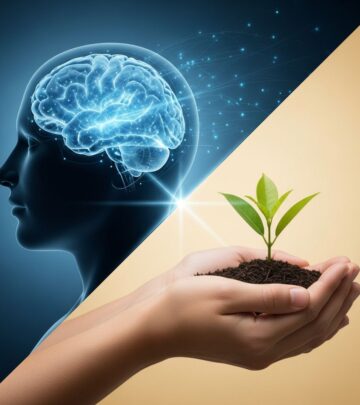
Depression, Chemicals, and Brain Communication
Understanding how brain chemicals and neural communication influence depression and treatment options.
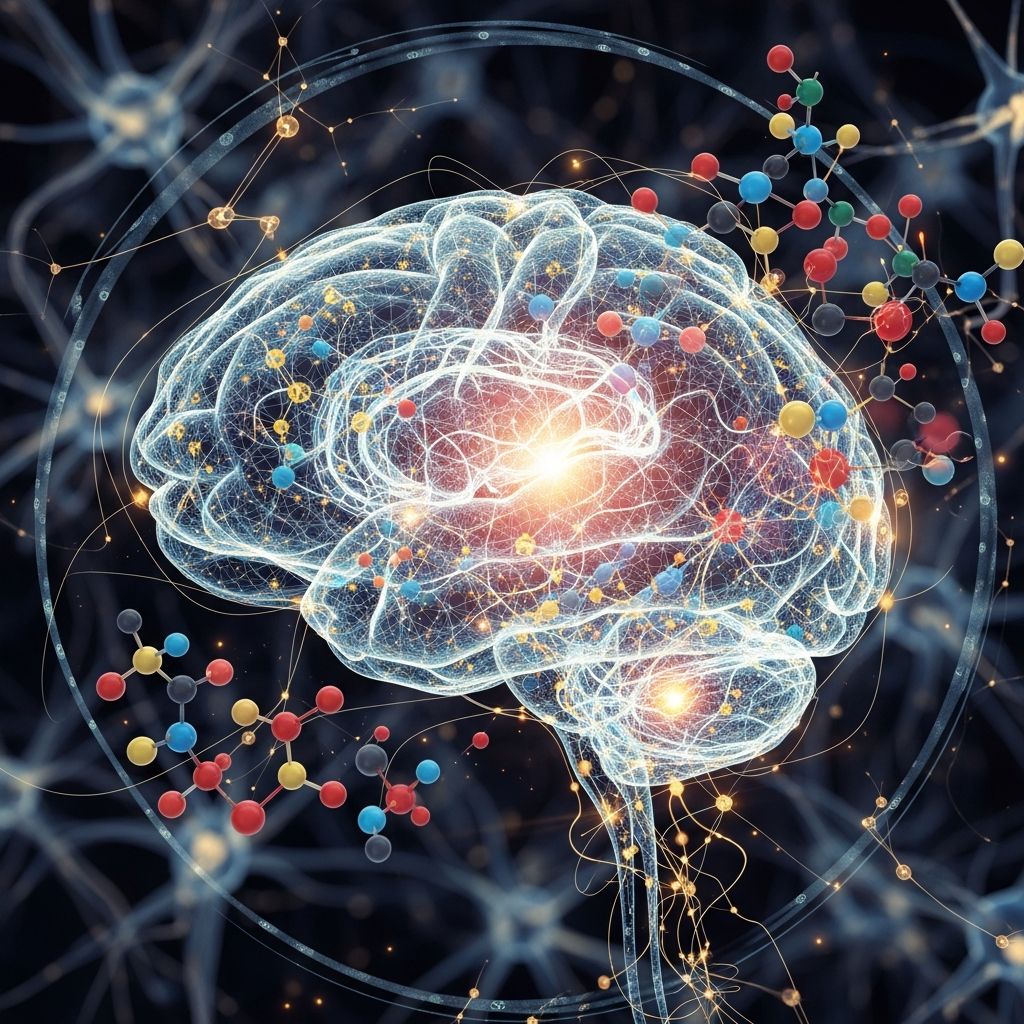
Understanding Depression: The Role of Brain Chemicals and Communication
Depression is one of the most prevalent mental health conditions affecting millions of people worldwide. For decades, the dominant explanation for depression centered on a simple theory: that it results from a chemical imbalance in the brain, particularly involving the neurotransmitter serotonin. This concept became so widespread that it shaped everything from how medications were developed to how society understood mental illness itself. However, modern neuroscience has revealed that the relationship between brain chemistry and depression is far more complex than this traditional framework suggests.
The brain operates through an intricate system of chemical communication. Understanding how this system functions, and how it relates to depression, requires looking beyond oversimplified explanations to appreciate the sophisticated interplay of biological, psychological, and environmental factors that contribute to this condition.
The Basics of Brain Chemistry and Communication
At the foundation of brain function lies a remarkable communication system. The brain contains approximately 86 billion neurons, each capable of forming thousands of connections with other neurons. These connections enable the brain to regulate mood, emotion, cognition, and behavior through the release and reception of chemical messengers called neurotransmitters.
Neurotransmitters are chemical substances produced by neurons that transmit signals across synapses—the tiny gaps between nerve cells. When a neuron fires, it releases neurotransmitters into the synaptic space, where they bind to receptors on neighboring neurons. This process allows neurons to communicate with each other continuously, creating the electrochemical basis for all brain functions, including mood regulation.
Several key neurotransmitters play important roles in mood and emotional states:
Key Neurotransmitters in Mood Regulation
Serotonin: Often called the “mood molecule,” serotonin influences emotional well-being, sleep, appetite, and stress response. This neurotransmitter has received the most attention in depression research and pharmaceutical development.
Dopamine: Associated with motivation, pleasure, and reward, dopamine plays a crucial role in driving behavior and maintaining interest in activities. Low dopamine levels have been linked to anhedonia—the loss of interest in previously enjoyable activities.
Norepinephrine: This neurotransmitter regulates alertness, attention, and the stress response. Low levels of norepinephrine are associated with depression symptoms including fatigue, poor concentration, and diminished interest in daily activities.
Glutamate and GABA: These neurotransmitters work in balance to regulate neural excitation and inhibition. Dysregulation in their levels has been implicated in various mood disorders.
The Chemical Imbalance Theory: Origins and Acceptance
The chemical imbalance theory emerged in the 1960s when researchers first developed antidepressant medications that increased serotonin levels in the brain. The logic seemed straightforward: if drugs that increase serotonin reduce depression symptoms, then depression must be caused by low serotonin. This simple explanation gained enormous traction, becoming embedded in medical education, pharmaceutical marketing, and public consciousness.
By the 1990s and 2000s, this theory became the primary lens through which depression was understood and treated. Pharmaceutical companies built billion-dollar marketing campaigns around this concept, with direct-to-consumer advertising presenting depression as a straightforward medical condition caused by a serotonin deficiency that could be corrected with medication. Television commercials and print advertisements claimed that selective serotonin reuptake inhibitor (SSRI) medications like Zoloft, Lexapro, and Paxil could restore the “chemical balance” in the brain.
This narrative provided several benefits: it offered a simple, understandable explanation for a complex condition; it suggested that depression was a medical problem rather than a personal failing; and it provided a clear rationale for pharmaceutical treatment. However, decades of scientific research have revealed that this explanation was fundamentally incomplete.
The Scientific Problems with the Chemical Imbalance Theory
Multiple lines of evidence have challenged the chemical imbalance theory’s validity. First, research attempting to demonstrate that depressed individuals have low serotonin levels has produced mixed and inconclusive results. Studies measuring serotonin metabolites in the cerebrospinal fluid of depressed patients compared to controls have been plagued by methodological difficulties, including small sample sizes and uncontrolled confounding variables.
Second, if depression were simply caused by low serotonin, SSRI medications should work immediately. However, these drugs typically require weeks or months of use before their therapeutic effects become apparent. This delay suggests that the medications’ benefits arise from more complex mechanisms than simply boosting neurotransmitter levels.
Third, and most conclusively, a comprehensive meta-analysis conducted by Joanna Moncrieff and colleagues in 2022 found no convincing evidence that depression is caused by a serotonin deficiency or any simple chemical imbalance. This landmark study reviewed decades of research and found insufficient evidence to support the chemical imbalance hypothesis—a finding that even major pharmaceutical companies have quietly acknowledged.
Furthermore, SSRI medications are not universally effective. Research shows that only about 46 percent of patients achieve complete remission when receiving a combination of antidepressants and talk therapy. Many patients continue to experience symptoms such as anhedonia, sleep disturbances, or emotional numbness, and some experience uncomfortable side effects that lead them to discontinue treatment.
Beyond Simple Imbalance: A More Complex Model
Contemporary neuroscience reveals that brain chemistry operates more like a complex computational system with intricate networks and interconnections, rather than a simple mechanism with individual “dials” that can be adjusted. Depression appears to involve dysregulation across multiple neurotransmitter systems, brain regions, and neural networks.
The relationship between neurotransmitters and depression involves several sophisticated mechanisms:
Neural Network Dysfunction
Depression is associated with altered communication patterns within and between brain regions responsible for mood, emotion regulation, and stress response. The prefrontal cortex, amygdala, and hippocampus—key regions involved in emotion processing and memory—show abnormal activity patterns in depression. These brain regions communicate through complex networks involving multiple neurotransmitter systems, not just serotonin.
Genetic and Environmental Interactions
Depression results from intricate interactions between genetic predisposition, environmental stressors, trauma history, social relationships, lifestyle factors, and individual variations in brain function. No single genetic variant or chemical level determines whether someone will develop depression. Instead, multiple genes influence vulnerability to depression, and this vulnerability is only realized in the context of specific environmental conditions.
The Brain-Body Connection
The brain and body exist in constant communication. What the brain perceives and believes influences the body’s chemical production, and what the body produces in turn affects mood, thought patterns, and emotional states. This bidirectional relationship means that physical health, sleep quality, nutrition, exercise, and stress levels all influence neural chemistry and mental health in profound ways.
Neuroplasticity and Learning
The brain is not a fixed entity but rather maintains the capacity to reorganize itself throughout life. Therapeutic interventions, including psychotherapy and behavioral changes, can literally reshape brain structure and function. This explains why psychological treatments are effective for depression—they work by facilitating neural changes that extend beyond simple neurotransmitter adjustments.
Implications for Treatment and Care
Recognition that depression involves complex biological, psychological, and social factors has important implications for how the condition should be treated and understood.
Medication in Context
While SSRI medications can be helpful for some individuals, they are not a universal solution. Understanding that these medications likely work through multiple mechanisms—including effects on gene expression, neural plasticity, and brain network organization—helps explain both their benefits and their limitations. Medication may be most effective when combined with other interventions that address the multiple factors contributing to depression.
Personalized Treatment Approaches
Because depression varies widely across individuals in its causes and manifestations, treatment should be tailored to the specific needs and circumstances of each person. Some individuals may benefit primarily from medication, while others may respond better to psychotherapy, lifestyle modifications, social support, or combinations of these approaches. A comprehensive assessment should consider genetic factors, trauma history, current life stressors, physical health, social relationships, and personal preferences.
Reducing Stigma
The idea that depression results from a permanent chemical flaw in the brain can feel stigmatizing, suggesting that affected individuals have something fundamentally broken within them. Recognizing the complex, multifaceted nature of depression—involving factors that extend beyond neurobiology—helps humanize the condition and foster compassion for those affected. Depression is not a personal failure or a sign of weakness; it is a complex condition arising from the interaction of multiple factors.
Broader Therapeutic Innovation
Moving beyond the chemical imbalance framework opens space for innovation in treatment approaches. Researchers are now exploring the roles of brain plasticity, immune system dysfunction, trauma’s neurobiological effects, social connection, meaning-making, and mind-body integration in depression. These investigations are leading to new and potentially more effective interventions that address depression’s multifaceted nature.
The Role of Psychotherapy and Behavioral Interventions
If depression were simply a chemical problem requiring a chemical solution, psychotherapy would be unnecessary. However, extensive research demonstrates that psychological treatments are highly effective for depression. Cognitive-behavioral therapy, interpersonal therapy, and other evidence-based psychotherapies produce changes in brain structure and function comparable to medication, working through different mechanisms to facilitate recovery.
Behavioral interventions—including exercise, sleep hygiene, social engagement, and stress management—also produce measurable changes in brain chemistry and neural function. These approaches work not by directly manipulating neurotransmitter levels but by engaging the brain’s capacity for change and adaptation.
Current Understanding of Neurotransmitter Dysregulation
Rather than rejecting the role of neurotransmitters entirely, contemporary science recognizes that dysregulation in neurotransmitter systems plays a role in depression for many people. However, this dysregulation is understood as one component of a complex condition rather than its sole cause.
Neurotransmitter systems interact with each other, with gene expression, with neural networks, and with bodily systems including the immune and endocrine systems. Depression may involve dysregulation in any or all of these interconnected systems. Understanding this complexity allows for more sophisticated explanations of why different people respond to different treatments and why some individuals experience treatment-resistant depression.
Frequently Asked Questions
Q: Does depression always involve low serotonin?
A: No. While research has historically suggested a link between low serotonin and depression, modern meta-analyses have found no convincing evidence that depression is caused by a simple serotonin deficiency. Depression appears to involve complex dysregulation across multiple neurotransmitter systems and brain networks.
Q: If the chemical imbalance theory is incorrect, does this mean medication doesn’t work?
A: No. Antidepressant medications can be effective for many people, but they likely work through more complex mechanisms than simply correcting a chemical imbalance. These mechanisms may include effects on neural plasticity, gene expression, and brain network organization.
Q: Can therapy alone treat depression?
A: Yes, psychotherapy can be an effective treatment for depression in many cases. Evidence-based therapies like cognitive-behavioral therapy produce changes in brain structure and function and can lead to sustained symptom improvement.
Q: Why do some people not respond to SSRIs?
A: Because depression is complex and involves multiple factors beyond serotonin dysregulation. For individuals whose depression is driven primarily by other factors—such as trauma, social isolation, chronic stress, or other biological mechanisms—SSRIs may be less effective. Personalized treatment approaches that address the specific factors contributing to an individual’s depression are often more beneficial.
Q: Can lifestyle changes affect brain chemistry?
A: Yes. Exercise, sleep, nutrition, social connection, and stress management all influence neurotransmitter function and brain structure. These behavioral interventions produce measurable changes in neural chemistry and can significantly impact depression symptoms.
Conclusion: Moving Forward in Depression Care
The journey from the chemical imbalance theory to a more sophisticated understanding of depression represents scientific progress. While this shift may seem to complicate depression treatment, it actually offers important opportunities for improvement.
Recognizing depression as a complex condition involving biological, psychological, social, and environmental factors encourages more comprehensive, personalized approaches to treatment. Rather than assuming that everyone needs the same medication, a modern understanding of depression supports tailored interventions that address the specific factors contributing to each individual’s condition.
The brain’s communication systems remain central to understanding depression, but this understanding must move beyond simple notions of chemical deficiency to appreciate the brain’s extraordinary complexity. By embracing this more nuanced view, mental health professionals can offer more effective, humane, and personalized care to individuals struggling with depression.
References
- Serotonin and Depression: A Disconnect between the Advertisements and the Scientific Literature — National Center for Biotechnology Information (NCBI). 2005-11-15. https://pmc.ncbi.nlm.nih.gov/articles/PMC1277931/
- Neurotransmitters and Depression — MentalHealth.com. 2024. https://www.mentalhealth.com/library/biology-of-depression-neurotransmitters
- Beyond the Chemical Imbalance: Rethinking Depression and Anxiety — Behavioral Health News. 2023. https://behavioralhealthnews.org/beyond-the-chemical-imbalance-rethinking-depression-and-anxiety/
- Causes of Depression: Beyond Chemical Imbalances and Genetics — Chandra MD. 2024. https://chandramd.com/what-causes-depression-chemical-imbalance/
- Why the Chemical Imbalance Theory of Depression Is Dead — Dr. Teralyn. 2024. https://drteralyn.com/why-the-chemical-imbalance-theory-of-depression-is-dead-and-what-it-means-for-mental-health/
- Understanding Depression — Campus Mental Health. 2021-05-15. https://campusmentalhealth.ca/wp-content/uploads/2021/05/understanding-depression.pdf
- Neurotransmitters and Their Influence on Mental Health Disorders — Open Access Journals. 2024. https://www.openaccessjournals.com/articles/neurotransmitters-and-their-influence-on-mental-health-disorders-18231.html
Similar Articles








Read full bio of medha deb