Depth Perception vs Stereo Vision Explained
Discover the key differences between depth perception and stereo vision, how they enable 3D sight, common issues, and ways to improve them for better daily life.
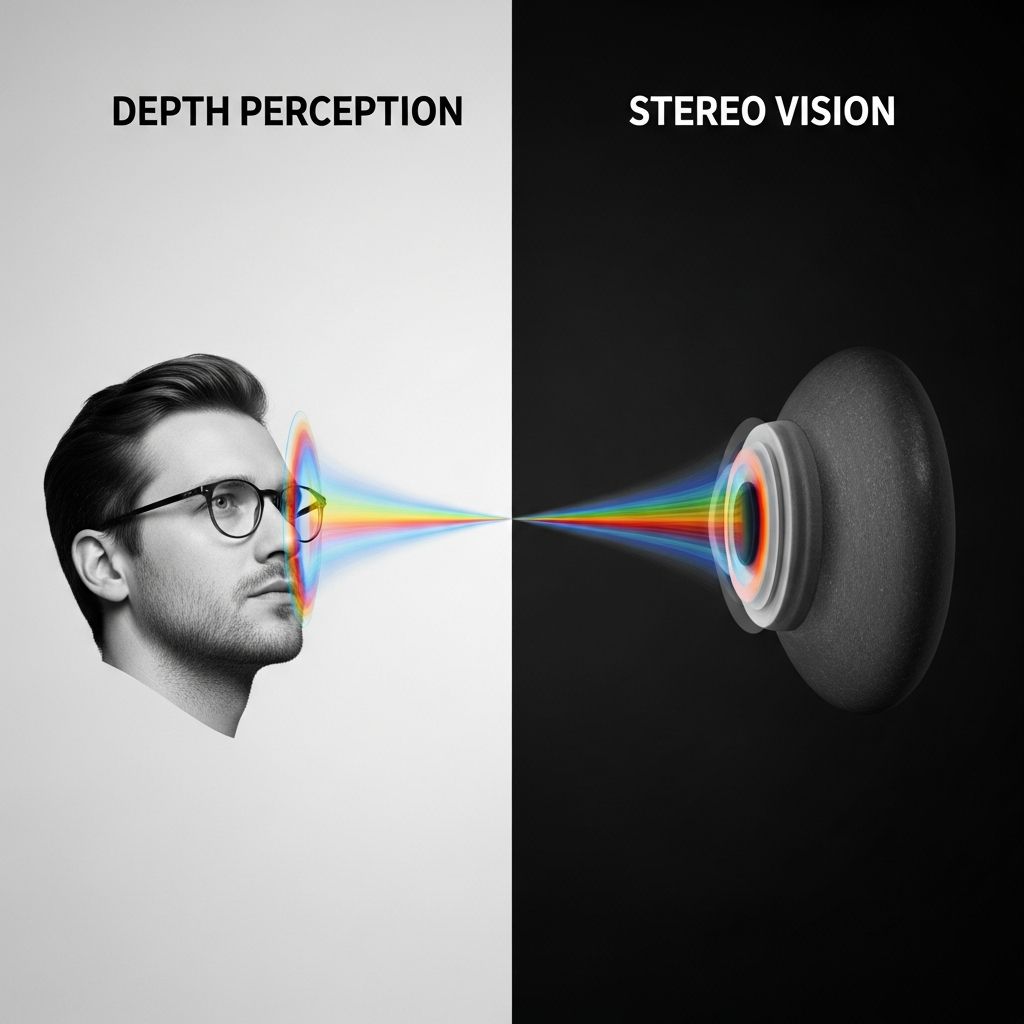
Depth perception allows us to perceive the world in three dimensions, judging distances accurately for safe navigation, while stereo vision is the specific binocular mechanism that creates a vivid 3D image by merging slightly different views from each eye.
The Foundations of 3D Vision
Human vision transforms a flat retinal image into a rich, spatial understanding of surroundings. This capability stems from intricate interactions between the eyes and brain. Light enters each eye, forming images on the retina that travel via optic nerves to the visual cortex. There, the brain processes these inputs to construct depth information.
Our eyes, spaced about 6.5 cm apart, capture unique perspectives of the same scene. This separation, known as binocular disparity, is central to advanced depth cues. The brain exploits these differences to compute object distances with remarkable precision.
Defining Depth Perception
Depth perception encompasses all visual processes enabling distance judgment and spatial awareness. It integrates multiple cues, allowing perception even with one eye. This broad ability ensures we interact effectively with the environment, from grasping objects to avoiding obstacles.
- Essential for mobility and coordination in dynamic settings.
- Relies on both eye-based and environmental signals.
- Compensates for binocular limitations through alternative mechanisms.
Stereo Vision: The Binocular Powerhouse
Stereo vision, or stereopsis, specifically refers to the brain’s fusion of two slightly offset images into a single, three-dimensional view. It provides the most acute sense of depth, particularly for nearby objects within about 6 meters.
This process activates specialized neurons sensitive to disparity, firing more intensely to encode relative positions. Without aligned eyes focusing on the same point, stereopsis fails, underscoring its dependence on healthy binocular function.
| Aspect | Depth Perception | Stereo Vision |
|---|---|---|
| Definition | Overall 3D distance judgment using various cues | Binocular fusion creating precise 3D image |
| Eye Requirement | One or two eyes | Both eyes required |
| Precision | Good, but variable | Highest for close ranges |
| Examples | Judging road distance while driving | Threading a needle |
Monocular Cues: Depth Without Binoculars
When stereo vision is unavailable, the brain relies on powerful monocular cues. These single-eye signals include relative size, where smaller objects appear farther; texture gradient, with finer details indicating distance; and occlusion, where nearer items block distant ones.
- Motion parallax: Objects shift at different speeds during head movement; closer ones move faster.
- Accommodation and convergence: Eye muscles adjust lens focus and inward turn for near objects, signaling distance.
- Aerial perspective: Hazy, bluish distant objects versus sharp, saturated near ones.
These cues enable functional depth perception in monocular vision, though less precise than stereopsis. Artists exploit them in paintings to simulate 3D space.
Real-World Applications and Importance
Strong depth perception and stereo vision underpin safety and performance. In driving, they help gauge vehicle spacing; in sports, track ball trajectories; in surgery, manipulate fine instruments.
Impairments elevate accident risks. Pilots and athletes with poor stereopsis face reduced efficacy, while everyday tasks like pouring liquids or descending stairs become hazardous. Professions demanding precision highlight the need for robust 3D vision.
Causes of Impaired Depth and Stereo Vision
Several conditions disrupt these abilities. Strabismus misaligns eyes, preventing image fusion; amblyopia weakens one eye’s input; uncorrected refractive errors blur disparities.
Related Stories



Other factors include cataracts clouding lenses, traumatic brain injuries damaging pathways, and age-related changes reducing acuity. Even temporary issues like fatigue or poor lighting can degrade performance.
- Amblyopia: Brain suppresses weaker eye signals.
- Strabismus: Eyes point in different directions.
- Neurological disorders: Affect visual processing centers.
Assessing Depth Perception and Stereo Vision
Eye care professionals use targeted tests to quantify these skills. Stereo tests present polarized images visible only with proper binocular fusion, measuring acuity in seconds of arc—the smaller, the better.
Common assessments:
- Random Dot Stereograms: Shape emerges only with stereopsis, immune to cheating.
- Titmus Fly Test: Patients identify 3D elements like a fly outline.
- Functional Tasks: Pointing at targets or catching objects evaluates real-life application.
Monocular tests check supporting cues via grating acuity or contrast sensitivity.
Training and Rehabilitation Strategies
Vision therapy can enhance or restore these skills, especially in children. Exercises promote eye teaming and disparity processing.
- Brock String: Align beads on a string to train convergence.
- Stereograms: Practice fusing 3D images.
- VR Simulations: Dynamic environments mimic sports demands.
- Depth Tasks: Quick identification of distances between objects.
Therapy success varies but often improves coordination and confidence. Corrective lenses or surgery address underlying issues like strabismus.
Impact on Daily Life and Professions
Beyond basics, 3D vision influences quality of life. Poor performers report more falls, driving anxiety, and activity limitations. In sports, superior stereo acuity correlates with better timing and accuracy, giving competitive edges in baseball, tennis, or soccer.
Military and aviation demand rigorous screening; deficits disqualify candidates. Surgeons rely on it for microsurgery precision.
FAQs
Can you have depth perception with one eye?
Yes, via monocular cues like size and motion, though less precise than binocular stereopsis.
How do you test stereo vision at home?
Simple online stereograms or apps show shapes only with good fusion, but professional tests are recommended.
Does age affect depth perception?
Yes, presbyopia and reduced contrast sensitivity gradually impair it, but exercises can help.
Can vision therapy fix poor stereo vision?
Often yes, particularly for amblyopia or mild strabismus in younger patients.
Why is stereo vision important for pilots?
It enables precise altitude and obstacle judgment, critical for safe flight.
Conclusion
Mastering depth perception and stereo vision unlocks fuller environmental interaction. From casual walks to high-stakes professions, these skills safeguard and empower. Routine eye exams detect issues early, while training bolsters performance.
References
- Understanding Depth Perception and Stereo Vision — Specialty Vision. 2023. https://specialty.vision/article/understanding-depth-perception-and-stereo-vision/
- Depth Perception and Stereo Vision — NVP Institute. 2024. https://nvpinstitute.com/therapy-services/depth-perception-and-stereo-vision/
- Stereopsis and Tests for Stereopsis — EyeWiki (AAO). 2025-02-01. https://eyewiki.org/Stereopsis_and_Tests_for_Stereopsis
- Stereo Vision Screening and Tests — Precision Vision. 2023. https://precision-vision.com/about-stereo-vision-screening-and-tests/
- What is the difference between stereopsis and depth perception? — DrOracle.ai. 2024. https://www.droracle.ai/articles/59406/what-is-the-difference-between-stereopsis-and-depth-perception
- Depth Perception and 3D Vision — Advanced Vision Therapy Center. 2023. https://www.advancedvisiontherapycenter.com/about/blog/depth-perception-and-d-vision.html
Similar Articles








Read full bio of medha deb