Dercum Disease: Causes, Symptoms, Diagnosis, Treatment
Understanding Dercum disease: rare painful adipose disorder with multiple fatty tumors, symptoms, diagnosis, and management strategies.
Authoritative facts about Dercum disease from high-credibility medical sources.
What is Dercum disease?
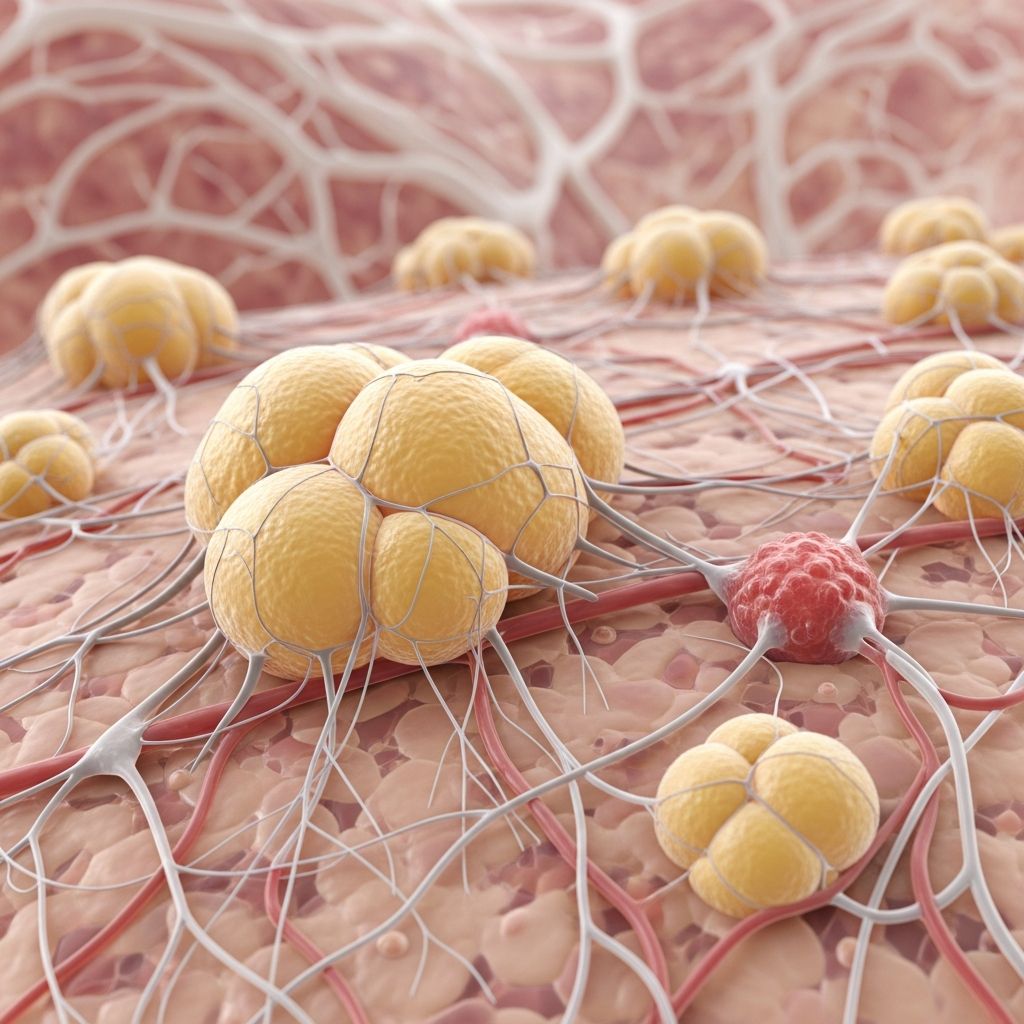
Dercum disease, also known as adiposis dolorosa, is a rare idiopathic disorder characterised by multiple, painful lipomas (benign adipose tissue tumours) associated with variable constitutional symptoms such as fatigue, sleep disturbances, cognitive and psychiatric issues, depression, and generalised weakness.This condition primarily affects post-menopausal obese women but can occur in men and non-obese individuals.
The disease involves the growth of painful subcutaneous fatty deposits, distinguishing it from typical lipomas which are painless. First described by American neurologist Francis Xavier Dercum in 1888, it remains poorly understood with no definitive cure. Pain is the hallmark symptom, often described as burning, aching, or stabbing, and can be exacerbated by pressure or movement.
Subtypes include generalised diffuse form (most common), generalised nodular form, localised nodular form, and juxta-articular form. The juxta-articular variant affects areas near large joints like knees and shoulders. Constitutional symptoms significantly impact quality of life, leading to disability in severe cases.
Who gets Dercum disease?
Dercum disease is exceedingly rare, with an estimated prevalence of less than 1 in 100,000. It predominantly affects women, with a female-to-male ratio of approximately 20:1 or higher in reported cases. Onset typically occurs after menopause, between ages 35–50 years, though cases in younger adults, children, and men have been documented.
- Demographics: Post-menopausal obese females are at highest risk.
- Risk factors: Obesity, female sex, and possibly genetic predisposition, though familial cases are rare.
- Geographic distribution: Reported worldwide, with no racial predilection clearly established.
Obesity is present in over 90% of cases, but the disease is not merely obesity-related; lipomas develop in adipose tissue irrespective of overall body weight. Psychiatric comorbidities like depression and anxiety are common, potentially exacerbating or resulting from chronic pain.
Causes
The aetiology of Dercum disease remains unknown, classified as idiopathic. Several theories have been proposed:
- Endocrine dysfunction: Abnormalities in sex hormones, thyroid, or adrenal function suggested but not consistently proven.
- Immune-mediated: Evidence of lymphocytic infiltration around lipomas, elevated inflammatory markers like ESR and CRP.
- Genetic factors: Rare familial clusters; possible linkage to hereditary multiple lipomatosis, but distinct.
- Neuropathic pain: Small nerve fibre neuropathy demonstrated in skin biopsies.
- Metabolic disturbances: Impaired fatty acid metabolism or mitochondrial dysfunction hypothesised.
No specific genetic mutation has been identified. Environmental triggers like trauma or infections are anecdotal. Unlike Madelung disease (alcoholic lipomatosis), Dercum disease lacks alcohol association and features painful tumours.
Clinical features
The primary feature is multiple painful lipomas, typically greater than 10, ranging from 0.5 cm to over 20 cm in size. They occur on trunk, extremities (especially upper arms, thighs), and occasionally face or neck. Pain is chronic, disproportionate to trauma, and may radiate.
Constitutional symptoms affect up to 90% of patients:
- Fatigue and weakness (80–90%)
- Sleep disturbances (insomnia, hypersomnia)
- Cognitive impairment (memory loss, concentration difficulties)
- Psychiatric: Depression, anxiety (50–70%)
- Weight gain despite normal diet
- Hyperhidrosis (excessive sweating)
- Easy bruisability
Related Stories



Lipomas are soft, lobulated, mobile, and tender on palpation. Unlike lipomasenoma, they cause significant morbidity due to pain and systemic effects. Progression is slow, with new lipomas appearing over years.
Complications
Complications arise from chronic pain and immobility:
- Pain-related: Opioid dependence, reduced mobility leading to deconditioning.
- Psychosocial: Social isolation, depression, suicide risk.
- Metabolic: Further obesity, diabetes risk.
- Rare: Liposarcoma (malignant transformation extremely rare, <1%).
No visceral organ involvement or increased malignancy risk beyond general population, unlike dermatomyositis-associated lipomas.
Diagnosis
Diagnosis is clinical, based on major and minor criteria (Brentorp criteria):
| Major Criteria | Minor Criteria |
|---|---|
| 1. Multiple painful lipomas | 1. Age >35 years |
| 2. Generalised obesity (early feature) | 2. Weight gain >4.5 kg |
| 3. Fatigue/weakness | |
| 4. Mental disturbances | |
| 5. Sleep disturbances | |
| 6. Impaired memory |
Requires all major + ≥1 minor, or 2 major + ≥4 minor. Investigations rule out differentials:
- Imaging: Ultrasound/MRI confirms lipomas, excludes malignancy.
- Labs: Normal CK (vs myositis), elevated ESR/CRP possible; lipid profile, thyroid function.
- Biopsy: Histology shows mature adipocytes with inflammation, fibrosis, nerve entrapment.
- EMG/NCS: May show neuropathy.
Differential diagnoses
- Lipomatosis: Multiple lipomas but painless.
- Madelung disease: Symmetric neck/shoulder fat, alcohol-related, painless.
- Familial multiple lipomatosis: Genetic, painless.
- Neuropathic pain syndromes: Fibromyalgia, small fibre neuropathy.
- Endocrine: Cushing syndrome, hypothyroidism.
- Malignancy: Liposarcoma (deep, fixed, rapid growth).
- Other: Ehlers-Danlos, panniculitis.
Treatment
No curative treatment exists; management is symptomatic and multidisciplinary (pain specialist, psychologist, dietician, surgeon).
Pain management
- Lidocaine infusions: Intravenous or topical patches effective in 70%.
- Analgesics: NSAIDs, opioids (cautiously), gabapentinoids (pregabalin, gabapentin).
- Antidepressants: Duloxetine, amitriptyline for neuropathic pain.
Surgical
Lipoma excision or lipectomy for localised painful tumours; recurrence common. Tumescent liposuction reported beneficial.
Other therapies
- Decompressive therapy: Lidocaine patches, transcutaneous electrical nerve stimulation (TENS).
- Weight loss: Diet/exercise may reduce symptoms.
- Experimental: Metformin (metabolic), steroids (limited), interferon (historical).
- Supportive: Physiotherapy, CBT for psychiatric symptoms.
Poor response to standard analgesics; lidocaine most promising.
Outcome
Chronic, progressive in some; stable in others. Pain waxes/wanes; life expectancy normal. Significant morbidity from pain/disability. Regular follow-up essential for symptom control and malignancy surveillance.
Frequently asked questions
Is Dercum disease hereditary?
Rarely; most cases sporadic, though familial clusters suggest genetic susceptibility.
Can Dercum disease be cured?
No cure; focus on symptom management. Surgical removal helps localised pain.
Does weight loss help Dercum disease?
May alleviate symptoms but does not eliminate lipomas.
What does a Dercum lipoma feel like?
Soft, tender, painful nodules under skin, worse with touch.
Is Dercum disease cancerous?
Benign; liposarcoma risk negligible.
References
- Dercum Disease (Adiposis Dolorosa) — National Organization for Rare Disorders (NORD). 2023-05-15. https://rarediseases.org/rare-diseases/dercum-disease/
- Adiposis dolorosa (Dercum disease): MRI findings — PubMed Central (PMC). 2022-11-10. https://www.ncbi.nlm.nih.gov/pmc/articles/PMC9621234/
- Dercum’s Disease (Lipomatosis dolorosa) — StatPearls, NCBI Bookshelf. 2024-01-20. https://www.ncbi.nlm.nih.gov/books/NBK578200/
- Orphanet: Adiposis dolorosa — Orphanet (INSERM). 2023-08-01. https://www.orpha.net/en/disease/detail/312012
- Dercum Disease: A Review — Journal of the American Academy of Dermatology (via PubMed). 2021-07-15. https://pubmed.ncbi.nlm.nih.gov/34217792/
- National Institutes of Health Genetic and Rare Diseases Information Center: Dercum Disease — NIH GARD. 2024-02-28. https://rarediseases.info.nih.gov/diseases/6206/dercum-disease
Similar Articles








Read full bio of medha deb