Dermal And Subcutaneous Lesions: Clinical Guide For Recognition
Comprehensive guide to identifying and understanding common dermal and subcutaneous skin lesions in clinical practice.
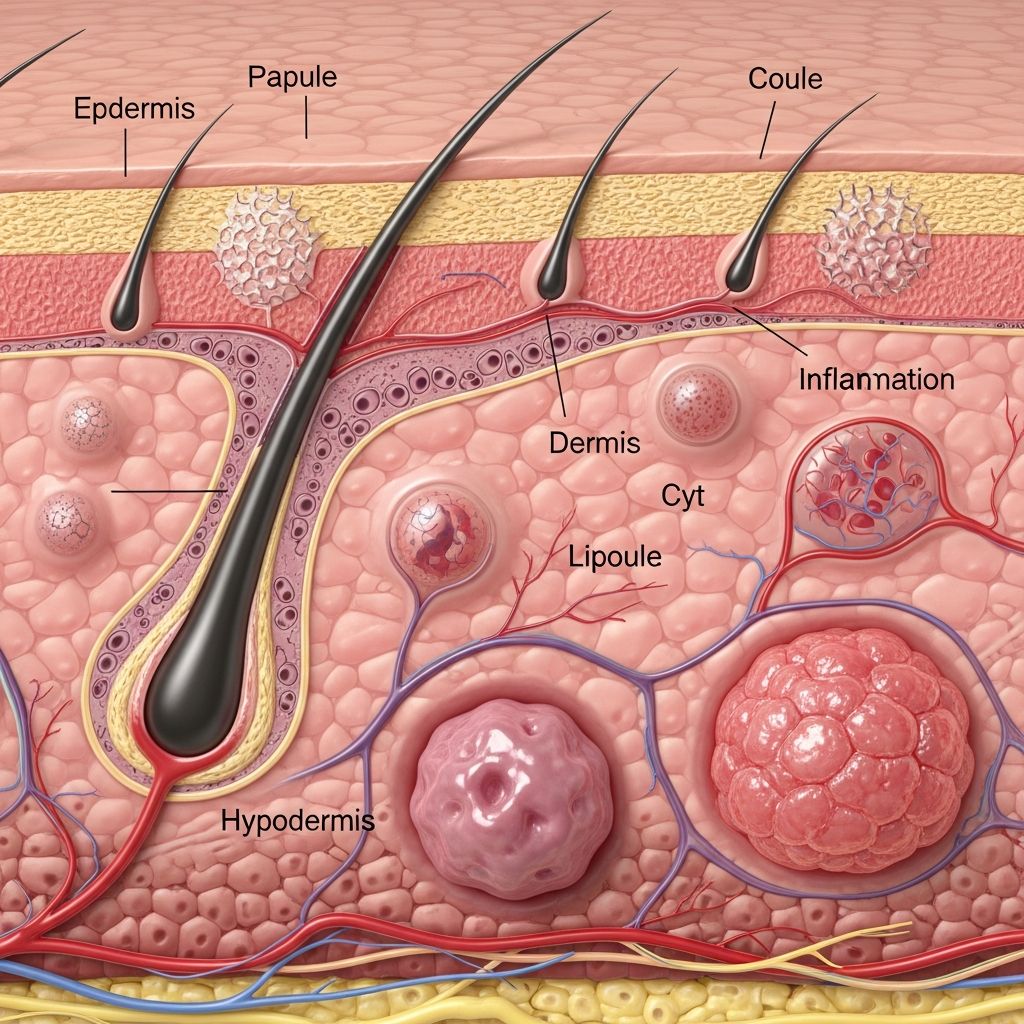
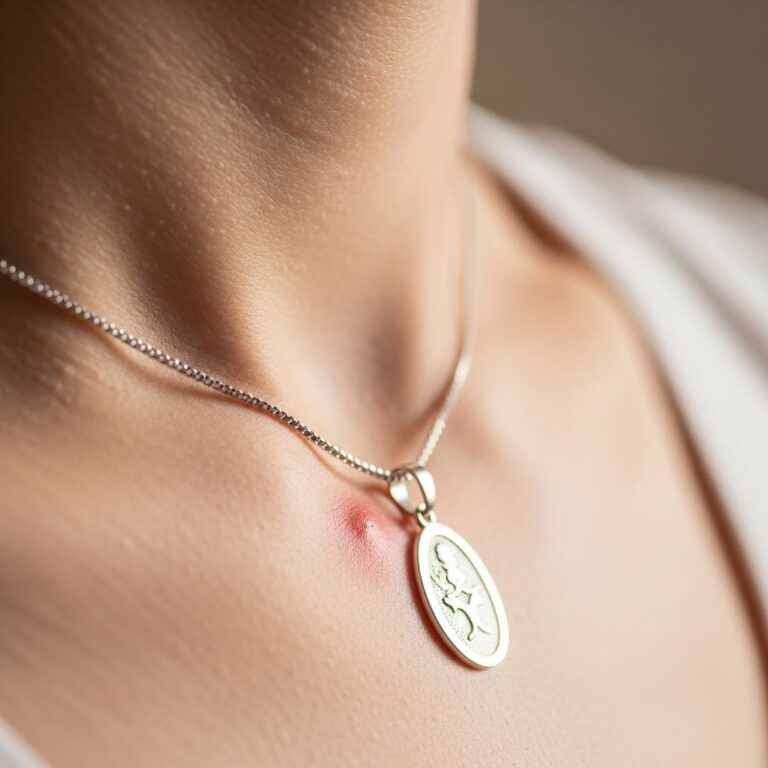
Dermal and subcutaneous lesions represent a diverse group of skin abnormalities originating in the deeper layers of the skin, including the dermis and subcutaneous fat. These lesions can be benign or malignant, vascular, fibrous, neural, or adipose in origin. Accurate identification is crucial for appropriate management, as some may indicate systemic diseases or require excision to prevent complications. This article covers key examples, clinical presentations, and associations based on established dermatological knowledge.
Vascular Lesions
Vascular lesions arise from proliferations or dilatations of blood or lymphatic vessels within the dermis or subcutis. They range from benign angiomas to aggressive malignancies.
Angiokeratoma
**Angiokeratoma** is a scaly vascular papule resulting from epidermal proliferation encircling dilated vessels. It may present as solitary or diffuse lesions. Multiple forms include genital angiokeratomas (Fordyce spots), acral types (Mibelli), or generalised in Fabry disease, a lysosomal storage disorder due to ceramide trihexosidase deficiency leading to glycosphingolipid deposition.
Cherry Angiomas
Cherry angiomas are extremely common benign red, blue, purple, or nearly black lesions appearing in middle age, primarily on the trunk. Dermoscopy reveals red, blue, or purple lacunes, distinguishing them from melanocytic lesions. Thrombosed angiomas may persist as firm bluish papules.
Glomus Tumour
Glomus tumours typically manifest as painful subungual papules. These benign neoplasms arise from the neuromyoarterial glomus body and are highly vascular.
Angiosarcoma
**Angiosarcoma** commonly arises on the head and neck or in areas of chronic lymphoedema, such as post-mastectomy. It presents as advancing purpura and ecchymosis in elderly patients. The prognosis is poor due to multifocality, limiting excision, and partial radiation sensitivity.
Kaposi Sarcoma
Kaposi sarcoma (KS), a low-grade vascular malignancy linked to human herpesvirus 8 (HHV-8), has four epidemiological types: classic, endemic, iatrogenic, and AIDS-associated. Lesions range from patches to nodules, often on lower extremities.
Acquired Telangiectasia
Acquired telangiectasia involves dilated vessels of varying sizes, often due to sun damage, rosacea, or scleroderma. Common on the face and legs.
Acquired Lymphangiectasia
This follows lymph node dissection or trauma disrupting lymphatic drainage, typically in axillary or genital areas. Frogspawn-like clear or haemorrhagic papules develop, causing ooze.
Neural Lesions
Neural tumours originate from nerve sheath cells or related structures in the dermis.
Neurofibromas
Neurofibromas are spindle cell tumours presenting as soft to firm, single or multiple dermal nodules, often pedunculated. A key feature is invagination through a dermal defect. Variants include diffuse, pigmented, and plexiform types. Plexiform neurofibromas are pathognomonic for neurofibromatosis type 1 (NF1) and carry a risk of malignant transformation.
NF1 may also feature café au lait macules (more than 6, present at birth), axillary freckling, and other neurofibromas developing in childhood or adulthood.
Other Neural Tumours
- **Neurilemmoma (schwannoma):** Encapsulated dermal nodules.
- **Neuroma:** Post-traumatic nerve proliferation.
- **Granular cell tumour:** Firm, yellowish papules.
- **Neurofibrosarcoma (malignant schwannoma):** Rare aggressive variant.
Merkel Cell Carcinoma
Merkel cell carcinoma, a rare primary neuroendocrine skin cancer, presents as a rapidly growing violaceous nodule that may ulcerate. It recurs post-excision in many cases, with 40% developing metastases and 30% mortality within 5 years.
Fibrous Lesions
Fibrous lesions involve fibroblast proliferation or excessive collagen deposition.
Dermatofibromas
**Dermatofibromas** (fibrous histiocytomas) are common firm dermal papules or nodules, often post-insect bite on lower legs. They exhibit the ‘pinch sign’ or dimple on lateral compression.
Related Stories



Keloids
Keloids are hypertrophic scars with excessive collagen bands extending beyond the original wound.
Angiofibromas
Solitary angiofibromas, also called fibrous papules or perifollicular fibromas, are common on the nose, feeling firm like intradermal naevi. They respond to shave excision or electrodessication. Multiple facial angiofibromas associate with tuberous sclerosis, alongside periungual fibromas.
Acrochordons
Acrochordons (skin tags) are pedunculated lesions filled with loose collagen, common in flexures.
Other Fibrous Lesions
- **Dermatomyofibroma:** Plaque-like on shoulders.
- **Nuchal fibroma:** Firm plaques on the neck.
- **Fibromatosis:** Aggressive infiltrative growths.
- **Elastofibroma:** Subscapular masses in elderly.
- **Inflammatory myofibroblastic tumour:** Rare, pseudosarcomatous.
Adipose Lesions
Lipomas
**Lipomas** are encapsulated proliferations of mature adipose tissue, presenting as solitary or multiple soft subcutaneous nodules. They are asymptomatic and common. Multiple lipomas associate with syndromes like familial multiple lipomatosis or Gardner syndrome.
Smooth Muscle Lesions
Leiomyomas
Leiomyomas include piloleiomyomas (multiple, painful), genital leiomyomas, and angioleiomyomas. They occur in young adults and may be tender.
Uncommon Skin Tumours
Rare entities include:
- **Epithelioid sarcoma:** Subcutaneous nodules on extremities.
- **Clear cell sarcoma:** Melanotic around tendons.
- **Extraosseous Ewing sarcoma:** Deep soft tissue.
- **Synovial sarcoma:** Near joints.
- **Superficial angiomyxoma:** Myxoid nodules.
- **Digital mucous cyst:** Near nails.
Metastatic Tumours
Cutaneous metastases from distant primaries most commonly arise from:
- **Squamous cell carcinoma** (head/neck, lung).
- **Adenocarcinoma** (breast, lung, GI tract).
- Other sources: renal cell carcinoma, melanoma, ovarian cancer.
Lesions appear as firm nodules, often multiple, with a ‘scar-like’ or umbilicated morphology.
Clinical Tips
Examine the next 20 patients for these lesions to build recognition skills. Use dermoscopy for vascular and melanocytic differentials. Biopsy suspicious nodules, especially rapidly growing or painful ones.
Frequently Asked Questions (FAQs)
What is the most common dermal vascular lesion?
Cherry angiomas are the most prevalent, appearing as small red papules in middle age.
How do you distinguish dermatofibroma from melanoma?
Dermatofibromas dimple on pinching and are firm; dermoscopy shows a network pattern. Biopsy if atypical.
Are lipomas dangerous?
Benign lipomas are harmless but excise if symptomatic or enlarging to rule out liposarcoma.
What syndromes associate with multiple neurofibromas?
Neurofibromatosis type 1 (NF1), featuring plexiform neurofibromas, café au lait spots, and axillary freckling.
Prognosis of angiosarcoma?
Poor due to multifocality and metastasis risk; early wide excision is key.
Diagnostic Table: Key Dermal Lesions
| Lesion | Site | Features | Associations |
|---|---|---|---|
| Angiokeratoma | Genital, acral | Scaly vascular papule | Fabry disease |
| Dermatofibroma | Legs | Firm, dimples on pinch | Post-insect bite |
| Neurofibroma | Trunk, flexures | Soft, button-hole sign | NF1 |
| Lipoma | Subcutaneous | Soft, mobile | Familial syndromes |
| Angiosarcoma | Head, lymphedema | Purpura, bruise-like | Poor prognosis |
References
- Common skin lesions. Dermal and subcutaneous lesions — DermNet New Zealand. 2008 (updated). https://dermnetnz.org/cme/lesions/dermal-and-subcutaneous-lesions
- Skin lesions, tumours and cancers — DermNet New Zealand. Accessed 2026. https://dermnetnz.org/topics/skin-lesions-tumours-and-cancers
- Benign skin lesions — DermNet New Zealand. Accessed 2026. https://dermnetnz.org/topics/benign-skin-lesions
- Melanocytic naevus — DermNet New Zealand. Accessed 2026. https://dermnetnz.org/topics/melanocytic-naevus
Similar Articles








Read full bio of Sneha Tete