Dermatological Conditions in Skin of Colour
Understanding skin conditions across diverse skin tones and ethnicities for better diagnosis and care.
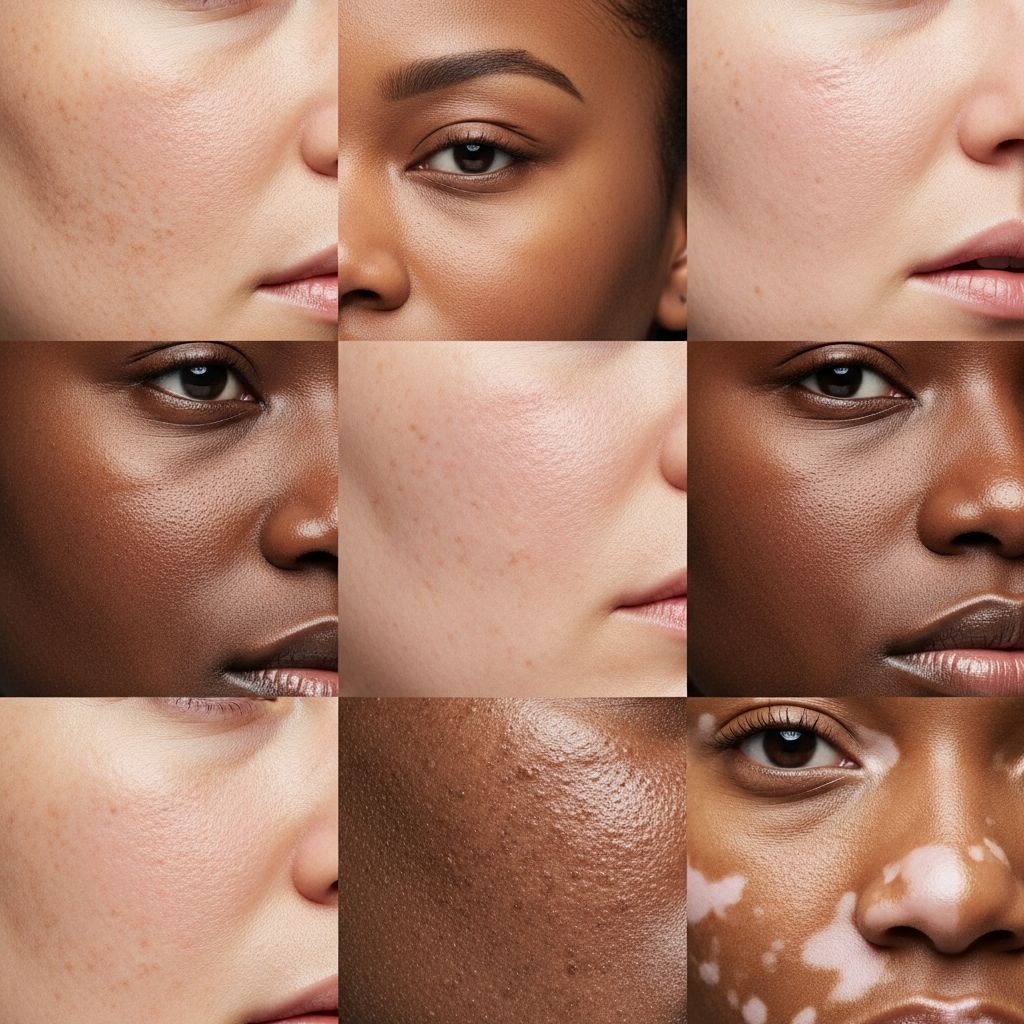
Introduction to Ethnic Dermatology
Ethnic dermatology is a specialized area of dermatology dedicated to understanding the presentation, diagnosis, and management of skin disorders in patients with pigmented or darker skin tones. Also referred to as dermatology in skin of colour, this field recognizes that skin conditions often present differently across various ethnicities and skin types, requiring tailored clinical knowledge for accurate diagnosis and effective treatment.
Ethnicity encompasses the cultural affiliation and identity that individuals ascribe to themselves, which may differ from concepts of race, ancestry, nationality, or citizenship. This distinction is important because ethnic dermatology highlights how genetics, biology, and cultural practices collectively influence the presentation and management of skin conditions. Individuals may identify with multiple ethnic groups, and understanding these nuances is essential for providing inclusive and effective dermatological care.
Understanding Skin Colour and Melanin
Melanin is the primary determinant of skin colour and is synthesized by melanocytes located in the basal layer of the epidermis. Two types of melanin contribute to skin pigmentation: eumelanin (the normal melanin that produces brown and black colors) and phaeomelanin (a red pigment). The variation in the amount and type of melanin produced determines the final colour of the skin.
The term “skin of colour” (often abbreviated as SOC) is a subjective descriptor used to refer to natural skin pigmentation darker than white skin, typically brown or black skin. When assessed using standardized scales such as the Fitzpatrick phototypes, skin of colour generally corresponds to skin types IV or higher. In broader contexts, the term encompasses the skin of various non-white ethnic groups, including those of African, Asian, South American, Pacific Island, Māori, Middle Eastern, and Hispanic descent.
The Fitzpatrick Scale and Skin Classification
The Fitzpatrick scale is a widely used classification system that describes skin types according to their reaction to sun exposure, which is dependent on the melanin content within the skin. This scale serves as a standardized reference when discussing and comparing skin types across different populations.
Understanding where a patient’s skin falls on the Fitzpatrick scale helps clinicians anticipate how certain conditions may present and what diagnostic challenges might arise. This knowledge is particularly valuable when examining presentations of inflammation, redness, and scaling, which can appear markedly different across skin tones.
Diagnostic Challenges in Skin of Colour
One of the most significant issues in dermatology is the underdiagnosis and delayed diagnosis of skin conditions in patients with skin of colour. This occurs because many common skin conditions present differently in darker skin tones compared to lighter skin, and clinical training has historically emphasized how conditions appear in fair skin.
A UK study involving 287 general practitioners demonstrated a concerning finding: malignant melanomas were significantly underdiagnosed in darker skin compared with lighter skin types, highlighting the real-world impact of diagnostic disparities in primary care.
Delayed diagnosis can have serious consequences:
- Increased severity of skin conditions
- Heightened itching and discomfort
- Greater skin dryness and thickening
- Development of post-inflammatory hyperpigmentation due to prolonged inflammation
- Requirement for more aggressive and prolonged treatments once diagnosis is finally made
Related Stories



The ability to recognize the main differences in how redness, inflammation, and scaling appear across different skin tones is imperative for healthcare professionals to properly serve and diagnose diverse populations.
Post-Inflammatory Hyperpigmentation in Skin of Colour
Post-inflammatory hyperpigmentation (PIH) is a common consequence of skin inflammation that occurs more frequently and with greater severity in individuals with darker skin tones. When inflammation occurs in skin of colour, it triggers the release of inflammatory mediators that increase melanogenesis (the production of melanin by melanocytes), resulting in darkened patches of skin that persist after the primary condition has resolved.
This is particularly concerning because in some cases, the post-inflammatory hyperpigmentation becomes more bothersome to patients than the original skin condition itself. Therefore, management strategies for skin conditions in darker skin types must place special emphasis on minimizing inflammation to reduce the risk of PIH.
Eczema in Skin of Colour
Clinical Presentation
Although the general presentation of eczema is considered similar among different skin tones, the appearance can be difficult to recognize in skin of colour. In fair skin, erythema (redness) is easily visible due to capillary dilatation. However, in darker skin tones, this classic erythema is often inapparent and is instead replaced by patches of darkened skin colour.
This diagnostic challenge can lead to:
- Late diagnosis and treatment delays
- More advanced disease at the point of diagnosis
- Significantly higher hospital admission rates—up to six times higher in patients of colour compared to those with lighter skin
Characteristic Features in Skin of Colour
Healthcare providers should be alert to the following presentations of eczema in darker skin tones:
- Pruritus: Intense itching is extremely common in all skin types with eczema
- Erythema: May appear more purple in skin of colour, whereas it appears red in lighter skin
- Dryness: Presents as white, fine flaking in darker skin
- Scaly plaques: Appear in flexure surfaces across all skin tones, with the neck commonly affected in Asian and Black skin
- Lichenification: Thickened, rough skin that is often hyperpigmented in skin of colour
- Pigmentation changes: Hyper- and hypopigmentation are common and present with greater severity in darker skin tones
Treatment of Eczema
The fundamental treatment of eczema is not affected by ethnicity or Fitzpatrick skin type. However, because post-inflammatory hyperpigmentation is of greater concern than the skin condition itself in skin of colour, management strategies should focus on minimizing this risk. This involves appropriate use of topical steroids to manage inflammation and proper emollient application to maintain skin hydration.
Psoriasis in Skin of Colour
Clinical Features
Psoriatic plaques are typically pruritic (itchy) and often result in post-inflammatory hyper- or hypopigmentation in skin of colour once they resolve. A distinctive feature is the presence of a ring of intense erythema surrounding the scaly plaques, as well as erythematous papules surrounding existing plaques. This presentation is uniform across all skin types.
Following resolution of plaques, there is typically decreased scale and central clearing. If the nails are involved, characteristic pitting of the nail surface may be observed.
Pigmentation Concerns
Similar to eczema, post-inflammatory hyperpigmentation and hypopigmentation are significant concerns in psoriasis affecting skin of colour. Management should prioritize inflammation control to minimize these secondary pigmentation changes.
Acne Vulgaris in Skin of Colour
Clinical and Histological Differences
Clinically, there is no significant difference in the appearance of acne lesions in Caucasian skin compared with skin of colour. However, histologically, there is notably more inflammation associated with skin of colour, even with smaller lesions such as comedones. This increased inflammatory response has important clinical consequences.
Post-Inflammatory Complications
Post-inflammatory hyperpigmentation (PIH), scarring, and post-inflammatory erythema (PIE) are more commonly seen in skin of colour than in Caucasian skin. Post-inflammatory erythema (PIE) refers to small, red, and flat spots left behind after acne lesions heal.
Additional complications of acne in all skin types include excess oil production, though these concerns are particularly pronounced in skin of colour.
Fungal Skin Infections
Fungal skin infections, including conditions such as tinea and candidiasis, require careful recognition in skin of colour. The presentation of these infections may differ from what is typically taught using fair skin examples, necessitating heightened clinical awareness among healthcare providers managing diverse populations.
Melanoma in Skin of Colour
Risk and Prevalence
Although melanoma develops in any skin type, it is most commonly seen in individuals with light-coloured skin. Conversely, a darker skin colour is associated with a reduced risk of developing melanoma. In darker skin, the higher content of UV radiation-absorbing melanin is protective, reducing melanoma risk compared to lighter skin types.
Skin colour is an independent but significant risk factor for melanoma across diverse ethnic groups. Most cases are diagnosed at a median age of 50–65 years.
Unusual Sites of Presentation
A critical difference in melanoma presentation between skin types is the location where tumours develop. In skin of colour, melanoma frequently develops in sites with low sun exposure, such as the palms or soles—a presentation known as acral lentiginous melanoma. Less commonly, melanoma may occur on mucous membranes (mouth or genitals) or in other parts of the body, including the brain and eyes.
This unique epidemiology in skin of colour means that standard recommendations about sun exposure being the primary melanoma risk factor may not fully apply, as a significant proportion of melanomas in darker skin types develop in sun-protected areas.
Diagnostic Considerations and Differential Diagnoses
Given the unusual sites where melanoma develops in skin of colour, benign lesions that also occur in these areas must be carefully considered as differential diagnoses. Naevi of special sites are benign moles that develop in atypical areas, including the genitals, breasts, palms, soles of the feet, and flexural regions (armpits, elbows, backs of knees). While benign, these naevi may show histological structures similar to melanoma.
This diagnostic overlap makes histopathological examination particularly important when evaluating pigmented lesions in these special sites in patients with skin of colour.
Prognosis
The prognosis for melanoma in skin of colour may be poorer overall compared to melanoma in white skin. This disparity could be due to late presentation or detection leading to thicker melanomas or more aggressive subtypes at diagnosis.
Regardless of skin colour, prognosis is generally dependent on the AJCC stage of melanoma, Clark level of invasion, and Breslow thickness at the time of excision of the primary lesion.
Other Skin Cancers in Skin of Colour
Beyond melanoma, individuals with darker skin tones (including Blacks, Asians, Hispanics, people of Latin or Mediterranean descent, Alaskan Natives, Native Americans, and Pacific Islanders) can develop other forms of skin cancer. A common misbelief is that only people with light skin develop skin cancer, but this is not accurate.
When someone with a darker skin tone develops skin cancer, the cancer is often advanced by the time it is diagnosed, making treatment more difficult. Squamous cell carcinoma is the most common type of skin cancer in Blacks and Asian Indians.
Warning Signs of Skin Cancer in Darker Skin
Individuals with darker skin tones should watch for the following signs:
- A new bump, spot, or mole—or one that is changing in any way
- Changes in skin colour, texture, or both
- Growths that are bleeding, itching, or otherwise changing
- A round or oval spot that is darker than natural skin tone
Clinical Implications and Best Practices
Healthcare professionals must develop competency in recognizing how common skin conditions present across the full spectrum of skin tones. Key elements of this competency include:
- Understanding how erythema, scaling, and inflammation appear differently in darker skin
- Recognizing that the absence of visible redness does not exclude active inflammation
- Anticipating higher risks of post-inflammatory hyperpigmentation and adjusting management strategies accordingly
- Being alert to unusual sites of melanoma development in skin of colour
- Providing appropriate education to patients about skin cancer risk and warning signs
- Ensuring timely diagnosis to prevent disease advancement and complications
Frequently Asked Questions
Q: Why are skin conditions harder to diagnose in skin of colour?
A: Many classic signs of skin conditions, such as visible erythema and redness, are less apparent in darker skin tones due to higher melanin content. This makes traditional clinical presentations less recognizable, requiring specialized knowledge to identify alternative presentations such as purple erythema, darkened patches, and white flaking.
Q: What is post-inflammatory hyperpigmentation and why is it a concern?
A: Post-inflammatory hyperpigmentation is darkening of the skin that occurs after inflammation resolves. It is a major concern in skin of colour because it can persist for months to years and sometimes becomes more bothersome to patients than the original skin condition. Management should prioritize inflammation control to minimize PIH risk.
Q: Can people with dark skin get melanoma?
A: Yes, people with darker skin can develop melanoma, though the risk is lower than in fair skin due to protective melanin. However, melanomas in skin of colour often develop in unusual locations like the palms and soles, are frequently detected at advanced stages, and may have poorer prognosis due to late diagnosis.
Q: How should acne be managed differently in skin of colour?
A: While acne lesions appear clinically similar across skin types, skin of colour experiences more histological inflammation even with small lesions. This increased inflammation leads to higher rates of post-inflammatory hyperpigmentation and scarring, so management should emphasize aggressive inflammation control and early treatment.
Q: Are treatment approaches different for skin of colour?
A: The fundamental treatments for conditions like eczema and psoriasis are not changed by skin type, but management priorities may differ. In skin of colour, the focus should extend beyond treating the primary condition to minimizing post-inflammatory hyperpigmentation through appropriate anti-inflammatory therapy and skin hydration strategies.
References
- Recognising common skin conditions in people of colour — The Pharmaceutical Journal. 2024. https://pharmaceutical-journal.com/article/ld/recognising-common-skin-conditions-in-people-of-colour
- Melanoma in skin of colour — DermNet NZ. https://dermnetnz.org/topics/melanoma-in-skin-of-colour
- Ethnic dermatology — DermNet NZ. https://dermnetnz.org/topics/ethnic-dermatology
- Finding skin cancer in darker skin tones — American Academy of Dermatology. https://www.aad.org/news/skin-cancer-in-skin-of-color
Similar Articles








Read full bio of Sneha Tete