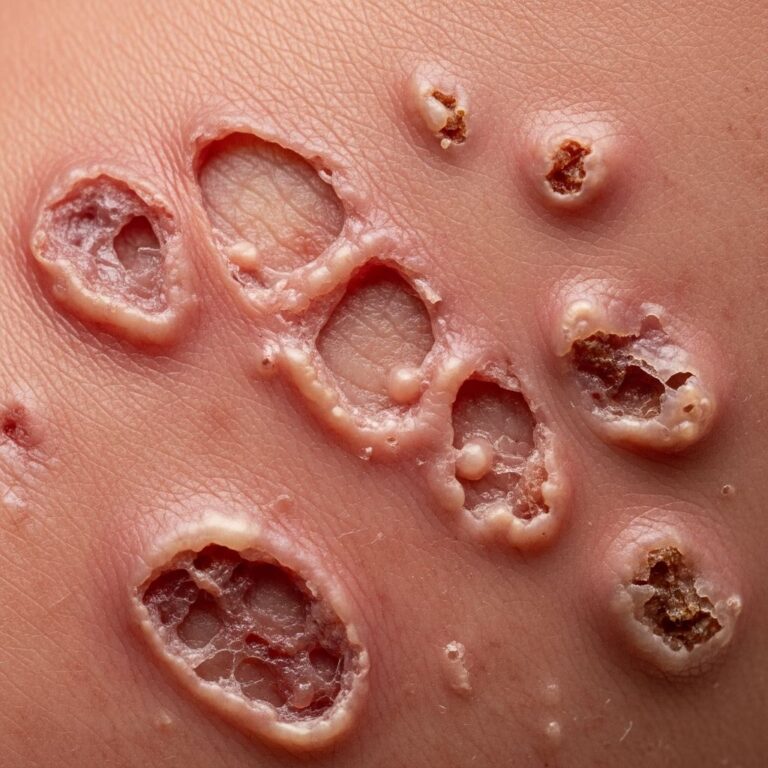
Dermatological Manifestations of Down Syndrome
Exploring skin conditions common in Down syndrome, from infancy transient changes to chronic disorders in adults.
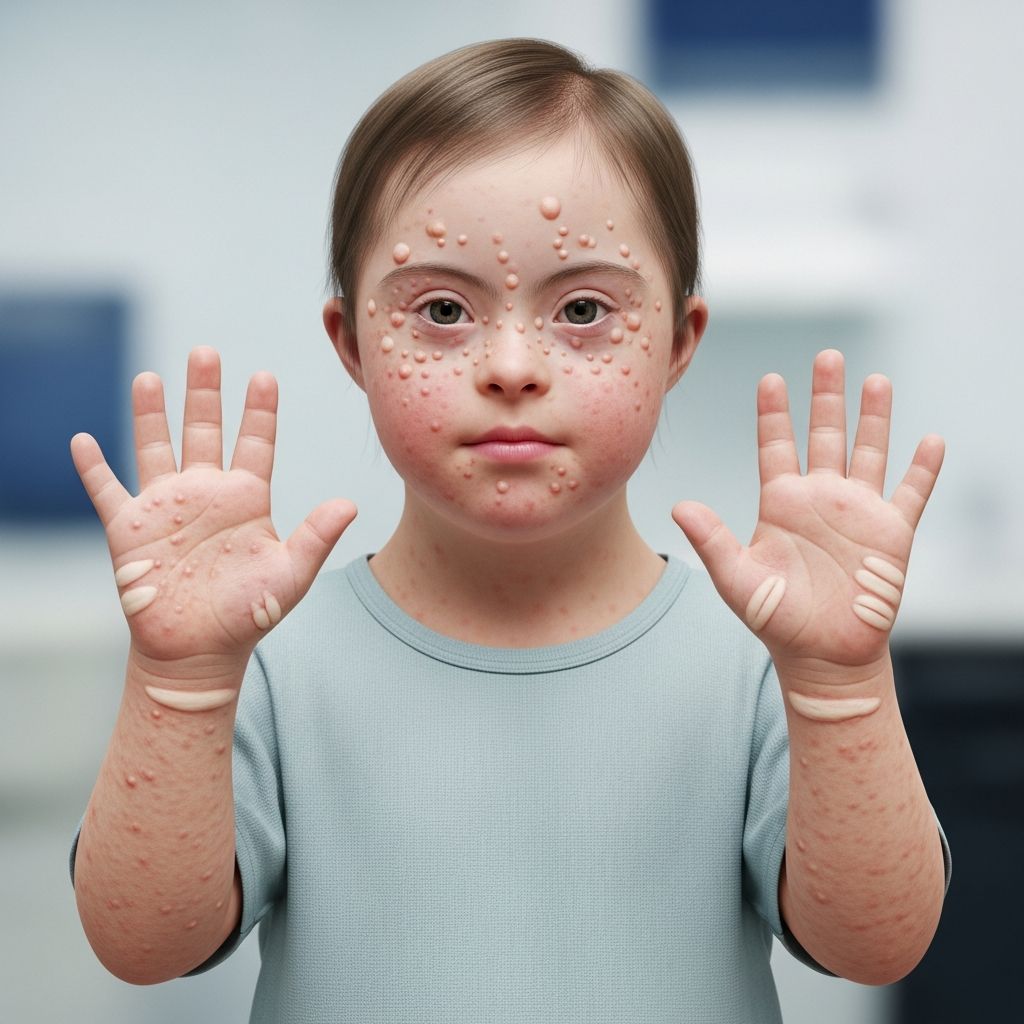
A variety of dermatological disorders are more common in individuals with Down syndrome due to immune dysregulation, genetic factors on chromosome 21, and inefficient physiological processes. Defective regulation of genes on chromosome 21 contributes to conditions like keratosis pilaris, alopecia areata, and vitiligo, while immune issues increase susceptibility to infections.
What is Down Syndrome?
Down syndrome, also known as trisomy 21, is a genetic condition caused by the presence of an extra chromosome 21. It affects multiple systems, including the skin, leading to characteristic dermatological features that vary by age. Transient physiological changes are common in infancy, while chronic conditions emerge later.
Who Gets Dermatological Manifestations of Down Syndrome?
These skin manifestations affect nearly all individuals with Down syndrome, with prevalence increasing with age. Newborns show vascular changes like acrocyanosis, infants develop cutis marmorata, and older children and adults experience dry skin, eczema, and keratoderma. Studies report folliculitis in 30.7%, seborrheic dermatitis in 26.7%, and hidradenitis suppurativa in 22.8% of patients seen by dermatologists.
Related Information
Transient Physiological Cutaneous Manifestations
During infancy, newborns with Down syndrome exhibit several transient skin changes due to poor peripheral circulation and altered vascular responses. These resolve as the child grows but are more pronounced than in typical infants.
Acrocyanosis
Acrocyanosis presents as bluish discoloration of the hands and feet, resulting from vasoconstriction in response to cold. It is common in newborns with Down syndrome and typically fades within months.
Cutis Marmorata
This lacy, mottled reticulated pattern on the skin appears when exposed to cooler temperatures, stemming from immature vascular autoregulation. It is frequently observed on the legs and trunk in infants with Down syndrome.
Livedo Reticularis
Similar to cutis marmorata but less intense, livedo reticularis features a net-like purple pattern primarily on the lower limbs, exacerbated by cold. It may persist longer in Down syndrome.
Skin Signs of Premature Ageing
Individuals with Down syndrome often show early signs of ageing, including greying or thinning hair, skin atrophy, wrinkles (rhytids), and lentigines (age spots). Overexpression of superoxide dismutase on chromosome 21 accelerates these changes.
General Skin Changes
Newborn skin in Down syndrome is soft and velvety but becomes rough, dry, and inelastic during school years. Adolescents and adults develop chronic xerosis, patchy lichenification, and reduced elasticity. A study found xerosis cutis in 49% of cases.
Chronic Skin Conditions
Chronic issues arise from immune deficiency, autoimmunity, infections, and keratinization defects. Dry skin predisposes to dermatitis.
Xerosis and Ichthyosis
Dry skin (xerosis) is universal, progressing to ichthyosis vulgaris-like scaling. Emollients are essential for management.
Related Stories



Atopic Eczema
Prevalence is around 5%, matching the general population, with red, scaly, itchy patches on cheeks, ears, knees, and elbows. Malar erythema is prominent.
Irritant and Allergic Contact Dermatitis
Dry skin heightens risk; common triggers include soaps and metals.
Seborrhoeic Dermatitis
Affects up to one-third, with yellow-brown scales on scalp, face, chest, and back, often linked to Malassezia folliculitis. Prevalence is 26.7% in dermatology cohorts.
Palmoplantar Keratoderma
Thickened palms and soles impact up to 40-75% over age 5. Hyperkeratosis on elbows and knees is also common.
Keratosis Pilaris
Rough, follicular papules on arms, thighs, cheeks, and buttocks appear in adolescence. Associated with Down syndrome in 15% of cases; treat with emollients, keratolytics, retinoids, or calcipotriene.
Psoriasis
Incidence 0.5-8%, potentially severe in immunocompromised states. Affects 8.9% overall.
Anetoderma
Flaccid skin patches with herniation, often on trunk and arms, due to elastolysis from folliculitis.
Dermatitis Herpetiformis
Rare, pruritic vesicular rash on extensors, linked to celiac disease. Biopsy shows IgA deposits; screen for celiac.
Hidradenitis Suppurativa
Pustules, nodules, and abscesses in flexures; poor antibiotic response, seen in 22.8%.
Infections and Infestations
Immune dysregulation predisposes to frequent infections.
Bacterial Infections
Folliculitis is most common (30.7%), alongside cellulitis and impetigo.
Fungal Infections
Tinea pedis and onychomycosis are prevalent (9.9%), often with nail dystrophy.
Parasitic Infestations
Scabies and pediculosis occur more frequently due to care challenges.
Autoimmune Conditions
- Alopecia Areata: Patchy hair loss, higher incidence.
- Vitiligo: Depigmented patches from melanocyte autoimmunity.
- Lichen Planus: Rare, pruritic papules.
Connective Tissue Disorders
Elastin defects lead to cutis laxa-like changes and easy bruising.
Malignant and Premalignant Conditions
Rare, but includes basal cell carcinoma and melanoma in situ. Monitor chronic ulcers and actinic damage.
Management and Treatment
- Use fragrance-free emollients daily for xerosis.
- Topical steroids for eczema; antifungals for seborrhea.
- Keratolytics (urea, lactic acid) for keratoderma and keratosis pilaris.
- Antibiotics for infections; refer refractory cases to dermatology.
- Screen for comorbidities like celiac in dermatitis herpetiformis.
| Age Group | Top Conditions |
|---|---|
| 0-12 years | Eczematous dermatitis, alopecia areata, xerosis |
| 13-17 years | Hidradenitis suppurativa, folliculitis, seborrheic dermatitis |
| 18+ years | Folliculitis, seborrheic dermatitis, xerosis |
Frequently Asked Questions
Is dry skin common in Down syndrome?
Yes, xerosis affects most individuals, worsening with age; daily moisturizing is key.
How is eczema managed in children with Down syndrome?
With emollients, topical corticosteroids, and avoiding irritants; malar involvement is typical.
Why are infections more frequent?
Due to immune dysregulation from trisomy 21.
Does keratosis pilaris resolve?
It may improve with treatment but often persists; use keratolytics.
Are skin cancers more common?
Rare, but vigilance is needed for chronic lesions.
div class=’ct-references’>References
- Dermatological manifestations of Down syndrome — DermNet NZ. 2023. https://dermnetnz.org/topics/dermatological-manifestations-of-down-syndrome
- Dermatologic conditions in Down syndrome — PubMed (J Am Acad Dermatol). 2020-07-07. https://pubmed.ncbi.nlm.nih.gov/32519435/
- Skin Problems and Down Syndrome — UCSF (YouTube transcript). 2019-06. https://www.youtube.com/watch?v=PPMoOR8-9Lw
- Skin conditions & Down syndrome: Teenagers — Society for Pediatric Dermatology. 2023. https://pedsderm.net/site/assets/files/25974/spd_ds_life_stages_handout_teenagers.pdf
- Dermatologic Conditions in Down Syndrome — PeDRA. 2024. https://pedraresearch.org/resources/dermatologic-conditions-in-down-syndrome/
- Dermatological manifestations of Down syndrome — DermNet NZ. 2023. https://dermnetnz.org/topics/dermatological-manifestations-of-down-syndrome
- Dermatologic conditions in Down syndrome — PubMed (J Am Acad Dermatol). 2020-07-07. https://pubmed.ncbi.nlm.nih.gov/32519435/
- Skin Problems and Down Syndrome — UCSF (YouTube transcript). 2019-06. https://www.youtube.com/watch?v=PPMoOR8-9Lw
- Skin conditions & Down syndrome: Teenagers — Society for Pediatric Dermatology. 2023. https://pedsderm.net/site/assets/files/25974/spd_ds_life_stages_handout_teenagers.pdf
- Dermatologic Conditions in Down Syndrome — PeDRA. 2024. https://pedraresearch.org/resources/dermatologic-conditions-in-down-syndrome/


Read full bio of medha deb