Dermatophytide Reactions: What You Need To Know
Understanding allergic skin reactions triggered by distant fungal infections like tinea pedis.
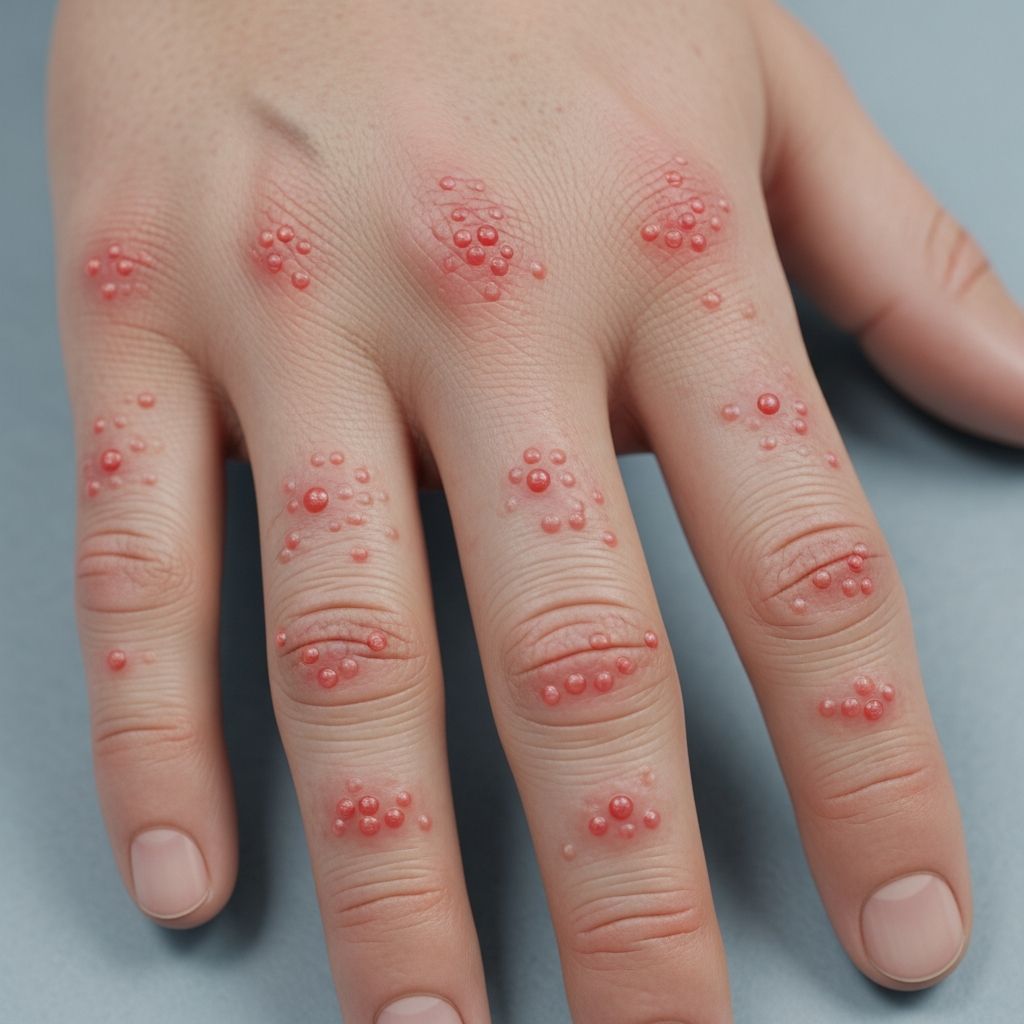
A dermatophytide reaction, also known as an id reaction or ide reaction, is an acute, non-infectious eczematous rash triggered by an inflammatory fungal infection (dermatophytosis or tinea) at a distant body site. This hypersensitivity response manifests as itchy bumps, vesicles, or blisters remote from the primary infection, often on the hands, feet, trunk, or limbs, and resolves once the original tinea is treated.
What is a dermatophytide reaction?
Dermatophytide reactions represent a form of autoeczematisation where the body’s immune system reacts allergically to fungal antigens from a primary dermatophyte infection elsewhere. First described by Whitfield in 1921 as ‘auto-intoxication,’ these reactions typically emerge within two weeks of the initial inflammation, appearing symmetrical and localised but occasionally generalised. The rash mimics acute dermatitis, featuring pruritic vesicles, papules, or plaques, but crucially lacks fungal elements upon microscopy or culture, distinguishing it from direct extension of the infection.
Commonly associated with tinea pedis (athlete’s foot), these reactions are immunologically mediated, involving primed T-lymphocytes and pro-inflammatory cytokines like IL-25 and IL-33 produced by keratinocytes. The severity often correlates inversely with distance from the primary site: closer proximity yields more intense eruptions.
Who gets dermatophytide reactions?
Dermatophytide reactions affect individuals with underlying dermatophytosis, particularly those with heightened delayed-type hypersensitivity to fungal antigens. They are more prevalent in cases of zoophilic dermatophytes like Trichophyton mentagrophytes (from animal sources), which provoke stronger inflammatory responses compared to anthropophilic species like T. rubrum (human-to-human transmission).
Patients with tinea pedis, tinea capitis, or inflammatory variants such as kerion are at higher risk. Immunocompetent adults and children exposed to fungal sources—such as communal showers, animals, or soil—may develop these reactions, especially if untreated or during initial antifungal therapy, which can paradoxically exacerbate the id response.
Causes of dermatophytide reactions
The primary cause is an inflammatory dermatophyte infection, most frequently tinea pedis caused by Trichophyton species. Other triggers include:
- Tinea infections at various sites: feet (pedis), groin (cruris), scalp (capitis), or beard (barbae).
- Zoophilic fungi eliciting strong hypersensitivity, e.g., T. mentagrophytes var. mentagrophytes from rodents.
- Initiation of systemic antifungals, causing transient worsening due to antigen release.
While classically linked to fungi, broader id reactions stem from stasis eczema, viral infections (e.g., molluscum), infestations (lice, larva migrans), or contact dermatitis, but true dermatophytides require a proven fungal source.
Clinical features of dermatophytide reactions
The morphology varies but typically presents as:
- Vesicular eczema: Small, fluid-filled blisters on palms, soles, or sides of fingers, resembling dyshidrotic eczema (symmetrical dyshidrotic mycid).
- Papular or urticarial eruptions: Itchy red bumps, plaques, or hives on limbs, trunk, or face.
- Rare variants: Annular erythema, erythema nodosum, or deep bruise-like nodules on shins; target-like lesions or lichenoid patterns with tinea capitis.
Symptoms include intense pruritus, symmetry, and proximity-related severity. Onset is acute, 1-2 weeks post-primary infection flare.
Related Stories



| Common Sites | Morphology | Associated Primary Infection |
|---|---|---|
| Palms/Hands | Vesicles, dyshidrotic | Tinea pedis |
| Soles/Feet | Papules, eczema | Tinea pedis/cruris |
| Trunk/Limbs | Urticaria, plaques | Tinea capitis |
| Face | Scattered bumps | Scalp/foot tinea |
Diagnosis of dermatophytide reactions
Diagnosis hinges on clinical correlation and mycological confirmation of the primary site:
- Identify primary infection: Microscopy (KOH prep) and culture from scrapings showing dermatophytes (e.g., hyphae, spores).
- Examine id site: Negative microscopy/culture for fungi, confirming sterile inflammation.
- Meet criteria for true dermatophytide:
- Proven dermatophytosis precedes the reaction.
- Id rash remote and fungus-free.
- Rash resolves with primary treatment.
Differential includes direct tinea spread, contact dermatitis, pompholyx, or bacterial superinfection. Skin biopsy rarely needed but shows spongiotic dermatitis without fungi.
Criteria for a genuine dermatophytide
To classify as authentic, the reaction must satisfy three key tenets:[11 from 1]
- A confirmed primary dermatophyte infection antedating the rash.
- The secondary eruption distant from primary site, lacking fungal hyphae/arthrospores on exam.
- Complete resolution upon successful antifungal eradication of the source.
These are uncommon with anthropophilic tinea pedis in Western settings but rise with zoophilic strains.
Treatment of dermatophytide reactions
Management prioritises the primary fungal infection while symptomatically addressing the id rash:
- Antifungals for primary site: Topical (e.g., terbinafine cream) for localised tinea; oral (terbinafine, itraconazole) for extensive/nail/scalp involvement. Continue despite initial id flare.
- Symptomatic id relief: Potent topical corticosteroids (e.g., clobetasol) for itch/inflammation; emollients; oral antihistamines.
- Severe cases: Short-course oral prednisone (0.5-1mg/kg) if widespread.
Avoid stopping antifungals prematurely. Resolution follows primary cure, typically 2-4 weeks.
What is the outcome for dermatophytide reactions?
Prognosis is excellent with prompt primary treatment. Id rashes self-limit as antigens clear, rarely scarring unless secondarily infected. Recurrence risks persist with re-exposure or incomplete therapy. Patient education on foot hygiene prevents tinea pedis relapse.
Frequently Asked Questions (FAQs)
Q: Can antifungal treatment worsen dermatophytide reactions?
A: Yes, initiating therapy can trigger or intensify id reactions due to antigen release, but continue treatment as the rash will resolve.
Q: Is a dermatophytide reaction contagious?
A: No, the id rash is sterile and non-infectious; only the primary tinea spreads via contact.
Q: How long do dermatophytide reactions last?
A: Typically 1-4 weeks, paralleling primary infection clearance.
Q: Who is most at risk for dermatophytides from tinea pedis?
A: Those with zoophilic Trichophyton infections, e.g., from pets, showing inflammatory foot tinea.
Q: Can id reactions occur from non-fungal causes?
A: Yes, broader id reactions link to eczema, viruses, or parasites, but dermatophytides specify fungal triggers.
References
- What is the ID reaction? – Foot Expert — Foot Expert. 2023. https://www.foot.expert/post/idreaction
- Dermatophytid – Knowledge and References — Taylor & Francis. 2020. https://taylorandfrancis.com/knowledge/Medicine_and_healthcare/Dermatology/Dermatophytid/
- [Dermatophyte : Current situation] — PubMed (Mycoses). 2017-02. https://pubmed.ncbi.nlm.nih.gov/28116455/
- Id reactions (syn. ide reactions; autoeczematisation) — Primary Care Dermatology Society (PCDS). 2022-12-19. https://www.pcds.org.uk/clinical-guidance/tinea-dermatophytide-reactions-id-or-ide-reactions
- Dermatophytid Reaction – Skin Disorders — Merck Manuals (Consumer). 2023. https://www.merckmanuals.com/home/skin-disorders/fungal-skin-infections/dermatophytid-reaction
- Dermatophytide reactions — DermNet NZ. 2003 (updated). https://dermnetnz.org/topics/dermatophytide-reactions
- Dermatophytid Reaction – Dermatologic Disorders — Merck Manuals (Professional). 2023. https://www.merckmanuals.com/professional/dermatologic-disorders/fungal-skin-infections/dermatophytid-reaction
Similar Articles








Read full bio of Sneha Tete