Dermatoscopes And Cameras: Essential Teledermatology Guide
Essential tools for teledermatology in skin cancer detection: mastering dermatoscopes, cameras, and imaging techniques.
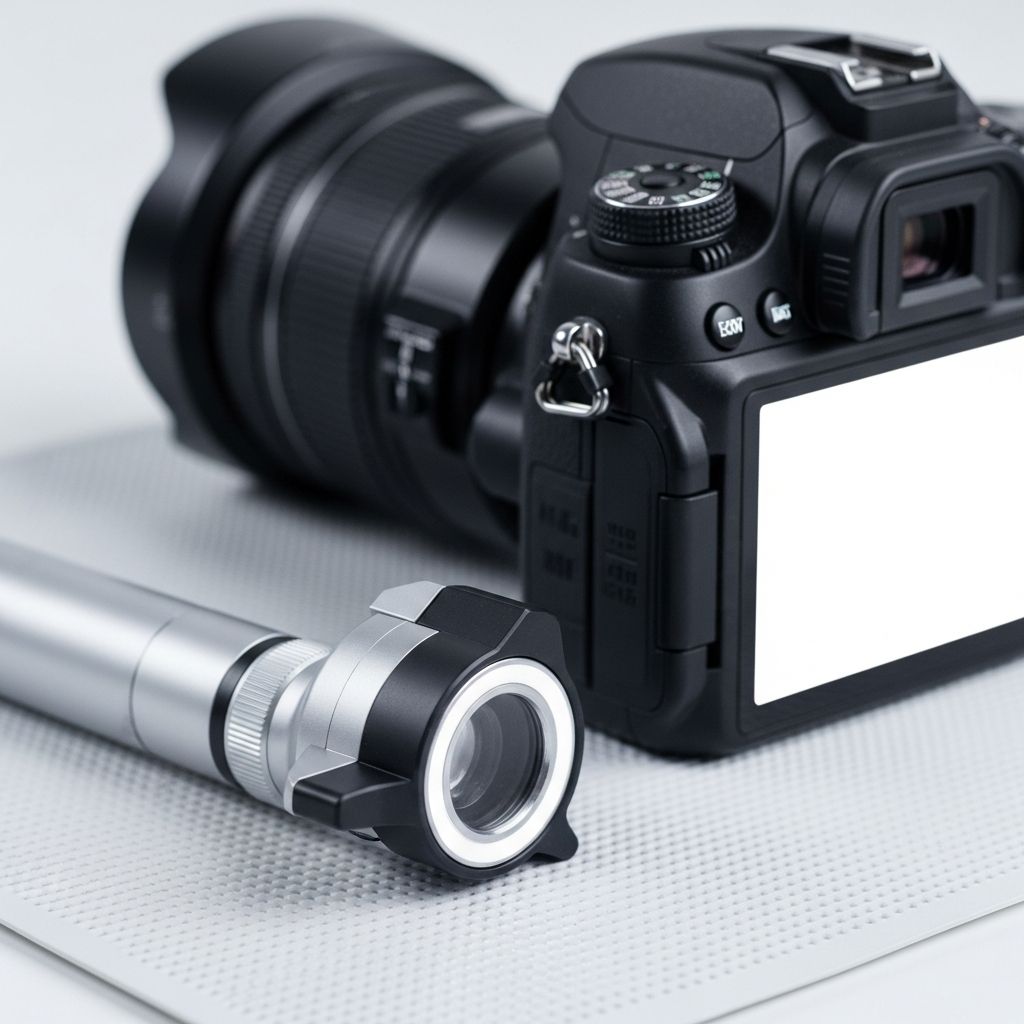
In teledermatology, particularly for skin cancer assessment, high-quality imaging is paramount. Dermatoscopes and specialized cameras enable visualization of subsurface skin structures, aiding in the accurate diagnosis of lesions like melanoma and basal cell carcinoma. This article details equipment options, techniques, and best practices for capturing diagnostic images.
Introduction to Dermoscopy in Teledermatology
Dermoscopy, also known as dermatoscopy or epiluminescence microscopy, uses a handheld device with magnification and polarized light to examine skin lesions beyond what the naked eye can see. In teledermatology, dermoscopy images transmitted via store-and-forward methods achieve diagnostic accuracy comparable to in-person exams, with studies showing up to 100% sensitivity for melanoma detection. Teledermoscopy integrates dermoscopy with telemedicine, reducing unnecessary biopsies and expediting referrals. New Zealand’s Virtual Lesion Clinic exemplifies this, using nurse-captured dermoscopy for dermatologist review, significantly shortening diagnosis times.
Dermatoscopes
Dermatoscopes are indispensable for revealing key features like pigment networks, vascular patterns, and regression structures critical for skin cancer diagnosis.
Types of Dermatoscopes
- Handheld Contact Dermatoscopes: Require immersion fluid (e.g., ultrasound gel) for optical contact. Models like Heine Delta 20T offer 10-24x magnification with LED lighting for stable illumination.
- Polarized Light Dermatoscopes: Non-contact option using cross-polarized light to visualize subsurface structures without fluid. Useful for vascular lesions; examples include DermLite DL4 with 10x magnification and rechargeable battery.
- Hybrid Models: Switch between contact and non-contact modes, e.g., DermLite 4T, ideal for versatile teledermatology use.
Experts recommend polarized devices for teledermatology due to ease of use and consistent image quality. Diagnostic concordance improves with dermoscopic images, matching face-to-face evaluations.
Key Features to Consider
| Feature | Importance | Examples |
|---|---|---|
| Magnification | 10-20x for lesion detail | 10x standard, up to 24x advanced |
| Light Source | LED for color accuracy, polarization for subsurface view | Cross-polarized, UV options |
| Battery Life | Rechargeable for mobility | 8+ hours |
| Camera Compatibility | Universal clips, adapters |
Select based on workflow: primary care favors portable hybrids; specialists prefer high-end models.
Smartphone Adapters and Attachments
Smartphones transform into dermatoscopes with adapters, democratizing teledermoscopy. Attachments clip onto phone cameras, aligning dermatoscope optics precisely.
- Universal Clips: Fit most smartphones (e.g., DermLite attachments for iPhone/Samsung).
- Mobile Dermoscopes: Integrated units like iDScope or DermLite Mobile+ provide 10-20x magnification via app capture.
- DIY Solutions: Basic clips with polarized lenses, though less consistent.
Studies confirm mobile teledermoscopy yields 90% specificity for nonmelanoma cancers, with 74% of lesions managed in primary care without specialist visits. Apps like SkinVision or custom EMR integrations streamline image upload and annotation.
Digital Cameras and Macro Lenses
For higher resolution, DSLR/mirrorless cameras with macro lenses excel in clinical and tele settings.
- Recommended Setup: Canon EOS R series or Nikon Z with 100mm macro lens (f/2.8), offering 1:1 reproduction ratio.
- Macro Rings: LED-lit rings for even illumination, simulating dermatoscope light.
- Portable Options: Mirrorless like Sony A7 with adapters for dermatoscope attachment.
Related Stories



Macro photography captures full lesions with scales for size reference, essential for triage. Teledermatology networks report halved surgical wait times using such images for pre-surgical planning.
Capturing High-Quality Dermoscopy Images
Image quality dictates diagnostic reliability. Follow standardized protocols:
- Preparation: Clean lesion, apply thin gel layer for contact mode; ensure good lighting.
- Positioning: Hold steady at 90 degrees, use focus ring for sharpness. Capture polarized and non-polarized views.
- Framing: Center lesion, include 2-5mm margin, add ruler for scale.
- Multiple Angles: 3-5 images per lesion: overview, close-up dermoscopy, vascular focus.
- Settings: Macro mode, high resolution (12MP+), white balance auto, ISO 100-400.
Avoid blur by using tripods or selfie-sticks. Histological correlation is higher with multi-view teledermoscopy.
Image Requirements for Teledermatology
Optimal images facilitate accurate remote assessment:
- Resolution: Minimum 2MP, ideally 8-12MP.
- Format: JPEG for compatibility, RAW for post-processing.
- Metadata: Embed patient ID, date, lesion location anonymously.
- Series: Clinical macro + dermoscopy + total body if multiple lesions.
Teledermatology pathways like New Zealand’s VLC mandate dual imaging, achieving 83-100% accuracy vs. histopathology.
Advanced Imaging Systems
Institutional setups use:
- Video Dermatoscopes: MoleMax or FotoFinder for automated mapping and AI analysis.
- Confocal Microscopy: VivaScope for cellular-level imaging, bridging dermoscopy and biopsy.
- Whole-Body Photography: Systems tracking changes over time, reducing biopsies by 30-50%.
AI integration flags malignant features, enhancing teledermoscopy efficiency.
Tips for Optimal Imaging
- Lighting Consistency: Use device LEDs; avoid flash artifacts.
- Patient Comfort: Explain process, use non-contact for sensitive areas.
- Compression: Store-and-forward limits file size to 5MB/image.
- Training: Nurses/GPs achieve expert-level images post short courses.
- Quality Check: Review for focus, color fidelity before submission.
These practices minimize rereferrals, as seen in teledermatology networks halving wait times.
Common Pitfalls and Solutions
| Pitfall | Issue | Solution |
|---|---|---|
| Blurry Images | Movement, poor focus | Stabilize device, use timer |
| Color Distortion | Incorrect white balance | Calibrate with gray card |
| Insufficient Margin | Cropped lesion edge | Zoom out slightly |
| Reflection/Glare | Poor polarization | Switch modes, angle light |
| Low Resolution | Compressed files | Capture in highest quality |
Addressing these ensures diagnostic equivalence to in-clinic exams.
Frequently Asked Questions (FAQs)
What is the best dermatoscope for beginners?
Polarized handheld like DermLite DL4: portable, non-contact, smartphone-compatible.
Can smartphones replace professional cameras?
Yes for triage; attachments provide 90% accuracy, though DSLRs offer superior detail for complex cases.
How does teledermoscopy improve skin cancer outcomes?
Reduces time to excision (often <50% of traditional), cuts unnecessary referrals, retains 74% management in primary care.
Is training required for non-dermatologists?
Yes; short protocols yield high-quality images, as in VLC where nurses match specialist standards.
What file formats work for teledermatology platforms?
JPEG/PNG under 5MB; include metadata for triage efficiency.
References
- Teledermatology for Enhancing Skin Cancer Diagnosis and Management — JMIR Dermatology. 2023-01-31. https://derma.jmir.org/2023/1/e45430/
- A Review of Telemedicine’s Role in Skin Cancer Care — PMC/NIH. 2024-04-15. https://pmc.ncbi.nlm.nih.gov/articles/PMC11065900/
- Teledermatology: From Prevention to Diagnosis of Nonmelanoma Skin Cancers — PMC/NIH. 2011-07-28. https://pmc.ncbi.nlm.nih.gov/articles/PMC3139121/
- Teledermatology and Mobile Applications in the Management of Patients with Skin Cancer — Medical Journals Sweden. 2023-10-05. https://www.medicaljournals.se/acta/content/html/10.2340/00015555-2718
- The Use of Teledermatology for Skin Cancer Referrals — Cureus. 2024-06-12. https://www.cureus.com/articles/291533-the-use-of-teledermatology-for-skin-cancer-referrals-a-retrospective-study-in-a-single-tertiary-centre
Similar Articles








Read full bio of medha deb