Dermatosis Papulosa Nigra: Causes, Diagnosis, and Treatment
Understanding DPN: A comprehensive guide to this benign skin condition affecting darker skin tones.
Dermatosis Papulosa Nigra: Understanding This Common Skin Condition
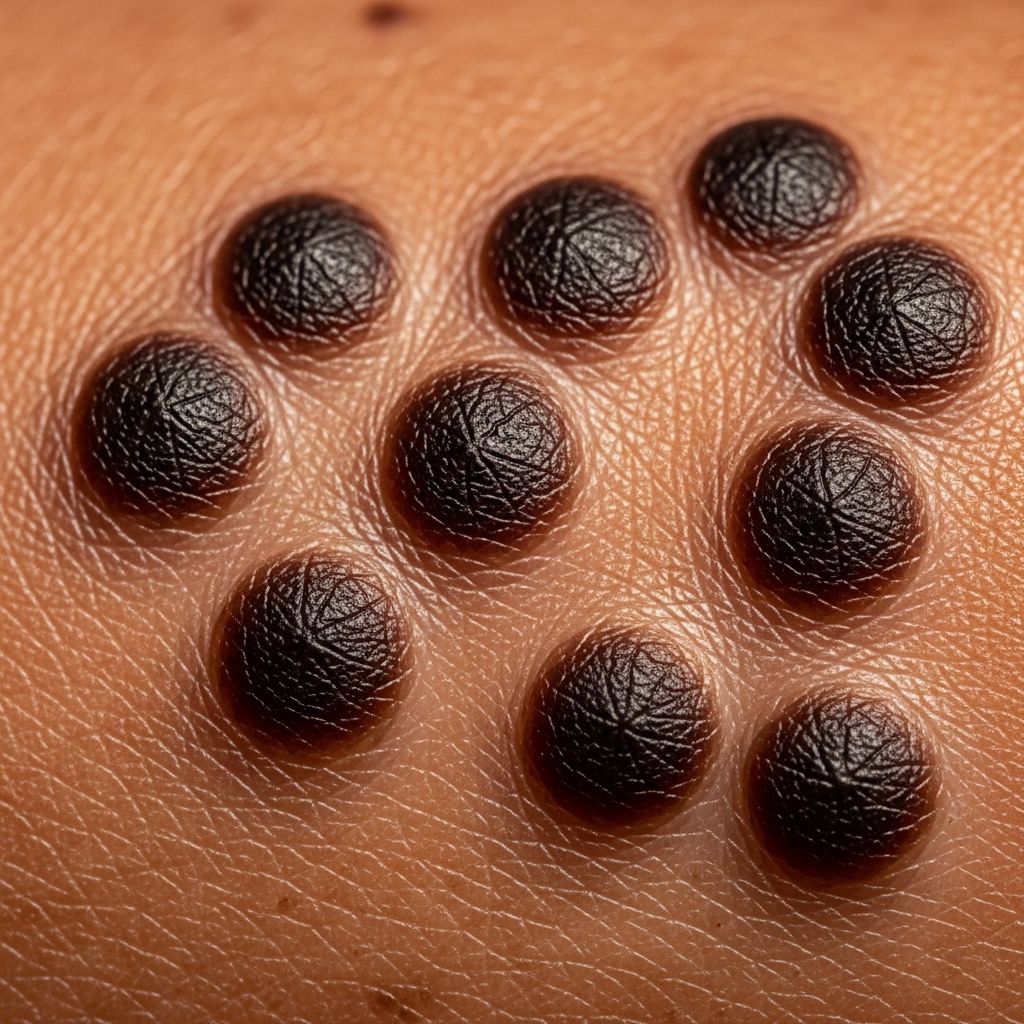
Dermatosis papulosa nigra (DPN) is a benign epidermal growth that presents as small, dark, raised bumps or papules, typically appearing on the face and neck. This common skin condition predominantly affects individuals with darker skin tones and is characterized by the development of hyperpigmented or skin-colored lesions. While DPN poses no health risks and does not require medical intervention for health reasons, many individuals seek treatment for cosmetic purposes due to the appearance and progressive nature of the lesions.
Clinical Presentation and Epidemiology
DPN manifests as multiple small, dark bumps that vary in size and typically measure a few millimeters in diameter. The lesions most commonly appear on the face, particularly on the cheeks, forehead, and around the eyes, though they can also develop on the neck and upper trunk. While some individuals develop only a few lesions, others may develop numerous bumps that become more prominent over time. The condition tends to become more noticeable and widespread with advancing age, which often motivates patients to seek treatment.
The prevalence of DPN is significantly higher in individuals with darker skin pigmentation, particularly in people of African, Asian, and Hispanic descent. The condition affects both men and women equally and typically begins to manifest in the second to fourth decades of life.
Etiology and Pathogenesis
The exact cause of DPN remains incompletely understood, though researchers have identified several contributing factors. A genetic component appears to play a significant role, as the condition frequently runs in families, suggesting familial predisposition. Some researchers propose that DPN may result from an overgrowth of keratinocytes (skin cells) or an increase in melanin production, the pigment responsible for skin coloration. Additionally, environmental and hormonal factors may contribute to lesion development.
Sun exposure is believed to play a role in promoting the development of DPN lesions, though the exact mechanism remains unclear. Hormonal changes may also influence lesion formation and progression in some individuals. The combination of genetic susceptibility and environmental triggers likely explains the variable presentation and progression of DPN among affected individuals.
Diagnosis
Diagnosis of DPN is primarily clinical, based on the characteristic appearance and distribution of lesions. A dermatologist typically evaluates the small, dark, raised bumps on the face and neck to confirm the diagnosis. In most cases, the clinical presentation is distinctive enough to establish diagnosis without additional testing.
Dermoscopic examination may be performed to assess the lesions more closely and rule out other conditions. The benign nature of DPN and its characteristic appearance usually allow for straightforward diagnosis without requiring biopsy or other invasive procedures.
Treatment Considerations
Dermatosis papulosa nigra lesions are generally best left untreated, particularly given the potential complications associated with destructive treatment modalities. However, many patients pursue treatment for cosmetic reasons or when lesions become irritated. When treatment is undertaken, dermatologists must exercise caution to minimize the risk of adverse effects, particularly in darker skin tones where complications can be more noticeable.
Potential complications of locally destructive treatment include increased pigmentation (hyperpigmentation), decreased pigmentation (hypopigmentation), scarring, and keloid formation. Treatment should be kept superficial to minimize these risks. The progressive nature of DPN means that even after successful treatment, new lesions may continue to develop over time.
Related Stories



Surgical Treatment Options
Several surgical techniques are available for DPN removal, typically performed using topical anesthesia:
- Curettage: This procedure involves scraping away the bumps using a small scooping surgical instrument. It is one of the most common treatment approaches and is relatively straightforward to perform. The treated area typically heals within a few weeks with minimal scarring when performed properly.
- Cryotherapy: Also known as freezing therapy, cryotherapy involves using liquid nitrogen to freeze and destroy DPN lesions. This treatment is relatively quick, can be performed in a dermatologist’s office, and is one of the most affordable options available. The treated area may become red and swollen after the procedure, and a scab typically forms and falls off within a few weeks.
- Electrodesiccation and Curettage: This combined approach involves using a small probe with an electric current to burn away the bumps, followed by curettage to remove the treated tissue. Electrodesiccation alone may also be performed as a standalone treatment modality.
- Snip Excision: This technique involves using very sharp, sterile scissors to remove the lesions. It is a simple procedure that can be performed with topical anesthesia and minimal discomfort.
- Surgical Excision: In some cases, dermatologists may recommend surgically removing DPN lesions using a scalpel or other surgical instruments. Surgical excision may be performed under local anesthesia to minimize discomfort, and the treated area may be closed with sutures or adhesive strips. The wound typically heals within a few weeks, leaving minimal scarring when appropriate wound care is provided.
Laser Treatment Options
Various laser therapies have demonstrated efficacy in treating DPN lesions and are often preferred due to their precision and reduced scarring risk compared to some surgical techniques:
- Nd:YAG Laser: Long-pulsed neodymium-doped yttrium aluminum garnet lasers have recently been reported to achieve excellent cosmetic results. Studies demonstrate that Nd:YAG laser therapy can provide a 75 percent improvement in the number of bumps and their sizes, with optimal results typically achieved after two treatment sessions. This laser type works by targeting and breaking down melanin in the lesions, causing them to fade or disappear.
- Carbon Dioxide Laser: A 2016 study found that carbon-dioxide laser therapy is a safe and effective option for DPN with a low chance of recurrence. This laser type delivers precise energy to treat lesions while minimizing damage to surrounding tissue.
- KTP Laser: Potassium titanyl phosphate (KTP) laser therapy, often used in combination with Nd:YAG laser, represents another treatment option for DPN lesions.
- PDL Laser: Pulsed dye laser therapy is also considered a safe and effective treatment to remove DPN growths, though optimal results typically require multiple treatment sessions.
Laser therapy may require multiple sessions for optimal results, and the treated area may become red and swollen after the procedure. However, laser treatments generally leave little or no scarring and have proven highly effective in reducing the appearance of DPN.
Topical Treatments
Topical treatments such as retinoids or hydroquinone may be recommended to help fade or shrink DPN lesions gradually. These treatments represent a less invasive alternative to surgical or laser procedures but may require consistent application over an extended period and can take longer to show visible results. Patients should follow dermatologist instructions carefully and avoid overuse, as these medications can cause skin irritation if not used correctly.
Treatment Outcomes and Recurrence
While various treatment modalities can effectively reduce or eliminate existing DPN lesions, recurrence is possible, and treatments may carry risks including scarring or pigmentation changes where the skin may heal darker or lighter than the surrounding skin. Over time, patients often continue to develop new spots of DPN regardless of prior treatment, necessitating possible repeat procedures in the future.
The choice of treatment should be individualized based on the patient’s preferences, skin type, number and size of lesions, and tolerance for potential side effects. Consultation with an experienced dermatologist is essential to determine the most appropriate treatment approach.
Considerations for Darker Skin Tones
When removing DPN lesions, medical professionals must take care to avoid scarring and loss of pigment (hypopigmentation) or unwanted pigmentation increases (hyperpigmentation) that can occur with certain aggressive treatments, particularly in individuals with darker skin tones. The selection of appropriate treatment technology and technique is crucial to minimize these risks and achieve optimal cosmetic outcomes in this population.
Prognosis and Long-Term Management
DPN is a benign condition that does not pose any health risks and does not require treatment for medical reasons. However, the progressive nature of the condition means that lesions typically increase in number and size over time. Many individuals choose to undergo treatment for cosmetic reasons or when lesions become irritated or bothersome. Regular follow-up with a dermatologist is recommended to monitor for new lesion development and to plan additional treatment if desired.
Frequently Asked Questions
Q: Is dermatosis papulosa nigra dangerous or cancerous?
A: No, DPN is a benign, non-cancerous skin condition that poses no health risks. It does not have the potential to develop into skin cancer or cause any systemic health problems.
Q: Can DPN be prevented?
A: Since the exact cause of DPN is not fully understood, prevention is difficult. However, limiting sun exposure may help reduce the development of lesions, as sun exposure appears to play a role in DPN development.
Q: Will DPN come back after treatment?
A: Yes, recurrence is possible after treatment. Additionally, new DPN lesions often continue to develop over time, requiring repeat procedures if cosmetic concerns persist.
Q: What is the best treatment option for DPN?
A: The best treatment depends on individual factors including skin type, number of lesions, and personal preferences. Nd:YAG laser and carbon-dioxide laser treatments have shown excellent results with minimal scarring risk. Your dermatologist can help determine the most appropriate option for your specific situation.
Q: Are there any home remedies for DPN?
A: There are no established self-care guidelines or home remedies for DPN. Professional treatment by a dermatologist is necessary for effective removal of lesions.
Q: Why does DPN primarily affect people with darker skin?
A: The exact reason for the higher prevalence in individuals with darker skin is not completely understood, but it may relate to differences in melanin production and cellular behavior. Genetic factors also play an important role in predisposition to DPN.
References
- Dermatosis Papulosa Nigra: Understanding and Treating This Common Skin Condition — EderMed Group. 2024. https://edermgroup.com/dermatology-blog/dermatosis-papulosa-nigra-understanding-and-treating-this-common-skin-condition
- Dermatosis Papulosa Nigra — DermNet NZ. 2024. https://dermnetnz.org/topics/dermatosis-papulosa-nigra
- What Is Dermatosis Papulosa Nigra? — WebMD Medical Reference. 2023. https://www.webmd.com/skin-problems-and-treatments/what-is-dermatosis-papulosa-nigra
- Dermatosis Papulosa Nigra: Appearance, Causes, and Removal — Healthline Media. 2024. https://www.healthline.com/health/dermatosis-papulosa-nigra
- Dermatosis Papulosa Nigra — National Center for Biotechnology Information (NCBI) StatPearls. 2024. https://www.ncbi.nlm.nih.gov/books/NBK534205/
Similar Articles








Read full bio of Sneha Tete