Desmoid Tumors: Causes, Symptoms, and Treatment Options
Rare, locally aggressive fibroblastic tumours with no metastatic potential but significant local infiltration risks.
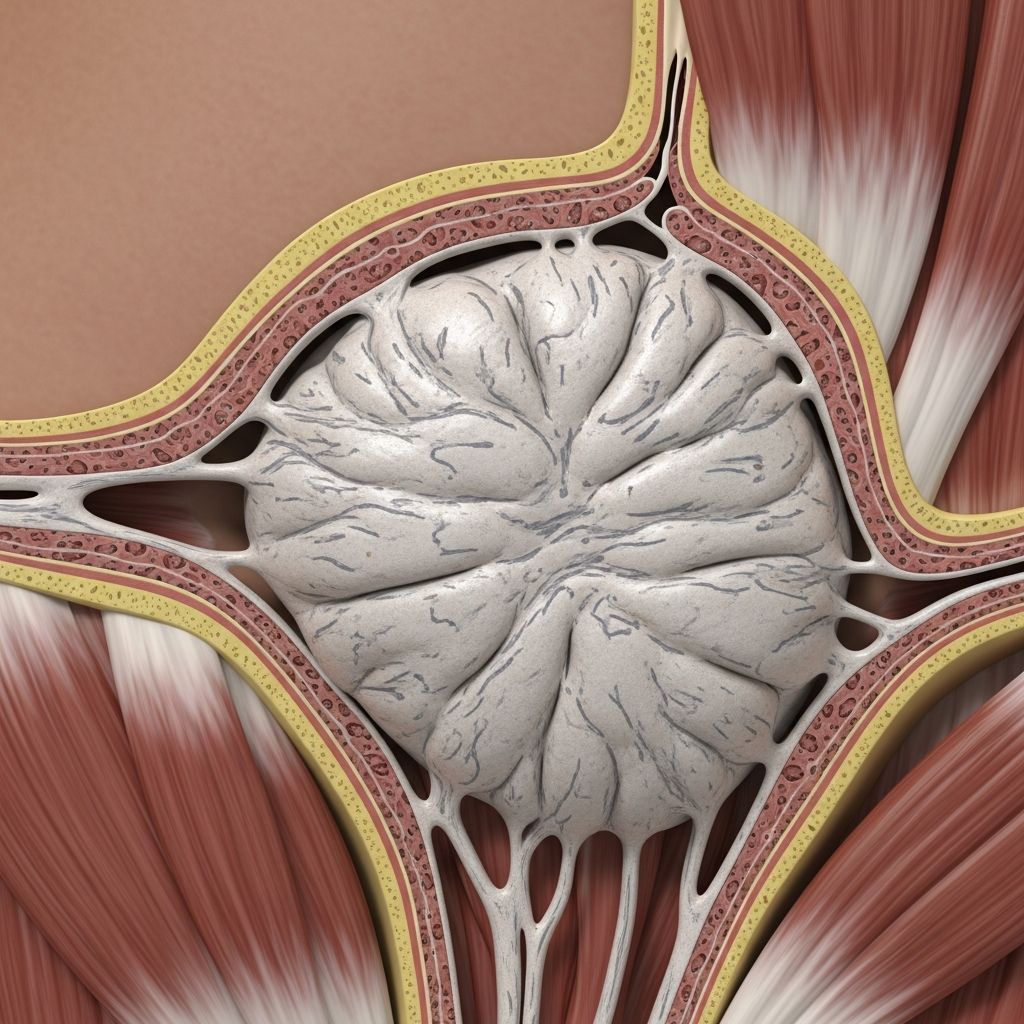
Desmoid tumours, also known as
aggressive fibromatosis
ordesmoid fibromatosis
, represent a rare group of mesenchymal neoplasms characterised by monoclonal fibroblastic proliferation. These tumours are locally infiltrative and destructive, yet they exhibit no risk of metastasis, distinguishing them from malignant sarcomas. Originating from myofibroblasts—fibroblast-like cells crucial for connective tissue formation and wound healing—desmoids can arise in various body sites, leading to significant morbidity through compression and invasion of adjacent structures.Introduction
Desmoid tumours form a heterogeneous spectrum of fibroblastic/myofibroblastic proliferations that lack metastatic potential but can cause substantial local damage due to their infiltrative growth pattern. Histologically, they appear poorly circumscribed, comprising slender spindle-shaped cells embedded in a collagenous matrix, often invading surrounding tissues without a true capsule. Electron microscopy reveals myofibroblastic features, suggesting an aberrant persistence of these cells beyond normal wound healing phases. Although benign, their unpredictable behaviour—ranging from spontaneous regression to relentless progression—necessitates a nuanced management approach, often involving multidisciplinary teams in specialised centres. The term ‘desmoid’ derives from the Greek ‘desmos’, meaning band or tendon, reflecting their tough, fibrous nature.
Demographics
Desmoid tumours are exceedingly rare, with an estimated incidence of 2–5 cases per million population annually. They predominantly affect individuals aged 15–60 years, showing a marked female predominance (approximately 2:1 female-to-male ratio), possibly linked to hormonal influences. In familial adenomatous polyposis (FAP) contexts, such as
Gardner syndrome
, desmoids occur in 10–15% of patients, often intra-abdominally and at younger ages. Sporadic cases constitute 85–90%, while FAP-associated cases account for the remainder. Geographically, no strong variations are noted, though higher reporting may occur in regions with advanced diagnostic capabilities. Pregnancy can exacerbate desmoids due to hormonal surges, trauma, and mechanical factors, with symptoms worsening in up to 20% of affected women.Causes
The pathogenesis of desmoid tumours centres on dysregulation of the Wnt/β-catenin signalling pathway. In sporadic cases (85–90%), somatic mutations in the
CTNNB1
gene (encoding β-catenin) predominate, particularly at codons 41 or 45, leading to β-catenin nuclear accumulation and unchecked fibroblastic proliferation. In FAP-associated desmoids (10–15%), germline mutations in theAPC
gene impair β-catenin degradation, similarly activating the pathway. Additional factors include:- Trauma or surgery: Reported in 20–25% of cases, preceding tumour development by months to years, potentially triggering myofibroblast activation.
- Hormonal influences: Oestrogen receptor positivity in many tumours suggests responsiveness to hormonal therapies; pregnancy and oral contraceptives may promote growth.
- Genetic predisposition: Strong family history in FAP/Gardner syndrome elevates risk; APC mutations distal to codon 1399 confer higher desmoid susceptibility.
- Notch pathway crosstalk: Emerging evidence implicates Notch signalling interactions with Wnt, potentially driving proliferation via gamma-secretase activity.
Environmental triggers like prior radiation are rare but noted in some post-irradiation sarcomas misdiagnosed as desmoids. Overall, the exact inciting event remains enigmatic, with tumours often arising de novo in otherwise healthy connective tissue.
Clinical Features
Desmoid tumours manifest as firm, painless masses with slow growth, though rapid progression occurs in 10% of cases. Common sites include:
- Extra-abdominal (50%): Extremities (shoulder girdle, thigh), trunk; often post-traumatic.
- Intra-abdominal (30%): Mesentery, pelvis; frequent in FAP, causing bowel obstruction.
- Abdominal wall (20%): Post-partum or surgical scars in women.
Symptoms depend on location: extremity lesions cause pain, restricted movement, or neurological deficits; abdominal wall tumours present as palpable masses; intra-abdominal desmoids lead to bowel obstruction, hydronephrosis, or vascular compression. Skin overlying extra-abdominal tumours may appear stretched or erythematous. Growth phases vary: initial expansion (first 2 years), followed by stabilisation (50%), regression (10–28%), or progression (10%). In pregnancy, tumours may enlarge due to progesterone/oestrogen surges.
Related Stories



Complications
Despite lacking metastatic potential, desmoid tumours cause significant morbidity through local invasion:
- Functional impairment: Limb lesions erode muscles/nerves, causing contractures or paralysis.
- Organ dysfunction: Intra-abdominal tumours compress bowel (obstruction/ischemia), ureters (hydronephrosis), or vessels (thrombosis).
- Pain and deformity: Chronic pain from nerve infiltration; cosmetic disfigurement.
- Life-threatening events: Rare bowel perforation, haemorrhage, or ureteric obstruction.
- Recurrence: Post-surgical relapse in 20–50%, especially with positive margins.
In FAP, desmoids contribute to 10–30% mortality, often exceeding colorectal cancer risk post-colectomy. Radiation-induced sarcomatous transformation is exceptional (<1%).
Diagnosis
Diagnosis integrates clinical, imaging, and histopathological findings. Core biopsy is preferred over excision for initial assessment.
Imaging
- Ultrasound: Well-defined, variable echogenicity mass.
- CT: Homogeneous/heterogeneous, iso- to hyperdense to muscle.
- MRI (gold standard): T1 low-signal, T2 heterogeneous with poor margination; enhances variably. Infiltrative bands signal high collagen.
- PET-CT: Limited role; low FDG uptake reflects low metabolic activity.
Histopathology
Spindle cells in collagenous stroma, infiltrating fat/muscle; low mitotic rate. Immunohistochemistry: nuclear
β-catenin
positivity (90%); SMA, desmin variable; CD34 negative. Molecular: CTNNB1/APC mutations confirm.Differential Diagnoses
| Site | Differential | Key Distinguishers |
|---|---|---|
| Abdominal wall | Sarcoma, endometriosis, haematoma | β-catenin+, infiltrative growth; MRI pattern |
| Intra-abdominal | GIST, lymphoma, sclerosing mesenteritis | Spindle cells, no atypia; IHC profile |
| Extremity | Fibrosarcoma, nodular fasciitis, amyloidoma | Low mitoses, collagen bands; EM myofibroblasts |
Fibrosarcoma shows higher mitoses/vascularity; GIST is c-KIT+.
Treatment
Management is individualised by MDT, favouring active surveillance for asymptomatic cases.
- Active surveillance: First-line for stable/asymptomatic (60–70% stable/regress); serial MRI every 3–6 months.
- Surgery: For symptomatic/progressive disease; wide excision (negative margins). Recurrence risk 20–77%; avoid if morbidity high.
- Systemic therapy: Front-line for inoperable/growing tumours.
- **Nirogacestat** (FDA-approved 2023): Gamma-secretase inhibitor; 71% stable/shrinkage, 41% response.
- **Sorafenib/Pazopanib:** TKIs; 33–70% control.
- NSAIDs, anti-oestrogens (tamoxifen): 15–50% benefit, now adjunctive.
- Radiotherapy: Adjuvant for positive margins/recurrences; 5-year control 70–80%, but sarcoma risk.
In FAP, prophylactic sulindac/celecoxib considered.
Outcome
Prognosis is favourable regarding survival (near 100%, no metastases), but morbidity varies. Spontaneous regression: 10–28%; 50% stable; progression managed effectively with modern therapies. Recurrence common post-surgery (30–50% at 5 years); nirogacestat improves quality of life. Long-term surveillance essential; FAP-desmoids carry higher mortality.
Frequently Asked Questions
What is a desmoid tumour?
A rare, benign but locally aggressive fibroblastic tumour without metastatic potential.
Do desmoid tumours spread?
No, they do not metastasise but infiltrate locally.
Is surgery always needed?
No; surveillance preferred for asymptomatic cases.
What is the role of beta-catenin?
Mutations drive pathogenesis via Wnt pathway.
Can desmoids regress spontaneously?
Yes, in 10–28% of cases.
References
- Desmoid Tumor – Symptoms, Causes, Treatment — NORD (National Organization for Rare Disorders). 2023. https://rarediseases.org/rare-diseases/desmoid-tumor/
- Desmoid Tumours — DermNet NZ. Accessed 2026. https://dermnetnz.org/topics/desmoid-tumours
- Desmoid Tumors: A Clear Perspective or a Persisting Enigma — PMC/NIH. 2017-10-11. https://pmc.ncbi.nlm.nih.gov/articles/PMC5624685/
- Desmoid Tumors: A Comprehensive Review — PMC/NIH. 2023. https://pmc.ncbi.nlm.nih.gov/articles/PMC10427533/
- Desmoid tumors – Symptoms and causes — Mayo Clinic. Accessed 2026. https://www.mayoclinic.org/diseases-conditions/desmoid-tumors/symptoms-causes/syc-20355083
- Desmoid Tumor — NCI (National Cancer Institute). Accessed 2026. https://www.cancer.gov/pediatric-adult-rare-tumor/rare-tumors/rare-soft-tissue-tumors/desmoid-tumor
Similar Articles








Read full bio of medha deb