Deucravacitinib: Oral TYK2 Inhibitor for Psoriasis
Comprehensive guide to deucravacitinib, a selective TYK2 inhibitor for moderate to severe plaque psoriasis treatment.
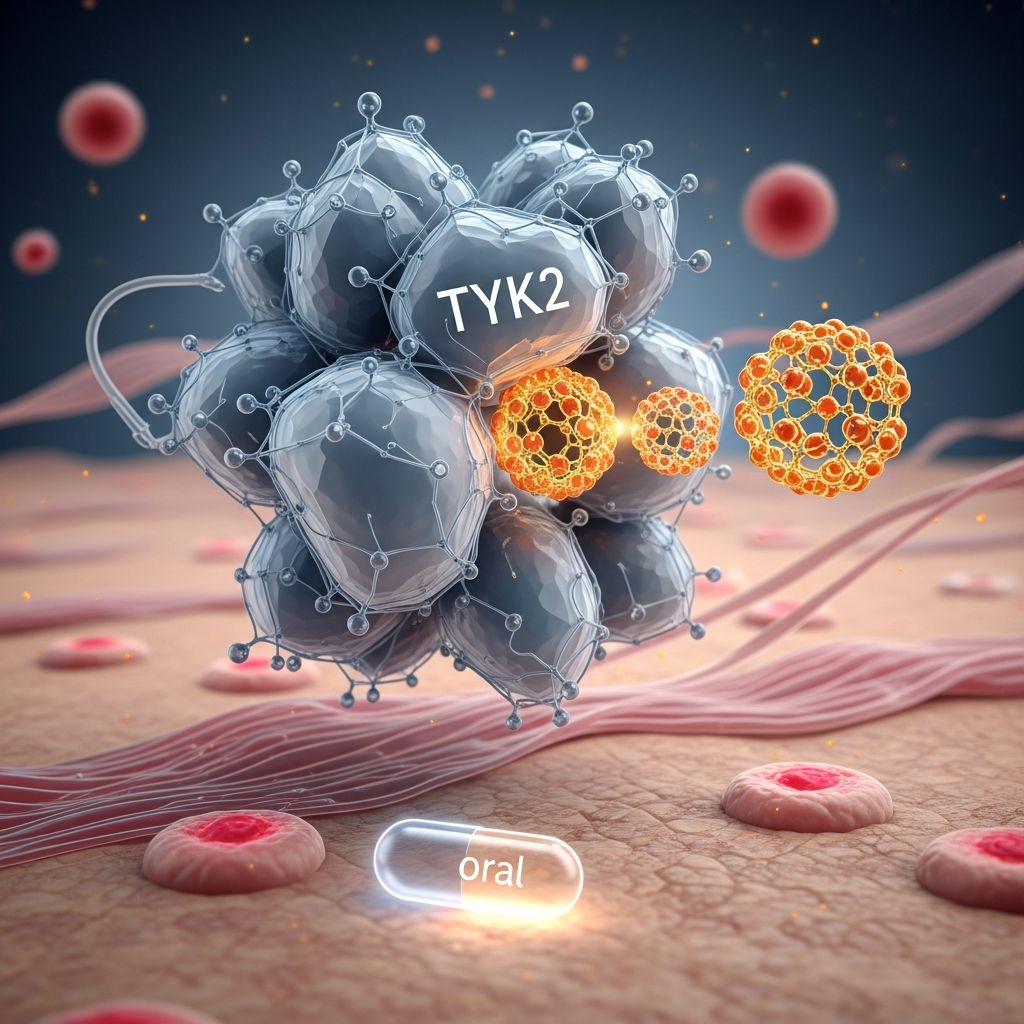
Deucravacitinib: A Complete Overview
Introduction
Deucravacitinib is an oral, selective allosteric tyrosine kinase 2 (TYK2) inhibitor approved for the systemic treatment of moderate to severe plaque psoriasis and other immune-mediated diseases. As a first-in-class oral selective TYK2 inhibitor, deucravacitinib represents a significant advancement in psoriasis management, offering patients a targeted oral alternative to biologic therapies. This medication represents a paradigm shift in how dermatologists approach systemic psoriasis treatment, combining oral convenience with the efficacy traditionally associated with injectable biologic agents.
Uses and Clinical Applications
Deucravacitinib is primarily indicated for adults with moderate to severe plaque psoriasis. The medication has demonstrated efficacy in various patient populations, including those with limited body surface area involvement and specialized psoriasis presentations such as scalp psoriasis. Clinical trials have established its effectiveness in diverse patient groups, including Asian populations with moderate to severe plaque psoriasis.
Beyond plaque psoriasis, deucravacitinib is being studied for its potential use in other immune-mediated inflammatory conditions. The selective inhibition of TYK2-mediated signaling pathways makes this agent a versatile option for multiple dermatological and systemic inflammatory diseases.
How Deucravacitinib Works
Deucravacitinib functions as an allosteric TYK2 inhibitor, selectively targeting tyrosine kinase 2 signaling. The medication specifically inhibits TYK2-mediated signaling of interleukin (IL)-23, IL-12, and type I interferons. These cytokines play crucial roles in the pathogenesis of psoriasis and other immune-mediated inflammatory diseases.
By blocking these specific inflammatory pathways, deucravacitinib reduces the aberrant immune response characteristic of psoriasis. The selective nature of TYK2 inhibition provides a targeted approach that minimizes off-target effects while maintaining the efficacy needed to control psoriasis symptoms and signs. This mechanism of action distinguishes deucravacitinib from broader-spectrum JAK inhibitors and positions it as a precision medicine approach to psoriasis management.
Administration and Dosing
Deucravacitinib is administered as a once-daily oral tablet at a dose of 6 mg. The convenient once-daily dosing regimen enhances patient compliance and simplifies treatment administration compared to injectable biologic therapies that require regular clinic visits.
The medication should be taken consistently at the same time each day for optimal therapeutic efficacy. Patients should swallow tablets whole with water and may take them with or without food. Dose adjustments may be necessary in specific patient populations or clinical circumstances, which should be determined by the treating physician based on individual patient factors and response to therapy.
Precautions and Contraindications
Before initiating deucravacitinib therapy, patients and healthcare providers should carefully consider several important precautions:
- Active infections or a history of serious infections should be evaluated, as TYK2 inhibition may increase infection risk
- Patients with tuberculosis or latent tuberculosis infection require careful monitoring and may require prophylactic treatment
- Herpes zoster reactivation risk should be assessed, particularly in patients with a history of herpes zoster
- Cardiovascular risk factors and thromboembolic disease history require evaluation
- Concurrent use of other immunosuppressive agents may require dose adjustments or additional monitoring
- Pregnancy and lactation represent relative contraindications requiring careful risk-benefit analysis
- Patients with hepatic impairment or severe renal disease may require dose modifications
Monitoring and Precautions During Treatment
Patients receiving deucravacitinib require appropriate clinical monitoring to ensure safety and efficacy. Before treatment initiation, baseline laboratory assessments should include:
- Complete blood count to establish baseline cell counts
- Comprehensive metabolic panel including liver and kidney function
- Lipid profile to assess cardiovascular risk
- Tuberculosis screening (TST or interferon-gamma release assay)
- Assessment for active or latent infections
During treatment, periodic monitoring at weeks 4, 8, and 12 should assess clinical response and tolerability. Regular laboratory monitoring should continue to detect any emerging safety signals, particularly for infections, hematologic abnormalities, or lipid changes. Patients should be counseled about signs and symptoms of serious infections, herpes zoster reactivation, and other potential adverse effects requiring medical attention.
Clinical Efficacy and Benefits
Clinical trials have established robust efficacy for deucravacitinib in treating moderate to severe plaque psoriasis. In the pivotal POETYK PSO-1 and PSO-2 phase III trials, deucravacitinib demonstrated superior efficacy compared to placebo and apremilast:
| Efficacy Measure | Deucravacitinib 6 mg | Placebo | Apremilast |
|---|---|---|---|
| PASI 75 (Week 16) | 58.4% | 12.7% | 35.1% |
| sPGA 0/1 (Week 16) | 48.5% | 13.7% | N/A |
| PASI 90 Achievement | 38.8% | 2.0% | N/A |
Long-term extension studies demonstrate the durability of deucravacitinib’s therapeutic effect. More than 60% of patients maintained PASI 75 through 148 weeks of continuous treatment. At four years of continuous treatment, efficacy outcomes remained robust, with 71.7% achieving PASI 75, 47.5% achieving PASI 90, and 57.2% achieving sPGA 0/1.
Patients with scalp psoriasis experienced notable improvements, with nearly 71% achieving scalp-specific PGA of clear or almost clear by week 16. The medication also demonstrated improvements in patient-reported outcomes, with significant reductions in the Dermatology Life Quality Index (DLQI) score, indicating improved quality of life.
Side Effects and Adverse Events
Deucravacitinib demonstrates a favorable safety profile consistent with a selective TYK2 inhibitor. Clinical trials extending up to 52 weeks have shown that deucravacitinib is generally well tolerated.
Common Side Effects
The most frequently reported adverse events in clinical trials included:
- Nasopharyngitis (14.6%) — inflammation of the nasopharynx
- Upper respiratory tract infection (11.7%-19.2%) — infections affecting sinuses and throat
- Acne (9.7%) — increased acne and pustular lesions
- Headache (7.8%) — mild to moderate headaches
- COVID-19 (5.8%) — consistent with general population infection rates
- Pustular acne (5.8%) — inflammatory acne variants
Mucocutaneous Side Effects
Additional mucocutaneous adverse events reported at elevated rates compared to placebo included:
- Herpes simplex infection (2.0%) — typically mild and self-limited
- Mouth ulcers or stomatitis (1.9%) — superficial oral ulcerations
- Folliculitis (1.7%) — hair follicle inflammation
Uncommon but Notable Adverse Events
Herpes zoster (shingles) occurred infrequently but represents an important safety consideration. Five patients in long-term studies developed mild cases of herpes zoster but did not discontinue treatment. Laboratory abnormalities included increased serum creatine phosphokinase levels (2.7%) in some patients.
Serious Adverse Events
The overall safety profile demonstrates low rates of serious adverse events. In clinical trials, serious adverse events were uncommon, with only two serious adverse events reported in the overall population (one in each treatment group). Neither was considered treatment-related, and neither led to treatment discontinuation. Major cardiovascular events and serious infections remained low over time through four years of continuous treatment.
In long-term extension studies, only five patients discontinued deucravacitinib because of side effects, demonstrating excellent tolerability overall.
Advantages of Deucravacitinib
Deucravacitinib offers several distinct advantages in psoriasis management:
- Oral administration: Once-daily tablets eliminate the need for injections or infusions
- Selective mechanism: Targeted TYK2 inhibition provides efficacy with potentially fewer off-target effects
- Proven durability: Sustained efficacy through four years of continuous treatment
- Favorable safety: Consistent and predictable adverse event profile
- Patient-reported outcomes: Significant improvements in quality of life and symptom burden
- Efficacy across populations: Demonstrated effectiveness in diverse patient groups
- Rapid onset: Clinical improvement observed within 4 to 16 weeks
Disadvantages and Limitations
While deucravacitinib represents a significant advancement, certain limitations warrant consideration:
- Infection risk: Increased susceptibility to nasopharyngitis and upper respiratory infections
- Herpes zoster risk: Although uncommon, herpes zoster reactivation requires monitoring
- Acne exacerbation: New or worsening acne occurs in approximately 10% of patients
- Limited long-term data: Most comprehensive data extends to 4 years; longer-term safety profile continues to accumulate
- Head-to-head comparisons lacking: Direct comparative efficacy data with IL-17 and IL-23 inhibitors remains limited
- Cost considerations: As a newer agent, cost may be a barrier for some patients
- Contraindication in specific populations: Not recommended for patients with active serious infections or certain comorbidities
Long-Term Safety and Efficacy Data
Long-term extension studies provide reassuring data regarding sustained efficacy and safety. Through 148 weeks of continuous treatment, more than 60% of patients maintained PASI 75, demonstrating durable disease control. Extended data through four years of continuous treatment reveal maintained efficacy with stable safety signals.
Clinically meaningful improvements were observed in patient-reported outcomes through extended follow-up. Mean DLQI score reductions of 8.5 points from baseline were maintained at week 196, indicating sustained improvements in quality of life. No new safety concerns emerged during long-term follow-up, with serious adverse event rates remaining low and consistent with earlier trial phases.
Frequently Asked Questions
Q: How quickly does deucravacitinib begin to work?
A: Clinical improvement typically begins within 4 to 16 weeks of initiating treatment, with maximum benefits often observed by 16 weeks in clinical trials.
Q: Can deucravacitinib be used for psoriasis types other than plaque psoriasis?
A: Current FDA approval is limited to moderate to severe plaque psoriasis, though the medication is being studied for potential use in other immune-mediated inflammatory conditions.
Q: Is deucravacitinib suitable for patients with scalp psoriasis?
A: Yes, deucravacitinib demonstrates excellent efficacy for scalp psoriasis, with nearly 71% of patients achieving clear or almost clear scalp skin by week 16.
Q: What laboratory monitoring is required during deucravacitinib treatment?
A: Baseline laboratories should include complete blood count, comprehensive metabolic panel, lipid profile, and tuberculosis screening. Periodic monitoring at weeks 4, 8, and 12 is recommended to assess response and safety.
Q: How does deucravacitinib compare to biologic therapies?
A: Deucravacitinib offers comparable or superior efficacy to some biologic therapies while providing the convenience of once-daily oral administration rather than injections or infusions. Direct comparisons with IL-17 and IL-23 inhibitors are ongoing.
Q: Is deucravacitinib safe for long-term use?
A: Yes, deucravacitinib demonstrates sustained safety and efficacy through four years of continuous treatment, with no new safety signals emerging during extended follow-up.
Q: Can deucravacitinib be used in patients with limited psoriasis involvement?
A: Yes, deucravacitinib has been studied and shown effective even in patients with more limited body surface area involvement, including those with body surface area as low as 3%.
Q: What should patients do if they develop an infection while taking deucravacitinib?
A: Patients should promptly contact their healthcare provider if they develop signs of infection, as appropriate evaluation and potential treatment adjustments may be necessary.
References
- Deucravacitinib in Moderate to Severe Scalp Psoriasis — Dermatology Squared, 2024. https://skin.dermsquared.com/skin/article/view/3088
- Deucravacitinib Shows Sustained Efficacy in Plaque Psoriasis Through 3 Years Study — Practical Dermatology, 2024. https://practicaldermatology.com/news/deucravacitinib-shows-sustained-efficacy-in-plaque-psoriasis-through-3-years-study/
- Deucravacitinib: An Oral Selective Allosteric Tyrosine Kinase 2 Inhibitor in Asian Patients with Moderate-to-Severe Plaque Psoriasis — British Journal of Dermatology, Oxford University Press, 2025. https://academic.oup.com/bjd/article/192/3/402/7831541
- Deucravacitinib Is Safe and Effective for Plaque Psoriasis for Up to 4 Years — Dermatology Advisor, 2025. https://www.dermatologyadvisor.com/news/deucravacitinib-safe-effective-plaque-psoriasis-up-to-4-years/
- Deucravacitinib: A Complete Overview — DermNet, 2025. https://dermnetnz.org/topics/deucravacitinib
- New Drugs: Deucravacitinib for Plaque Psoriasis — The Derm Digest, 2023. https://thedermdigest.com/new-drugs-deucravacitinib-for-plaque-psoriasis/
- A Review of the Safety and Efficacy of Deucravacitinib for Plaque Psoriasis: An Expert Consensus Panel — Journal of Drugs in Dermatology, 2025. https://jddonline.com/articles/review-of-safety-efficacy-of-deucravacitinib-plaque-psoriasis-an-expert-consensus-panel/
Similar Articles








Read full bio of Sneha Tete