DEXA Scan: What It Is, Who Needs One, And Results
What Is a DEXA Scan, and Do You Need One? Learn about this key test for bone health, osteoporosis risk, and body composition analysis.
A
DEXA scan
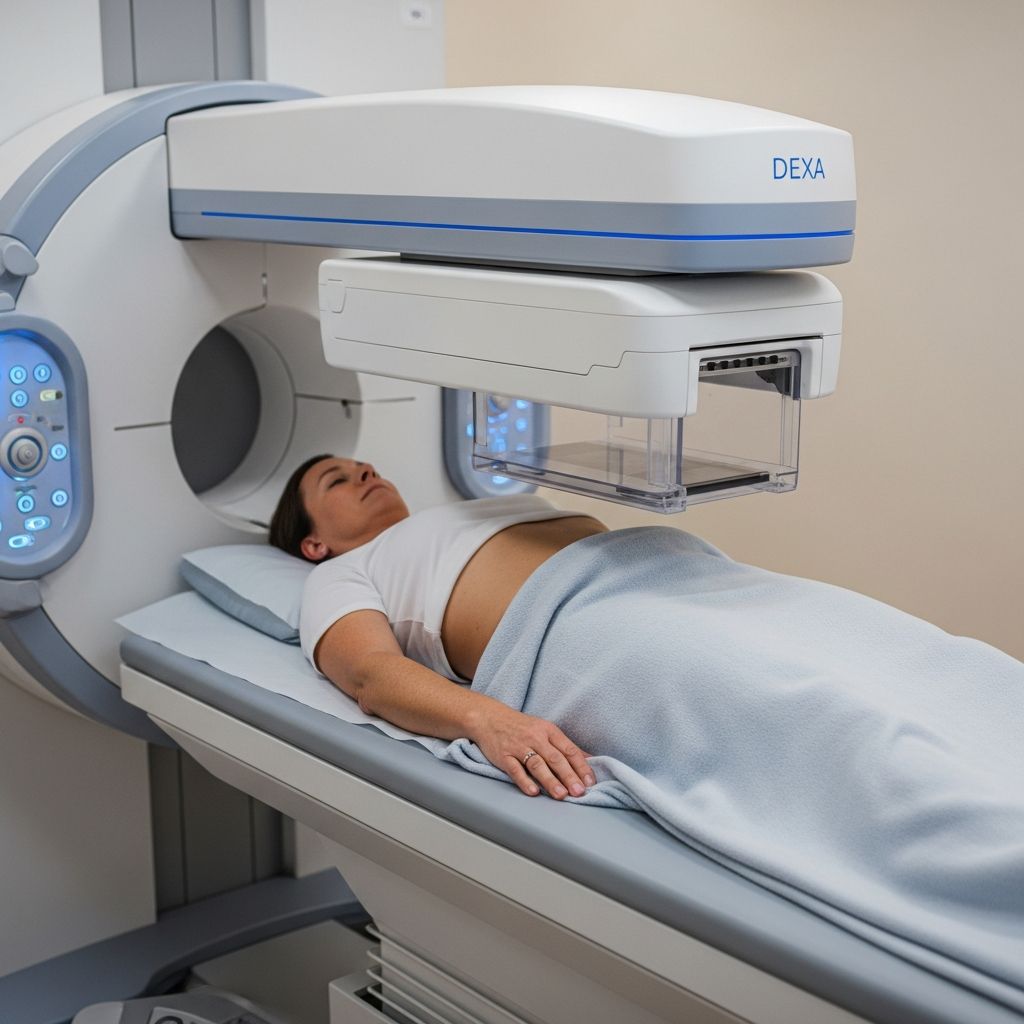
, also known as a DXA scan or bone densitometry, is a specialized low-dose X-ray test that measures bone mineral density (BMD) to assess bone strength and fracture risk. It is the most accurate, standardized method for diagnosing osteoporosis and monitoring treatment effectiveness, typically scanning the spine, hips, and sometimes forearm or wrist.What Is a DEXA Scan?
A DEXA scan uses dual-energy X-ray absorptiometry to produce precise images of bone density in key areas like the lumbar spine, hips, and forearm. This noninvasive test employs two low-energy X-ray beams to differentiate bone from soft tissue, providing quantitative data on mineral content. Unlike standard X-rays, it delivers minimal radiation—less than one-tenth of a chest X-ray or a day’s natural background exposure—making it safe for routine use.
The procedure is quick, painless, and completed in 10-30 minutes on an outpatient basis. Central DEXA machines, which scan the hip and spine, are the gold standard for accuracy, while peripheral devices (pDEXA) target sites like the heel or wrist for preliminary screening.
What Is a DEXA Scan Used For?
DEXA scans serve multiple critical purposes in bone health assessment:
- Diagnosing osteoporosis: Identifies low bone mass before fractures occur.
- Predicting fracture risk: Evaluates 10-year probability of hip or major osteoporotic fractures, factoring in age, weight, and lifestyle.
- Monitoring treatment: Tracks changes in BMD to gauge response to medications like bisphosphonates or lifestyle interventions.
- Detecting secondary causes: Reveals bone loss from conditions like hyperparathyroidism or hyperthyroidism.
- Body composition analysis: Advanced scans quantify fat mass, lean muscle, and bone, useful for athletes or metabolic assessments.
Beyond osteoporosis, DEXA helps evaluate vertebral fractures via imaging add-ons like Vertebral Fracture Assessment (VFA).
Who Should Get a DEXA Scan?
Screening guidelines from organizations like the USPSTF and NOF recommend DEXA for high-risk individuals. Key candidates include:
- Women aged 65+ and men aged 70+, regardless of risk factors.
- Postmenopausal women under 65 and men 50-69 with risk factors (e.g., low body weight, prior fracture, family history).
- Those with height loss >1.5 inches (women) or >2 inches (men).
- Individuals with conditions increasing bone loss: rheumatoid arthritis, hyperthyroidism, chronic kidney/liver disease, inflammatory bowel disease, or high-turnover markers.
- Long-term users of glucocorticoids or other osteoporosis-inducing drugs.
- Smokers, excessive alcohol users, or those with lifestyle-related bone risks.
| Risk Group | Recommended Age/Trigger | Source |
|---|---|---|
| Postmenopausal women | 65+ or younger with risks | |
| Men | 70+ or 50-69 with risks | |
| Glucocorticoid users | Any age, long-term use | |
| Fracture after mild trauma | Any age |
How Is a DEXA Scan Performed?
Preparation is minimal: Avoid calcium supplements 24-48 hours prior, wear metal-free clothing, and disclose pregnancy or recent contrast agents. During the scan:
- Lie on a padded table; technologist positions you with foam blocks or braces to flatten the spine or rotate the hip.
- X-ray generator below and detector above pass slowly over the spine/hip (central) or wrist (peripheral).
- Hold still and possibly hold breath to avoid motion artifacts; no discomfort involved.
- Computer generates images and BMD scores instantly.
Related Stories



Full scans take 10-30 minutes; results are reviewed by a radiologist.
Understanding DEXA Scan Results
Results include
T-score
(compares to young adult peak bone mass) andZ-score
(compares to age-matched peers):| T-Score | Diagnosis | Fracture Risk |
|---|---|---|
| ≥ -1.0 | Normal | Low |
| -1.0 to -2.5 | Osteopenia | Moderate |
| ≤ -2.5 | Osteoporosis | High |
Z-scores below -2.0 suggest secondary causes beyond age-related loss. Additional metrics like Trabecular Bone Score (TBS) assess bone microarchitecture (normal, partially degraded, degraded), enhancing fracture prediction independent of osteoarthritis.
FRAX tool integrates DEXA with clinical risks for precise 10-year fracture probability.
Risks and Benefits of DEXA Scans
Benefits:
- Gold standard for osteoporosis diagnosis and treatment monitoring.
- Extremely low radiation (safer than natural daily exposure).
- Noninvasive, no anesthesia, widely available.
- Accurate fracture risk estimation guides prevention.
Risks: Negligible radiation; no side effects. Central DEXA is pricier than peripheral but more reliable. Osteoarthritis may falsely elevate spine/hip BMD, so unaffected sites or TBS are used.
DEXA Scan vs. Bone Scan
| Aspect | DEXA Scan | Bone Scan |
|---|---|---|
| Purpose | BMD, osteoporosis, fracture risk | Infection, cancer, injury detection |
| Technology | Low-dose X-ray | Nuclear medicine (tracer injection) |
| Radiation | Minimal | Higher |
| Duration | 10-30 min | Hours (with wait) |
DEXA for Body Composition
Beyond bones, whole-body DEXA precisely measures fat, lean mass, and bone distribution—valuable for sports medicine, obesity research, and sarcopenia assessment.
Frequently Asked Questions (FAQs)
Who needs a DEXA scan?
Women 65+, men 70+, or younger adults with risk factors like fractures, medications, or conditions affecting bone health.
How painful is a DEXA scan?
Not painful at all—it’s noninvasive with no injections or compression.
How often should you get a DEXA scan?
Every 1-2 years if osteopenic/osteoporotic, or as recommended based on treatment response and risks.
Can you eat before a DEXA scan?
Yes, no fasting required; just avoid calcium supplements.
Does insurance cover DEXA scans?
Often yes for at-risk individuals per guidelines; check with your provider.
What if my T-score is low?
Consult your doctor for lifestyle changes, medications, or further tests to prevent fractures.
References
- What are DEXA scans used for? — Health Images. 2023. https://www.healthimages.com/what-are-dexa-scans-used-for/
- Bone Density Scan (DEXA or DXA) — RadiologyInfo.org (RSNA & ACR). 2024-05-15. https://www.radiologyinfo.org/en/info/dexa
- DEXA Scan / Bone Density Test: A Patient’s Guide — Hospital for Special Surgery (HSS). 2024. https://www.hss.edu/health-library/conditions-and-treatments/dxa-dexa-bone-density-test-patient-guide
- DXA/DEXA Bone Density Scan — Banner Health. 2025. https://www.bannerhealth.com/services/imaging/dexa-bone-scan
- DXA body composition analysis — UC Davis Health. 2024. https://health.ucdavis.edu/sports-medicine/resources/dxa-info
- Dual-Energy X-Ray Absorptiometry — NCBI Bookshelf (StatPearls). 2023-08-08. https://www.ncbi.nlm.nih.gov/books/NBK519042/
- Are You at Risk for Breaking Bones? New Technology Gives Detailed Analysis — Orlando Health. 2024. https://www.orlandohealth.com/content-hub/are-you-at-risk-for-breaking-bones-new-technology-gives-detailed-analysis/
Similar Articles








Read full bio of medha deb