Dexamethasone Injection: Uses, Side Effects & Safety
Complete guide to dexamethasone injections: understanding uses, benefits, risks, and important safety information.
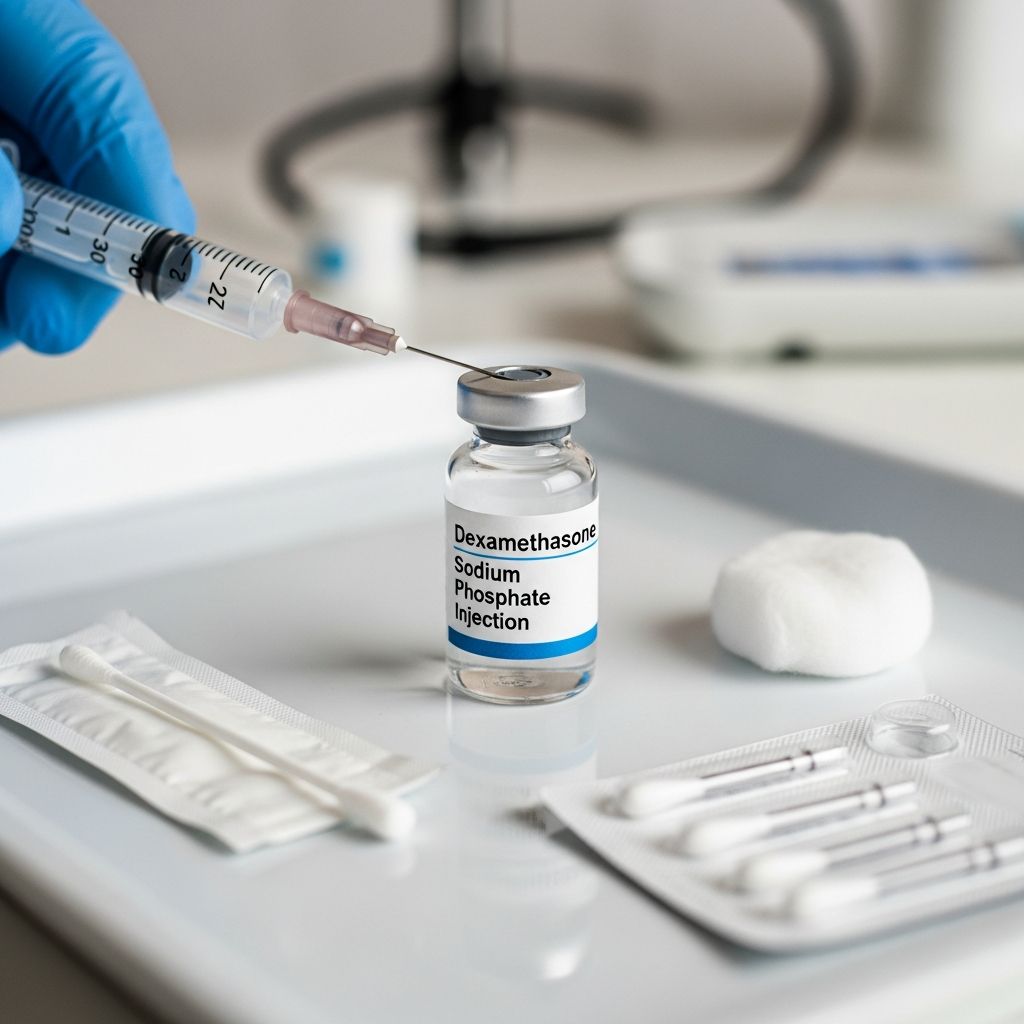
Understanding Dexamethasone Injection
Dexamethasone is a potent corticosteroid medication administered through injection to treat various inflammatory and immune-related conditions. This medication works by decreasing inflammation and slowing down an overactive immune system response in your body. When inflammation occurs, your immune system sends out cells to fight bacteria or heal injuries. However, sometimes this response becomes excessive and causes additional harm. Dexamethasone helps regulate this response, making it an effective treatment for numerous medical conditions.
Dexamethasone is approximately 25 times more potent than hydrocortisone, demonstrating its significant anti-inflammatory capabilities. The medication belongs to a group of drugs called steroids, which are distinct from anabolic steroids used in athletics. Medical-grade corticosteroids like dexamethasone are designed specifically to reduce inflammation and suppress immune system activity when necessary.
Primary Uses and Medical Conditions
Dexamethasone injections treat a wide range of medical conditions across multiple body systems. Healthcare providers prescribe this medication for patients experiencing various health challenges where inflammation or immune system dysfunction plays a significant role.
Common conditions treated with dexamethasone injection include:
- Asthma and respiratory conditions
- Severe allergic reactions
- Rheumatoid arthritis and other joint disorders
- Inflammatory bowel diseases
- Adrenal insufficiency and related endocrine disorders
- Blood disorders and bone marrow conditions
- Severe infections requiring immune modulation
- Postoperative nausea and vomiting prevention
- Postoperative pain management
The versatility of dexamethasone makes it valuable in both acute emergency situations and chronic disease management. In surgical settings, dexamethasone is administered to reduce the risk of nausea and vomiting after anesthesia, relieve postoperative pain, and promote faster recovery. Studies have shown that a single dose of 4 mg of dexamethasone can significantly decrease the time to discharge after ambulatory surgery, making it an important tool in perioperative care.
How Dexamethasone Injection is Administered
Dexamethasone is administered exclusively in professional healthcare settings by trained medical personnel. Your healthcare provider will inject this medication directly into a muscle, joint, lesion, or other affected tissue. The injection cannot be self-administered at home and requires supervision by qualified healthcare professionals in a hospital or clinic setting.
The injection route allows the medication to work directly at the site of inflammation or systemically throughout the body, depending on the injection method chosen by your healthcare team. This direct delivery method often provides more rapid and concentrated effects compared to oral medications.
Dosage Information
Dexamethasone dosage varies significantly depending on the condition being treated, the severity of the inflammation, and individual patient factors. In surgical settings, intravenous doses typically range from 4 mg to 20 mg administered during the procedure. For postoperative nausea and vomiting prevention, the standard recommended dose is 4 mg given intravenously during surgery. For postoperative pain management, doses between 1.25 mg to 20 mg have demonstrated significant reduction in pain scores.
Related Stories



Your healthcare team will determine the appropriate dose for your specific condition. The duration of dexamethasone’s effect exceeds 36 hours, meaning a single injection can provide extended relief from symptoms. Never adjust your dosage without explicit instructions from your medical provider.
Important Precautions and Contraindications
Before receiving dexamethasone injection, inform your healthcare team about any existing medical conditions you have. Certain conditions require special consideration or may contraindicate dexamethasone use. Your care team needs to know if you have:
- Current infections or active fever
- Diabetes or blood sugar regulation issues
- High blood pressure or hypertension
- Osteoporosis or bone density concerns
- Tuberculosis or history of TB exposure
- Hepatitis or liver disease
- Kidney disease or renal dysfunction
- Heart disease or cardiac conditions
- Mental health disorders including depression or psychosis
- Thyroid disease
Additionally, if you are scheduled for surgery or any medical procedure, inform your healthcare team that you are using or will be using dexamethasone. This medication can affect how your body responds to surgical stress and anesthesia.
Medication Interactions and Considerations
Dexamethasone may interact with various other medications, so it is crucial to provide your healthcare team with a complete list of all medications, supplements, and herbal products you are currently taking. Special care may be needed if you are taking this medication in combination with other drugs.
If you are going to undergo surgery or other medical procedures, inform your care team in advance about your dexamethasone use. The medication may need to be temporarily discontinued or adjusted around the time of your procedure.
Dietary considerations are also important. You may need to follow a special diet while taking dexamethasone. Ask your healthcare team about specific dietary recommendations and how many glasses of fluids you should drink daily to maintain proper hydration and support your body’s response to treatment.
Side Effects: What to Expect
Like all medications, dexamethasone injection can cause side effects. Understanding which side effects require immediate medical attention and which are typically mild is important for safe medication use.
Serious Side Effects Requiring Immediate Medical Attention
Contact your healthcare team as soon as possible if you experience any of the following serious side effects:
- Signs of infection including fever, chills, or sore throat
- Severe allergic reactions
- Persistent headaches or vision changes
- Severe mood changes or psychological symptoms
- Chest pain or difficulty breathing
- Severe abdominal pain
- Signs of bleeding or unusual bruising
- Severe muscle weakness
Common Mild Side Effects
Some side effects usually do not require immediate medical attention but should be reported to your healthcare team if they continue or become bothersome:
- Mild nausea or stomach upset
- Headache
- Dizziness or lightheadedness
- Insomnia or sleep disturbances
- Increased appetite
- Mood changes or nervousness
- Facial flushing or skin irritation at injection site
Important Health Risks and Warnings
Dexamethasone may increase your risk of developing certain infections. Call your healthcare team immediately if you develop a fever, chills, sore throat, or other symptoms of a cold or flu. Do not attempt to self-treat these symptoms. Additionally, try to avoid being around people who are sick when you are taking this medication.
If you have not received the measles or chickenpox vaccines, inform your care team immediately if you are around someone with these viruses. Vaccination status is important when taking immunosuppressive medications like dexamethasone.
This medication may increase your blood sugar levels, which poses particular concern for patients who already have diabetes. Ask your healthcare team what you can do to monitor and lower your risk of developing diabetes-related complications while taking this medication. Regular blood sugar monitoring may be necessary.
Long-term treatment with steroid drugs has multiple potential side effects including increased infection risk, high blood pressure, and diabetes development. However, short-term dexamethasone treatment during surgery has shown to be generally safe when used appropriately. A systematic review of surgical patients found that dexamethasone was a safe and effective strategy for postoperative pain management and nausea prevention.
Infection Risk and Immune System Effects
One of the most important considerations when taking dexamethasone is the increased infection risk. Corticosteroids suppress immune system activity, which means your body may have reduced ability to fight off infections. This is why maintaining good hygiene, avoiding sick individuals, and promptly reporting signs of infection is essential.
The immunosuppressive effects of dexamethasone mean you should be particularly cautious during cold and flu season. If you develop any signs of infection, contact your healthcare provider immediately rather than attempting self-treatment.
Special Populations: Use in Children and Pregnancy
Talk to your care team about the use of dexamethasone injection in children. Special care and dosage adjustments may be needed for pediatric patients. Children may respond differently to the medication and require careful monitoring.
If you are pregnant, planning to become pregnant, or breastfeeding, discuss dexamethasone use with your healthcare provider before receiving the injection. The medication can pass into breast milk and may affect a developing fetus.
Overdose and Emergency Situations
If you believe you have received too much dexamethasone or experience signs of overdose, contact a poison control center or emergency room immediately. Do not wait to see if symptoms resolve on their own. Emergency medical professionals can provide appropriate treatment and monitoring.
Managing Your Treatment
To ensure safe and effective use of dexamethasone injection, maintain open communication with your healthcare team. Report all side effects, even mild ones, and inform them about any new symptoms that develop during treatment. Keep all scheduled appointments for monitoring and follow-up care.
Keep a record of your dexamethasone injections, including dates, dosages, and any side effects experienced. This information is valuable for your healthcare team in adjusting your treatment plan if necessary.
Reporting Side Effects
Your healthcare team wants to know about any side effects you experience. In addition to informing your doctor, you can report side effects to the FDA at 1-800-FDA-1088. This helps ensure that medication safety information is continuously updated and that healthcare providers have complete information about medication effects.
Frequently Asked Questions
Q: Can I self-administer dexamethasone injections at home?
A: No, dexamethasone injections must be administered by trained healthcare professionals in a hospital or clinic setting. This ensures proper injection technique, sterility, and medical supervision.
Q: How long does dexamethasone injection take to work?
A: Dexamethasone typically begins working within hours of injection. The medication’s effects can last more than 36 hours, providing extended relief from inflammation and symptoms.
Q: What should I do if I miss an appointment for my dexamethasone injection?
A: Contact your healthcare provider immediately to reschedule. Do not attempt to make up for a missed dose on your own. Your care team will determine the appropriate timing for your injection.
Q: Can dexamethasone be used long-term?
A: Long-term corticosteroid use carries increased risks of side effects. Your healthcare team will determine the appropriate treatment duration based on your condition and response to therapy.
Q: Are there alternatives to dexamethasone injection?
A: Depending on your condition, other treatment options may be available. Discuss alternative medications and treatments with your healthcare provider to determine the best approach for your specific needs.
Q: How does dexamethasone compare to other corticosteroids?
A: Dexamethasone is approximately 25 times more potent than hydrocortisone, making it a powerful anti-inflammatory medication. Your healthcare provider will select the most appropriate corticosteroid based on your condition.
Q: What diet should I follow while taking dexamethasone?
A: Your healthcare team may recommend a special diet while you are taking this medication. Ask your care provider about specific dietary recommendations and daily fluid intake requirements.
References
- Dexamethasone (dex a METH a sone) Injection — Cleveland Clinic. 2024. https://my.clevelandclinic.org/health/drugs/20480-dexamethasone-injection
- Effect of dexamethasone on the duration of interscalene nerve blocks using ropivacaine or bupivacaine — British Journal of Anaesthesia, Oxford University Press. 2011. https://academic.oup.com/bja/article-abstract/107/3/446/256625
- Adverse side effects of dexamethasone in surgical patients — National Center for Biotechnology Information, U.S. National Library of Medicine. 2019. https://pmc.ncbi.nlm.nih.gov/articles/PMC6513495/
- Glucocorticoid-induced adrenal insufficiency and glucocorticoid replacement — Cleveland Clinic Journal of Medicine. 2024. https://www.ccjm.org/content/91/4/245
- A systematic review and meta-analysis of randomized controlled trials: Dexamethasone in ultrasound-guided TAP block — PLOS ONE, Public Library of Science. 2019. https://journals.plos.org/plosone/article?id=10.1371%2Fjournal.pone.0209646
- Cortisone Shots (Steroid Injections): Benefits and Side Effects — Cleveland Clinic. 2024. https://my.clevelandclinic.org/health/treatments/cortisone-shots-steroid-injections
Similar Articles








Read full bio of Sneha Tete