Dextrocardia: Causes, Symptoms & Treatment
Understanding dextrocardia: A rare condition where the heart is positioned on the right side of the chest.
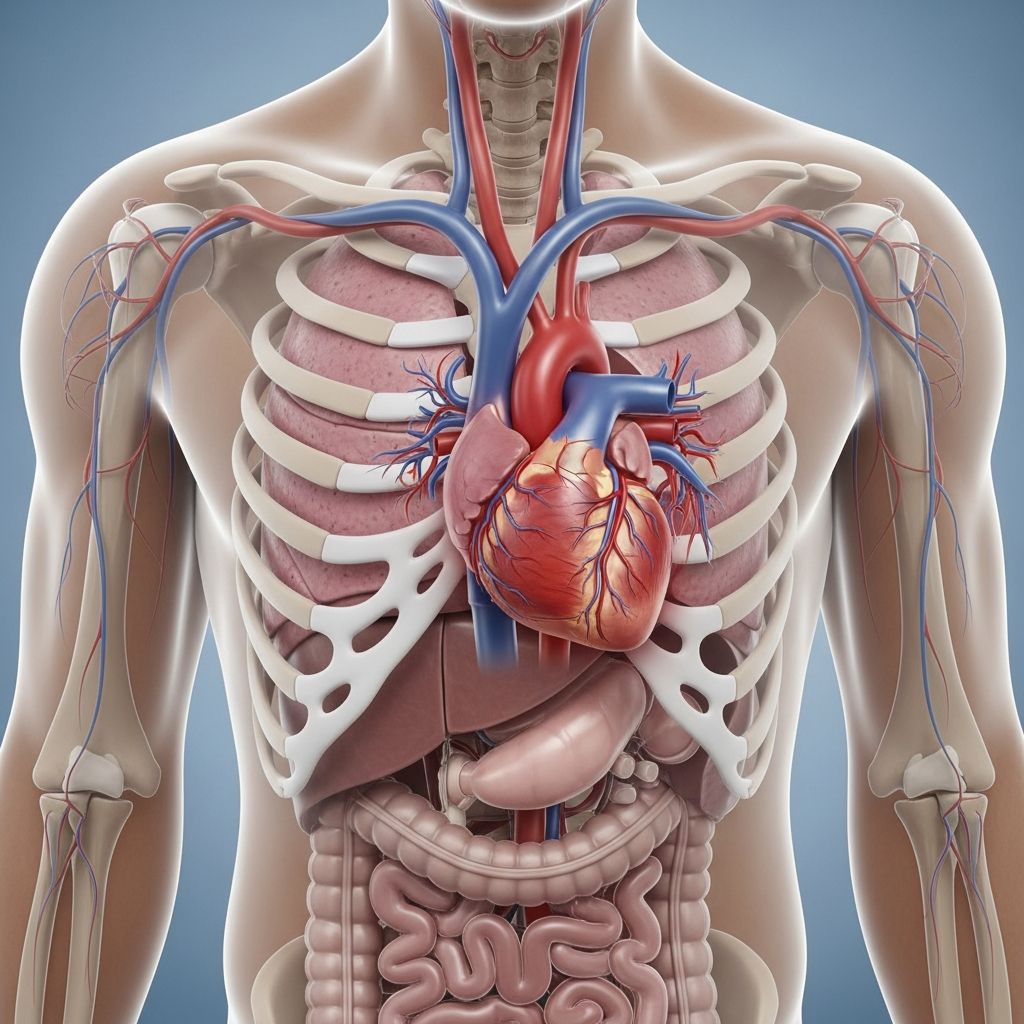
What Is Dextrocardia?
Dextrocardia is a rare congenital condition in which the heart is positioned on the right side of the chest cavity instead of its normal location on the left side. In this condition, the apex (tip) of the heart points toward the right, which represents a significant deviation from the typical cardiac anatomy where the apex points leftward. This anatomical variation occurs during fetal development and is present from birth.
It is important to distinguish dextrocardia from a related but different condition called cardiac dextroposition. In cardiac dextroposition, the heart is displaced to the right side due to external factors such as a diaphragmatic hernia, right pneumonectomy, or right lung hypoplasia. In contrast, dextrocardia represents a true change in the heart’s orientation and positioning, making it a distinct congenital anomaly.
Dextrocardia can occur in isolation, meaning the heart is the only organ affected, or it can be associated with other congenital anomalies. When dextrocardia occurs alongside situs inversus totalis—a condition where all internal organs are mirrored—it creates additional diagnostic and management considerations.
How Common Is Dextrocardia?
Dextrocardia is considered a rare condition, affecting a small percentage of the population. The exact prevalence varies depending on whether isolated dextrocardia or dextrocardia associated with situs inversus is being considered. Most cases of dextrocardia are discovered incidentally during routine imaging studies performed for other reasons, which means many individuals may have the condition without realizing it.
The rarity of this condition means that healthcare providers may not immediately recognize it, potentially leading to diagnostic delays or misinterpretation of clinical findings. Increased awareness among clinicians about dextrocardia is essential to ensure prompt and accurate diagnosis.
What Causes Dextrocardia?
Dextrocardia is a congenital condition, meaning it develops before birth during fetal development. The exact mechanisms that cause the heart to develop on the right side of the chest are not completely understood, but the condition results from abnormal development of the heart’s position during embryogenesis.
There are several types of dextrocardia based on its association with other conditions:
- Isolated dextrocardia: The heart is positioned on the right side, but all other organs remain in their normal positions. This is the least common form and is typically benign.
- Dextrocardia with situs inversus totalis: Both the heart and other internal organs are reversed. This occurs in approximately 25% of individuals with situs inversus who also develop Kartagener syndrome.
- Dextrocardia with heterotaxy: The heart is on the right side along with abnormal positioning of other organs and frequently accompanied by congenital heart defects.
- Dextrocardia with congenital heart defects: The right-sided heart is associated with structural abnormalities such as septal defects, Tetralogy of Fallot, or valve abnormalities.
Related Stories



Signs and Symptoms of Dextrocardia
The presentation of dextrocardia varies significantly depending on whether it occurs in isolation or with associated cardiac or systemic abnormalities.
Isolated Dextrocardia
Most patients with isolated dextrocardia are completely asymptomatic and may never experience any health problems related to their heart positioning. These individuals often discover they have dextrocardia only incidentally when imaging studies reveal the abnormal cardiac position.
Dextrocardia With Associated Conditions
When dextrocardia occurs alongside other congenital anomalies or cardiac defects, patients may experience various symptoms:
- Cyanosis (blue discoloration of the skin due to inadequate oxygen)
- Dyspnea (shortness of breath)
- Failure to thrive in infants
- Fatigue and decreased exercise tolerance
- Jaundice (yellowing of the skin)
- Pallor (pale appearance)
- Recurrent sinus or lung infections
- Hydrocephalus (fluid accumulation in the brain)
- Arrhythmias, particularly atrioventricular blocks
Physical Examination Findings
During physical examination, healthcare providers may note several characteristic findings in patients with dextrocardia. The most notable finding is the presence of a prominent apical impulse (the point where the heart’s contraction can be felt) on the right side of the chest rather than the left. Additionally, heart sounds may be more easily audible on the right side of the chest. Patients with associated cardiac defects may demonstrate cyanosis or clubbing of the fingers and toes.
How Is Dextrocardia Diagnosed?
Imaging Studies
Chest radiography is often the first imaging modality to reveal dextrocardia, showing the heart positioned on the right side of the thoracic cavity with a right-sided cardiac apex. Computed tomography (CT) or magnetic resonance imaging (MRI) can provide more detailed information about cardiac anatomy and help identify associated anomalies.
Electrocardiogram (EKG)
The electrocardiogram is a valuable diagnostic tool for identifying dextrocardia and shows characteristic findings. These include right axis deviation, inversion of all complexes in lead I, upright P-waves in augmented vector left, and absent R-wave progression in the anterior leads. For proper interpretation, special electrode placement on the right side of the chest may be necessary in patients with dextrocardia.
Echocardiography
Transthoracic or transesophageal echocardiography can visualize the heart’s position, orientation, and structure, helping identify associated cardiac defects and valve abnormalities.
Genetic Testing
In cases where dextrocardia is associated with primary ciliary dyskinesia or other genetic syndromes, genetic analysis may be warranted to confirm the diagnosis.
Treatment and Management Options
Observation for Isolated Dextrocardia
Most patients with isolated dextrocardia are asymptomatic and require no specific treatment. These individuals lead normal lives without health complications and have a normal life expectancy. However, they should be aware of their condition, particularly if they require medical imaging or cardiac interventions in the future.
Management of Associated Cardiac Defects
When dextrocardia occurs alongside other congenital heart defects such as septal defects, Tetralogy of Fallot, valve abnormalities, or malposition of blood vessels, surgical reconstruction may be necessary. These surgical procedures require meticulous planning due to the mirror-image anatomy of the heart and coronary arteries. Coronary interventions can be particularly challenging because of the unusual positioning of the coronary ostia and aortic arch.
Pacemaker Placement
Patients who develop heart blocks or abnormalities of the cardiac electrical system may require pacemaker placement. This intervention helps regulate the heart’s rhythm and prevents dangerous arrhythmias.
Management of Associated Conditions
When dextrocardia is associated with primary ciliary dyskinesia, management focuses on clearing respiratory secretions using mucolytics and expectorants. Patients with associated asplenia or immune dysfunction may require prophylactic antibiotics to prevent bacterial respiratory infections.
Potential Complications
While isolated dextrocardia typically has an excellent prognosis, patients with associated anomalies may face several complications. These include recurrent respiratory infections, particularly in those with primary ciliary dyskinesia or asplenia, as well as complications related to underlying cardiac defects. In adults, dextrocardia may be associated with infertility. Additionally, patients undergoing cardiac procedures face increased complexity due to the unusual anatomy.
Living With Dextrocardia
Patient Education
It is important for patients and families to understand that isolated dextrocardia is a benign condition that rarely affects quality of life. However, when dextrocardia is associated with other congenital anomalies, comprehensive evaluation and ongoing management become essential. Patients should maintain awareness of their condition and communicate this information to all healthcare providers, particularly before undergoing cardiac imaging, interventions, or surgery.
Lifestyle Considerations
Patients with isolated dextrocardia can participate in normal activities without restrictions. Those with associated cardiac defects should follow their cardiologist’s recommendations regarding activity levels and exercise. Regular follow-up care with a multidisciplinary team including cardiologists, radiologists, and primary care clinicians ensures comprehensive evaluation and optimal management.
Diagnostic Considerations and Differential Diagnosis
Distinguishing dextrocardia from other conditions is crucial for appropriate management. As mentioned earlier, cardiac dextroposition differs from true dextrocardia in that it results from external displacement rather than abnormal cardiac orientation. Additionally, situs inversus with levocardia (where organs are reversed but the heart points left) is frequently associated with cardiac anomalies and requires separate management considerations.
The presence of dextrocardia may serve as a clinical bridge to recognizing rare presentations of Kartagener syndrome or heterotaxy, making accurate diagnosis particularly important for identifying associated systemic conditions.
Importance of Interprofessional Care
Effective management of dextrocardia requires collaboration among multiple healthcare disciplines. Cardiologists assess cardiac structure and function, radiologists provide detailed imaging interpretation, and primary care clinicians coordinate overall care. This interprofessional approach improves diagnostic accuracy, optimizes resource utilization, and enhances outcomes for patients with dextrocardia.
Frequently Asked Questions
Q: Is dextrocardia life-threatening?
A: Isolated dextrocardia is not life-threatening and does not affect life expectancy. Most people with isolated dextrocardia are asymptomatic and lead completely normal lives. However, when dextrocardia is associated with other congenital heart defects or conditions like primary ciliary dyskinesia, medical management becomes necessary.
Q: Can dextrocardia be treated or cured?
A: There is no cure for dextrocardia itself, as it is a congenital condition present from birth. However, associated cardiac defects can often be surgically corrected, and other complications can be managed with appropriate medical interventions.
Q: Will dextrocardia affect my ability to have surgery or cardiac imaging?
A: Dextrocardia requires special consideration during cardiac surgery and imaging procedures due to the unusual anatomy. It is essential to inform your healthcare providers about your dextrocardia diagnosis before undergoing any cardiac procedures so they can plan accordingly.
Q: Is dextrocardia inherited?
A: Dextrocardia is a congenital condition that develops during fetal development. While most cases appear to be sporadic, some forms may be associated with genetic syndromes or inherited conditions, particularly when accompanied by situs inversus or primary ciliary dyskinesia.
Q: How often do I need follow-up care if I have dextrocardia?
A: The frequency of follow-up depends on whether you have isolated dextrocardia or dextrocardia with associated conditions. Those with isolated dextrocardia may require only occasional check-ups, while individuals with associated cardiac defects need regular monitoring by a cardiologist.
Q: Can dextrocardia be detected before birth?
A: Yes, dextrocardia can sometimes be detected during prenatal ultrasound imaging, though it may not always be immediately apparent. Fetal echocardiography can provide detailed assessment of cardiac positioning and associated anomalies.
References
- Dextrocardia — National Center for Biotechnology Information, National Library of Medicine. 2024. https://www.ncbi.nlm.nih.gov/books/NBK556074/
- Heart on the right may sometimes be ‘right’ — Cleveland Clinic Journal of Medicine. 2015. https://www.ccjm.org/content/ccjom/82/4/206.full.pdf
- Situs Inversus: Causes & Outlook — Cleveland Clinic. 2024. https://my.clevelandclinic.org/health/diseases/23486-situs-inversus
Similar Articles








Read full bio of medha deb