DHT (Dihydrotestosterone): Effects, Levels & Health
Understanding DHT: Its role in sexual development, health conditions, and hormonal balance.
What is DHT (Dihydrotestosterone)?
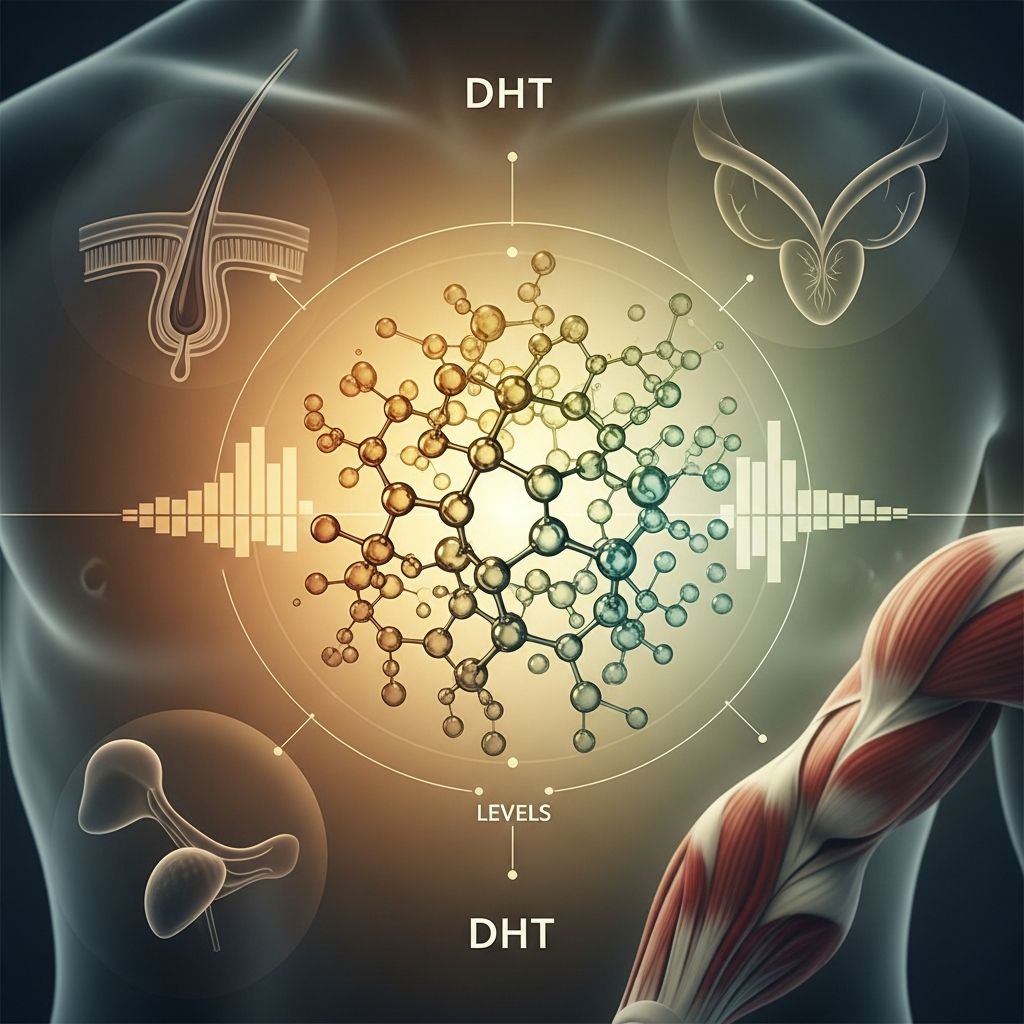
Dihydrotestosterone, commonly referred to as DHT, is a powerful hormone and androgen that plays a crucial role in human development and physiology. An androgen is a type of sex hormone that stimulates the development of male characteristics and traits. DHT is derived from testosterone through the action of an enzyme called 5-alpha-reductase, which converts testosterone into this more potent form. While DHT is present in both males and females, levels naturally remain significantly higher in males because they produce substantially more testosterone.
DHT represents one of the most biologically active androgens in the human body, with a higher binding affinity for androgen receptors compared to testosterone itself. This heightened potency means that DHT exerts powerful effects on cells throughout the body that contain androgen receptors. The hormone’s functions and significance vary considerably depending on age and developmental stage, making it particularly important during specific life phases.
Role of DHT in Male Sexual Development
Fetal Development Stage
During fetal development, DHT plays an essential and irreplaceable role in male sexual differentiation. In a genetically male fetus with XY chromosomes, DHT works in concert with other hormones, including testosterone, to suppress the formation of female reproductive anatomy while simultaneously promoting the development of male sexual structures. Specifically, DHT is critical for the formation of the male external genitalia, including the penis and scrotum. The hormone also contributes to the development of the prostate gland, which is essential for male reproductive function.
This developmental window demonstrates DHT’s fundamental importance in establishing male physiology at the earliest stages of life. Without adequate DHT during this critical period, males can experience underdeveloped external genitalia and other reproductive complications.
Puberty Stage
During male puberty, DHT continues its important developmental role by promoting further growth and maturation of the penis and scrotum. Beyond genital development, DHT drives the emergence of secondary sexual characteristics that define male adolescence. The hormone is the primary androgen responsible for facial and body hair growth, including beard development and increased body hair density. DHT also contributes to voice deepening, increased muscle mass development, and bone density enhancement during this transformative period.
Adulthood
Interestingly, unlike testosterone, DHT does not play a significant role in maintaining core male physiology during adulthood. Instead, its primary effects in adult males involve prostate enlargement and male pattern hair loss. These effects can become increasingly problematic as men age, particularly after age 50, contributing to common health concerns that many men face during their later years.
Normal DHT Reference Ranges
Understanding normal DHT levels is important for assessing hormonal health and identifying potential imbalances. Reference ranges vary significantly between sexes:
| Sex | Normal Range (ng/dL) |
|---|---|
| Female | ≤20 |
| Male | 12-65 |
These reference ranges help healthcare providers interpret DHT test results and determine whether levels fall within expected parameters or indicate a potential hormonal imbalance requiring intervention.
Related Stories



Health Conditions Associated with High DHT Levels
Benign Prostatic Hyperplasia (BPH)
Benign prostatic hyperplasia is a common condition in which the prostate gland grows abnormally large, affecting a significant proportion of males over age 50. The prostate produces substantial amounts of DHT locally, which under normal circumstances stimulates appropriate prostate function. However, when DHT levels become excessively high, this local production can lead to abnormal prostate growth. BPH frequently causes bothersome urinary symptoms, including difficulty with urination, increased urinary frequency, and sexual dysfunction. These symptoms can significantly impact quality of life and may require medical intervention to manage effectively.
Prostate Cancer
Men with prostate cancer typically demonstrate elevated DHT levels. While DHT itself is not directly carcinogenic, it can support the growth of existing prostate cancer cells. In individuals with genetic predispositions to prostate cancer, DHT helps sustain the proliferation of both normal and abnormal prostate tissue. This mechanism explains why androgen deprivation therapy, which lowers circulating androgens including DHT, serves as a frontline treatment for advanced prostate cancer. Research has demonstrated that reducing DHT levels can significantly slow tumor progression in high-risk patients.
Male Pattern Hair Loss (Androgenic Alopecia)
Male pattern baldness represents one of the most common manifestations of elevated DHT in adult males. The body converts approximately 10% of testosterone into DHT daily. High DHT levels cause hair follicles to shrink through a process called miniaturization and shorten the hair growth cycle. This results in thinner, shorter hairs and progressive hair loss, typically beginning at the hairline or crown. The sensitivity of hair follicles to DHT varies among individuals due to genetic factors, explaining why some men experience significant hair loss while others remain largely unaffected despite similar DHT levels.
Polycystic Ovary Syndrome (PCOS) in Females
While DHT is essential for male development, elevated DHT levels in females can cause significant health complications. Polycystic ovary syndrome is a hormonal imbalance affecting females in which the ovaries produce excess androgens, including testosterone, leading to increased DHT levels. PCOS manifests through multiple symptoms including irregular menstrual periods, excessive facial and body hair growth known as hirsutism, acne, infertility, and metabolic dysfunction. The condition affects a substantial percentage of women of reproductive age and can have lasting impacts on fertility and overall health.
Additional Female Conditions
In women, elevated DHT can result in hyperandrogenism—a state of excessive androgen activity—and various dermatological manifestations. These conditions often require specialized medical management to restore hormonal balance and alleviate symptoms.
Health Conditions Associated with Low DHT Levels
5-Alpha Reductase Deficiency
5-alpha reductase deficiency represents a rare genetic condition affecting the conversion of testosterone to DHT. Males born with this deficiency typically experience underdeveloped external genitalia, smaller penis and scrotum size, and reduced facial and body hair growth. In severe cases, genetically male babies with XY chromosomes may have external genitalia appearing female at birth.
Importantly, low DHT does not affect the development of testicles, which continue to produce sperm normally, or the development of internal sexual organs and structures. This distinguishes 5-alpha reductase deficiency from androgen insensitivity syndrome, a different condition in which individuals have normal testes with normal to high testosterone levels but lack functional androgen receptors.
DHT Testing and Diagnosis
Healthcare providers can order DHT tests when hormonal imbalances are suspected or when patients present with symptoms suggestive of abnormal DHT levels. The test typically uses red-top serum samples and requires a minimum volume of 0.6 milliliters, with standard volume being 1.0 milliliter. Results are generally available within 2 to 6 days, allowing for timely diagnosis and treatment planning.
When DHT levels fall outside normal reference ranges, this finding helps guide diagnostic and therapeutic decisions. Elevated DHT may warrant investigation into conditions like BPH, male pattern baldness, PCOS, or prostate cancer, depending on clinical presentation. Conversely, low DHT in males may indicate 5-alpha reductase deficiency or other enzymatic disorders affecting hormone metabolism.
Managing DHT Levels: Treatment Approaches
Pharmacological Interventions
When DHT levels require medical management, healthcare providers may prescribe 5-alpha-reductase inhibitors, medications that block the conversion of testosterone to DHT. Two commonly prescribed options include finasteride and dutasteride. These medications work by inhibiting the enzyme responsible for testosterone conversion, thereby reducing circulating and tissue DHT levels.
However, patients should understand that while these medications effectively reduce DHT, they may produce side effects including decreased libido and mood changes. Therefore, the decision to use these medications requires careful discussion with healthcare providers to weigh benefits against potential adverse effects.
Hormonal Interactions and Balance
Managing DHT effectively requires understanding its relationship with other hormones, particularly testosterone. While testosterone serves as the precursor to DHT, these two hormones must maintain appropriate balance. Excessive conversion of testosterone to DHT—often due to elevated 5-alpha-reductase activity—can reduce free testosterone levels, potentially affecting sexual function, mood, and overall well-being.
Additionally, chronic stress elevates cortisol, the body’s primary stress hormone, which can interfere with DHT regulation by increasing 5-alpha-reductase activity and elevating DHT production. This creates a feedback loop of stress and hormonal imbalance that may contribute to hair loss, acne, and prostate issues. Understanding these complex interactions supports development of comprehensive, holistic approaches to hormonal health management.
DHT and Broader Health Implications
Metabolic and Cardiovascular Effects
Research reveals potential connections between elevated DHT and metabolic dysfunction. High DHT levels have been associated with metabolic syndrome, a clustering of risk factors including high blood pressure, elevated blood glucose, abdominal obesity, and abnormal cholesterol levels. Additionally, elevated DHT has been linked to increased cardiovascular disease risk, including hypertension, atherosclerosis, and dyslipidemia.
The mechanisms underlying these associations involve DHT’s effects on lipoproteins, vascular inflammation, and arterial plaque formation. DHT can negatively influence endothelial function and lipid metabolism, contributing to long-term vascular risk and cardiovascular complications. These broader health implications emphasize that DHT management extends beyond reproductive and dermatological concerns to encompass overall cardiometabolic health.
Frequently Asked Questions
What exactly is DHT and where does it come from?
DHT (dihydrotestosterone) is a potent androgen hormone created when the enzyme 5-alpha-reductase converts testosterone. It plays a critical role in male sexual development, particularly during fetal development and puberty, though its functions change throughout life.
Why do males have higher DHT levels than females?
Males naturally have significantly higher DHT levels because they produce substantially more testosterone, the precursor to DHT. Since DHT is derived from testosterone through enzymatic conversion, higher testosterone levels result in higher DHT production.
Can DHT levels be tested?
Yes, healthcare providers can order DHT tests using serum samples. The test requires a minimum volume of 0.6 milliliters, with results typically available within 2 to 6 days. Testing helps identify hormonal imbalances and guide treatment decisions.
What are the main health problems caused by high DHT?
High DHT levels are associated with benign prostate hyperplasia (BPH), male pattern baldness, prostate cancer development and progression, PCOS in females, and elevated cardiovascular and metabolic disease risk.
Are there treatments available for DHT-related conditions?
Yes, healthcare providers may prescribe 5-alpha-reductase inhibitors like finasteride or dutasteride to reduce DHT levels. These medications block testosterone-to-DHT conversion. However, they may produce side effects, so medical consultation is essential.
What is 5-alpha reductase deficiency?
This rare genetic condition prevents adequate testosterone-to-DHT conversion. Males with this deficiency typically have underdeveloped external genitalia, reduced facial and body hair, and small penis and scrotum size, though internal reproductive structures develop normally.
How does stress affect DHT levels?
Chronic stress elevates cortisol, which can increase 5-alpha-reductase activity and DHT production. This creates a feedback loop where elevated DHT from stress can worsen hair loss, acne, and prostate issues.
Does DHT matter in adult males?
Unlike testosterone, DHT doesn’t significantly maintain core male physiology in adulthood. Instead, its primary adult effects include prostate enlargement and male pattern hair loss, which become increasingly common with age.
When to Seek Medical Care
If you experience symptoms suggesting abnormal DHT levels—such as progressive hair loss, urinary difficulties, irregular menstrual cycles in females, excessive facial hair, or signs of prostate dysfunction—consult with a healthcare provider. They can order appropriate testing, interpret results, and recommend individualized treatment approaches based on your specific condition and health status.
DHT represents an important component of human endocrinology with profound effects across multiple body systems. Understanding its role, recognizing conditions associated with abnormal levels, and working with healthcare providers to maintain hormonal balance supports overall health and well-being throughout life.
References
- Dihydrotestosterone, LC-MS/MS — Cleveland Heart Lab. Accessed December 2025. https://www.clevelandheartlab.com/tests/dihydrotestosterone-lc-msms/
- Unlocking the Mystery: What is Dihydrotestosterone and Why It Matters for Your Health — Swolverine. Accessed December 2025. https://swolverine.com/blogs/blog/unlocking-the-mystery-what-is-dihydrotestosterone-and-why-it-matters-for-your-health
- DHT (Dihydrotestosterone): What It Is, Side Effects & Levels — Cleveland Clinic. December 20, 2022. https://my.clevelandclinic.org/health/articles/24555-dht-dihydrotestosterone
- A gain-of-function mutation in DHT synthesis in castration-resistant prostate cancer — PubMed Central. 2013. https://pubmed.ncbi.nlm.nih.gov/23993097/
- Age-Related Hair Loss Explained: A Guide for Older Adults — National Council on Aging. Accessed December 2025. https://www.ncoa.org/article/age-related-hair-loss-explained-a-guide-for-older-adults/
Similar Articles








Read full bio of Sneha Tete