Diabetes And High Blood Pressure: Expert Guide To Lower Risk
Understand the vital link between diabetes and hypertension, risks, management strategies, and treatments to safeguard your health.
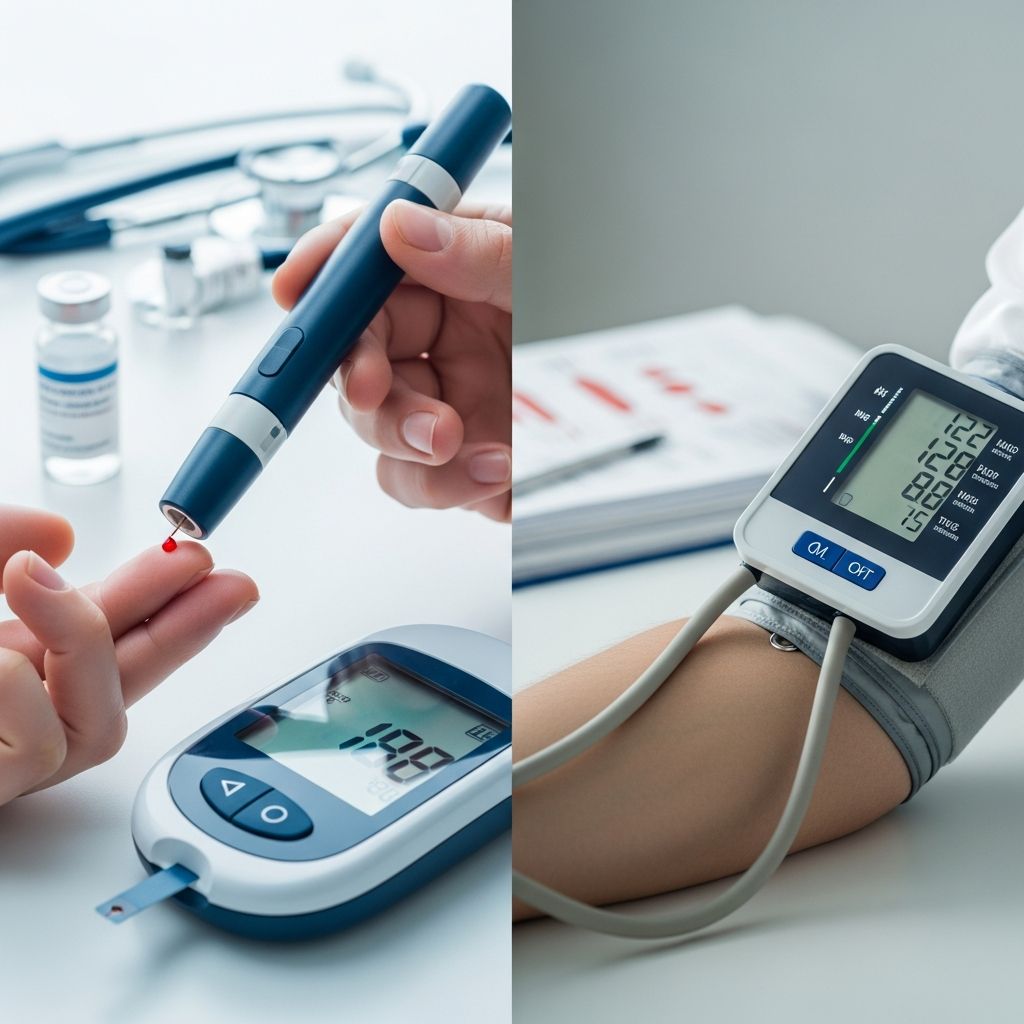
High blood pressure (hypertension) is common in people with diabetes. It is thought that around 3 in 10 people with type 1 diabetes and around 8 in 10 people with type 2 diabetes have high blood pressure. Both diabetes and high blood pressure increase the risk of heart disease, stroke, and kidney problems. Managing blood pressure is as important as controlling blood sugar levels for people with diabetes.
What is high blood pressure?
High blood pressure is often called the ‘silent killer’ because it usually has no symptoms. Blood pressure is measured in millimetres of mercury (mmHg) and is recorded as two numbers: systolic pressure (when the heart beats) over diastolic pressure (when the heart relaxes between beats). Normal blood pressure is around 120/80 mmHg or lower. High blood pressure is when the systolic pressure is consistently 140 mmHg or more, or the diastolic pressure is consistently 90 mmHg or more.
In people with diabetes, the target is usually lower: below 130/80 mmHg, or even stricter at below 120/80 mmHg for some, to reduce cardiovascular risks.
Why is high blood pressure more common in people with diabetes?
Diabetes damages small blood vessels over time, leading to stiffening and narrowing, which raises blood pressure. High blood sugar also impairs kidney function, causing salt and water retention that further elevates pressure. This creates a vicious cycle: hypertension accelerates kidney damage, worsening diabetes control.
Shared risk factors include obesity, sedentary lifestyle, poor diet, smoking, and genetics. Metabolic syndrome often links the two conditions.
What are the risks if you have diabetes and high blood pressure?
Untreated, this combination doubles the risk of heart attack, stroke, kidney failure, retinopathy, and neuropathy compared to either condition alone. Diabetes is the leading cause of kidney failure in the US, affecting up to 40% of type 2 diabetics.
- Cardiovascular disease: Heart attack and stroke risk increases significantly.
- Kidney disease: Damaged kidneys filter less efficiently, retaining fluid and toxins.
- Eye problems: Retinopathy leading to vision loss.
- Nerve damage: Poor circulation exacerbates neuropathy.
How is high blood pressure diagnosed?
Diagnosis involves multiple readings over time using a blood pressure monitor. Home monitoring is recommended for accuracy. For diabetics, annual checks are standard, more frequent if elevated.
| Category | Systolic (mmHg) | Diastolic (mmHg) |
|---|---|---|
| Normal | <120 | <80 |
| Elevated | 120-129 | <80 |
| Hypertension Stage 1 | 130-139 | 80-89 |
| Hypertension Stage 2 | ≥140 | ≥90 |
| Diabetic Target | <130 | <80 |
Sources: Adapted from AHA and ADA guidelines.
Treatment of high blood pressure in diabetes
Treatment combines lifestyle changes and medications. The goal is to keep blood pressure below 130/80 mmHg to protect organs.
Lifestyle changes
- Diet: DASH or Mediterranean diet low in salt (<2,300 mg/day), rich in fruits, vegetables, whole grains.
- Exercise: 150 minutes/week of moderate activity like walking.
- Weight management: Losing 5-10% body weight lowers pressure.
- Limit alcohol: ≤1-2 drinks/day.
- Quit smoking: Improves vessel health.
- Stress reduction: Meditation, yoga.
Related Stories



Medicines
ACE inhibitors (e.g., lisinopril) or ARBs (e.g., losartan) are first-line for diabetics due to kidney protection. Others include calcium channel blockers, diuretics, beta-blockers.
Emerging diabetes drugs like SGLT2 inhibitors (e.g., empagliflozin) and GLP-1 agonists (e.g., semaglutide) lower both blood sugar and pressure, reducing heart and kidney risks dramatically.
Can high blood pressure be prevented in people with diabetes?
Yes, through early screening, tight blood sugar control (HbA1c <7%), healthy lifestyle, and prompt treatment. Regular monitoring prevents progression.
What is the outlook?
With proper management, risks drop significantly. New medications offer game-changing protection against complications.
Frequently Asked Questions (FAQs)
Why do people with diabetes often develop high blood pressure?
High blood sugar damages blood vessels and kidneys, leading to stiffening, fluid retention, and elevated pressure.
What is the target blood pressure for diabetics?
Typically below 130/80 mmHg, sometimes stricter.
Can lifestyle changes alone control hypertension in diabetes?
Often yes for mild cases, but most need medications alongside.
Do new diabetes drugs help with blood pressure?
Yes, SGLT2 inhibitors and GLP-1 agonists reduce both glucose and pressure, protecting heart and kidneys.
How often should blood pressure be checked if diabetic?
At every routine visit, or more if elevated.
References
- The connection between diabetes, kidney disease and high blood pressure — American Heart Association. 2020-11-03. https://www.heart.org/en/news/2020/11/03/the-connection-between-diabetes-kidney-disease-and-high-blood-pressure
- Diabetes and hypertension: Connection, complications, risks — Medical News Today. 2017-06-20. https://www.medicalnewstoday.com/articles/317220
- Diabetes and Hypertension — NewYork-Presbyterian. N/A. https://www.nyp.org/diabetes-and-endocrinology/diabetes-resource-center/diabetes-and-hypertension
- Diabetes and High Blood Pressure — American Diabetes Association. N/A. https://diabetes.org/about-diabetes/complications/high-blood-pressure
- Diabetes and Hypertension: A Position Statement — Diabetes Care (ADA). 2017-07-15. https://diabetesjournals.org/care/article/40/9/1273/36772/Diabetes-and-Hypertension-A-Position-Statement-by
Similar Articles








Read full bio of medha deb