Diabetes And Illness: Essential Sick-Day Guide
Essential guidance for managing diabetes during illness to prevent complications and maintain blood sugar control.
When you have
diabetes
, any illness can disrupt your blood sugar control, leading to hyperglycemia or serious complications like diabetic ketoacidosis (DKA) or hyperosmolar hyperglycemic state (HHS). This guide provides essential strategies for managing diabetes during sickness, ensuring safety and recovery.Why Illness Affects Diabetes Control
Illness triggers stress hormones such as cortisol and adrenaline, which raise blood glucose levels by promoting liver glucose release and reducing insulin sensitivity. Even minor infections like colds, flu, or urinary tract infections can cause significant spikes. Dehydration from fever, vomiting, or diarrhea worsens this, concentrating blood sugar. For people with
type 1 diabetes
, this risks DKA; fortype 2 diabetes
, HHS is a concern.Reduced appetite or inability to eat normally complicates management, as carbohydrate intake drops while insulin needs may rise. Poor monitoring during illness exacerbates risks, emphasizing preparation and adherence to ‘sick day rules’.
Sick Day Rules
**Sick day rules** are protocols to maintain glucose control during illness. Key principles include:
- Never stop insulin or diabetes medications, even if not eating—hyperglycemia occurs regardless of intake.
- Monitor blood glucose and ketones frequently (every 2-4 hours).
- Stay hydrated with sugar-free fluids (at least 100 ml/hour if tolerated).
- Attempt regular meals; if unable, use fast-acting carbs like glucose drinks or gels.
- Adjust insulin doses based on readings—consult guidelines or healthcare provider.
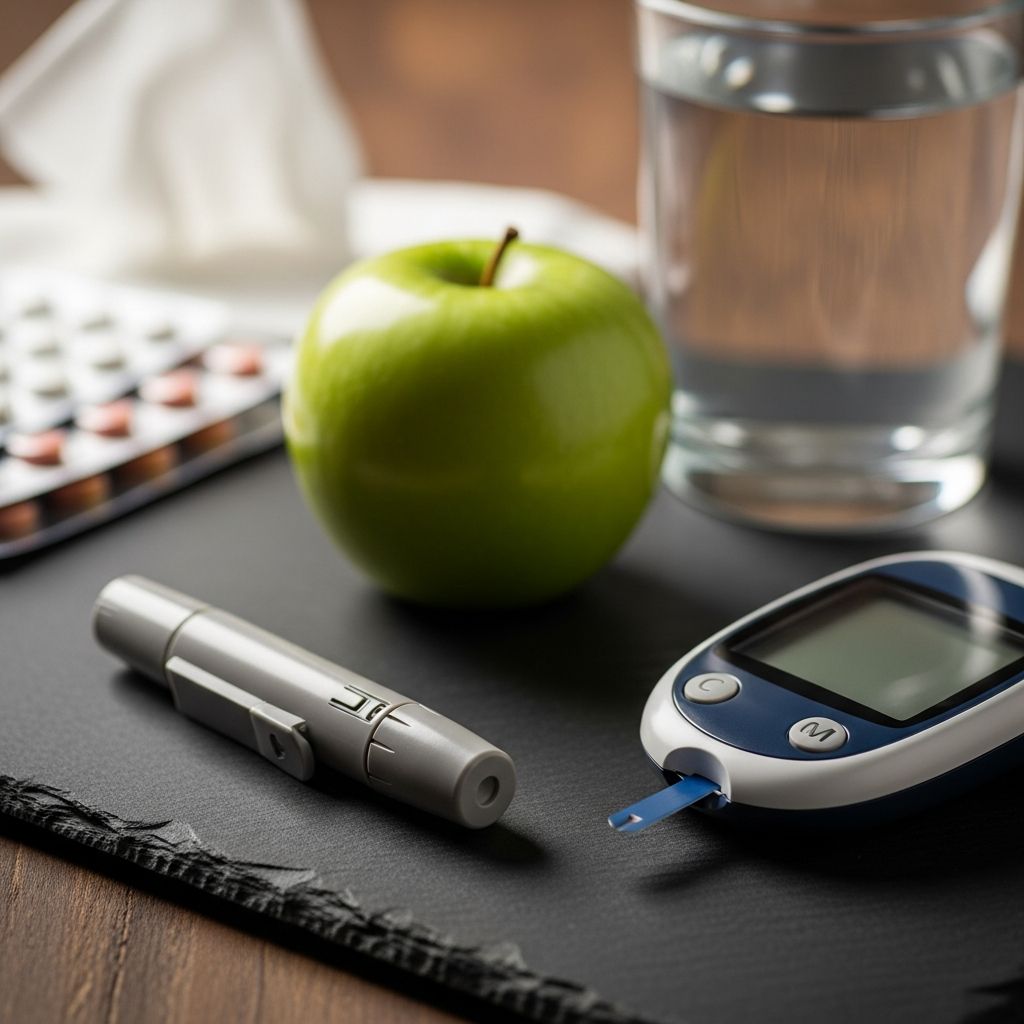
Prepare a sick day kit with glucose meters, ketone strips, medications, fluids, and contact numbers.
Monitoring During Illness
Frequent
blood glucose monitoring
is crucial. Target levels: 4-7 mmol/L fasting, under 9 mmol/L post-meal, but illness may require higher allowances temporarily. Use continuous glucose monitors (CGMs) if available for real-time data.**Ketone testing** is vital, especially for type 1 diabetes or insulin users. Urine or blood ketones above 0.6 mmol/L (moderate/large) signal risk—act promptly.
| Glucose Level (mmol/L) | Action | Ketone Level |
|---|---|---|
| <4 | Treat hypo with fast carbs | Negative |
| 4-14 | Monitor, hydrate, adjust insulin | Trace/Small (<0.6) |
| >14 | Increase insulin, check ketones, seek advice | Moderate/Large (>0.6) |
| >28 | Emergency—go to hospital | High |
This table summarizes actions based on standard guidelines.
Patients on Insulin
For insulin users, illness often increases requirements by 10-20% or more. Do not omit doses; if vomiting, prioritize basal insulin and add correction boluses for highs.
- If glucose >14 mmol/L, give extra rapid-acting insulin (e.g., 10% of total daily dose).
- Repeat every 2-4 hours if needed.
- If ketones present, use ketone-specific protocols to avoid DKA.
Contact your diabetes team for personalized adjustments.
Patients on Tablets (Oral Hypoglycemics)
Most oral medications continue during mild illness, but some pose risks:
- Metformin: Stop if vomiting, severe diarrhea, or dehydration risk to prevent lactic acidosis.
- SGLT2 inhibitors (e.g., dapagliflozin): Stop 24-48 hours before illness or if ketones rise, due to euglycemic DKA risk.
- Sulphonylureas/GLP-1 agonists: Continue but monitor for hypos.
If glucose remains high (>14 mmol/L for 12+ hours), consider temporary insulin—discuss with GP.
Food and Fluid Intake
Maintain nutrition to avoid hypoglycemia or ketosis. If solids are impossible:
- Sip 10-15g carbs hourly (e.g., 100ml Lucozade, 200ml regular Coke, or 4 sugar lumps).
- Alternate with protein/fat sources like soup or yogurt.
- Non-carb fluids: water, squash (aim 6-8 cups/day).
Track intake to match insulin/carbs.
Hypoglycaemia (Hypos) During Illness
Hypos risk increases with reduced food but unchanged meds. Treat standardly: 15g fast carbs, recheck in 15 mins. If recurrent, reduce insulin/tablets after advice. Symptoms: sweating, shakiness, confusion—act fast.
Hyperglycaemia and Ketones
Persistent highs (>14 mmol/L) with ketones indicate DKA/HHS precursors. DKA symptoms: nausea, abdominal pain, rapid breathing, fruity breath. HHS: extreme thirst, confusion, seizures.
Related Stories



When to Seek Medical Help
Contact GP/diabetes team if:
- Glucose >14 mmol/L for 12+ hours.
- Ketones moderate/high.
- Vomiting >12 hours, unable to keep fluids down.
- Illness >2 days without improvement.
- Symptoms of DKA/HHS.
Call 999 for: glucose >28 mmol/L, high ketones, severe symptoms, unconsciousness.
Preventing Complications
Illness heightens risks of long-term issues like retinopathy, neuropathy. Good control reduces this. Annual reviews assess HbA1c, blood pressure, cholesterol. Vaccinations (flu, pneumococcal, COVID) prevent triggers.
Special Considerations
Children and Young People
More prone to rapid DKA—monitor closely, involve pediatric team.
Pregnancy
Gestational diabetes requires tight control; illness needs specialist input.
Travel
Carry extra supplies, know international protocols.
Frequently Asked Questions (FAQs)
Should I stop my diabetes medication when ill?
No, never stop insulin. For tablets, follow specific rules (e.g., stop metformin if dehydrated). Consult your team.
How often should I test blood sugar when sick?
Every 2-4 hours, or more if high/ketones present.
What if I can’t eat solid food?
Use liquid carbs hourly and hydrate with non-sugary fluids.
When is it an emergency?
Glucose >28 mmol/L, high ketones, persistent vomiting, or DKA symptoms—seek immediate help.
Do I need a sick day kit?
Yes: meter, strips, ketones, meds, glucagon, ID card, contacts.
Long-term Management
Beyond acute illness, lifestyle (diet, exercise, weight control) prevents frequent disruptions. Education programs enhance self-management. Remission possible in type 2 via low-calorie diets.
(Word count: 1687)
References
- Type 2 Diabetes: Causes, Symptoms, and Treatment — Patient.info. 2023-05-15. https://patient.info/diabetes/type-2-diabetes
- Diabetes Mellitus: Causes, Symptoms, and Treatment — Patient.info (Doctor). 2024-02-10. https://patient.info/doctor/endocrine-disorders/diabetes-mellitus-pro
- Diabetes: Symptoms, Diagnosis, and Treatment — Patient.info. 2024-01-20. https://patient.info/diabetes/diabetes-mellitus-leaflet
- Diabetes and Intercurrent Illness — Patient.info (Doctor). 2023-11-05. https://patient.info/doctor/endocrine-disorders/diabetes-and-intercurrent-illness
- Diabetes — Cleveland Clinic. 2024-08-12. https://my.clevelandclinic.org/health/diseases/7104-diabetes
- Diabetes and Illness — Patient.info. 2024-03-18. https://patient.info/diabetes/diabetes-and-illness
Similar Articles








Read full bio of Sneha Tete