Diabetes and Pregnancy: 2025 Guide To Risks & Management
Comprehensive guide to managing pre-existing diabetes during pregnancy for healthy outcomes for mother and baby.
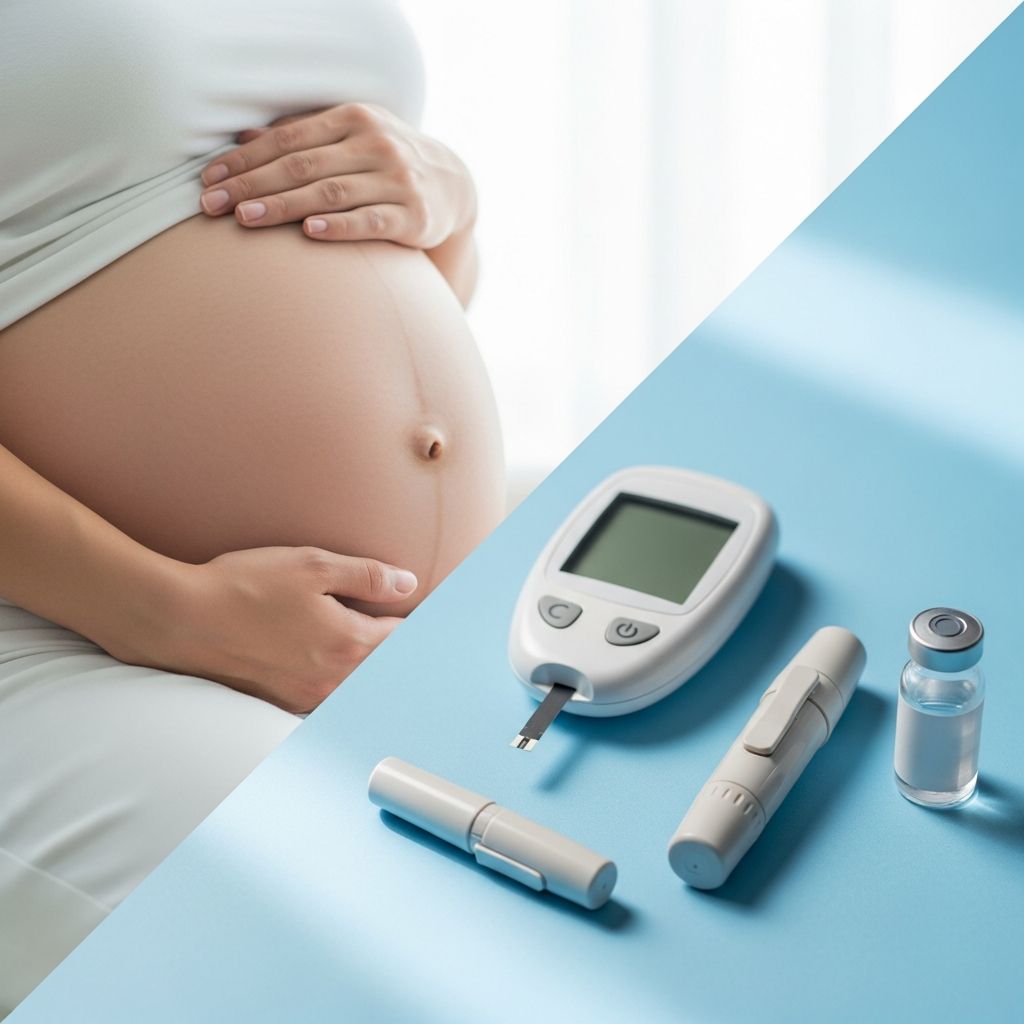
Pregnancies in women with pre-existing diabetes, either type 1 or type 2, are classified as high-risk due to elevated chances of complications for both mother and baby. Effective preconception care and tight glucose control can significantly mitigate these risks.
Understanding Diabetes in Pregnancy
Pre-existing diabetes refers to type 1 or type 2 diabetes present before conception, distinct from gestational diabetes which develops during pregnancy. Approximately 7.5% of diabetes cases in pregnancy are type 1 and 5% type 2, with the majority being gestational. Hormonal changes in pregnancy increase insulin resistance, necessitating adjustments in management to maintain stable blood glucose levels.
Preconception Care
Optimal preconception planning is crucial for women with diabetes. Achieving blood glucose targets before pregnancy reduces risks of congenital malformations and other complications. Women should consult their healthcare provider to normalize blood sugar, review medications, and address comorbidities like hypertension or retinopathy.
- Achieve HbA1c below 48 mmol/mol (6.5%): Lower levels correlate with reduced malformation risks.
- Folic acid supplementation: 5 mg daily to prevent neural tube defects.
- Retinal screening: Essential as pregnancy can accelerate retinopathy progression.
- Medication review: Switch to pregnancy-safe insulins; discontinue oral agents if needed.
Prepregnancy counseling allows discussion of treatment for diabetes-related issues such as high blood pressure, kidney disease, or eye problems.
Risks to the Mother
Women with pre-existing diabetes face heightened risks during pregnancy. Poor glycemic control exacerbates these issues.
Increased Risk of Diabetes Complications
- Ketoacidosis: More frequent, posing severe threats.
- Retinopathy and nephropathy progression: Linked to first-trimester poor control and hypertension.
Obstetric Complications
| Complication | Description | Risk Factors |
|---|---|---|
| Pregnancy-induced hypertension | Higher in type 2 diabetes | Poor control, obesity |
| Pre-eclampsia | Elevated blood pressure, proteinuria | Nephropathy, hypertension |
| Thromboembolism | Increased clotting risk | Immobility, hypercoagulability |
| Premature labour | 5x more likely before 37 weeks | Macrosomia, infection |
| Spontaneous abortion | Higher miscarriage rates | Poor preconception control |
| Obstructed labour | Due to macrosomia, shoulder dystocia | Large baby size |
| Polyhydramnios | Excess amniotic fluid | Poor glucose control |
| Maternal infection | UTIs, wound infections | Hyperglycemia |
Preeclampsia risk rises, and existing conditions like eye, heart, or kidney disease can worsen with high glucose.
Risks to the Baby
Fetal complications stem largely from maternal hyperglycemia, especially in the first trimester during organogenesis.
- Congenital malformations: 6-12% risk, affecting heart, brain, spine, skeleton; occur in first 8 weeks.
- Stillbirth and perinatal mortality: Higher rates despite advances.
- Macrosomia: Large babies (>4kg), leading to birth injuries.
- Postnatal issues: Hypoglycemia, respiratory distress, jaundice.
Maintaining control prevents many anomalies, as high glucose in early pregnancy harms organ development.
Management During Pregnancy
Multidisciplinary care involving endocrinologists, obstetricians, and dietitians is essential. Insulin remains the cornerstone, with adjustments for changing needs.
Insulin Therapy
Oral hypoglycemics are generally avoided; insulin is preferred.
- Rapid-acting analogues: Aspart, lispro safe for pregnancy.
- Long-acting: NPH first choice; detemir or glargine if pre-pregnancy control good.
- Dosing changes: Insulin requirements drop in first trimester, rise later due to placental hormones.
- Insulin pump: Considered for type 1 to fine-tune delivery.
Glycaemic Control and Monitoring
Tight control targets prevent complications.
| Time | Target (mmol/L) |
|---|---|
| Fasting | 3.5-5.3 |
| 1-hour post-meal | <7.8 |
| Bedtime | 6.4-7.8 |
| Mimumum | >4.0 |
- Type 1: Test fasting, pre-meal, 1-hour post, bedtime daily; offer rtCGM.
- Type 2: Fasting and 1-hour post-meal if on non-insulin therapy or single-dose insulin.
- HbA1c: Measure at booking, consider in 2nd/3rd trimesters; >48 mmol/mol increases risk.
- Hypoglycaemia: Advise fast glucose sources, glucagon for type 1; awareness may impair.
Related Stories



rtCGM improves outcomes in type 1 pregnancies. Whole foods diet: fruits, vegetables, legumes, grains, lean proteins.
Fetal Monitoring
- Ultrasound scans: 18-20 weeks for anomalies, growth every 4 weeks from 28 weeks.
- Cardiotocography: From 30 weeks for well-being.
- Doppler ultrasound: If growth issues or polyhydramnios.
Labour and Delivery
Timing and mode depend on control and fetal status. Induction or cesarean often at 38-39 weeks to avoid stillbirth.
- Glucose management: IV insulin-dextrose infusion targeting 4-7 mmol/L.
- Vaginal delivery preferred: Unless macrosomia or other indications for cesarean.
Postnatal Care
Post-delivery, insulin needs halve abruptly. Monitor mother and baby closely.
- Maternal: HbA1c at 6-8 weeks; contraception advice; type 2 may restart orals.
- Neonatal: Screen for hypoglycemia, jaundice; breastfeeding encouraged.
Women with prior gestational diabetes face type 2 risk; reconfirm diabetes type post-delivery.
Frequently Asked Questions (FAQs)
Q: Can women with diabetes have a healthy pregnancy?
A: Yes, with preconception optimization and vigilant management, risks are minimized for healthy outcomes.
Q: What are the target blood glucose levels in pregnancy?
A: Fasting 3.5-5.3 mmol/L, 1-hour post-meal <7.8 mmol/L, above 4 mmol/L minimum.
Q: Is insulin safe during pregnancy?
A: Yes, specific analogues like aspart, lispro, and NPH are recommended and do not harm fetus.
Q: When is delivery typically planned?
A: Around 38-39 weeks by induction or cesarean to reduce stillbirth risk.
Q: What postnatal checks are needed for the baby?
A: Blood glucose, jaundice screening, and growth assessment due to hypoglycemia risk.
References
- Diabetes in Pregnancy — Patient.info. 2023. https://patient.info/doctor/endocrine-disorders/diabetes-in-pregnancy
- Pregnancy if You Have Diabetes — NIDDK (nih.gov). 2024-01-05. https://www.niddk.nih.gov/health-information/diabetes/diabetes-pregnancy
- Diabetes in Pregnancy — UCSF Health. 2023. https://www.ucsfhealth.org/education/diabetes-in-pregnancy
- Pregnancy With Type 1 or Type 2 Diabetes — ACOG. 2023-10-01. https://www.acog.org/womens-health/faqs/pregnancy-with-type-1-or-type-2-diabetes
- Diabetes in Pregnancy: Type 1, Type 2, Risks & Management — Cleveland Clinic. 2024. https://my.clevelandclinic.org/health/articles/diabetes-in-pregnancy
- 15. Management of Diabetes in Pregnancy: Standards of Care — American Diabetes Association (diabetesjournals.org). 2025-12-01. https://diabetesjournals.org/care/article/49/Supplement_1/S321/163918/15-Management-of-Diabetes-in-Pregnancy-Standards
Similar Articles








Read full bio of Sneha Tete