Diabetes Insipidus: Causes, Symptoms, Diagnosis & Treatment
Complete guide to understanding diabetes insipidus: symptoms, diagnosis, and effective treatment options.
What is Diabetes Insipidus?
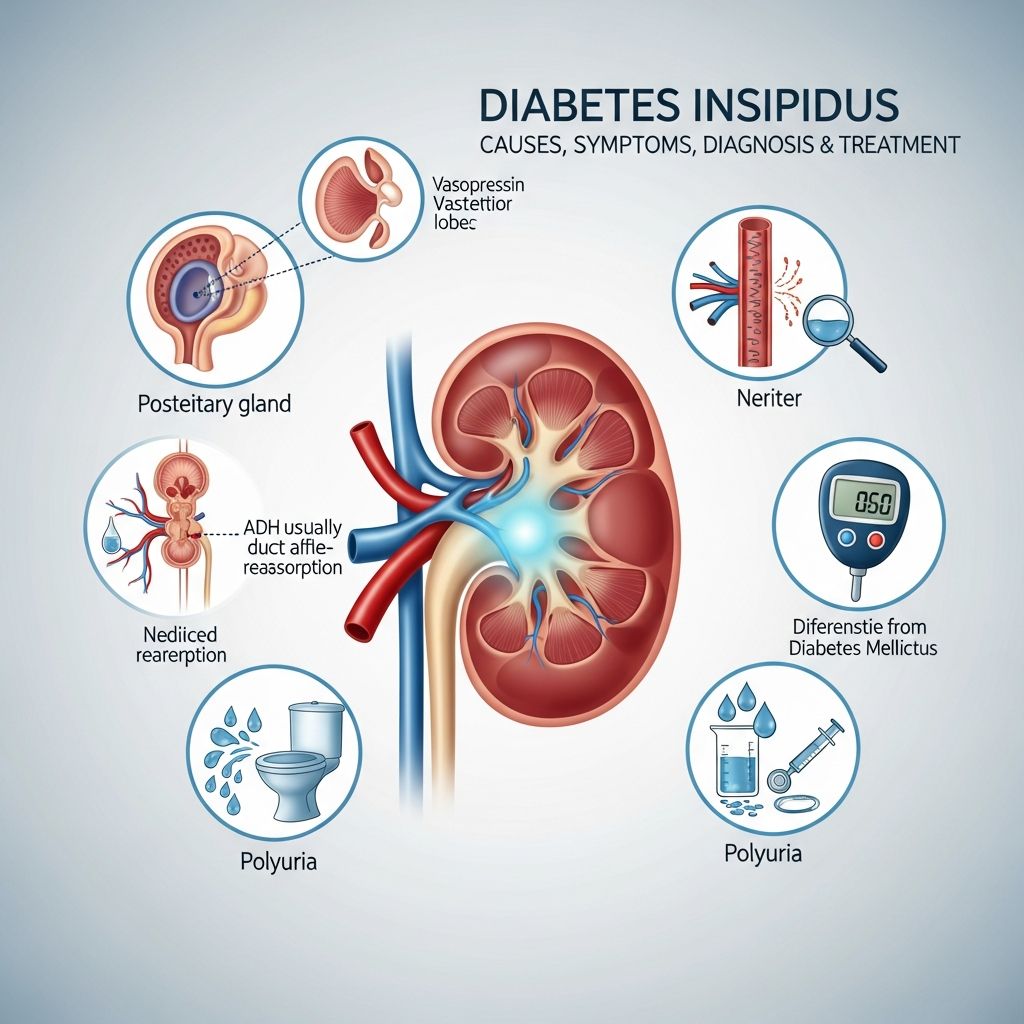
Diabetes insipidus (DI) is a rare endocrine disorder that disrupts your body’s ability to regulate fluid balance. Unlike diabetes mellitus, which affects blood sugar levels, diabetes insipidus involves a problem with antidiuretic hormone (ADH), also called vasopressin. This hormone plays a critical role in helping your kidneys conserve water by concentrating urine. When ADH production or function is compromised, your body loses excessive amounts of fluid through urination, leading to intense thirst and dehydration if fluid intake is inadequate.
The condition affects the body’s fluid balance mechanism in ways that can significantly impact daily life. People with diabetes insipidus may experience urinary frequency of up to every 15 minutes and consume large quantities of fluids to compensate for fluid loss. Understanding this condition is essential for proper management and preventing serious complications.
Understanding ADH and Its Role
Antidiuretic hormone (ADH) is produced in the hypothalamus, a small region of the brain located near the pituitary gland. When your body’s fluid levels drop too low, the pituitary gland releases ADH into your bloodstream. This hormone signals your kidneys to conserve fluids by reabsorbing water from urine and returning it to your bloodstream, thereby concentrating the urine and reducing the volume of fluid lost.
When this system functions properly, your body maintains optimal hydration and electrolyte balance. However, when ADH production fails or when kidneys cannot respond to ADH appropriately, excessive fluid loss occurs, triggering the symptoms characteristic of diabetes insipidus.
Types of Diabetes Insipidus
Diabetes insipidus is classified into four distinct types, each with different underlying causes and treatment approaches.
Central Diabetes Insipidus
Central diabetes insipidus occurs when your body doesn’t produce enough ADH due to damage to the hypothalamus or pituitary gland. This is the most common form of the condition. The damage can result from several causes including surgery in the pituitary region (the most common cause), tumors affecting the pituitary gland or nearby structures, head injuries, infections in the brain, inflammation, loss of blood supply to the pituitary gland, or autoimmune diseases that damage ADH-producing cells.
An inherited genetic disorder may also cause central diabetes insipidus. When central DI develops, the kidneys themselves function normally, but they don’t receive adequate signals to conserve water.
Nephrogenic Diabetes Insipidus
Nephrogenic diabetes insipidus occurs when your kidneys produce normal amounts of ADH but fail to respond to the hormone appropriately. In this type, the problem lies with the kidney’s inability to respond to ADH signals, not with ADH production itself. This condition can result from inherited genetic disorders, certain medications (particularly lithium and some antiviral medicines), electrolyte imbalances (low potassium or high calcium levels), urinary tract blockages or infections, or chronic kidney conditions.
Nephrogenic DI can be particularly challenging to treat because addressing ADH deficiency won’t help if the kidneys cannot respond to the hormone. However, in some cases, treating the underlying cause—such as switching medications or correcting electrolyte imbalances—may resolve the condition.
Related Stories



Gestational Diabetes Insipidus
Gestational diabetes insipidus occurs specifically during pregnancy when an enzyme produced by the placenta breaks down ADH more quickly than usual. This temporary form of the condition typically develops during the third trimester and resolves after delivery.
Primary Polydipsia (Dipsogenic Diabetes Insipidus)
Primary polydipsia, also called dipsogenic diabetes insipidus, results from abnormal thirst sensation rather than problems with ADH production or kidney response. A problem with your hypothalamus causes you to feel unusually thirsty and drink excessive amounts of liquids, which leads to frequent urination. This can result from damage to the hypothalamus from surgery, infection, inflammation, tumors, or head injury, as well as from certain medications or mental health conditions.
Symptoms of Diabetes Insipidus
The hallmark symptoms of diabetes insipidus are distinctive and typically develop relatively quickly. Recognition of these symptoms is crucial for seeking appropriate medical evaluation.
Primary Symptoms
The two main symptoms of diabetes insipidus are:
– Excessive thirst that may be intense and uncontrollable, often with a specific craving for water or ice water- Excessive urination, sometimes occurring as frequently as every 15 minutes, day and night
Because of the excessive fluid consumption required to compensate for urinary losses, urine becomes very clear and dilute, resembling water in appearance. Most people with diabetes insipidus become so thirsty that they naturally drink enough water to replace the fluid they lose in urine, which typically prevents severe dehydration.
Secondary Complications and Related Symptoms
If fluid intake becomes inadequate or if the condition goes untreated, dehydration can develop. Symptoms of dehydration include:
– Dry mouth and excessive thirst- Dizziness or lightheadedness, especially when standing- Fatigue and general tiredness- Difficulty concentrating or performing mental tasks- Nausea- Fainting in severe cases
Causes and Risk Factors
Understanding the underlying causes of diabetes insipidus is essential for proper treatment and management.
Causes of Central Diabetes Insipidus
Central diabetes insipidus can develop due to various conditions affecting the pituitary gland or hypothalamus:
– Pituitary or brain tumors- Head injuries- Brain surgery, particularly in the pituitary region (most common surgical cause)- Infections in the brain, such as meningitis or encephalitis- Brain inflammation- Blocked or bulging arteries (aneurysms)- Loss of blood supply to the pituitary gland- Autoimmune diseases that damage ADH-producing cells- Inherited genetic disorders- Diseases such as Langerhans cell histiocytosis
Causes of Nephrogenic Diabetes Insipidus
Nephrogenic diabetes insipidus develops when kidneys cannot respond appropriately to ADH. Common causes include:
– Inherited genetic mutations affecting kidney function- Lithium therapy, especially with long-term use (can become permanent)- Antiviral medications such as foscarnet- Electrolyte imbalances (low potassium or high calcium levels)- Urinary tract blockages- Urinary tract infections- Chronic kidney disease- Other medications used to treat various conditions
Diagnosis of Diabetes Insipidus
Accurate diagnosis of diabetes insipidus requires specific tests to distinguish it from other conditions causing similar symptoms.
Initial Evaluation
Your healthcare provider will begin with a thorough medical history and physical examination, focusing on your symptom patterns, fluid intake, and urination frequency. They will inquire about any recent head injuries, surgeries, or medications that might contribute to the condition.
Diagnostic Tests
Several tests help confirm diabetes insipidus and determine its type:
–
Serum sodium levels
: Blood tests measure sodium concentration, which becomes elevated in diabetes insipidus-Urine osmolality
: This test measures urine concentration; in diabetes insipidus, urine is abnormally dilute-Water deprivation test
: This classic test helps determine whether the kidneys can concentrate urine when body fluids become low. Patients fast from fluids while healthcare providers monitor urine output and osmolality-ADH stimulation test
: After the water deprivation test, desmopressin (synthetic ADH) is administered; response to this medication helps distinguish between central and nephrogenic diabetes insipidus-MRI imaging
: This may be ordered to visualize the pituitary gland and hypothalamus, particularly when central diabetes insipidus is suspected, to identify tumors or other structural abnormalities-Blood calcium and potassium levels
: These electrolytes are measured to identify imbalances that might cause nephrogenic diabetes insipidusTreatment Options
Treatment approaches for diabetes insipidus depend on the underlying type and cause. While there is no cure for diabetes insipidus, various treatment strategies effectively manage symptoms and prevent complications.
Central Diabetes Insipidus Treatment
When central diabetes insipidus is caused by an underlying disorder such as a pituitary tumor, that condition is treated first. Beyond addressing the underlying cause, the primary treatment involves replacing the missing ADH:
Desmopressin (DDAVP) is a manufactured hormone that replaces natural ADH and is the first-line treatment for central diabetes insipidus. This medication lowers the amount of urine the body produces and maintains proper fluid balance. Desmopressin is available in multiple forms:
– Nasal spray- Tablets taken by mouth- Injectable form- Dissolving tablets
Most patients take desmopressin two or three times daily. Additional medications may be prescribed to enhance the effectiveness of desmopressin.
Nephrogenic Diabetes Insipidus Treatment
Nephrogenic diabetes insipidus presents greater treatment challenges because the kidneys cannot respond to ADH. Management strategies include:
Medication adjustments: If nephrogenic diabetes insipidus is caused by a specific medication, discontinuing that medicine may restore normal kidney function. However, long-term use of some medications, such as lithium, can cause permanent nephrogenic diabetes insipidus even after the medicine is stopped.
Thiazide diuretics: Although counterintuitive, certain diuretics such as hydrochlorothiazide (Microzide) help reduce urine output in nephrogenic diabetes insipidus. These medications work through different mechanisms than they do in other conditions.
Nonsteroidal anti-inflammatory drugs (NSAIDs): Medications such as indomethacin (Indocin) can ease symptoms by reducing urine production.
Other diuretics: Medications such as amiloride (Moduretic) may be prescribed to help reduce urinary output.
Dietary modifications: A diet low in salt and protein helps reduce kidney urine production, easing symptoms.
Adequate hydration: For both hereditary and lithium-induced nephrogenic diabetes insipidus, drinking sufficient fluids to match urine output remains essential to prevent dehydration.
Gestational Diabetes Insipidus Treatment
Gestational diabetes insipidus is managed with desmopressin medication, which is safe during pregnancy. The condition typically resolves after delivery.
Primary Polydipsia Management
Primary polydipsia has no specific medical treatment beyond reducing fluid intake. If the condition relates to a mental health disorder, treating that underlying condition may ease symptoms.
General Fluid Management
Regardless of diabetes insipidus type, your doctor will recommend maintaining adequate fluid intake. In mild cases of central diabetes insipidus, increased water consumption may be sufficient without medications. Drinking plenty of fluids replaces the constant loss of water and prevents dehydration.
Living with Diabetes Insipidus
With appropriate treatment and management strategies, most people with diabetes insipidus can lead normal lives. The prognosis depends on the underlying disorder, but when treated properly, diabetes insipidus does not cause severe complications or result in early death.
Key management strategies include maintaining consistent medication adherence, ensuring adequate hydration, monitoring symptoms, attending regular medical appointments, and maintaining communication with your healthcare provider about any changes in your condition.
Frequently Asked Questions
Q: Is diabetes insipidus the same as diabetes mellitus?
A: No. Although both conditions have “diabetes” in their names, they are completely different. Diabetes mellitus involves elevated blood sugar levels, while diabetes insipidus involves problems with fluid balance and ADH hormone regulation. The two conditions require entirely different treatments.
Q: Can diabetes insipidus be cured?
A: There is no cure for diabetes insipidus, but symptoms can be effectively managed with appropriate treatment, including medications like desmopressin and lifestyle modifications.
Q: Is diabetes insipidus life-threatening?
A: When properly treated and managed, diabetes insipidus does not cause severe complications or early death. The main concern is preventing dehydration through adequate fluid intake and medication adherence.
Q: How is central diabetes insipidus different from nephrogenic diabetes insipidus?
A: Central diabetes insipidus occurs when your body doesn’t produce enough ADH due to pituitary or hypothalamus problems. Nephrogenic diabetes insipidus occurs when your body produces sufficient ADH, but your kidneys cannot respond to it properly.
Q: Can medications cause diabetes insipidus?
A: Yes, certain medications can cause nephrogenic diabetes insipidus, particularly lithium and some antiviral medicines. Stopping these medications may resolve the condition if caught early.
Q: How often do I need to take desmopressin?
A: Most patients take desmopressin two or three times daily, though frequency may vary based on individual needs and response to treatment. Your healthcare provider will determine the optimal dosing schedule for you.
References
- Diabetes Insipidus: Symptoms, Causes, Diagnosis, Treatment — WebMD. 2024. https://www.webmd.com/diabetes/what-is-diabetes-insipidus
- Diabetes Insipidus – Diagnosis and Treatment — Mayo Clinic. 2024. https://www.mayoclinic.org/diseases-conditions/diabetes-insipidus/diagnosis-treatment/drc-20351274
- Diabetes Insipidus — NHS. 2024. https://www.nhs.uk/conditions/diabetes-insipidus/
- Diabetes Insipidus — Penn Medicine. 2024. https://www.pennmedicine.org/conditions/diabetes-insipidus
- Diabetes Insipidus – Symptoms and Causes — Mayo Clinic. 2024. https://www.mayoclinic.org/diseases-conditions/diabetes-insipidus/symptoms-causes/syc-20351269
- Diabetes Insipidus — UCSF Health. 2024. https://www.ucsfhealth.org/conditions/diabetes-insipidus
- Diabetes Insipidus — National Institute of Diabetes and Digestive and Kidney Diseases (NIDDK). 2024. https://www.niddk.nih.gov/health-information/kidney-disease/diabetes-insipidus
Similar Articles








Read full bio of Sneha Tete