Diabetes Risk Factor Quiz
Assess your type 2 diabetes risk with this quick quiz based on key factors like age, BMI, family history, and lifestyle habits.
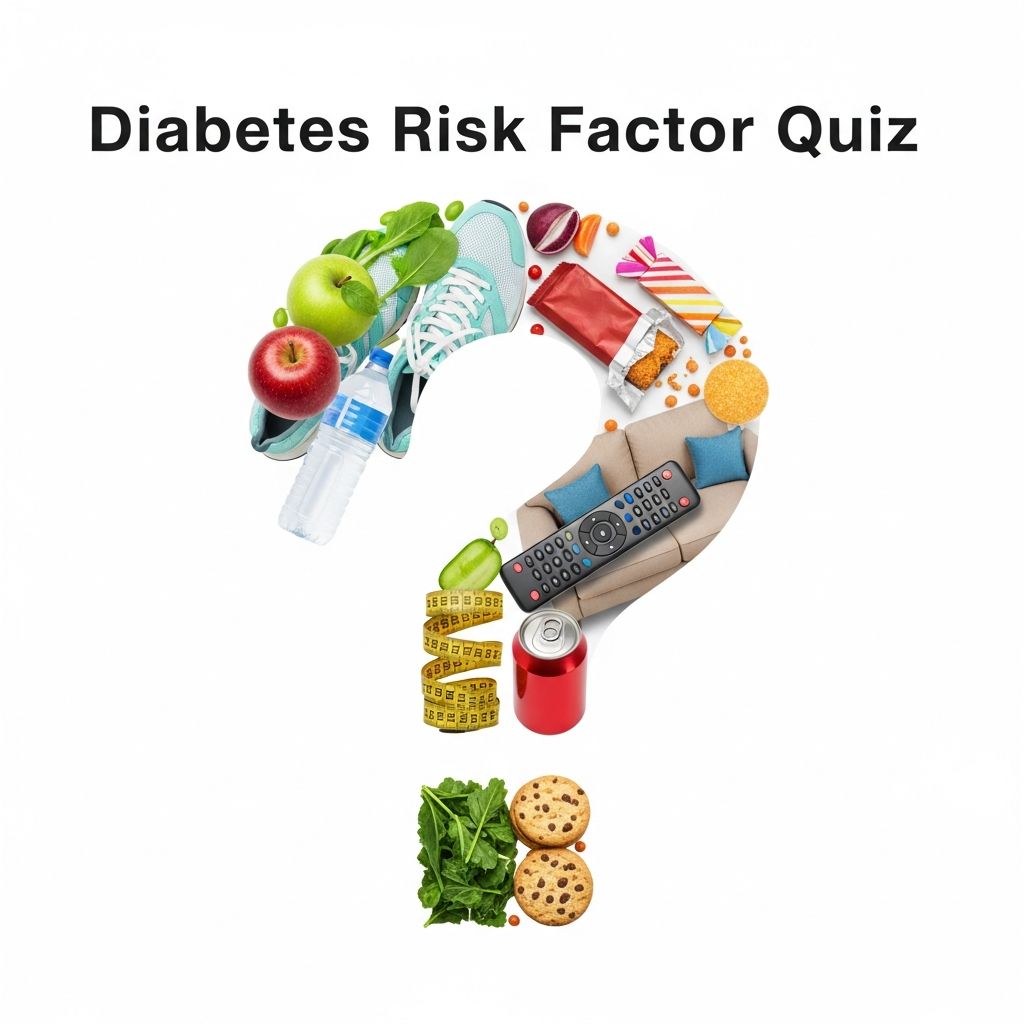
Type 2 diabetes affects millions worldwide, but knowing your risk can empower you to take preventive action. This quiz, inspired by established risk assessment tools, evaluates key factors such as age, body mass index (BMI), family history, physical activity, and more. Answer the questions honestly to calculate your score and understand your risk level. Early detection of prediabetes or high risk can lead to lifestyle changes that significantly reduce your chances of developing diabetes.
How to Take the Quiz
Each question is multiple-choice. Select the option that best describes you. At the end, tally your points to determine your risk category. Consult a healthcare provider for personalized advice, as this quiz is for informational purposes only.
The Quiz
- Age:
- Under 40 years: 0 points
- 40-49 years: 1 point
- 50-59 years: 2 points
- 60 years or older: 3 points
- Body Mass Index (BMI): (Calculate BMI using weight in kg divided by height in meters squared)
- Less than 25: 0 points
- 25-30 (overweight): 2 points
- Over 30 (obese): 4 points
- Waist Circumference: (Measure at navel level; men in inches, women in cm)
- Men under 40 inches / Women under 88 cm: 0 points
- Men 40+ inches / Women 88+ cm: 3 points
- Family History of Diabetes:
- No: 0 points
- Parent or sibling: 5 points
- Multiple first-degree relatives: 7 points
- History of High Blood Glucose or Gestational Diabetes:
- No: 0 points
- Yes, elevated glucose or gestational diabetes: 10 points
- Physical Activity Level:
- Active 3+ times/week: 0 points
- Less than 3 times/week: 2 points
- Daily Fruit, Berry, or Vegetable Consumption:
- Yes, daily: 0 points
- No: 1 point
- Hypertension or Antihypertensive Medication:
- No: 0 points
- Yes: 2 points
- Ethnicity (Higher Risk Groups):
- Non-Hispanic White: 0 points
- African American, Hispanic/Latino, American Indian, Alaska Native, Pacific Islander, Asian American: 1 point
- History of Polycystic Ovary Syndrome (PCOS) or NAFLD: (Women for PCOS; anyone for NAFLD)
- No: 0 points
- Yes: 3 points
Scoring Your Quiz
Add up your points from all questions. Compare your total to the risk categories below:
| Risk Level | Score Range | Action Steps |
|---|---|---|
| Low Risk | 0-7 | Continue healthy habits; screen every 3 years. |
| Moderate Risk | 8-14 | Adopt lifestyle changes; screen annually. |
| High Risk | 15-20 | Get tested now; consider prediabetes program. |
| Very High Risk | 21+ | Immediate medical evaluation required. |
This scoring draws from validated models like the Diabetes Risk Score, which identifies high-risk individuals with over 70% accuracy for future diabetes cases.
Understanding Your Risk Factors
**Age:** Risk increases after 45, as insulin resistance builds over time.
**BMI and Waist Circumference:** Excess weight, especially abdominal fat, promotes insulin resistance. BMI 25-30 doubles risk, over 30 quadruples it.
**Family History:** Genetics play a key role; a first-degree relative raises odds significantly.
**History of High Blood Sugar:** Past prediabetes, gestational diabetes, or elevated glucose strongly predicts future type 2 diabetes.
**Physical Inactivity:** Less than 3 sessions weekly heightens risk; activity improves insulin sensitivity.
**Poor Diet:** Low fruit/vegetable intake correlates with higher incidence, even if not the strongest predictor.
**Hypertension:** Linked to metabolic syndrome, increasing diabetes odds.
**Ethnicity:** Certain groups face higher prevalence due to genetic and socioeconomic factors.
**Other Conditions:** PCOS and NAFLD signal underlying insulin issues.
Why Take This Quiz?
Simple self-assessments like this Diabetes Risk Score help identify at-risk individuals before symptoms appear. In studies, scores above 9 flagged over 70% of future cases in the highest quartile. Tools promote awareness of modifiable factors, encouraging preventive behaviors. While not diagnostic, they outperform basic checks by incorporating lifestyle data.
Prevention Strategies
- Lose Weight: 5-7% reduction lowers risk by 58% in prediabetes.
- Exercise Regularly: 150 minutes moderate activity weekly.
- Eat Well: Focus on whole foods, fiber-rich fruits/veggies.
- Monitor Health: Regular blood pressure, glucose checks.
- Join programs like the National Diabetes Prevention Program for structured support.
Frequently Asked Questions (FAQs)
What is prediabetes?
Prediabetes is blood sugar higher than normal but not diabetic, a warning sign for type 2. Lifestyle changes can reverse it.
Can I lower my risk if I have a family history?
Yes, genetics increase susceptibility, but healthy weight, diet, and exercise can prevent onset even in high-genetic-risk individuals.
How accurate is this quiz?
Based on validated models like the Diabetes Risk Score, it predicts 10-year risk effectively, though professional testing confirms.
What if I score high?
Schedule a doctor’s visit for an A1C or glucose test. Early intervention works.
Is gestational diabetes a risk for men?
No, but history of high glucose applies to all; women with gestational diabetes have 50% lifetime risk.
Next Steps
Print your results, discuss with your doctor, and track progress. Small changes yield big results in diabetes prevention.
References
- The Diabetes Risk Score: A practical tool to predict type 2 diabetes risk — Lindström J, Tuomilehto J. Diabetes Care. 2003-03-01. https://diabetesjournals.org/care/article/26/3/725/29197/The-Diabetes-Risk-ScoreA-practical-tool-to-predict
- Diabetes Risk Factors — Centers for Disease Control and Prevention (CDC). Accessed 2026. https://www.cdc.gov/diabetes/risk-factors/index.html
- Determinants of the Use of a Diabetes Risk-Screening Test — van der Holst M, et al. PMC. 2008. https://pmc.ncbi.nlm.nih.gov/articles/PMC2522380/
Similar Articles







Read full bio of Sneha Tete