Diagnosing Breast Cancer: A Complete Guide To Tests, Biopsies
Learn about screening tests, diagnostic procedures, and biopsy methods used to detect and diagnose breast cancer effectively.
Diagnosing breast cancer involves a series of steps, from routine screening to advanced diagnostic tests, to detect abnormalities and confirm cancer. Early detection through screening significantly improves outcomes, with five-year survival rates exceeding 99% for localized disease according to the American Cancer Society. This guide covers screening methods, diagnostic imaging, biopsy procedures, and staging to help you understand the process.
Breast Cancer Screening Tests
Screening tests aim to detect breast cancer before symptoms appear. The primary tool is the mammogram, recommended by the U.S. Preventive Services Task Force for women aged 40-74 at average risk, with biennial screening reducing mortality by 40% in clinical trials.
Mammogram
A mammogram is a low-dose X-ray of the breast that can identify tumors or calcifications not yet palpable. There are two types:
- Screening mammogram: Routine test for asymptomatic women, typically involving two views per breast.
- Diagnostic mammogram: More detailed imaging for those with symptoms or abnormal screening results, including additional views and magnification.
Digital mammograms allow computer-aided detection (CAD), improving sensitivity. 3D mammography (tomosynthesis) reduces callbacks by 15-30% and boosts cancer detection by 1-2 per 1,000 women screened.
Clinical Breast Exam
Performed by healthcare providers, this manual exam checks for lumps, thickening, or nipple changes. It’s often combined with mammograms during annual checkups, though evidence for standalone frequency varies.
Breast Self-Exam
Monthly self-exams help women familiarize themselves with their breasts to notice changes early. While not proven to reduce mortality alone, the American Cancer Society supports them as part of overall awareness.
Imaging Tests for Breast Cancer Diagnosis
If screening reveals abnormalities, diagnostic imaging provides detailed evaluation.
Breast Ultrasound
Ultrasound uses sound waves to distinguish cysts (fluid-filled, benign) from solid masses. It’s particularly useful for dense breasts or young women where mammograms are less effective, guiding 20-30% of biopsies.
Breast MRI
Magnetic Resonance Imaging offers high sensitivity for detecting cancer, recommended for high-risk women (e.g., BRCA mutations) or screening dense breasts. It identifies additional cancers in 10-20% of cases pre-surgery but has higher false positives.
Molecular Breast Imaging (MBI)
MBI involves injecting a radioactive tracer highlighting cancer cells, useful as a mammogram adjunct in dense breasts, detecting 2-3 times more cancers than mammography alone per Mayo Clinic studies.
Breast Biopsy Procedures
A biopsy provides a tissue sample for microscopic cancer confirmation, essential for diagnosis.
Fine-Needle Aspiration (FNA) Biopsy
A thin needle extracts cells from a lump. Quick and minimally invasive, it’s ideal for cysts but less accurate for solid masses.
Core Needle Biopsy
A larger needle removes a tissue core, preferred for accuracy. Ultrasound or mammogram-guided, it assesses cancer type and grade with low complication rates (<1% infection).
Related Stories



Stereotactic Biopsy
For non-palpable lesions seen on mammograms, a computer guides the needle using digital images. Vacuum-assisted versions remove larger samples.
Ultrasound-Guided Biopsy
Real-time ultrasound directs the needle for palpable or visible masses, minimizing damage.
MRI-Guided Breast Biopsy
For MRI-detected lesions invisible on other imaging, performed in an MRI suite.
Image-Guided Biopsy
Combines techniques for precise targeting, often with markers left for future reference.
Surgical Biopsy
Involves excisional (removing entire lump) or incisional (partial) removal under anesthesia if needle biopsy is inconclusive, now rare (<5% of cases).
Breast Cancer Pathology Reports
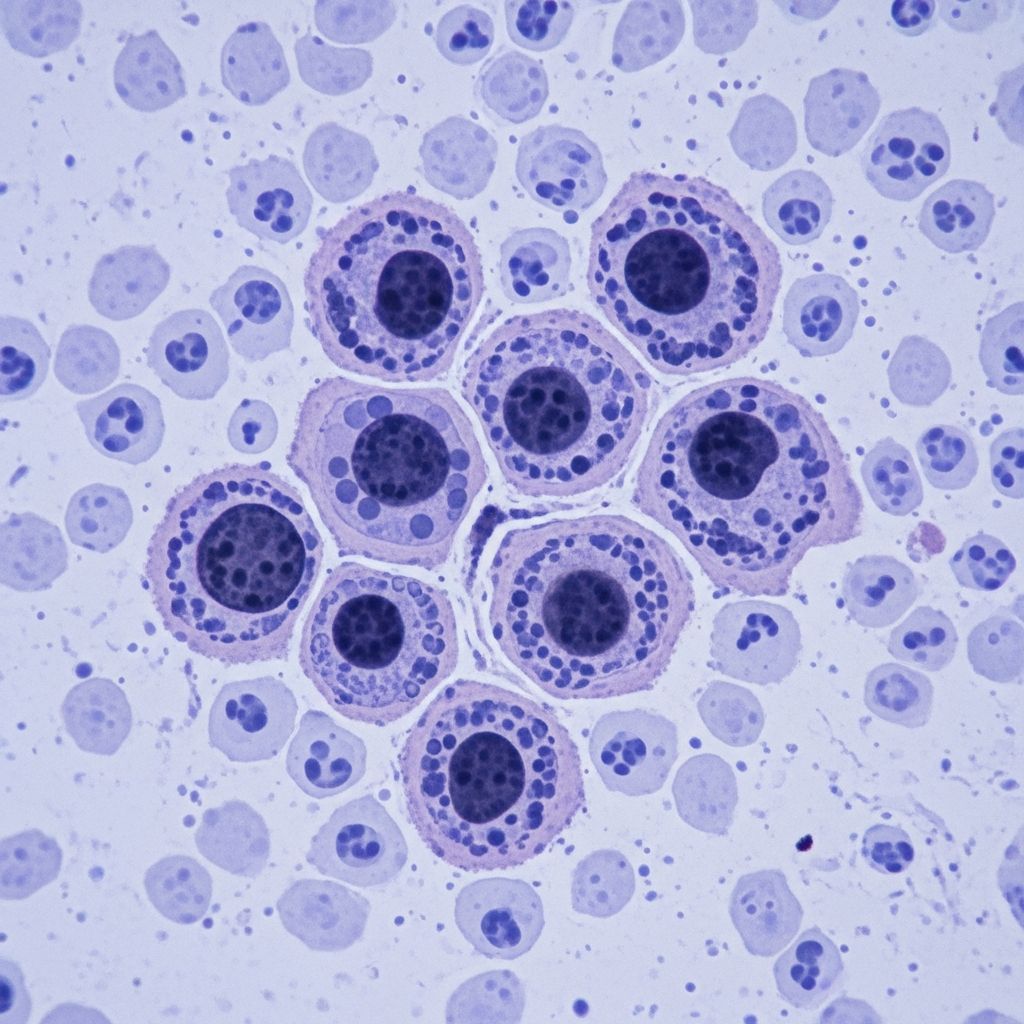
Post-biopsy, pathologists analyze tissue for:
- Cancer type: Ductal (80%) vs. lobular.
- Grade: 1 (well-differentiated) to 3 (poorly differentiated), predicting aggressiveness.
- Receptor status: ER/PR/HER2 guiding targeted therapies.
- Genomic tests: Oncotype DX scores recurrence risk.
Reports inform treatment, with HER2-positive cancers responding to trastuzumab.
Breast Cancer Stages
Staging uses TNM system (Tumor, Node, Metastasis):
| Stage | Description |
|---|---|
| 0 | Ductal carcinoma in situ (DCIS), non-invasive. |
| I | Small invasive tumor (<2cm), no nodes. |
| II | Larger tumor or limited node involvement. |
| III | Locally advanced, extensive nodes. |
| IV | Metastatic to distant sites. |
Staging directs therapy; stage I has 98-100% 5-year survival per SEER data.
Frequently Asked Questions (FAQs)
What is the first step in diagnosing breast cancer?
The first step is often a screening mammogram for asymptomatic women or a diagnostic mammogram if symptoms like lumps or discharge are present.
How painful is a breast biopsy?
Local anesthesia minimizes pain; most report mild discomfort similar to a dental procedure, resolving quickly.
Can breast cancer be diagnosed without a biopsy?
No, imaging suggests but does not confirm cancer; biopsy is required for definitive diagnosis.
Who should get a breast MRI?
High-risk women (lifetime risk >20%), per ACS guidelines, or those with dense breasts and prior cancers.
What does a positive mammogram mean?
It indicates an abnormality needing further tests; only 20-30% are cancer, per radiology data.
Key Takeaways
- Early screening with mammograms saves lives by detecting cancer at treatable stages.
- Diagnostic imaging like ultrasound and MRI clarifies abnormalities.
- Biopsies confirm diagnosis and provide critical prognostic information.
- Understanding pathology and staging empowers informed treatment decisions.
Consult healthcare providers for personalized screening schedules, especially with family history or genetic risks. Advances like AI-enhanced imaging continue improving accuracy.
References
- Breast Cancer Screening — U.S. Preventive Services Task Force. 2024-04-02. https://www.uspreventiveservicestaskforce.org/uspstf/recommendation/breast-cancer-screening
- Breast Cancer Facts & Statistics — American Cancer Society. 2025-01-15. https://www.cancer.org/cancer/types/breast-cancer/about/how-common-is-breast-cancer.html
- Breast Cancer Screening and Diagnosis — National Cancer Institute. 2024-11-20. https://www.cancer.gov/types/breast/screening-fact-sheet
- Mammography and Tomosynthesis — FDA. 2025-03-10. https://www.fda.gov/radiation-emitting-products/mammography-quality-standards-program-and-accreditation/mammography-quality-standards-act-and-program
- Breast Cancer Treatment (PDQ®)–Health Professional Version — National Cancer Institute. 2025-12-05. https://www.cancer.gov/types/breast/hp/breast-treatment-pdq
- ACR Appropriateness Criteria® Breast Cancer Screening — American College of Radiology. 2024-07-18. https://acsearch.acr.org/docs/69425/narratives
Similar Articles








Read full bio of Sneha Tete