Dialysis: Types, How It Works, Procedure & Side Effects
Complete guide to dialysis treatment: Understanding types, procedures, and managing kidney failure effectively.
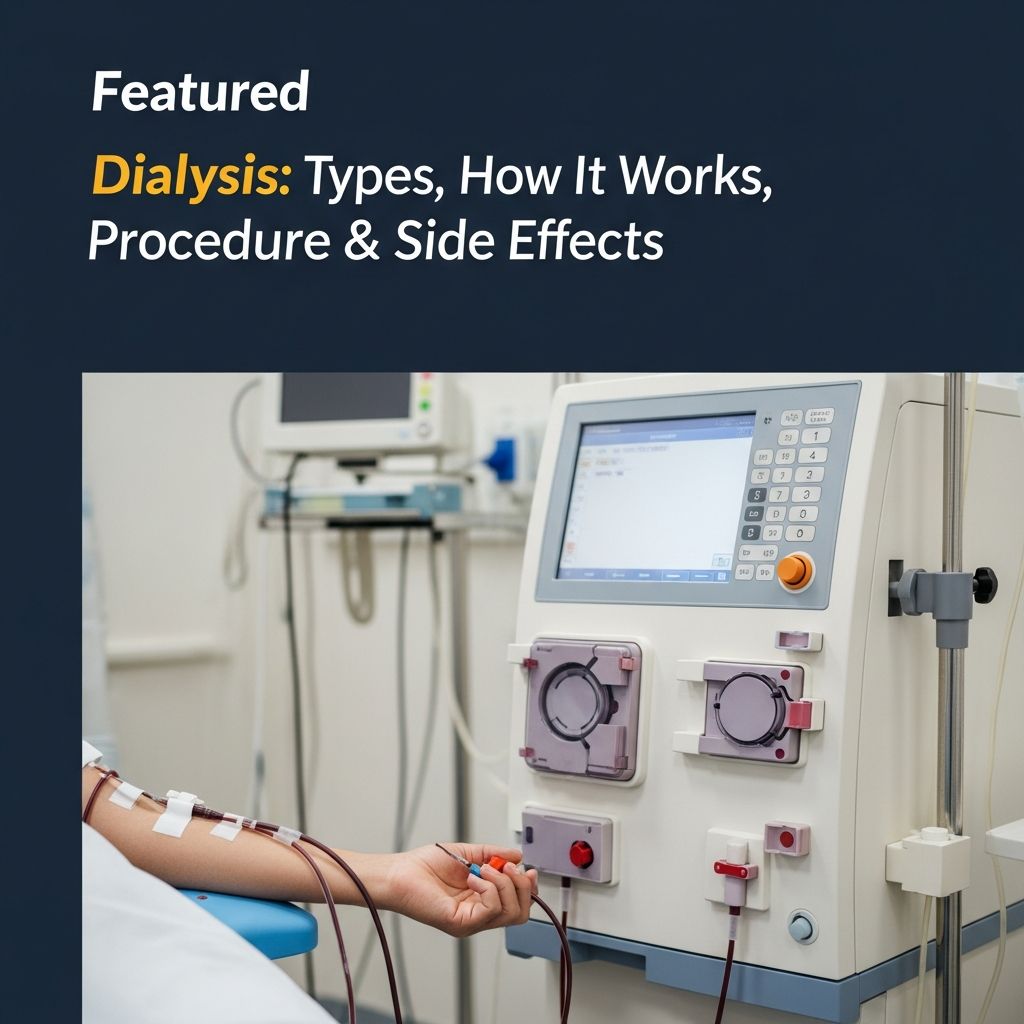
Understanding Dialysis: A Lifesaving Treatment for Kidney Failure
Dialysis is a critical medical treatment designed for individuals whose kidneys are no longer functioning properly and cannot filter waste products and excess water from the blood. When your kidneys fail, these harmful substances accumulate in your body, leading to serious health complications. Dialysis performs the essential functions that healthy kidneys naturally handle, removing waste, excess water, and other impurities from the blood through an artificial filtration process. This treatment becomes necessary when kidney function drops to critically low levels, typically when your kidneys are operating at less than 10 to 15 percent of normal capacity.
There are two primary types of dialysis available to patients: hemodialysis and peritoneal dialysis. Each type works differently and offers distinct advantages depending on individual patient needs, lifestyle preferences, and medical circumstances. Understanding these options helps patients and their healthcare providers determine the most suitable treatment approach.
What Is Hemodialysis?
Hemodialysis is the most common form of dialysis treatment, utilized by the majority of patients with end-stage renal disease. During hemodialysis, your blood is removed from your body, circulated through a specialized machine called a dialyzer, and then returned to your body. The dialyzer functions as an artificial kidney, containing a semi-permeable membrane that filters out waste products, excess water, and excess salt from your blood.
How Hemodialysis Works
The hemodialysis process begins with the creation of vascular access, a small opening that allows blood to flow in and out of the body during treatment. Your doctor performs a minor surgical procedure to create this access, which remains in place between treatments. During each treatment session, needles are inserted into the access point to establish blood flow.
Once connected, blood is drawn from your body into the dialysis machine at a controlled rate. Inside the machine, the blood passes through the dialyzer where waste products and excess fluids are removed through a process called diffusion. Clean blood is then returned to your body through the same access point. A typical hemodialysis session lasts approximately three to five hours and is usually performed three to four times per week at a specialized dialysis center.
Types of Hemodialysis Access
There are three main types of vascular access for hemodialysis:
- Arteriovenous (AV) Fistula: A surgical connection between an artery and vein, usually in the arm, creating a larger blood vessel that can accommodate the needles used during dialysis.
- Arteriovenous (AV) Graft: A synthetic tube that connects an artery to a vein, used when a patient’s own blood vessels are not suitable for fistula creation.
- Central Venous Catheter: A temporary access option consisting of a tube placed in a large vein in the neck, chest, or groin, typically used when immediate dialysis is needed.
What Is Peritoneal Dialysis?
Peritoneal dialysis is an alternative treatment method that uses the peritoneum, a thin membrane lining the inside of your abdomen, as the natural filter for removing waste and excess fluid from your blood. This type of dialysis offers greater flexibility and independence compared to hemodialysis, making it an attractive option for many patients.
How Peritoneal Dialysis Works
In peritoneal dialysis, a special fluid called dialysate is introduced into the peritoneal cavity through a catheter, a soft tube placed through a small opening in the abdomen. The dialysate works by drawing waste products and excess water through the peritoneal membrane into the abdominal cavity. After several hours, when the dialysate has absorbed the waste products, it is drained from the body and replaced with fresh solution.
Related Stories



Types of Peritoneal Dialysis
There are two main types of peritoneal dialysis:
- Continuous Ambulatory Peritoneal Dialysis (CAPD): A manual process that does not require a machine. Dialysate is pumped into your abdomen, where it dwells for several hours while waste removal occurs. The fluid is then drained out in a process called an exchange, which typically takes 30 to 40 minutes. CAPD is generally performed four times daily, and because it does not use a machine, patients can move around freely during treatment.
- Continuous Cycling Peritoneal Dialysis (CCPD): An automated process using a machine called a cycler that automatically fills and drains the dialysate solution. CCPD is typically performed for six to eight hours, five to seven times per week, often while the patient sleeps, freeing up daytime hours for work or school.
Hemodialysis vs. Peritoneal Dialysis: A Comparison
| Feature | Hemodialysis | Peritoneal Dialysis |
|---|---|---|
| Treatment Location | Dialysis center (most common) | Home or any location |
| Treatment Duration | 3-5 hours per session | 30-40 minutes per exchange (CAPD) or 6-8 hours (CCPD) |
| Frequency | 3-4 times per week | 4 times daily (CAPD) or 5-7 times weekly (CCPD) |
| Equipment Required | Dialysis machine at center | Cycler machine (CCPD only) or no machine (CAPD) |
| Mobility | Limited during treatment | Flexible; can continue activities |
| Vascular Access | Required (fistula, graft, or catheter) | Abdominal catheter |
| Dietary Restrictions | More restrictive | Less restrictive |
| Fluid Restrictions | More restrictive | Generally less restrictive |
Preparing for Dialysis
Preparation for dialysis involves several important steps. Your healthcare provider will assess your kidney function through blood tests and determine the appropriate type and frequency of treatment for your specific condition. If hemodialysis is recommended, a vascular access will be created surgically before treatment begins. For peritoneal dialysis, a catheter will be surgically placed in your abdomen.
Your medical team will provide comprehensive training on how to manage your treatment, including how to care for your access site, recognize signs of infection, and understand dietary and fluid restrictions. For peritoneal dialysis patients, training includes proper sterile technique for managing the dialysate exchanges to prevent peritonitis, a serious abdominal infection.
What to Expect During the Procedure
During Hemodialysis
When you arrive at the dialysis center for a hemodialysis session, your blood pressure will be checked and you will be positioned comfortably. The nurse will clean the access site and insert needles into your arteriovenous fistula, graft, or catheter. One needle draws blood from your body into the dialysis machine, while another returns the filtered blood back to your body. Throughout the treatment, you may read, watch television, sleep, or participate in other quiet activities. Your healthcare team will monitor you continuously, and you may feel tired or have a drop in blood pressure as fluid is removed from your body.
During Peritoneal Dialysis
For CAPD patients, you will perform exchanges at home or in any clean, safe location. The process involves connecting the dialysate bag to your abdominal catheter, allowing the fresh solution to flow into your peritoneal cavity, and then disconnecting the empty bag. The used dialysate remains in your abdomen for several hours before being drained. With CCPD, the automated cycler machine performs these exchanges automatically, allowing you to relax or sleep while treatment occurs.
Side Effects and Complications
While dialysis is life-sustaining, it can produce various side effects and potential complications that patients should be aware of.
Common Side Effects
- Fatigue: Many dialysis patients experience tiredness, particularly after treatment sessions.
- Muscle Cramps: Sudden muscle cramps can occur during or after dialysis, often related to fluid shifts in the body.
- Low Blood Pressure: Removing fluid from your body can cause a temporary drop in blood pressure, leading to dizziness or weakness.
- Nausea and Vomiting: Some patients experience stomach discomfort during or after treatment.
- Itching: Accumulation of uremic toxins can cause persistent itching of the skin.
- Bone Pain: Dialysis-related bone disease can develop over time.
- Sleep Disturbances: Some patients develop restless leg syndrome or other sleep-related issues.
Serious Complications
Serious complications can include infection at the access site for hemodialysis, peritonitis (abdominal infection) for peritoneal dialysis, blood clots in the access, aneurysm formation, and cardiovascular complications. Regular monitoring and proper care of your access or catheter significantly reduce the risk of these serious complications.
Lifestyle and Dietary Management
Successful dialysis treatment requires careful attention to diet and lifestyle modifications. Your healthcare team will recommend specific dietary restrictions based on your residual kidney function and individual needs.
Dietary Considerations
Dialysis patients typically need to limit sodium, potassium, and phosphorus intake. Sodium restriction helps control blood pressure and fluid retention, while potassium and phosphorus limitations help maintain proper electrolyte balance. Protein intake must be carefully managed—adequate protein is necessary to maintain muscle mass, but excess protein creates more waste products for dialysis to remove. Your healthcare provider will work with a renal dietitian to develop a personalized meal plan that meets your nutritional needs while accounting for your dialysis treatment.
Fluid Management
Managing fluid intake is crucial for dialysis patients. Between treatments, excess fluid accumulates in your body, and consuming too much fluid can lead to dangerous complications. Your healthcare team will establish a target weight and fluid gain limits between treatments. Most hemodialysis patients are limited to drinking between 32 and 48 ounces of fluid daily, though this varies based on individual circumstances.
Vascular Access Care
For hemodialysis patients, proper care of your vascular access is essential to prevent complications and ensure successful treatment. You should keep your access site clean and dry, avoid wearing tight clothing or jewelry over the access, and refrain from having blood pressure checks or blood draws from the access arm. Listen for the characteristic “thrill” (vibration) in your access and report immediately if you cannot feel it, as this may indicate a problem. Regularly examine your access for signs of infection such as redness, warmth, or drainage.
Home Dialysis Options
Both hemodialysis and peritoneal dialysis can be performed at home after proper patient training. Home-based peritoneal dialysis offers significant advantages, including greater flexibility in scheduling and the ability to continue work and daily activities. Home hemodialysis is also available at select centers and provides patients with increased control over their treatment schedule. At-home dialysis allows individuals more freedom and independence while maintaining the essential filtration function their failed kidneys can no longer provide.
Traveling with Dialysis
Many dialysis patients successfully travel for vacation or business. If you are on hemodialysis, your healthcare provider can help arrange treatment at dialysis centers in your destination. Peritoneal dialysis patients may find traveling easier since they have greater scheduling flexibility. Always plan ahead, carry documentation of your dialysis prescription, and maintain contact with your healthcare team during travel.
Long-Term Outlook and Kidney Transplantation
Dialysis is often viewed as a bridge to kidney transplantation. Many patients remain on dialysis indefinitely while waiting for a suitable donor kidney or if transplantation is not an option. Advances in dialysis technology and management have significantly improved survival rates and quality of life for dialysis patients. Working closely with your healthcare team to optimize your dialysis treatment and manage underlying health conditions helps ensure the best possible long-term outcomes.
Working with Your Healthcare Team
Your dialysis care involves a multidisciplinary team including nephrologists (kidney specialists), nurses, nurse practitioners, social workers, and dietitians. Regular appointments with your healthcare provider are essential to monitor your kidney function, adjust your treatment as needed, and address any concerns or complications. Open communication with your care team helps optimize your treatment and improve your overall health and quality of life.
Frequently Asked Questions
Q: How long does a dialysis session typically last?
A: Hemodialysis sessions usually last three to five hours and are performed three to four times per week. Peritoneal dialysis exchanges take 30 to 40 minutes with CAPD performed four times daily, or six to eight hours with CCPD performed five to seven times weekly.
Q: Can I work while on dialysis?
A: Yes, many dialysis patients work part-time or full-time. Home-based dialysis and flexible scheduling options make this more feasible. Discuss your employment situation with your healthcare team to develop a treatment schedule that works for you.
Q: Is dialysis painful?
A: The needle insertion at the start of hemodialysis may cause brief discomfort, but dialysis itself is not painful. Peritoneal dialysis is generally painless, though some patients experience mild abdominal discomfort during the initial exchanges.
Q: How do I choose between hemodialysis and peritoneal dialysis?
A: Your choice depends on various factors including your kidney function, overall health, lifestyle preferences, and ability to manage the treatment independently. Your healthcare team will help determine which option is most suitable for your situation.
Q: What happens if I miss a dialysis session?
A: Missing dialysis sessions allows waste products and excess fluid to accumulate in your body, potentially causing serious health complications. Always attend your scheduled treatments and contact your healthcare provider immediately if you cannot attend.
Q: Can dialysis cure kidney disease?
A: Dialysis does not cure kidney disease; it replaces the filtration function of failed kidneys. However, kidney transplantation offers the possibility of restoring more normal kidney function, though many patients remain on dialysis long-term.
Q: What dietary restrictions do I need to follow on dialysis?
A: Your specific dietary restrictions depend on your residual kidney function and individual needs, but typically include limiting sodium, potassium, phosphorus, and fluid intake. A renal dietitian will provide personalized recommendations.
References
- Dialysis Services at Cleveland Clinic — Cleveland Clinic. 2025. https://my.clevelandclinic.org/departments/urology-kidney/depts/dialysis
- Hemodialysis: What It Is, Types & Procedure — Cleveland Clinic. 2025. https://my.clevelandclinic.org/health/treatments/24472-hemodialysis
- Peritoneal Dialysis: Duration, Phases, & Side Effects — Cleveland Clinic. 2025. https://my.clevelandclinic.org/health/procedures/peritoneal-dialysis
- Dialysis — Cleveland Clinic Abu Dhabi — Cleveland Clinic Abu Dhabi. 2025. https://www.clevelandclinicabudhabi.ae/en/health-hub/health-resource/treatments-and-procedures/dialysis
- Chronic Kidney Disease (CKD): Symptoms & Treatment — Cleveland Clinic. 2025. https://my.clevelandclinic.org/health/diseases/15096-chronic-kidney-disease
- Kidney Failure: Stages, ESRD, Causes, Symptoms & Treatment — Cleveland Clinic. 2025. https://my.clevelandclinic.org/health/diseases/17689-kidney-failure
- Machine-Generated Bicarbonate Solution for Continuous Kidney Replacement Therapy — National Institutes of Health, PMC8178460. 2021. https://pmc.ncbi.nlm.nih.gov/articles/PMC8178460/
Similar Articles








Read full bio of Sneha Tete