Diamorphine for Pain Relief: Uses, Dosage & Side Effects
Comprehensive guide to diamorphine: a strong opioid painkiller for severe pain management.
About Diamorphine
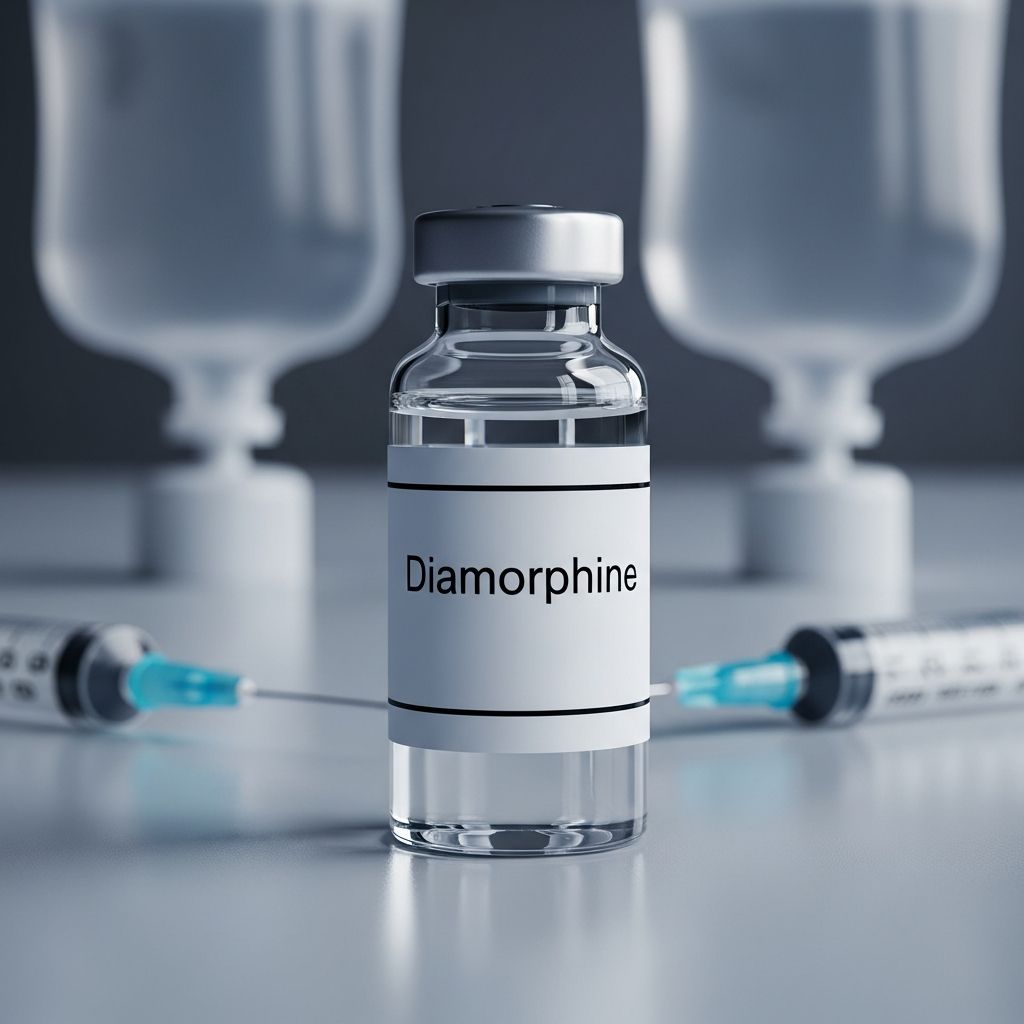
Diamorphine is a strong opioid painkiller used primarily to treat severe pain in various medical conditions. It is also known as diacetylmorphine in the United States and is sometimes referred to as pharmaceutical heroin due to its chemical composition and potency. This medication is a controlled substance available in multiple forms, including injections, tablets, and nasal spray, making it adaptable to different patient needs and clinical situations.
Strong opioids, sometimes called opiates, represent a class of medicines specifically designed to treat severe pain that cannot be adequately managed by weaker analgesics. Diamorphine stands out among these medications due to its higher potency compared to morphine, meaning smaller doses are required to achieve comparable pain relief effects.
What Is Diamorphine Used For?
Diamorphine has several important clinical applications in modern medicine. The primary uses include:
- Postoperative Pain Relief: Diamorphine is particularly effective for managing severe pain following surgical procedures. Its rapid onset of action makes it ideal for immediate post-operative pain management in hospital settings.
- Cancer Pain Management: Patients with cancer-related pain benefit significantly from diamorphine therapy, especially when pain becomes severe and other analgesics prove insufficient. Its potency allows for effective pain control with smaller doses.
- Cardiac Events: Following a myocardial infarction (heart attack), diamorphine provides rapid pain relief and can help reduce psychological distress associated with the acute cardiac event.
- Terminal Illness Pain: For patients with terminal conditions, diamorphine offers compassionate pain management during end-of-life care.
- Pulmonary Edema Relief: The medication is also indicated for relief of dyspnea (breathlessness) in acute pulmonary edema, a condition where fluid accumulates in the lungs.
- Labour Pain: In some clinical contexts, diamorphine is used during obstetric procedures for pain relief.
How Does Diamorphine Work?
Diamorphine’s pain-relieving mechanism is sophisticated and involves multiple steps within the body’s nervous system. The medication works by mimicking the body’s natural painkillers known as endorphins. These endogenous compounds control pain by blocking pain messages from reaching the brain.
At the molecular level, diamorphine functions as an agonist at opioid receptors, specifically the mu (μ), kappa (κ), and delta (δ) receptor subtypes. When diamorphine binds to these receptors in the central nervous system, it activates descending inhibitory pathways that suppress pain transmission. Additionally, it inhibits nociceptive afferent neurons in the peripheral nervous system, further reducing the overall perception of pain.
One of diamorphine’s unique characteristics is its metabolism and its metabolites’ clinical effects. After administration, diamorphine is rapidly metabolized to 6-monoacetylmorphine (6-MAM), which is itself an active compound with potential anxiolytic properties. This metabolite then converts to morphine, which undergoes further metabolism to morphine-6-glucuronide (M6G) and morphine-3-glucuronide. The various active metabolites contribute to diamorphine’s overall clinical effect, which may explain why some patients respond better to diamorphine compared to other opioids.
Diamorphine has a more rapid onset of activity than morphine because its first metabolite, monoacetylmorphine, more readily crosses the blood-brain barrier. In the human body, diamorphine has a half-life of two to three minutes, while its first metabolite is more slowly hydrolyzed in the blood and concentrated in skeletal muscle, kidney, lung, liver, and spleen.
Related Stories



How Is Diamorphine Administered?
Diamorphine can be administered through several different routes depending on the clinical situation and patient needs:
- Intramuscular Injection: Injection into the muscle tissue for systemic pain relief
- Intravenous Injection: Direct injection into the bloodstream for rapid onset of action
- Subcutaneous Injection: Injection beneath the skin, often used for continuous infusion
- Oral Forms: Tablets for patients able to take oral medications
- Intranasal Spray: Nasal administration for breakthrough pain management, particularly in pediatric patients
When administered by continuous infusion pump, glucose intravenous infusion is the preferred diluent, though the medication is also compatible with sodium chloride intravenous infusion.
Dosage Information
Diamorphine dosing varies based on the individual patient’s pain severity, medical history, and response to treatment. Typical adult dosing begins at 5 to 10 mg, which can be administered orally, intramuscularly, subcutaneously, or intravenously, with doses repeated approximately every four hours as needed.
For pediatric patients receiving intranasal diamorphine for breakthrough pain, the dosing protocols are adjusted based on age, weight, and previous opioid exposure. Healthcare providers carefully titrate doses to achieve optimal pain control while minimizing adverse effects.
Individual dosing requirements can vary significantly based on tolerance, previous opioid exposure, and clinical context. Only healthcare providers should determine appropriate dosing for each patient.
Side Effects and Adverse Reactions
Like all medications, diamorphine can produce side effects, particularly in the central nervous system and gastrointestinal system. Understanding potential adverse reactions is important for patients receiving this medication.
Common Central Nervous System Effects:
- Drowsiness and sedation
- Somnolence (excessive sleepiness)
- Euphoria and sense of wellbeing
- Mood alteration and detachment from reality
- Respiratory depression (reduced respiratory rate and sensitivity to carbon dioxide)
Cardiovascular Effects:
- Venodilation and reduced peripheral resistance
- Pinpoint pupils
- Peripheral vasodilation
- Inhibition of baroreceptor reflexes
- Diminished vasoconstrictor response
Other Effects:
- Constipation (very common with opioids)
- Nausea and vomiting
- Histamine release leading to itching
- Physical and psychological dependence with prolonged use
The respiratory depression effects of diamorphine are particularly important to monitor, as the medication reduces the sensitivity of respiratory centers to carbon dioxide, potentially leading to dangerously low breathing rates if not properly managed.
Special Considerations and Precautions
Certain patient populations and clinical situations require special attention when using diamorphine:
- Respiratory Conditions: Patients with chronic respiratory diseases should use diamorphine with caution due to potential respiratory depression
- Hepatic and Renal Impairment: Liver and kidney function affects drug metabolism and clearance
- Psychological Distress: Diamorphine’s unique metabolites may provide additional anxiolytic benefits for patients experiencing both pain and psychological distress
- Opioid Tolerance: Patients with existing opioid exposure may require higher doses or may experience paradoxical responses
- Breakthrough Pain Management: In pediatric patients, intranasal diamorphine offers advantages for managing breakthrough pain episodes
Diamorphine vs. Other Opioids
| Characteristic | Diamorphine | Morphine | Oxycodone |
|---|---|---|---|
| Potency | Higher | Standard reference | Moderate to high |
| Onset Speed | Rapid | Slower | Moderate |
| Blood-Brain Barrier Penetration | Excellent (via 6-MAM) | Good | Moderate |
| Available Routes | Multiple (injection, oral, intranasal) | Multiple | Primarily oral |
| Clinical Use in UK | Licensed and widely used | Standard opioid | Limited availability |
Diamorphine’s higher potency means that smaller doses may be required compared to morphine to achieve equivalent pain relief. This can be beneficial for patients who experience side effects at higher opioid doses or who have difficulty tolerating morphine.
Important Safety Information
Diamorphine is a controlled substance due to its potential for abuse and dependence. Important safety considerations include:
- Use only as prescribed by a healthcare provider
- Do not adjust doses without medical guidance
- Inform healthcare providers of all medications and supplements
- Report any unusual symptoms or concerning side effects immediately
- Avoid alcohol and other central nervous system depressants while taking diamorphine
- Do not suddenly stop taking diamorphine without medical supervision, as withdrawal symptoms may occur
- Keep medication stored securely and out of reach of children and others
- Dispose of unused medication according to healthcare provider or pharmacy instructions
Frequently Asked Questions
Q: Is diamorphine the same as heroin?
A: Diamorphine and heroin have the same chemical composition (diacetylmorphine), but they are not the same thing. Pharmaceutical diamorphine is a regulated, sterile medication used medically under controlled conditions, while illicit heroin is an unregulated, impure substance associated with abuse. Diamorphine used therapeutically is administered in clinical settings with medical oversight.
Q: How long does diamorphine take to work?
A: Diamorphine has a rapid onset of action, particularly when administered intravenously or intramuscularly. The medication begins working within minutes due to its ability to rapidly cross the blood-brain barrier via its first metabolite, monoacetylmorphine. The exact timing depends on the route of administration.
Q: Can diamorphine cause addiction?
A: Like all opioids, diamorphine carries a risk of physical and psychological dependence with prolonged use. However, when used appropriately under medical supervision for legitimate pain management, the benefits often outweigh the risks. Healthcare providers carefully monitor patients receiving diamorphine to minimize this risk.
Q: What should I do if I miss a dose?
A: Since diamorphine is typically administered in clinical settings or under strict medical supervision, missed doses are managed by healthcare providers. If you self-administer diamorphine at home, follow your healthcare provider’s specific instructions regarding missed doses.
Q: Can diamorphine be used for children?
A: Yes, diamorphine can be used in pediatric patients, particularly intranasal diamorphine for breakthrough pain management. Dosing is carefully adjusted based on the child’s age, weight, and clinical situation. Healthcare providers determine appropriate pediatric dosing.
Q: What is the difference between breakthrough pain dosing and regular dosing?
A: Breakthrough pain refers to sudden pain episodes that occur despite regular pain medication use. Breakthrough doses are typically smaller, rapid-acting doses given in addition to scheduled pain medication. Intranasal diamorphine is particularly useful for breakthrough pain management due to its rapid onset.
Q: Are there drug interactions I should know about?
A: Diamorphine can interact with other medications, particularly other central nervous system depressants like benzodiazepines, alcohol, and certain antidepressants. Always inform healthcare providers of all medications, supplements, and herbal products you take before starting diamorphine.
References
- Diamorphine: Uses, Interactions, Mechanism of Action — DrugBank. 2024. https://go.drugbank.com/drugs/DB01452
- Diamorphine for pain and distress in young patients — PubMed Central, National Institutes of Health. 2022. https://pmc.ncbi.nlm.nih.gov/articles/PMC8862032/
- Diamorphine Hydrochloride 10mg for Injection – Summary of Product Characteristics — Medicines and Healthcare products Regulatory Agency. 2024. https://www.medicines.org.uk/emc/product/1466/smpc
- Diamorphine — Patient.info. 2024. https://patient.info/medicine/diamorphine-for-pain-relief
- Heroin drug profile — European Union Drug Agency. 2024. https://www.euda.europa.eu/publications/drug-profiles/heroin_en
- Diamorphine — Cancer Research UK. 2024. https://www.cancerresearchuk.org/about-cancer/treatment/drugs/diamorphine
- Intranasal diamorphine population pharmacokinetics modeling and simulation — Clinical Pharmacology and Therapeutics, Wiley Online Library. 2022. https://ascpt.onlinelibrary.wiley.com/doi/10.1002/psp4.13186
Similar Articles








Read full bio of medha deb