Diaphragmatic Hernia: Types, Symptoms & Treatment
Understanding diaphragmatic hernias: causes, diagnosis, and surgical repair options.
What Is a Diaphragmatic Hernia?
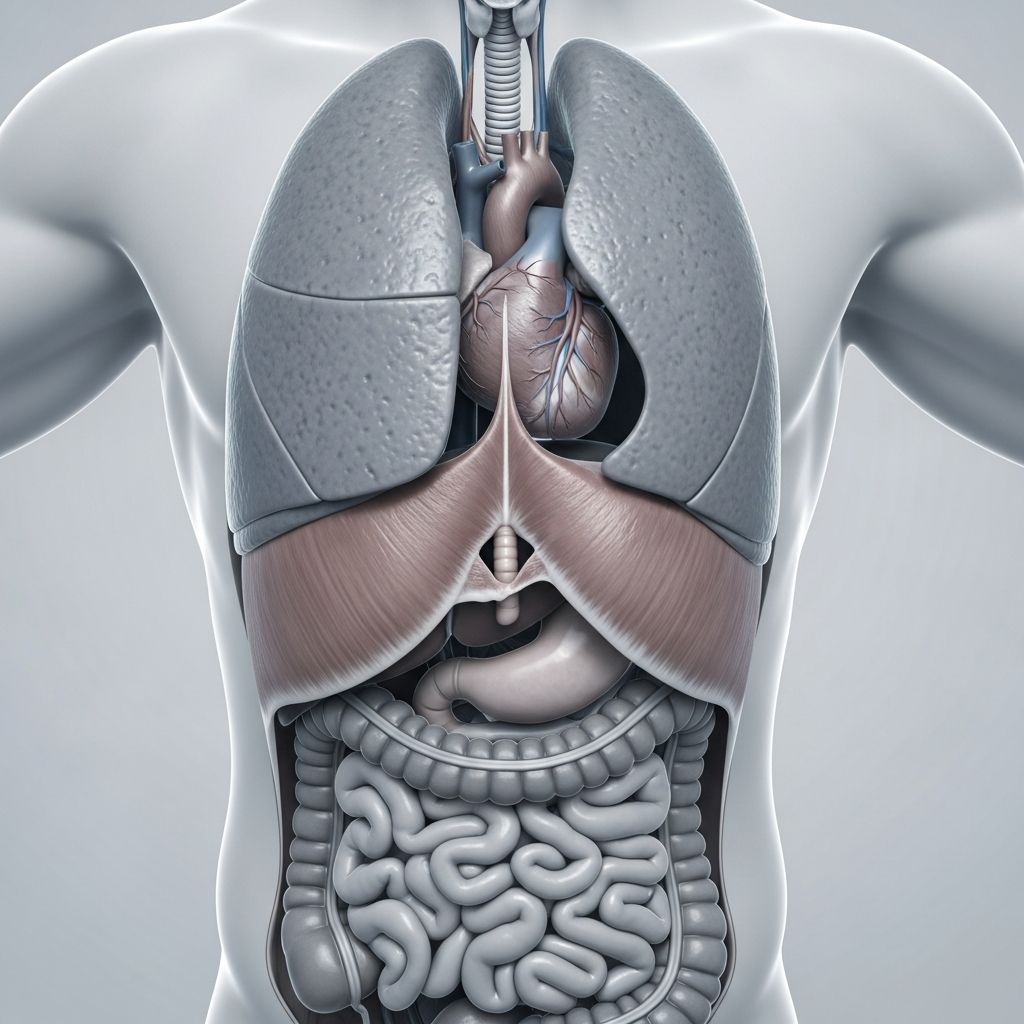
A diaphragmatic hernia occurs when abdominal contents migrate into the thoracic cavity through a defect in the diaphragm, the muscle that separates the chest from the abdomen. This condition can be either congenital (present at birth) or acquired (developing later in life). The severity and presentation of a diaphragmatic hernia depend on the size of the defect, which organs herniate through the opening, and whether the condition is recognized and treated promptly.
The diaphragm plays a critical role in respiration by contracting to allow air to enter the lungs. When a defect exists in this muscle, abdominal organs such as the intestines, stomach, spleen, and liver can push upward into the chest cavity, potentially crowding the heart and lungs. This displacement can prevent the lungs from developing properly in congenital cases or impair lung function in acquired cases.
Types of Diaphragmatic Hernias
Diaphragmatic hernias fall into two main categories: congenital and acquired. Understanding the differences between these types is essential for proper diagnosis and treatment planning.
Congenital Diaphragmatic Hernia (CDH)
Congenital diaphragmatic hernia occurs when the diaphragm, the muscle that separates the chest from the abdomen, fails to close properly during prenatal development. This defect typically develops early in pregnancy when the baby’s organs are forming in the womb. The opening in the diaphragm may be on the left or right side and can range from small to very large.
When the diaphragmatic opening is large enough, abdominal organs migrate into the chest cavity. The liver, being a large and heavy organ, causes particular complications because its presence in the thoracic space significantly impairs lung development. As a result, congenital diaphragmatic hernia is characterized by a triad of serious conditions:
- Pulmonary hypoplasia — Underdevelopment of lung tissue, where the air sacs (alveoli) don’t develop as they should
- Pulmonary hypertension — Abnormally high blood pressure in the lung’s blood vessels, making it difficult for the baby to breathe after birth
- Cardiac dysfunction — Problems with heart development, which may also be affected by the condition
CDH is a rare condition, and the prognosis depends on how severely the lungs are affected and the degree of organ involvement.
Acquired Diaphragmatic Hernia (ADH)
An acquired diaphragmatic hernia develops later in life as a result of injury or trauma to the diaphragm. The primary causes include:
- Blunt trauma — Traffic accidents and falls account for the majority of cases
- Penetrating injuries — Stab wounds or gunshot wounds
- Iatrogenic injury — Accidental damage during abdominal or chest surgery
- Spontaneous hernias — Rare cases occurring without a known cause
Unlike congenital hernias, acquired diaphragmatic hernias may remain asymptomatic for extended periods and can present months or even years after the initial trauma. The diagnosis is often challenging due to nonspecific clinical symptoms and radiological signs. Additionally, isolated diaphragmatic injuries are uncommon, typically occurring alongside other pathologies in 80% to 100% of cases, with 77.9% of penetrating diaphragmatic ruptures involving intra-abdominal injuries.
Related Stories



Symptoms and Signs
The severity of symptoms with a diaphragmatic hernia varies depending on its size, cause, and which organs are involved. Some individuals, particularly those with spontaneous or chronic hernias, may experience no symptoms and only discover the condition incidentally on imaging studies.
Common Symptoms Include:
- Difficulty breathing — Usually severe; in CDH, this results from abnormal lung development, while in ADH it occurs when lungs can’t function properly due to crowding
- Chest pain — Caused by the pressure effect of abdominal organs in the thorax
- Shortness of breath — Related to compressed lungs and impaired respiratory function
- Recurrent abdominal pain — Especially after eating, due to displaced organs
- Postprandial fullness — Feeling excessively full after meals
- Vomiting — May occur intermittently or persistently
- Obstructive gastrointestinal symptoms — Including bloating and constipation
Physical Examination Findings
During physical examination, physicians may observe:
- Scaphoid abdomen — An indrawn or concave abdominal appearance
- Absent breath sounds — Over the lower chest on the affected side
- Bowel sounds in the chest — Audible over the lower chest, indicating organ displacement
Diagnosis and Imaging
Diagnosis of diaphragmatic hernia relies primarily on imaging techniques that visualize the defect and assess the extent of organ herniation. Healthcare providers use multiple diagnostic tools:
Diagnostic Imaging Methods:
- Chest X-rays — Often the first imaging study performed to detect abnormalities in the thoracic cavity
- Computed Tomography (CT) scans — Provide detailed cross-sectional images to confirm the presence and severity of the hernia
- Fetal ultrasound — For prenatal detection of CDH during routine pregnancy screening
- Prenatal imaging — High-resolution ultrasound or fetal MRI may be used to assess lung size and organ involvement before birth
For congenital cases, CDH may be discovered during routine fetal ultrasound, allowing healthcare providers to discuss treatment options with parents and plan delivery at an appropriate facility.
Treatment and Management
Treatment approaches differ significantly between congenital and acquired diaphragmatic hernias, depending on severity, timing of diagnosis, and the patient’s clinical stability.
Congenital Diaphragmatic Hernia Treatment
Management of CDH begins before birth and continues through intensive neonatal care and surgical intervention. Babies with CDH should be delivered at an experienced tertiary perinatal center with extracorporeal membrane oxygenation (ECMO) capability.
Immediate Neonatal Care:
The first step is to stabilize the baby and increase oxygen levels. A variety of medications and techniques are used to support the infant:
- Pressure-limited ventilation strategies
- Oxygen supplementation and respiratory support
- Hemodynamic stabilization
- Extracorporeal life support (ECLS) when necessary
These infants are best cared for at a center with a highly specialized Neonatal Intensive Care Unit (NICU).
Surgical Repair:
Surgery to repair diaphragmatic hernia after birth is not an emergency and is usually performed when the baby has stabilized, typically within 48 to 72 hours after delivery, though timing varies by case. Surgery may occur earlier in emergency situations or may be delayed depending on the infant’s condition.
Modern surgical techniques for CDH include:
- Primary repair — Direct closure of the diaphragmatic defect
- Muscle flap repair — Uses the baby’s own abdominal muscle to close the hole in the diaphragm, reducing long-term complications
- Gore-Tex patch repair — A synthetic material option for select cases
For larger defects, muscle flap repair is now preferred because it uses the baby’s own tissue, grows with the child, and has a lower risk of infection and hernia recurrence compared to synthetic materials like Gore-Tex.
Acquired Diaphragmatic Hernia Treatment
Treatment of acquired diaphragmatic hernia in the acute setting requires appropriate patient resuscitation followed by surgical correction. The surgical approach depends on the timing of diagnosis and the clinical presentation.
Surgical Approaches:
For acute cases: An open abdominal approach is typically used, with primary closure accomplishing the repair. When the defect is too large for primary closure with nonabsorbable sutures, mesh repair may be an alternative.
For delayed cases: If diagnosis is delayed, a thoracic approach is generally preferred to reduce viscera-pleural adhesions and minimize the risk of intra-thoracic visceral perforation. In some delayed cases, a combined thoracic-abdominal approach may be appropriate. A transthoracic approach via a seventh or eighth intercostal thoracotomy provides excellent visualization and access to the diaphragm, facilitating identification of ruptures and safe reduction of herniated organs.
Minimally invasive options: A laparoscopic approach may be feasible for repair in selected cases, particularly for isolated diaphragmatic injuries. However, in patients with extensive surgical history and potential for severe dense adhesions, alternative approaches may be preferable.
Surgical Considerations:
During surgical repair, gentle reduction of herniated abdominal viscera back into the abdominal cavity is essential. The hernia sac must be carefully dissected, and any unintentional injuries, including serosal injuries, should be repaired promptly. In rare circumstances, splenic injury during reduction could complicate the procedure, necessitating meticulous handling. Mesh repair should not be considered the standard repair method unless primary closure is not feasible due to defect size.
Prognosis and Long-Term Outlook
The long-term outlook varies considerably between congenital and acquired diaphragmatic hernias.
Congenital Diaphragmatic Hernia Prognosis:
The prognosis for CDH depends on how damaged the lungs are, as well as the severity of involvement of other organs. According to current research, the overall survival rate for congenital diaphragmatic hernias is 70-90 percent. Even when the CDH is severe, greater than 70% of affected babies can be saved with intensive support.
However, there can be long-term health issues related to breathing, feeding, growth, and development. After surgical repair, these babies require intensive support for many weeks or even months to recover fully.
Acquired Diaphragmatic Hernia Prognosis:
The survival rate for ADH correlates directly with the type of injury, age, overall health of the individual, the severity of the hernia based on defect size, and other organs involved. Prompt recognition and treatment significantly improve outcomes, as delayed diagnosis can lead to serious complications including intestinal strangulation and organ ischemia, requiring urgent surgical repair.
Complications
If treatment is delayed, serious complications can develop. Abdominal organs can herniate through the opening into the thoracic cavity, leading to respiratory distress and ischemia (lack of blood flow) of the affected organs. Traumatic diaphragmatic rupture that is not immediately identified can present months or even years after the initial trauma, complicating diagnosis and management.
In congenital cases, complications include:
- Severe trouble breathing due to small lungs that don’t work well (pulmonary hypoplasia)
- Pulmonary hypertension affecting the arteries in the lungs and the right side of the heart
- Problems with heart development
- Damage to abdominal organs if they migrate through the hernia into the chest
Frequently Asked Questions (FAQs)
Q: Can a diaphragmatic hernia be detected before birth?
A: Yes, congenital diaphragmatic hernia can be detected during routine fetal ultrasound screening. Once detected, healthcare providers can discuss treatment options and plan delivery at a specialized center equipped to handle the condition immediately after birth.
Q: How common is congenital diaphragmatic hernia?
A: CDH is classified as a rare condition, though exact prevalence rates vary. It occurs early in pregnancy when the baby’s organs are forming, and the severity of cases ranges widely from small asymptomatic defects to large defects requiring intensive intervention.
Q: Is surgery always necessary for diaphragmatic hernia?
A: For congenital diaphragmatic hernia, surgery is typically necessary and is usually performed within 48 to 72 hours after birth once the baby has stabilized. For acquired diaphragmatic hernia, surgical repair is the standard treatment in acute settings, though minimally invasive approaches may be used in selected cases with isolated injuries.
Q: What is the recovery time after diaphragmatic hernia surgery?
A: Recovery varies depending on whether the condition is congenital or acquired. For CDH, infants require intensive support in the NICU for many weeks or months after surgical repair. For acquired hernias, recovery depends on the severity of the initial injury and any associated organ damage.
Q: Are there long-term complications after diaphragmatic hernia repair?
A: Yes, there can be long-term health issues related to breathing, feeding, growth, and development, particularly in cases of congenital diaphragmatic hernia. Modern surgical techniques, such as muscle flap repair, help reduce the risk of hernia recurrence and other complications compared to synthetic mesh repair.
Q: Can a diaphragmatic hernia recur after surgery?
A: Recurrence is possible, but the risk varies depending on the surgical repair method used. Muscle flap repair, which uses the baby’s own tissue, has a lower risk of hernia recurrence and infection compared to synthetic materials like Gore-Tex patch repair.
Q: What organs are most commonly affected by diaphragmatic hernia?
A: The liver, intestines, stomach, and spleen are the organs most commonly affected. The liver, being a large and heavy organ, causes particular complications because its presence in the thoracic space significantly impairs lung development in congenital cases.
References
- Diaphragmatic Hernia — National Center for Biotechnology Information (NCBI) Bookshelf, National Institutes of Health (NIH). https://www.ncbi.nlm.nih.gov/books/NBK536952/
- Congenital Diaphragmatic Hernia (CDH) — Children’s Hospital of Philadelphia (CHOP). https://www.chop.edu/conditions-diseases/congenital-diaphragmatic-hernia-cdh
- Diaphragmatic Hernia: Causes, Symptoms & Diagnosis — Healthline Media. https://www.healthline.com/health/diaphragmatic-hernia
- Congenital Diaphragmatic Hernia (CDH) — Mayo Clinic. https://www.mayoclinic.org/diseases-conditions/congenital-diaphragmatic-hernia/symptoms-causes/syc-20544249
- Congenital Diaphragmatic Hernia (CDH) — University of California San Francisco (UCSF) Fetal Surgery Center. https://fetus.ucsf.edu/cdh/
Similar Articles








Read full bio of Sneha Tete