Diastasis Recti: Causes, Symptoms & Treatment
Understand abdominal separation during pregnancy and discover effective treatment options.
Understanding Diastasis Recti: Abdominal Separation Explained
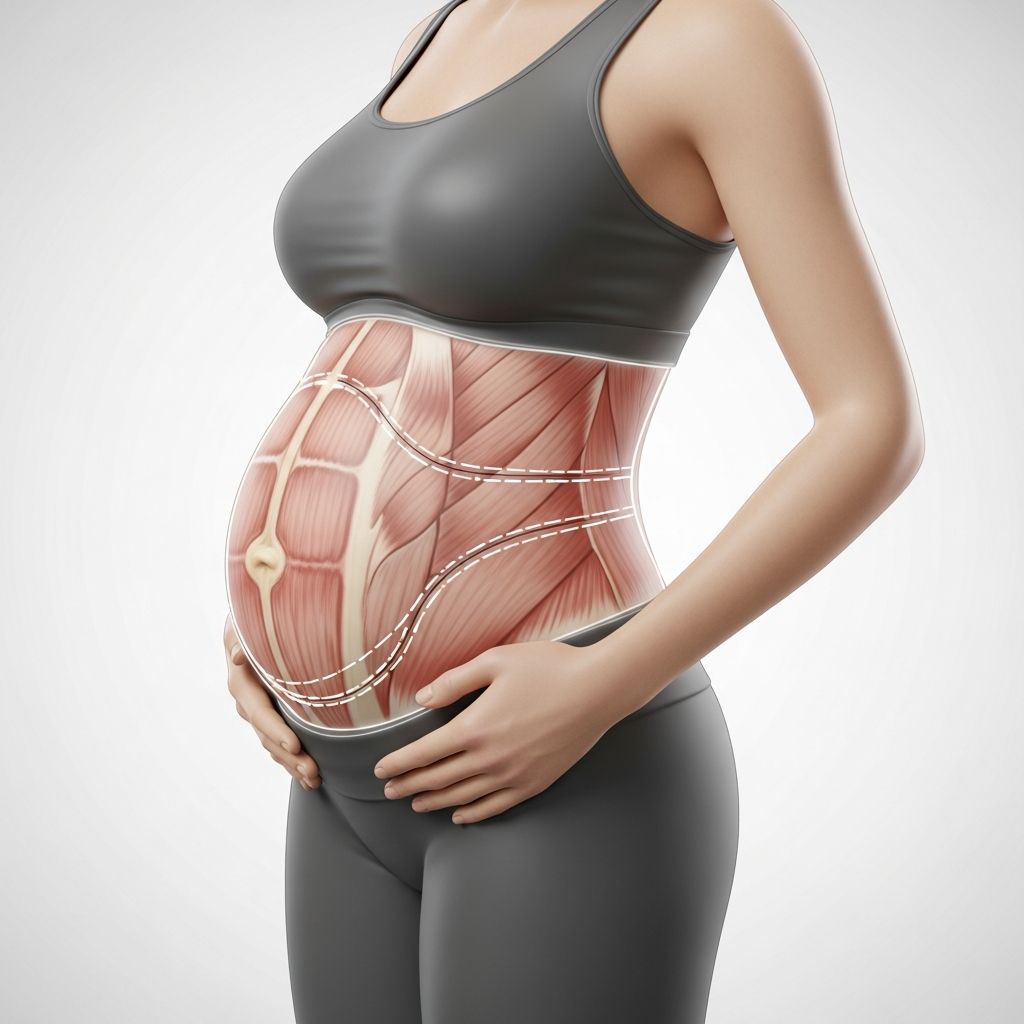
Diastasis recti is a condition where your rectus abdominis muscles—commonly known as your “six-pack” ab muscles—separate during pregnancy from being stretched. This separation occurs along the midline of your abdomen and is caused by the stretching of the connective tissue known as the linea alba. The separation can make your belly stick out or bulge months or years after your last baby, and while it is primarily a cosmetic concern for many women, it can also affect core function and stability.
This is a common and treatable condition that affects a significant portion of the postpartum population. Understanding what causes diastasis recti, recognizing its symptoms, and knowing your treatment options is essential for managing this condition effectively.
What Causes Diastasis Recti?
During pregnancy, your body undergoes remarkable changes to accommodate your growing baby. As your uterus expands, it places increasing pressure on your abdominal muscles. The linea alba, the thin band of connective tissue that runs down the front of your stomach and separates your left and right rectus abdominis muscles, becomes stretched and thins significantly.
The linea alba is naturally elastic and designed to accommodate this stretching. In most cases, after delivery, this tissue heals and retracts back to its normal position, much like a rubber band returning to its original shape. However, just like a rubber band, the linea alba can lose its elasticity from being overstretched. When this happens, the gap in your abdominals won’t close as much as it should, and the left and right sides of your abdominals remain separated and appear pushed outward.
While pregnancy is the most common cause of diastasis recti, the condition can also occur in non-pregnant individuals. Significant weight gain followed by weight loss can stretch the abdominal tissues enough to cause separation. Additionally, diastasis recti can range from mild to severe depending on the extent of the muscle separation.
Recognizing the Symptoms of Diastasis Recti
The most obvious sign of diastasis recti is an abdominal bulge or pouch that persists well after pregnancy. However, this condition extends beyond cosmetic concerns and can present with various physical symptoms that affect daily functioning.
Common Symptoms Include:
- A visible bulge or ridge running down the center of your abdomen
- Weakened core stability affecting balance and coordination
- Back pain resulting from compensatory muscle overuse
- Poor posture as your body adjusts to reduced abdominal support
- Difficulty with daily activities such as lifting children or getting out of bed
- Pelvic floor dysfunction, which may cause urinary incontinence
- Digestive problems including bloating and constipation
The separation can weaken your core’s ability to stabilize your body, which in turn leads to back pain and postural issues. Simple daily tasks become uncomfortable when your abdominal muscles cannot provide adequate support. The altered pressure in the abdominal cavity can also contribute to pelvic floor dysfunction and digestive complications.
How to Self-Diagnose Diastasis Recti
You can perform a simple self-examination to check for diastasis recti. Lie on your back with your knees bent and feet flat on the floor. Use one hand to support your head and gently lift your shoulders slightly—similar to the beginning of a sit-up. Place your free hand on your stomach, positioning your fingers horizontally just above your belly button, and feel for a gap between the abdominal muscles.
Related Stories



If two or more fingers can fit into the gap, you may have diastasis recti. Any gap wider than 2 centimeters is officially diagnosed as diastasis recti. Diagnosis typically occurs at the appointment women have approximately six weeks after delivery, though it can be identified later as well.
If you suspect you have diastasis recti or experience the symptoms mentioned above, it is important to contact your healthcare provider for a professional diagnosis and treatment recommendations.
Understanding the Prevalence of Diastasis Recti
Diastasis recti is far more common than many women realize. Research shows that approximately 45% of women have diastasis recti at six months postpartum. This high prevalence underscores the importance of awareness and proper management of the condition.
The exact time it takes for the separation to heal depends on several factors, including the amount of abdominal separation and how consistent you are with strengthening exercises. After several weeks postpartum, the gap will typically start to close as your muscles regain strength, particularly with targeted intervention.
Non-Surgical Treatment Options
Physical Therapy and Specialized Exercise
In most cases, diastasis recti can be managed without surgery through conservative treatment approaches. Your healthcare provider will recommend gentle movements that engage your abdominal muscles properly. Physical therapy is often the first and most effective step in treating diastasis recti.
Specialized physical therapy focuses on strengthening the transverse abdominis, which is your body’s deepest abdominal muscle. This involves carefully guided core exercises that avoid strain on the separated muscles. Treatment typically includes posture retraining and coordination with pelvic floor therapy when necessary. These programs, often led by therapists trained in postpartum care, aim to gradually close the gap and restore core function.
Current research demonstrates that the most important factor in healing diastasis recti is creating tension through the gap. This means focusing on exercises that properly engage the abdominal muscles without causing further separation or strain. Your physical therapist will provide a customized plan and ensure you are performing movements properly and safely.
Important Exercise Considerations
It is crucial to engage only in exercises that have been approved by your healthcare provider if you have diastasis recti. Certain movements can make the condition worse, particularly those that increase intra-abdominal pressure. High-impact exercises, traditional crunches, and heavy weight training should be avoided without professional guidance. Incorrect exercise techniques can exacerbate the separation rather than improve it.
Surgical Treatment Options
When Surgery Becomes Necessary
While non-surgical treatment can strengthen the core, if the muscles remain separated after conservative treatment, they may not function optimally. When non-surgical options reach their limit, surgical repair may be necessary. Women who still experience instability, discomfort, or a visible bulge after diligent therapy may find long-lasting results through surgical intervention.
If diastasis recti is severe or has caused a hernia—where an organ has pushed through the linea alba—then surgery may be performed. Especially in cases where the connective tissue has thinned beyond recovery, surgery is often the most effective way to restore both form and function.
The Surgical Procedure
Diastasis recti surgery aims to repair the separation of the rectus abdominis muscles. The surgical correction typically takes place during an abdominoplasty, or “tummy tuck” procedure. During surgery, the separated muscles are carefully brought back to the midline and sutured together to recreate a stable abdominal wall. This restores core strength and helps improve posture and body mechanics.
Surgeons use photographs, examination, and measurements to map the patient’s anatomy and surgical plan. In some cases—particularly with complex revisions or suspected internal concerns—imaging such as a CT scan may be recommended for a more detailed view of the abdominal structure before surgery.
Laparoscopic Approach
Many facilities, including specialized hernia surgery programs, perform diastasis recti repair laparoscopically. In this minimally invasive approach, surgeons make a few small incisions, and a laparoscope (a long, thin tube with a light and camera) is inserted to allow the surgeon to visualize the abdominal wall and perform the repair with precision.
Following laparoscopic surgery, an abdominal support is typically worn for six to eight weeks. Strenuous exercise or heavy lifting must be avoided during this recovery period to allow proper healing.
Combined Procedures
Sometimes, diastasis recti surgery is combined with an abdominoplasty to remove excess loose abdominal skin. Excess, overstretched skin may also be removed during the procedure, and liposuction may be used to refine the waistline. The belly button is repositioned to maintain a natural appearance. This comprehensive approach not only improves physical function but also enhances aesthetic balance.
Recovery and Results
The procedure is performed under general anesthesia, with patients closely monitored throughout. While recovery takes time, the results are often enduring and life-changing for many women. Most patients notice significant improvements in core strength, posture, and abdominal appearance following surgical repair.
Proper post-operative care is essential for optimal healing and results. Following your surgeon’s instructions regarding activity restrictions, wound care, and follow-up appointments is critical during the recovery period.
Prevention Strategies
While you cannot completely prevent diastasis recti if you are predisposed to it, certain precautions during and after pregnancy may help reduce your risk of developing the condition or minimize its severity:
- Practice proper posture throughout pregnancy and postpartum
- Maintain appropriate weight gain during pregnancy under medical guidance
- Avoid heavy lifting and strenuous activities during pregnancy
- Perform pregnancy-safe core strengthening exercises as approved by your healthcare provider
- Use proper body mechanics when getting out of bed or lifting objects
- Consider wearing an abdominal support garment during pregnancy if recommended
- Begin postpartum core rehabilitation early under professional guidance
When to Seek Medical Attention
Diastasis recti is a common and treatable condition, but professional evaluation is important. If you have more than a two-finger gap between your abdominals or are experiencing pain or functional difficulties, contact your healthcare provider for a diagnosis. Your provider may recommend that you see a physical therapist or pelvic floor specialist to help strengthen your abdominal muscles and address any related concerns.
Frequently Asked Questions About Diastasis Recti
Q: How long does it take for diastasis recti to heal naturally?
A: The healing timeline varies depending on the severity of the separation and your consistency with strengthening exercises. Many women see improvement within several weeks to months postpartum with dedicated physical therapy. However, some cases may take longer or require surgical intervention for complete resolution.
Q: Can diastasis recti affect balance or coordination?
A: Yes, since the abdominal muscles play a key role in core stability, diastasis recti can make it harder to balance or move efficiently. Many women describe feeling “off-center” or unsteady when walking or exercising.
Q: Can weight training or crunches make diastasis recti worse?
A: Yes. Incorrect exercise techniques, especially those that increase intra-abdominal pressure, can worsen the separation. That’s why supervised therapy or guided instruction is important if you’re working on your core. Always consult with your healthcare provider before starting any exercise program.
Q: Will diastasis recti go away on its own?
A: In many cases, some improvement occurs naturally as postpartum hormones subside and muscles naturally regain some tone. However, significant gaps often require targeted exercises or surgical intervention to fully resolve.
Q: Can men develop diastasis recti?
A: While diastasis recti is most common in postpartum women, it can occur in men due to significant weight gain followed by weight loss, chronic straining, or certain medical conditions. The treatment approach remains similar.
Q: Is diastasis recti surgery covered by insurance?
A: Coverage varies by insurance plan and whether the surgery is deemed medically necessary versus cosmetic. If diastasis recti is causing functional impairment or is associated with a hernia, insurance is more likely to cover the procedure. Contact your insurance provider for specific details.
References
- Diastasis Recti (Abdominal Separation): Causes & Treatment — Cleveland Clinic. 2024. https://my.clevelandclinic.org/health/diseases/22346-diastasis-recti
- Diastasis Recti – Cleveland Clinic Abu Dhabi — Cleveland Clinic Abu Dhabi. 2024. https://www.clevelandclinicabudhabi.ae/en/health-hub/health-resource/diseases-and-conditions/diastasis-recti
- Abdominal Separation and Diastasis Recti Explained — Hinge Health. 2024. https://www.hingehealth.com/resources/articles/diastasis-recti-abdominal-separation/
- What Is Diastasis Recti – And How Can You Repair It? — Dr. Michael Baumholtz. 2024. https://www.baumholtzplasticsurgery.com/blog/what-is-diastasis-recti-and-how-can-you-repair-it/
- Diastasis Recti with Concomitant Ventral Hernia Repair: An Initial Experience — Journal of Laparoendoscopic & Advanced Surgical Techniques. 2024. https://www.liebertpub.com/doi/10.1089/lap.2024.0216
- Abdominoplasty and Rectus Diastasis Repair — PubMed Central. 2024. https://pubmed.ncbi.nlm.nih.gov/41205058/
- Linea Alba (Abdomen): Function, Anatomy & Conditions — Cleveland Clinic. 2024. https://my.clevelandclinic.org/health/body/23483-linea-alba
Similar Articles








Read full bio of Sneha Tete