Diastasis Recti: Symptoms, Causes, Treatment
Understand diastasis recti: causes, symptoms, diagnosis, and effective treatments from exercises to surgery for recovery.
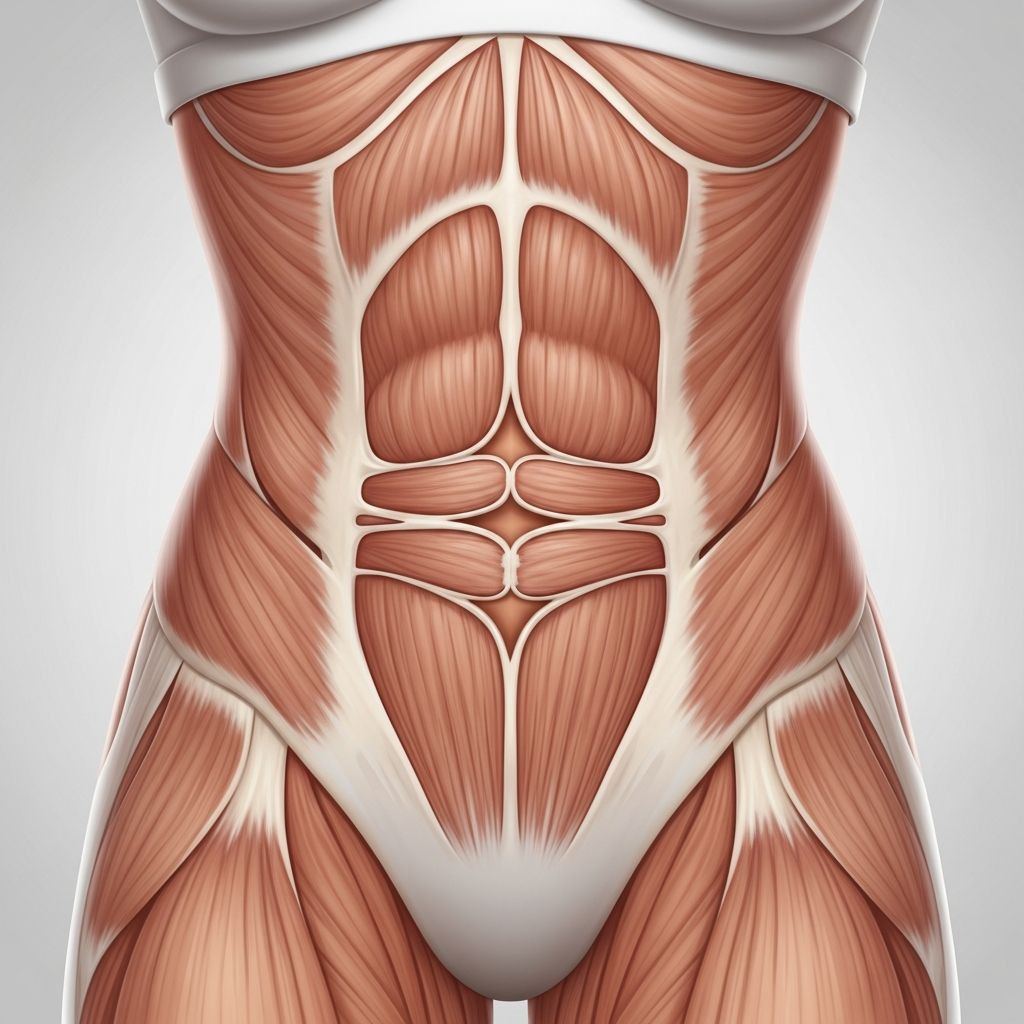
Diastasis recti, also known as diastasis rectus abdominis (DRA), involves an increased distance between the rectus abdominis muscles at the midline due to weakness in the anterior abdominal wall, often leading to a visible bulge and functional issues.
What Is Diastasis Recti?
**Diastasis recti** is a condition characterized by the stretching and thinning of the *linea alba*, the connective tissue between the two rectus abdominis muscles, resulting in an abnormal widening of the gap, typically measured as inter-recti distance (IRD). This separation does not involve a true fascial defect like a hernia but can cause a midline bulge that worsens with activities increasing intra-abdominal pressure, such as coughing or crunches.
The rectus abdominis muscles run vertically along the front of the abdomen, and in diastasis recti, they diverge, most commonly above the umbilicus where there are no bony attachments. While often associated with pregnancy, it can occur congenitally in infants, especially premature or African American newborns, or be acquired in adults due to obesity or other pressures.
Clinically, it presents as a palpable gap greater than 2 cm, assessed during a physical exam with the patient supine and head lifted. Unlike ventral hernias, there is no protrusion of abdominal contents through a defect, but it may contribute to symptoms like back pain, urinary incontinence, and core instability.
Symptoms of Diastasis Recti
Common symptoms include a noticeable ridge or bulge along the midline of the abdomen, extending from the xiphoid process to the pubic symphysis, which becomes prominent during straining. Patients often report:
- A soft gap or doming in the abdomen when sitting up or performing core exercises.
- Lower back pain due to impaired load transfer between the thorax, spine, and pelvis.
- Urinary stress incontinence from weakened pelvic floor support.
- Feeling of core weakness or instability, especially postpartum.
- Cosmetic concerns about the protruding ‘pooch’.
In infants, the bulge is visible when crying or straining to sit up, but it often resolves spontaneously. Adults may confuse it with hernias, but reassurance is key as untreated diastasis recti carries no risk of strangulation or other hernia complications.
Causes and Risk Factors
Diastasis recti arises from excessive intra-abdominal pressure stretching the linea alba and weakening abdominal musculature. Primary causes include:
- Pregnancy: The growing uterus exerts repeated stretching, especially in multiparous women or those with multiples.
- Obesity: Chronic increased pressure from excess weight.
- Congenital factors: Immature muscle development in newborns.
- Other: Heavy lifting, chronic coughing, or connective tissue disorders.
Risk factors heighten susceptibility:
| Risk Factor | Description |
|---|---|
| Multiple pregnancies | Higher cumulative stretching of abdominal wall. |
| Premature or African American infants | Incomplete midline sealing. |
| Obesity or rapid weight gain | Increased intra-abdominal pressure. |
| Age over 35 or grand multiparity | Reduced tissue elasticity. |
| Connective tissue weakness | Genetic predisposition. |
Postpartum, up to 60% of women experience DRA, with prevalence decreasing over time but persisting in 30-50% at 6 months.
Diagnosis
Related Stories



Diagnosis begins with a thorough history and physical exam. Key technique: Patient supine, knees bent, lift head and shoulders while clinician palpates the midline gap at rest and contraction, measuring IRD in finger breadths or cm (pathologic if >2 cm).
Observe for coning or doming during maneuvers. Imaging like ultrasound confirms IRD and rules out hernias if needed; CT or MRI for complex cases. Differential includes ventral/epigastric hernia, distinguished by fascial defect presence.
Linea alba integrity is assessed for tension rather than just width, as function relies more on tension generation than gap closure.
Treatment Options
Treatment is symptom-driven, starting conservatively. No intervention needed if asymptomatic.
Conservative Management
First-line: Lifestyle modifications, weight loss, and
physiotherapy
.- Core stability exercises: Focus on transverse abdominis (TrA), pelvic floor, and diaphragm activation before rectus. Examples: diaphragmatic breathing, pelvic tilts, heel slides, modified planks (3x/week for 8 weeks).
- Avoid: Traditional crunches that increase pressure.
- Bracing: Abdominal binders for support during healing.
Evidence shows deep core training reduces IRD and improves quality of life. Linea alba tension restoration is prioritized over mere approximation.
Surgical Interventions
For conservative failures with persistent symptoms/cosmesis issues:
- Plication: Suturing linea alba to approximate muscles, open/laparoscopic/robotic.
- Mesh repair: For larger defects or combined hernias.
- Abdominoplasty: Cosmetic tummy tuck with plication.
Surgery indicated if LA distortion impairs function; success rates high but risks include recurrence, infection.
Prevention and Postpartum Recovery
Prevent via pre/postnatal exercise emphasizing deep core: TrA activation, avoiding high-pressure moves. Postpartum screening at 6-8 weeks; early intervention improves outcomes.
Multidisciplinary approach: PT, OB/GYN, surgeons.
Frequently Asked Questions (FAQs)
Can diastasis recti heal on its own?
Yes, often in infants and some postpartum women within 6-12 months with conservative care; persistent cases may need intervention.
Is diastasis recti a hernia?
No, it lacks a fascial defect; hernias involve protrusion risks absent in DRA.
What exercises fix diastasis recti?
Deep core: breathing, pelvic floor contractions, heel slides, bird-dog; avoid crunches.
Who is at risk for diastasis recti?
Pregnant/multiparous women, obese individuals, certain infants.
When is surgery needed for diastasis recti?
If symptoms like pain/incontinence persist after 6-12 months conservative treatment.
Complications and Prognosis
Untreated: Chronic back pain, incontinence; rare aneurysm links. Prognosis excellent with tailored treatment; 80-90% improve conservatively.
References
- Diastasis Recti Rehabilitation — StatPearls, NCBI Bookshelf, NIH. 2023-10-20. https://www.ncbi.nlm.nih.gov/books/NBK573063/
- Diastasis Recti Abdominis — Physiopedia. 2024-01-15. https://www.physio-pedia.com/Diastasis_Recti_Abdominis
- Diastasis recti abdominis — a review of treatment methods — Ginekologia Polska. 2023-05-12. https://journals.viamedica.pl/ginekologia_polska/article/view/56088
- Diastasis recti — MedlinePlus Medical Encyclopedia. 2024-08-01. https://medlineplus.gov/ency/article/001602.htm
- Diastasis Rectus Abdominis – Postpartum Health — Diane Lee & Associates Physiotherapy. 2023-11-10. https://dianeleephysio.com/education/diastasis-rectus-abdominis-postpartum-health/
- Physical Therapy Guide to Diastasis Rectus Abdominis — Choose PT. 2024-02-28. https://www.choosept.com/guide/physical-therapy-guide-diastasis-rectus-abdominis
Similar Articles








Read full bio of Sneha Tete