Diclofenac Gel For Actinic Keratoses: 60-90 Day Field Therapy
Effective field treatment for actinic keratoses using topical diclofenac gel with hyaluronic acid, minimizing irritation while targeting precancerous lesions.
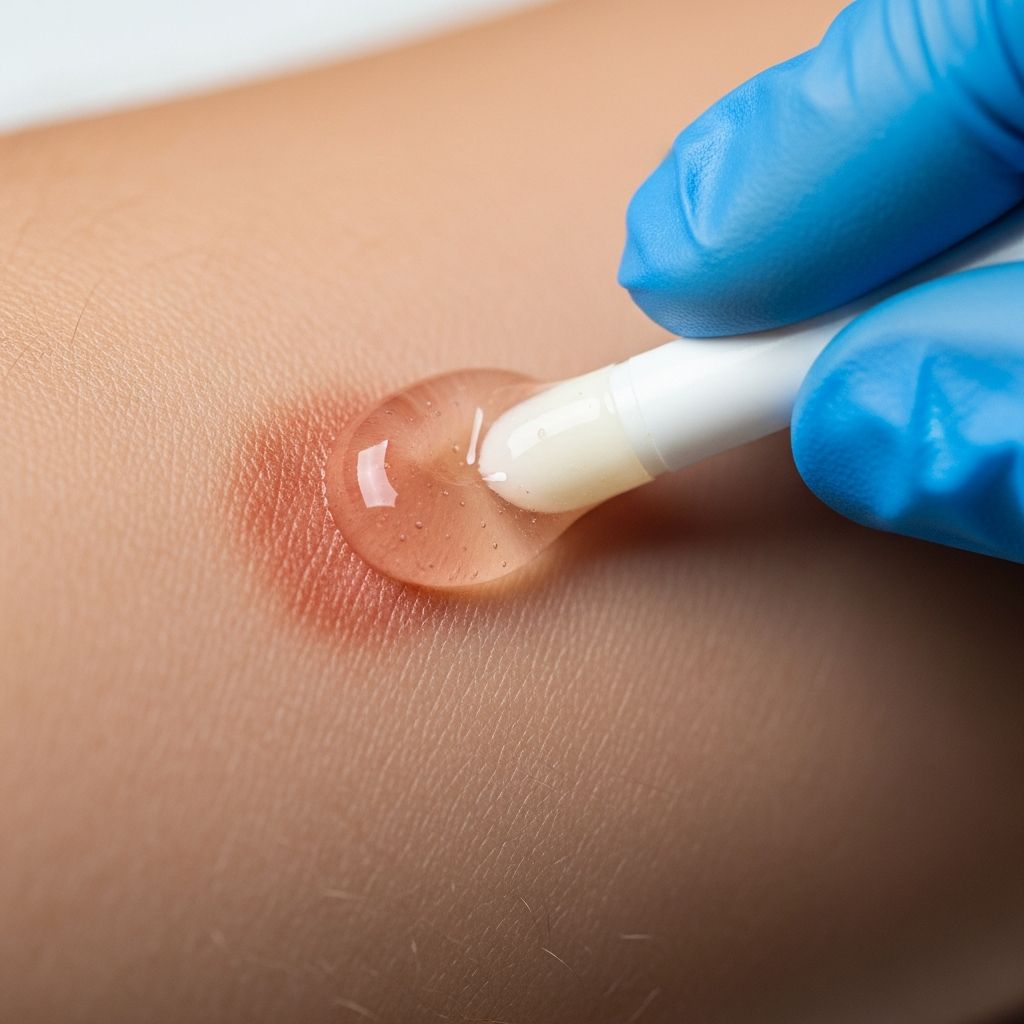
Actinic keratoses (AKs) represent precancerous skin lesions caused by chronic ultraviolet (UV) exposure, primarily affecting fair-skinned individuals in sun-exposed areas like the face, scalp, ears, and hands. These rough, scaly patches signal intraepidermal neoplasia and carry a risk of progression to squamous cell carcinoma if untreated. Topical
diclofenac gel
, specifically the 3% formulation in 2.5% hyaluronic acid (Solaraze®), serves as a non-invasive field-directed therapy targeting both visible and subclinical lesions across sun-damaged skin fields.What are actinic keratoses?
Actinic keratoses, also known as solar keratoses or senile keratoses, emerge as a consequence of cumulative UV radiation damage to keratinocytes. They appear as erythematous, hyperkeratotic papules or plaques, typically 1-10 mm in diameter, with a sandpaper-like texture. Common sites include the face (forehead, cheeks, nose), scalp (especially in balding men), dorsal hands, forearms, and lower legs. Risk factors encompass fair skin phototypes (Fitzpatrick I-II), advanced age, immunosuppression (e.g., organ transplant recipients), and outdoor occupations or recreational sun exposure.
Histologically, AKs show atypical keratinocytes confined to the epidermis, with varying degrees of atypia (Olsen grade I-III). While most remain benign, approximately 0.025%-16% may progress to invasive squamous cell carcinoma over time, underscoring the need for proactive management. Early detection via clinical exam or dermoscopy is crucial, as subclinical lesions often coexist in photodamaged fields.
Who gets actinic keratoses?
Individuals at highest risk include those with light skin, blue/green eyes, blonde/red hair, and a history of significant sun exposure. Prevalence rises with age, affecting up to 60% of Caucasians over 40 in sunny climates. Immunosuppressed patients, such as solid organ transplant recipients on calcineurin inhibitors, exhibit 65-250 times higher incidence due to impaired immune surveillance. Genetic syndromes like xeroderma pigmentosum further elevate susceptibility.
- High-risk groups: Elderly fair-skinned males with outdoor lifestyles.
- Moderate risk: Women with cumulative sun exposure (e.g., tanning beds).
- Low risk: Darker skin types, though not immune.
Prevention emphasizes broad-spectrum sunscreen (SPF 50+), protective clothing, and UV avoidance, particularly between 10 AM and 4 PM.
What is field therapy?
Field therapy addresses the ‘field cancerization’ concept, where large areas of sun-damaged skin harbor multiple visible AKs and invisible precancerous changes. Unlike lesion-specific treatments (e.g., cryotherapy), field approaches treat the entire affected zone to reduce recurrence and prevent progression. Diclofenac gel exemplifies this strategy, offering a tolerable alternative to more inflammatory options like 5-fluorouracil (5-FU) or imiquimod.
Mechanism of action of diclofenac gel
Diclofenac, a nonsteroidal anti-inflammatory drug (NSAID), inhibits cyclooxygenase-2 (COX-2), an enzyme overexpressed in AKs. COX-2 blockade suppresses prostaglandin synthesis, curbing angiogenesis, cellular proliferation, and inflammation. Recent evidence indicates diclofenac induces apoptosis in neoplastic keratinocytes and upregulates p53 tumor suppressor pathways. The hyaluronic acid vehicle enhances penetration and sustains drug release, minimizing systemic absorption.
Formulations of diclofenac gel
The approved formulation for AKs is
diclofenac sodium 3% gel in 2.5% hyaluronic acid
(Solaraze®), designed for twice-daily application. Lower concentrations like 1% gel (available over-the-counter for musculoskeletal pain) have shown anecdotal efficacy in refractory cases but lack robust trial data. Studies confirm 3% gel’s superiority over vehicle alone.Related Stories



| Formulation | Concentration | Approved Use | Evidence Level |
|---|---|---|---|
| Solaraze® | 3% diclofenac + 2.5% hyaluronic acid | AK field treatment | Phase 3 RCTs |
| Voltaren® gel | 1% diclofenac | Off-label for AKs | Case reports |
Clinical studies on diclofenac gel
Pivotal phase 3 trials demonstrated significant efficacy. In one study, 90 days of twice-daily 3% gel yielded 50% complete clearance of target lesions and 47% of all lesions (visible + new) at 30 days post-treatment, versus 20% for vehicle. A 60-day regimen achieved 33% complete clearance at 4 weeks follow-up. Long-term data show 81% of patients required no further AK treatment one year post-therapy.
In organ transplant patients, 2-year follow-up revealed no invasive squamous cell carcinomas in treated groups. Comparative trials found diclofenac equivalent to 5-FU in lesion clearance but with milder inflammation and higher patient satisfaction.
- Face/forehead: Superior clearance rates.
- Scalp/hands: Trends toward efficacy, limited by smaller cohorts.
Application instructions
Apply a pea-sized amount of gel to the entire affected field (e.g., one face/side of forehead = 0.5 g twice daily) for 60-90 days. Gently massage until absorbed; wash hands post-application. Consistent timing (e.g., morning/evening) optimizes results. Treatment sequela like mild erythema peaks at weeks 4-6 but resolves post-therapy.
“Follow the directions on your prescription label carefully… Do not use more or less of it or use it more often than prescribed.”
Response to treatment
Visible improvement begins after 2-4 weeks, with peak clearance by 30 days post-treatment. Complete response rates: 33%-50% for all lesions. Partial responders show reduced lesion count/size. Recurrence is lower with field therapy versus spot treatments. Monitor via photography or serial exams; biopsy persistent lesions.
Side effects of diclofenac gel
Diclofenac gel is well-tolerated, with primarily local reactions: pruritus (31%-52%), dryness (25%-27%), mild erythema/crusting (<10%). Severe irritation is rare, contrasting sharply with 5-FU’s intense inflammation. Systemic effects (e.g., GI upset) are negligible due to low absorption. Discontinuation rates are low (~5%).
- Common: Itching, scaling, mild redness.
- Rare: Contact dermatitis, infection.
- Contraindications: Allergy to NSAIDs, concurrent photosensitizing drugs.
Comparison with other field treatments
| Treatment | Duration | Complete Clearance | Side Effects | Patient Satisfaction |
|---|---|---|---|---|
| Diclofenac 3% gel | 60-90 days | 33-50% | Mild irritation | High |
| 5-FU 5% | 2-4 weeks | 43-47.6% | Severe erythema/pain | Moderate |
| Imiquimod 5% | 16 weeks | ~50% | Flu-like symptoms | Variable |
Diclofenac offers comparable efficacy to 5-FU/imiquimod with superior tolerability, ideal for extensive fields or sensitive patients.
Special situations
Organ transplant recipients: Safe and effective; prevents progression to SCC.
Mucosal lips: Minimal irritation, high satisfaction.
Refractory AKs: 1% gel viable off-label option after 3% failure.
Self-Care (Frequently Asked Questions)
What is the usual duration of treatment?
60 to 90 days of twice-daily application, with assessment 30 days post-completion.
Does diclofenac gel prevent skin cancer?
It clears precancerous AKs, reducing SCC risk, especially in high-risk patients.
Can I use sunscreen during treatment?
Yes; daily broad-spectrum SPF 50+ is essential and compatible.
What if I miss a dose?
Apply as soon as remembered; resume schedule without doubling.
Is diclofenac gel suitable for scalp AKs?
Yes, though clearance rates may be lower; part hair for even coverage.
How do I store the gel?
Room temperature, away from moisture/heat; discard unused portions post-therapy.
This comprehensive approach ensures optimal outcomes while prioritizing patient comfort and compliance. Regular dermatologic follow-up is recommended for sustained prevention.
References
- Diclofenac gel in the treatment of actinic keratoses — PMC – NIH. 2011-07-08. https://pmc.ncbi.nlm.nih.gov/articles/PMC3132090/
- Diclofenac Sodium 3% Gel for the Management of Actinic Keratosis — Journal of Drugs in Dermatology. 2012-10-01. https://jddonline.com/articles/diclofenac-sodium-3-gel-for-the-management-of-actinic-keratosis-10-years-of-cumulative-evidence-of-e-S1545961612P0600X
- Actinic Keratosis Treatment With Diclofenac Gel 1% — The Hospitalist. 2015-01-01. https://blogs.the-hospitalist.org/content/actinic-keratosis-treatment-diclofenac-gel-1
- Actinic Keratosis Treatment With Diclofenac Gel 1% — MDedge Cutis. 2020-01-01. https://mdedge.com/cutis/article/272585/nonmelanoma-skin-cancer/actinic-keratosis-treatment-diclofenac-gel-1
- Diclofenac Topical (actinic keratosis) — MedlinePlus. 2023-01-15. https://medlineplus.gov/druginfo/meds/a611041.html
- Long-term Follow up of Diclofenac Sodium 3% in 2.5% Hyaluronic Acid Gel — Journal of Clinical and Aesthetic Dermatology. 2019-01-01. https://jcadonline.com/long-term-follow-up-of-diclofenac-sodium-3-in-25-hyaluronic-acid-gel-for-actinic-keratosis-one-year-evaluation/
- Diclofenac gel for actinic keratoses — DermNet NZ. 2023-01-01. https://dermnetnz.org/topics/diclofenac-gel-for-actinic-keratoses
Similar Articles








Read full bio of medha deb