Dietary Supplements for Weight Loss, Bodybuilding, and Sexual Enhancement
Evidence-based guide on the safety and efficacy of popular dietary supplements for weight loss, muscle building, and sexual enhancement.
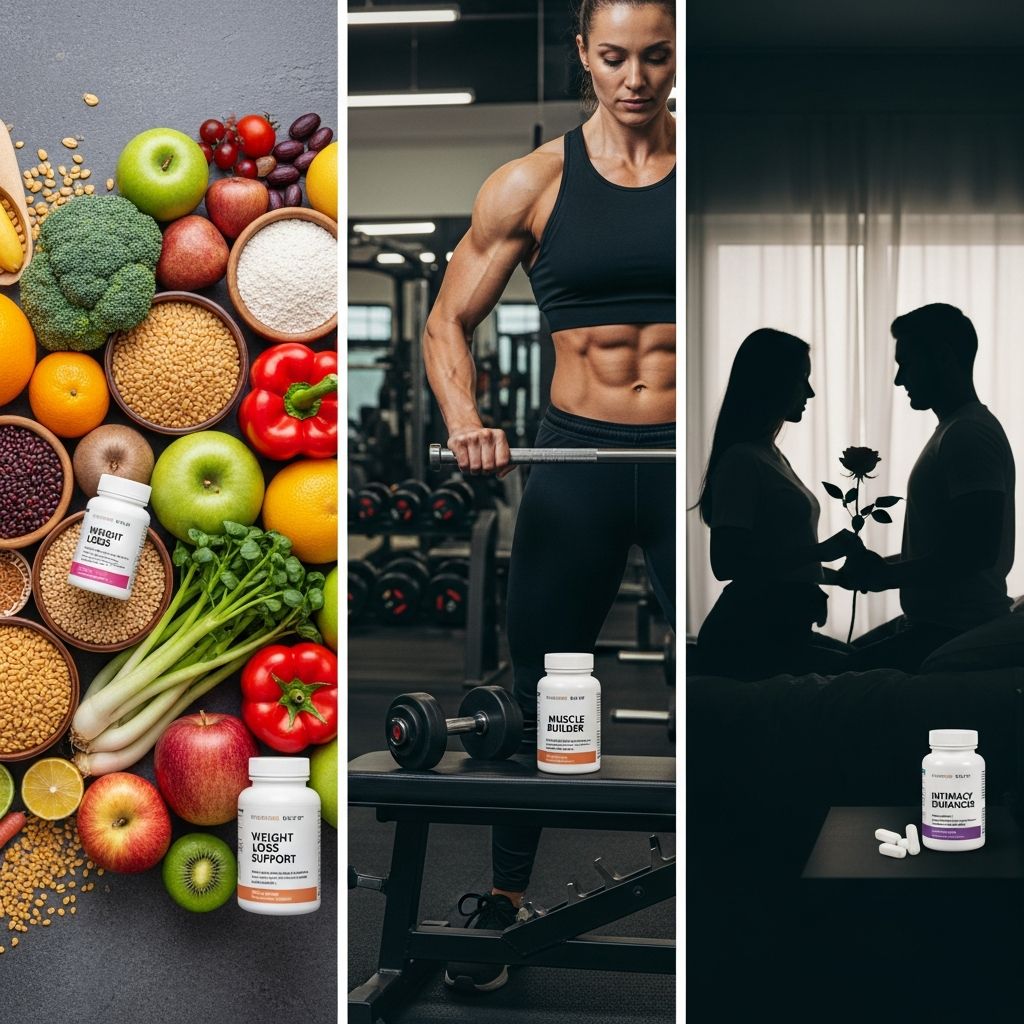
Dietary Supplements Marketed for Weight Loss, Bodybuilding, and Sexual Enhancement: What the Science Says
Healthcare professionals frequently encounter patients asking about dietary supplements marketed for rapid weight loss, muscle building, and sexual enhancement. Although these products are readily available in supermarkets, pharmacies, health food stores, and online retailers, the scientific evidence supporting their safety and efficacy is often limited or conflicting. Despite widespread public perception that botanical and traditional agents are inherently safe, research demonstrates that these products carry the same risks as other pharmacologically active compounds, including potential drug interactions, direct toxicities, and contamination with undisclosed pharmaceutical agents.
Weight Loss Supplements: Limited Efficacy and Significant Safety Concerns
Most dietary supplements marketed for rapid weight loss have failed to demonstrate effectiveness for long-term weight control. Popular products such as acai and hoodia, which benefit from significant marketing and consumer appeal, have not been proven safe or effective. Researchers have extensively investigated various weight loss supplements, including green tea extracts, Chinese herbs, and bitter orange extract, yet none have demonstrated clear effectiveness for weight loss. Furthermore, each of these supplements carries documented side effects that may concern patients and healthcare providers.
Common Weight Loss Supplements and Their Limitations
Green tea extracts have received considerable research attention due to their antioxidant properties and theoretical metabolic effects. However, despite multiple studies, the evidence does not support their use as an effective weight loss intervention. Similarly, traditional Chinese herbs marketed for weight management lack robust clinical evidence supporting their efficacy. Bitter orange extract, another popular supplement, presents additional safety concerns that warrant careful consideration before recommendation.
The underlying issue with these supplements extends beyond mere ineffectiveness. Many products make exaggerated claims about “quick fix” results, creating unrealistic expectations among consumers seeking expedited solutions to weight management challenges. Healthcare providers must educate patients about the importance of evidence-based approaches to weight loss, including dietary modification and physical activity, rather than relying on unproven supplementation.
Bodybuilding and Performance Enhancement Supplements: Unproven Claims and Hidden Dangers
Many bodybuilders and athletes utilize dietary supplements in attempts to increase muscle size, strength, and definition. However, numerous products marketed as dietary supplements for bodybuilding contain ingredients that are potentially harmful or completely unproven. The bodybuilding supplement market is particularly problematic because many products contain undisclosed ingredients, including hidden steroids and other pharmaceutical agents not listed on product labels, creating serious health risks for users unaware of what they are actually consuming.
Commonly Studied Performance Enhancement Ingredients
Researchers have extensively examined numerous supplements used by bodybuilders and athletes to improve physical performance. The following ingredients have received particular research attention:
Glutamine, choline, methoxyisoflavone, quercetin, zinc/magnesium aspartate, nitric oxide, and L-arginine are frequently promoted as performance-enhancing agents. Despite their popularity and widespread marketing, there is no clear evidence that these supplements actually improve athletic performance. Athletes and bodybuilders continue to use these products based on anecdotal reports and marketing claims rather than solid scientific evidence.
Creatine: A Supplement with Some Supportive Evidence
Among performance-enhancing supplements, creatine has received the most extensive research attention and demonstrates some supportive evidence, though with important caveats. A 2021 comprehensive review found that daily creatine supplementation over several days leads to increased concentrations of intramuscular creatine and intramuscular phosphocreatine (PCr), which are associated with reduced adenosine triphosphate (ATP) degradation and heightened ATP production.
Some studies suggest that creatine supplementation may enhance the effects of vigorous exercise on strength, muscle mass, and endurance. The supplement may also facilitate recovery following exercise-induced muscle damage and may aid during post-injury rehabilitation. However, creatine supplementation carries documented side effects, including fluid weight gain, nausea, cramping, and diarrhea, which patients should understand before beginning supplementation.
Beta-Alanine and Other Emerging Supplements
Beta-alanine, an amino acid found naturally in food and dietary supplements, has been studied for its potential performance-enhancing effects. However, results of studies examining beta-alanine are mixed and generally do not demonstrate significant improvements in athletic performance. Like many bodybuilding supplements, the promise often exceeds the evidence.
Safety Concerns in Bodybuilding Supplements
A critical issue affecting the bodybuilding supplement industry is product adulteration and contamination. Many supplements marketed for bodybuilding have been found to contain prescription drugs, anabolic steroids, and other harmful substances not listed on product labels. This represents a serious safety hazard because consumers unknowingly ingest pharmaceutically active compounds without medical supervision or informed consent.
Additionally, some bodybuilding products contain combinations of multiple unproven ingredients or excessively high doses of active substances, which can produce dangerous interactions or acute toxicity. The lack of regulatory oversight in the dietary supplement industry allows manufacturers to include virtually any ingredient without proof of safety or efficacy, creating an environment where profit motivation supersedes consumer protection.
Sexual Enhancement Supplements: No Safe and Effective Options Established
No complementary health approaches have been definitively shown to be both safe and effective for sexual enhancement or treating erectile dysfunction (ED). Despite the widespread availability of supplements marketed for these purposes, sometimes colloquially referred to as “herbal Viagra,” safety represents a serious concern that healthcare providers must address with patients.
Research on Herbal Remedies for Erectile Dysfunction
Researchers have studied various herbal remedies for erectile dysfunction, but the quantity and quality of research on individual herbs remains limited. Much of the existing research has been conducted in animal models rather than human subjects, limiting the applicability of findings to clinical practice. Currently, there is no definitive evidence that any herbal products are both effective and safe for treating ED.
Tribulus terrestris represents one of the more extensively studied herbal remedies for sexual dysfunction. A 2017 prospective, randomized controlled trial in 86 men with mild to moderate erectile dysfunction found that following a 12-week treatment with Tribulus terrestris extracts, significant improvement in sexual function was observed compared with placebo. However, an earlier 2014 study conducted in 30 men with ED found that Tribulus terrestris was not more effective than placebo in improving symptoms of ED or serum total testosterone levels, demonstrating the inconsistent evidence base for this botanical remedy.
Adulteration and Hidden Drug Ingredients
A particularly serious safety concern involves the adulteration of supplements promoted for sexual enhancement with undisclosed prescription drug ingredients. Many products marketed for ED and sexual enhancement have been found to contain pharmaceutical agents or their related compounds that are not listed on product labels. This practice creates substantial health risks, as consumers unknowingly consume drugs that may interact with other medications, produce adverse effects, or be contraindicated based on their medical history.
Some products include dangerous combinations of multiple ingredients or excessively high doses of active substances. The lack of transparency in labeling prevents consumers from making informed decisions about product use and discussing potential interactions with their healthcare providers. This represents a fundamental breach of consumer protection principles in the dietary supplement marketplace.
Regulatory and Consumer Protection Issues
The dietary supplement industry operates under different regulatory frameworks than pharmaceutical products. Unlike drugs, which must be proven safe and effective before marketing, dietary supplements are assumed safe unless proven otherwise. This creates an inherent imbalance that favors manufacturers and marketing over consumer protection.
Products marketed for weight loss, sexual enhancement, and bodybuilding have been particularly problematic in this regulatory environment. Manufacturers can make broad health claims, promote unproven ingredients, and fail to disclose the presence of pharmaceutical agents or contaminants. Healthcare providers must educate patients about these regulatory differences and the importance of verifying ingredient information through independent sources.
Key Recommendations for Healthcare Providers
Healthcare professionals should adopt a cautious, evidence-based approach when discussing dietary supplements with patients. Key recommendations include:
Counseling on Weight Loss: Encourage patients to pursue evidence-based weight management strategies including dietary modification, increased physical activity, and behavioral interventions. Advise patients that supplements marketed for rapid weight loss lack scientific support and may carry safety risks.
Discussion of Performance Enhancement: For athletes and bodybuilders, explain that most bodybuilding supplements lack clear evidence of efficacy and many contain undisclosed harmful ingredients. If patients choose to use supplements, recommend they consult with healthcare providers and be aware of potential side effects.
Sexual Enhancement Concerns: Inform patients that no herbal approaches have been established as safe and effective for ED. Discuss the risks of adulterated products and encourage patients to seek evidence-based treatments, including prescription medications evaluated by healthcare providers.
Frequently Asked Questions
Q: Are all dietary supplements dangerous?
A: Not all supplements are inherently dangerous, but those marketed for weight loss, bodybuilding, and sexual enhancement carry particularly high risks due to adulteration, undisclosed ingredients, and unproven efficacy. Many supplements lack adequate research on safety and effectiveness.
Q: How can consumers determine if a supplement is safe?
A: Consumers should consult with healthcare providers before using any supplement, especially those marketed for rapid results. Look for products that have undergone independent testing through third-party organizations, though even these provide only partial assurance of safety and purity.
Q: Is creatine supplementation safe for athletes?
A: Creatine shows some evidence of enhancing performance during high-intensity exercise, but users should be aware of potential side effects including fluid weight gain, nausea, cramping, and diarrhea. Individuals with kidney disease or those taking certain medications should consult healthcare providers before use.
Q: Why do dietary supplements contain undisclosed pharmaceutical ingredients?
A: Manufacturers sometimes add pharmaceutical ingredients to make products more effective and marketable, creating the illusion that their supplement works better than competitors. This deceptive practice puts consumers at risk of adverse effects and drug interactions they don’t expect or understand.
Q: Can herbal remedies effectively treat erectile dysfunction?
A: Current research does not support the use of herbal remedies as safe and effective treatments for erectile dysfunction. While some herbs like Tribulus terrestris show mixed results in limited studies, evidence remains insufficient to recommend their use over proven pharmaceutical interventions.
Conclusion
The dietary supplement market for weight loss, bodybuilding, and sexual enhancement remains largely unregulated and often ineffective. Healthcare providers must remain vigilant in educating patients about the limited evidence supporting these products, the serious safety concerns including adulteration with pharmaceutical agents, and the importance of pursuing evidence-based approaches to health and wellness. Patients should be encouraged to discuss any supplement use with their healthcare providers and to report adverse effects through appropriate regulatory channels. The burden of evidence remains on consumers and providers to navigate a marketplace where profit incentives often supersede scientific rigor and consumer safety.
References
- Dietary Supplements Marketed for Weight Loss, Bodybuilding, and Sexual Enhancement: What the Science Says — National Center for Complementary and Integrative Health (NCCIH), NIH. Accessed December 2025. https://www.nccih.nih.gov/health/providers/digest/dietary-supplements-marketed-for-weight-loss-bodybuilding-and-sexual-enhancement-science
- Dietary Supplements Marketed for Weight Loss, Bodybuilding, and Sexual Enhancement — National Center for Complementary and Integrative Health (NCCIH), NIH. Accessed December 2025. https://www.nccih.nih.gov/health/providers/digest/dietary-supplements-marketed-for-weight-loss-bodybuilding-and-sexual-enhancement
- Bodybuilding and Performance Enhancement Supplements: What You Need To Know — National Center for Complementary and Integrative Health (NCCIH), NIH. Accessed December 2025. https://www.nccih.nih.gov/health/bodybuilding-and-performance-enhancement-supplements
- Dietary and Herbal Supplements — National Center for Complementary and Integrative Health (NCCIH), NIH. Accessed December 2025. https://www.nccih.nih.gov/health/dietary-and-herbal-supplements
- Using Dietary Supplements Wisely — National Center for Complementary and Integrative Health (NCCIH), NIH. Accessed December 2025. https://www.nccih.nih.gov/health/using-dietary-supplements-wisely
- Erectile Dysfunction/Sexual Enhancement — National Center for Complementary and Integrative Health (NCCIH), NIH. Accessed December 2025. https://www.nccih.nih.gov/health/erectile-dysfunctionsexual-enhancement
- 6 Things To Know About Dietary Supplements for Bodybuilding or Performance Enhancement — National Center for Complementary and Integrative Health (NCCIH), NIH. Accessed December 2025. https://www.nccih.nih.gov/health/tips/6-things-to-know-about-dietary-supplements-marketed-for-bodybuilding-or-performance-enhancement
Similar Articles




Read full bio of Sneha Tete