Dietitian-Favorite High-Protein Vegetarian Recipes
Discover nutritionist-approved high-protein vegetarian recipes that fuel your body and satisfy your taste buds.
Building a balanced vegetarian diet requires careful attention to protein intake, especially for those looking to maintain muscle mass, support athletic performance, or simply meet their daily nutritional needs. Registered dietitians understand that protein is an essential macronutrient that supports countless functions in the body, including muscle repair, immune function, hormone production, and enzyme synthesis. However, many people transitioning to vegetarian eating struggle to identify sufficient protein sources that are both nutritious and delicious. This comprehensive guide presents tried-and-tested high-protein vegetarian recipes that have earned the seal of approval from nutrition professionals.
Understanding Protein Requirements for Vegetarians
The general dietary recommendation suggests that adults consume approximately 0.8 grams of protein per kilogram of body weight daily. However, vegetarians and those engaging in regular strength training may require higher amounts. According to research published by the Academy of Nutrition and Dietetics, well-planned vegetarian diets are nutritionally adequate and may provide health benefits in the prevention and treatment of certain diseases. The key is combining complementary proteins and selecting nutrient-dense plant-based sources.
Plant-based proteins offer unique nutritional profiles, often providing not only protein but also fiber, minerals, and phytonutrients. When properly combined, vegetarian protein sources can deliver all nine essential amino acids necessary for optimal health.
Top Plant-Based Protein Sources
Before diving into specific recipes, understanding which plant-based foods pack the most protein is essential:
- Legumes: Lentils, chickpeas, black beans, and split peas contain 15-18 grams of protein per cooked cup
- Tofu and Tempeh: These soy products offer complete proteins with all essential amino acids, providing 15-20 grams per serving
- Nuts and Seeds: Almonds, pumpkin seeds, and hemp seeds deliver 5-8 grams of protein per ounce
- Whole Grains: Quinoa, buckwheat, and amaranth provide 8-14 grams per cooked cup
- Greek Yogurt and Cottage Cheese: These dairy options contain 15-20 grams of protein per serving
- Nutritional Yeast: Fortified varieties provide 8 grams of protein per two tablespoons
High-Protein Vegetarian Recipe Categories
Protein-Packed Breakfast Ideas
Starting your day with adequate protein sets the tone for stable energy and satiety throughout the morning. These breakfast recipes combine grains, legumes, dairy, or nuts to create satisfying meals that keep you fueled until lunch.
Greek Yogurt Parfait with Granola and Berries combines Greek yogurt (20g protein), granola made with nuts and seeds (5g protein), and fresh berries (1g protein) for a total of approximately 26 grams of protein per serving. This simple yet elegant breakfast requires minimal preparation and offers probiotic benefits from the yogurt.
Tofu Scramble with Vegetables transforms crumbled tofu (15g protein) with nutritional yeast, turmeric, and sautéed vegetables. When served with whole grain toast (4g protein), this hearty breakfast delivers over 20 grams of protein while providing essential micronutrients.
Overnight Oats with Protein Powder leverages oats (5g protein), milk or plant-based alternative (4-8g protein), protein powder (20-25g protein), and nut butter (8g protein) for a meal that can exceed 40 grams of protein. Prepare it the night before for grab-and-go convenience.
Satisfying Lunch and Dinner Recipes
These recipes serve as complete meals, combining multiple protein sources to create balanced, restaurant-quality dishes suitable for both weeknight dinners and meal-prep sessions.
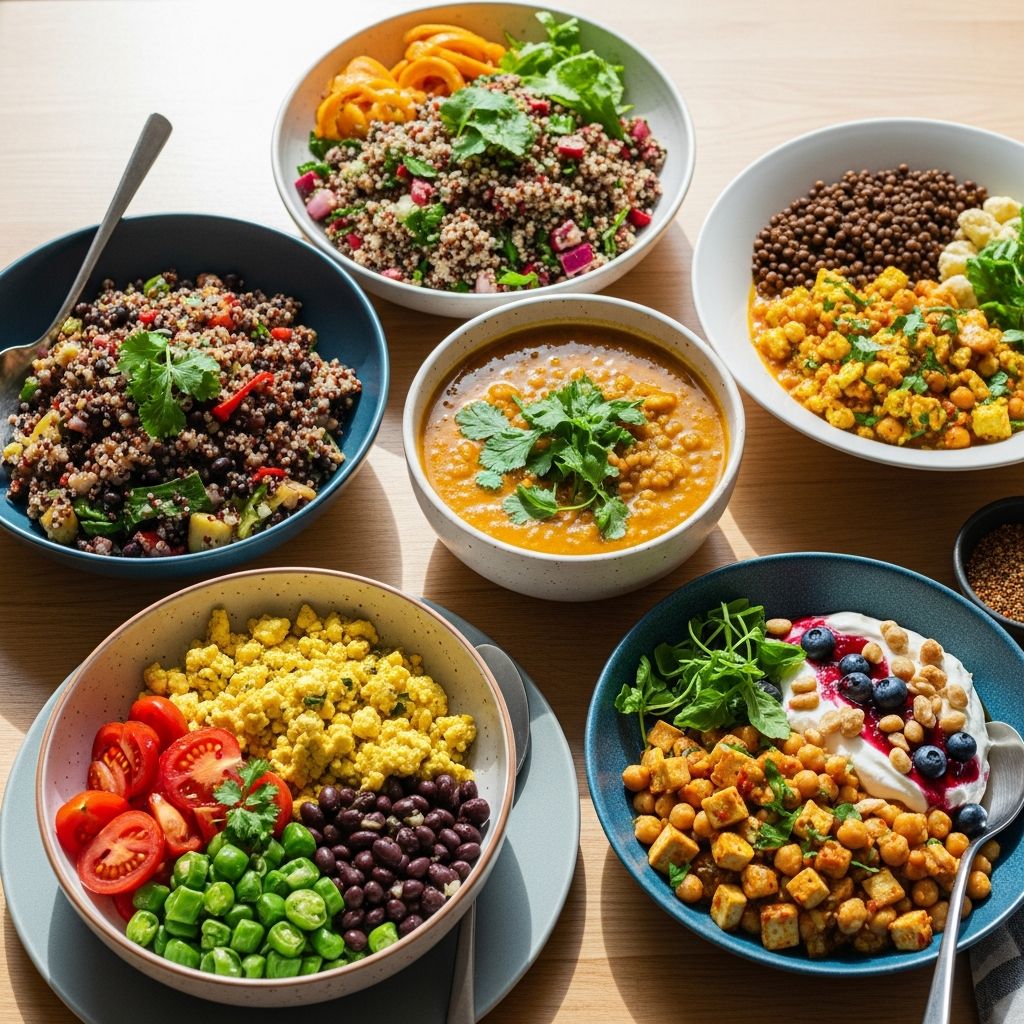
Lentil and Vegetable Curry is a flavor-packed dish combining red or brown lentils (18g protein per cup), coconut milk, aromatic spices, and an assortment of vegetables. This recipe is naturally vegan and becomes even more nutritious when paired with brown rice (4g protein per cooked cup), bringing total protein to approximately 25-30 grams per serving.
Related Stories



Chickpea Buddha Bowls arrange roasted chickpeas (12g protein per cup), quinoa (8g protein per cooked cup), leafy greens, roasted sweet potatoes, and tahini dressing (3g protein per tablespoon) in an Instagram-worthy presentation. These customizable bowls allow vegetarians to mix and match components based on seasonal availability and personal preferences.
Black Bean and Tempeh Tacos utilize tempeh bacon (15g protein), black beans (15g protein per cooked cup), and corn tortillas (2g protein each) to create a satisfying meal. Topped with avocado, salsa, and Greek yogurt (5g protein per tablespoon), each taco delivers balanced nutrition with complex flavors.
Baked Falafel with Tahini Sauce offers a Middle Eastern-inspired protein boost, with chickpea-based falafel providing 4-5 grams of protein per falafel ball. A three-falafel serving alongside hummus (3g protein per tablespoon), vegetables, and whole wheat pita bread (4g protein) creates a complete meal.
Protein-Rich Snacks and Sides
Snacking strategically supports consistent energy levels and prevents overeating at main meals. These recipes provide portable, protein-dense options perfect for midday hunger or pre/post-workout nutrition.
Homemade Protein Energy Balls combine nuts (6g protein per ounce), seeds, plant-based protein powder (20-25g per serving), and dates. These no-bake treats deliver 8-12 grams of protein per ball and satisfy sweet cravings naturally.
Roasted Chickpea Snacks are prepared by tossing canned chickpeas with olive oil, salt, and spices, then roasting until crispy. Each one-cup serving provides approximately 12 grams of protein with minimal preparation required.
Edamame with Sea Salt offers one of the simplest high-protein snacks available. A one-cup serving of cooked edamame delivers 18 grams of protein, making it an excellent pre-workout fuel or afternoon pick-me-up.
Meal Planning Strategy for High-Protein Vegetarian Eating
Building Balanced Meals
Successful vegetarian nutrition relies on intentional meal planning that combines complementary proteins. Aim to include one serving (approximately one-quarter of your plate) of a protein source at each meal. Pair legumes with whole grains, incorporate dairy or plant-based alternatives, and add nuts or seeds for additional protein and healthy fats.
A simple formula for balanced vegetarian meals includes:
- One-quarter plate: legumes, tofu, tempeh, or other concentrated protein source
- One-quarter plate: whole grains or starchy vegetables
- One-half plate: non-starchy vegetables
- Additional healthy fats: olive oil, nuts, seeds, or avocado
Weekly Meal Prep Strategy
Dedicating two to three hours weekly to meal preparation significantly reduces weekday stress and ensures consistent protein intake. Cook large batches of grains, legumes, and protein sources that can be mixed and matched throughout the week.
Sunday Prep Recommendations:
- Cook two varieties of whole grains (brown rice, quinoa, or farro)
- Prepare 2-3 types of cooked legumes
- Prepare baked tofu or tempeh portions
- Chop and store raw vegetables
- Prepare 1-2 complete sauces or dressings
Nutritional Considerations for Vegetarian Athletes
Vegetarian athletes face unique nutritional challenges and should consider increasing protein intake to 1.2-2.0 grams per kilogram of body weight, depending on their sport and training intensity. Additionally, specific micronutrients require attention:
| Nutrient | Vegetarian Sources | Daily Target |
|---|---|---|
| Vitamin B12 | Fortified plant milks, nutritional yeast, supplements | 2.4 mcg |
| Iron | Legumes, leafy greens, fortified cereals | 8-18 mg (depending on age/sex) |
| Zinc | Legumes, nuts, seeds, whole grains | 8-11 mg |
| Calcium | Fortified plant milks, leafy greens, tofu | 1000-1200 mg |
| Omega-3 Fatty Acids | Flaxseeds, chia seeds, walnuts, algae supplements | 1.1-1.6 g |
Shopping and Ingredient Guide
Pantry Staples for High-Protein Vegetarian Cooking
Building a well-stocked pantry simplifies recipe preparation and ensures you always have protein-rich options available:
- Canned and dried legumes (lentils, chickpeas, beans)
- Whole grains (quinoa, brown rice, oats, farro)
- Nut butters and seeds
- Tofu and tempeh (fresh or shelf-stable)
- Nutritional yeast and miso paste
- Canned coconut milk and vegetable broth
- Dried herbs and spices for flavor variety
- Plant-based protein powder
Frequently Asked Questions
Q: Can vegetarians get enough protein without supplements?
A: Yes, well-planned vegetarian diets can provide adequate protein through food sources alone. By combining complementary proteins and incorporating legumes, tofu, nuts, seeds, and whole grains into meals, vegetarians can meet their protein requirements without supplements. However, some may find supplementation convenient, especially for post-workout nutrition.
Q: Are plant-based proteins complete proteins?
A: Most individual plant-based proteins are incomplete, lacking one or more essential amino acids. However, soy products (tofu, tempeh, edamame) and quinoa are complete proteins. Vegetarians can also obtain complete proteins by combining foods throughout the day, such as beans with rice or hummus with whole grain bread.
Q: How much protein do vegetarians need daily?
A: Most adults require 0.8 grams of protein per kilogram of body weight daily. Vegetarians may benefit from consuming slightly more, and athletes should aim for 1.2-2.0 grams per kilogram, depending on training intensity and goals.
Q: What are easy high-protein vegetarian breakfast options?
A: Greek yogurt parfaits, protein smoothies, tofu scrambles, overnight oats with protein powder, and whole grain toast with nut butter provide quick, protein-rich breakfast options that support morning energy and satiety.
Q: How can I make vegetarian meals more interesting?
A: Incorporate diverse proteins, experiment with international cuisines, utilize various cooking techniques, add texture through nuts and seeds, and develop a collection of favorite sauces and dressings. Meal variation prevents boredom while ensuring broad nutrient intake.
Q: Is it possible to build muscle on a vegetarian diet?
A: Absolutely. Consuming adequate protein, engaging in strength training, and ensuring overall caloric sufficiency supports muscle development in vegetarians. Many professional athletes thrive on plant-based or vegetarian diets when properly planned.
References
- Vegetarian Diets: Academy of Nutrition and Dietetics Evidence Analysis Library — Academy of Nutrition and Dietetics. 2016. https://www.eatrightpro.org/practice/practice-resources/nutrition-research/evidence-analysis-library
- Protein and Physical Activity — U.S. Department of Agriculture (USDA). 2023. https://www.dietaryguidelinesforamericans.gov
- Plant-Based Proteins: Complete Amino Acid Profile and Athletic Performance — PubMed Central. 2021. https://pubmed.ncbi.nlm.nih.gov/34072782/
- Dietary Reference Intakes for Energy, Carbohydrate, Fiber, Fat, Fatty Acids, Cholesterol, Protein, and Amino Acids — National Academies of Sciences, Engineering, and Medicine. 2005. https://www.nap.edu
- The Role of Plant-Based Nutrition in Disease Prevention and Management — Journal of the International Society of Sports Nutrition. 2019. https://jissn.biomedcentral.com/
Similar Articles








Read full bio of medha deb