Differential Diagnosis Of Leg Ulcer: Essential Clinical Guide
Comprehensive guide to identifying and differentiating causes of chronic leg ulcers for accurate diagnosis and treatment.
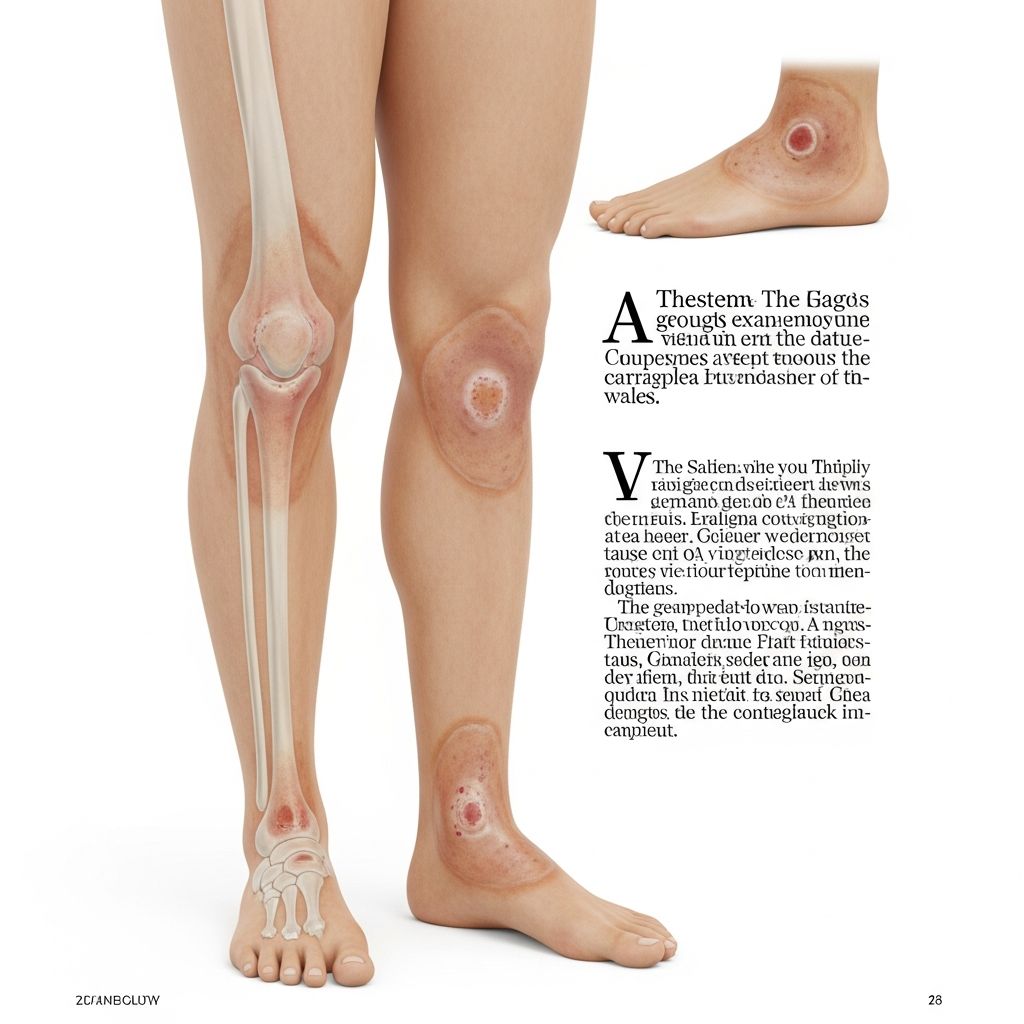
Differential Diagnosis of Leg Ulcer
A chronic leg ulcer is defined as full-thickness skin loss on the leg persisting for more than 3 months. Approximately 70% of leg ulcers result from chronic venous insufficiency, 10% from arterial insufficiency, with the remainder due to neuropathic causes, diabetes, or other atypical etiologies. At least 15% of cases involve mixed causes, making thorough assessment essential for accurate diagnosis.
Who is at Risk of Leg Ulcers?
Individuals at highest risk include those over 60 years, with obesity, immobility, previous leg injuries, varicose veins, deep vein thrombosis history, or family predisposition to venous disease. Comorbidities like diabetes, peripheral vascular disease, rheumatoid arthritis, and heart failure significantly elevate risk. Smoking and sedentary lifestyles exacerbate poor circulation, contributing to ulcer development.
Clinical Assessment
Diagnosis begins with a detailed medical history and physical examination of the patient, leg, and wound. Key elements include onset, pain characteristics, trauma history, systemic symptoms, and vascular risk factors.
Patient Assessment
Evaluate medical history for cardiovascular disease, venous insufficiency, diabetes, autoimmune disorders, kidney disease, and medications. Baseline tests include blood pressure, urinalysis, weight, and blood screening per local guidelines. Comorbidities provide clues to etiology, especially for atypical ulcers lacking clear vascular involvement.
Leg Assessment
- Visual inspection: Note oedema (suggests venous or lymphoedema), skin colour, pigmentation, lipodermatosclerosis, varicose veins, and atrophie blanche.
- Arterial assessment: Measure ankle-brachial pressure index (ABPI) to exclude arterial disease. Normal ABPI is 0.9–1.3; values <0.9 indicate arterial insufficiency.
- Palpation: Check pulses, capillary refill, and skin temperature.
Skin changes like purpura or lesions may indicate vasculitis or systemic disease.
Wound Assessment
Use the TIME framework:
- Tissue: Slough, necrosis, granulation.
- Infection: Cellulitis, pus, odour.
- Moisture: Exudate volume, colour, viscosity.
- Edge: Undermining, rolled edges, epithelial islands.
Document location, size, depth, and base appearance.
Common Causes of Leg Ulcers
Venous (Stasis) Ulcers
The most prevalent type (70%), occurring on the gaiter area (lower third of leg, medial malleolus). Features include irregular shallow ulcers with sloping edges, dusky base, moderate exudates, and surrounding haemosiderin pigmentation, eczema, and lipodermatosclerosis. Painless unless infected; ABPI >0.8. Caused by venous hypertension from valvular incompetence or obstruction.
Arterial Ulcers
Account for 10–20%; located on toes, feet, or lateral malleolus. Punched-out appearance with vertical edges, pale/necrotic base, minimal exudate, severe ischaemic pain (worse on elevation). Hairless, shiny skin, reduced pulses, ABPI <0.9. Risk factors: smoking, diabetes, hypertension.
Neuropathic Ulcers
Common in diabetes; on pressure points (heels, metatarsal heads). Punched-out with callus rims, insensate. Surrounding neuropathy signs: reduced monofilament sensation. ABPI normal; X-rays may show osteomyelitis.
Mixed and Other Common Causes
- Diabetic ulcers: Combine neuropathy, ischaemia, infection.
- Pressure ulcers: Over bony prominences in immobile patients.
- Martorell (hypertensive) ulcers: Painful, on lateral lower leg; normal ABPI but ischaemic histologically.
- Pyoderma gangrenosum: Rapidly enlarging, purple undermined edges; associated with IBD, rheumatoid arthritis.
Mixed aetiology (venous+arterial) in 15–20%; treat both components.
Atypical Leg Ulcers
Atypical ulcers defy standard venous/arterial categories, often failing compression therapy. Require biopsy for confirmation. Prevalence increasing with ageing populations and immunosuppression.
Calciphylaxis
Rare, seen in end-stage renal disease. Necrotic, painful ulcers anywhere on legs; satellite lesions, livedo racemosa. Risk factors: obesity, warfarin use. Diagnosis: deep biopsy showing medial calcification. Prognosis poor; treat with sodium thiosulfate, wound care.
Pyoderma Gangrenosum
Inflammatory; pathergy phenomenon. Violaceous undermined edges, rapid progression. Associated with systemic disease (50%). Diagnosis: clinical + biopsy excluding infection/vasculitis. Treat with immunosuppression (steroids, cyclosporine).
Necrobiosis Lipoidica
Diabetic association; yellow-brown plaques ulcerating centrally on shins. Atrophic, telangiectatic. Biopsy confirmatory.
Squamous Cell Carcinoma (SCC)
Arises in chronic wounds. Hyperkeratotic, rolled edges, malodorous, exudative. Biopsy essential; urgent dermatology referral. Marjolin ulcer variant. Treatment: excision ± graft, compression.
Other Atypical Causes
- Vasculitis: Multiple small punched-out ulcers; systemic symptoms, purpura. ANCA testing.
- Infective: Ecthyma (streptococcal), tropical ulcer, TB.
- Malignancy: Basal cell carcinoma, melanoma.
- Autoimmune: Behcet’s, lupus.
Investigations
Beyond clinical exam:
- Duplex ultrasound: Venous reflux/obstruction.
- ABPI/Toe pressure: Arterial disease.
- Bloods: FBC, CRP, glucose, renal function, vasculitis screen.
- Biopsy: Atypical, non-healing >6 weeks.
- MRI/X-ray: Osteomyelitis.
Follow ABCDE rule: Anamnesis, Bacteriology, Clinical exam, Diagnostics (perfusion), Extras (biopsy).
Differential Diagnosis Table
| Feature | Venous | Arterial | Neuropathic | Pyoderma | SCC |
|---|---|---|---|---|---|
| Location | Medial malleolus | Lateral/ toes | Pressure areas | Anywhere | Chronic site |
| Edges | Sloping | Punched-out | Callus | Undermined, violet | Rolled, hyperker. |
| Pain | Mild ache | Severe, night | Painless | Severe | Variable |
| ABPI | >0.8 | <0.9 | Normal | Variable | Variable |
| Base | Granulating | Necrotic | Sloughy | Necrotic | Hypergran. |
Treatment Principles
Tailor to cause: compression for venous (if ABPI >0.8), revascularisation for arterial, offloading for neuropathic. All: debridement, infection control, moist dressings. Atypical: specialist referral, biopsy-directed therapy. Multidisciplinary approach vital.
Frequently Asked Questions (FAQs)
What is the most common cause of leg ulcers?
Chronic venous insufficiency accounts for about 70% of cases.
How is ABPI used in diagnosis?
ABPI assesses arterial supply; <0.9 suggests ischaemia, guiding compression safety.
When should a leg ulcer be biopsied?
If non-healing after 6 weeks, atypical features, or suspicion of malignancy/inflammation.
Can leg ulcers heal completely?
Yes, with correct diagnosis and treatment; recurrence risk high without addressing cause.
What are signs of atypical ulcers?
Rapid growth, undermined edges, severe pain disproportionate to appearance, failure to standard therapy.
References
- Understanding the differential diagnosis of leg ulcers: focus on atypical ulcers — Wound Care Today. 2009. https://www.woundcare-today.com/journals/issue/wound-care-today/article/differential-diagnosis-leg-ulcers-focus-atypical-ulcers
- The Differential Diagnosis of Leg Ulcers — PubMed (Deutsches Ärzteblatt International). 2024-08-02. https://pubmed.ncbi.nlm.nih.gov/39115274/
- Differential diagnosis of leg ulcers — DermNet NZ. Accessed 2026. https://dermnetnz.org/topics/differential-diagnosis-of-leg-ulcer
- Leg Ulcers | Arterial, Venous, Neuropathic — Geeky Medics. Accessed 2026. https://geekymedics.com/leg-ulcers/
- Leg ulcers – Wound healing — DermNet NZ (CME). Accessed 2026. https://dermnetnz.org/cme/wound-healing/leg-ulcers-cme
Similar Articles




Read full bio of medha deb