Digestive Enzymes: How Supplements Like Lactaid and Beano Can Help
Discover how digestive enzyme supplements work and whether they're right for your digestive health needs.
Understanding Digestive Enzymes: How Supplements Like Lactaid and Beano Can Help With Digestion
Digestive enzymes are specialized proteins that break down food into smaller, absorbable components in your gastrointestinal tract. These enzymes are essential for proper nutrient absorption and optimal digestive function. When your body doesn’t produce enough enzymes, or when you consume foods your body struggles to digest, supplements like Lactaid and Beano may help alleviate common digestive symptoms. Understanding how these supplements work and whether they’re right for you is crucial for making informed decisions about your digestive health.
What Are Digestive Enzymes?
Digestive enzymes are biological catalysts that facilitate the breakdown of macronutrients into their basic building blocks. Your body naturally produces these enzymes in the mouth, stomach, and small intestine to help digest carbohydrates, proteins, and fats. The three primary types of digestive enzymes include:
- Amylase: Breaks down carbohydrates into simple sugars
- Protease: Breaks down proteins into amino acids
- Lipase: Breaks down fats into fatty acids and glycerol
When your digestive system functions optimally, these enzymes work seamlessly to ensure that nutrients from food are properly extracted and absorbed. However, various factors—including age, illness, stress, and certain medical conditions—can impair enzyme production, leading to digestive discomfort.
Common Digestive Problems and Their Causes
Approximately 70 million Americans experience common digestive issues like bloating, gas, diarrhea, and constipation due to impaired breakdown of food compounds. These symptoms often result from enzyme deficiencies or food intolerances. Understanding the underlying causes of your digestive problems is essential before considering supplementation.
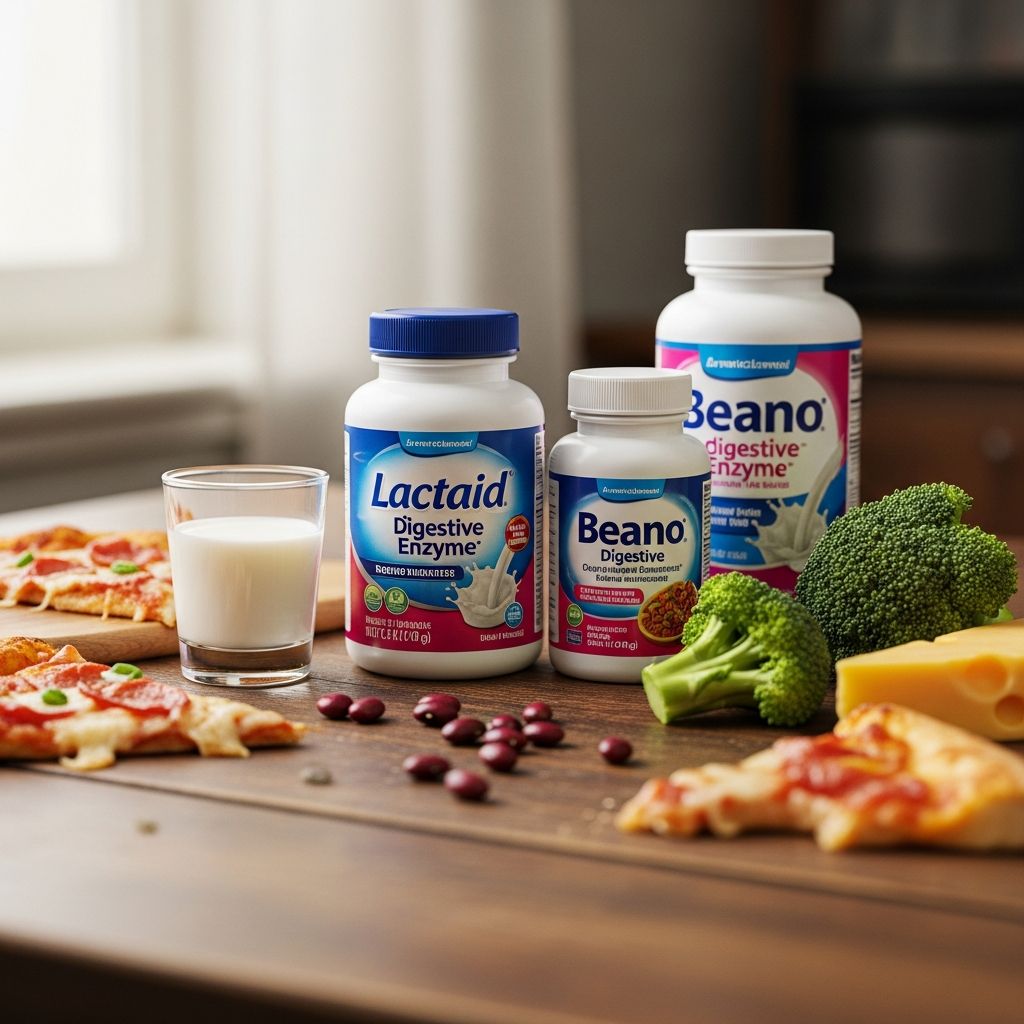
Lactose Intolerance: This is one of the most prevalent digestive issues, affecting millions of people worldwide. Lactose intolerance occurs when your body doesn’t produce enough lactase, an enzyme responsible for breaking down lactose found in dairy products. Lactaid supplements contain lactase and are specifically designed to help people with lactose intolerance digest dairy without experiencing bloating, gas, or cramping.
Food Fermentation and Gas: When your body can’t properly digest certain carbohydrates, bacteria in your colon ferment these compounds, producing gas and bloating. This is where supplements like Beano become useful. Beano contains alpha-galactosidase, an enzyme that breaks down complex carbohydrates in beans and vegetables that commonly cause gas.
Types of Digestive Enzyme Supplements
Digestive enzyme supplements are available in several forms, sourced from different origins. Each type has unique characteristics and benefits:
Animal-Derived Enzymes
Animal-derived enzymes, typically extracted from pigs or cows, remain the established standard of care for many chronic digestive conditions. These enzymes are FDA-regulated when prescribed as medications and contain pancrelipase—a mixture of amylase, lipase, and protease. Prescription pancreatic enzyme supplements are encapsulated in special coatings to survive stomach acid and reach the small intestine where they’re most effective.
Plant-Based Enzymes
Plant-based digestive enzymes are gaining popularity as a growing body of evidence supports their effectiveness. These enzymes, often derived from papaya, pineapple, or other plant sources, tend to work across a wider pH range, making them effective throughout the digestive tract. Plant-based options are particularly appealing to vegetarians and vegans seeking enzyme supplementation.
Related Stories



Microbial Enzymes
Microbial enzymes, derived from fungi or bacteria, represent an emerging category of digestive supplements. These enzymes are vegan-friendly and often demonstrate good stability and effectiveness. They’re increasingly used in various enzyme supplement formulations, either alone or in combination with other enzyme sources.
How Supplements Like Lactaid and Beano Work
Lactaid works by providing the lactase enzyme that your body may lack or produce in insufficient quantities. When you take Lactaid with dairy products, the supplement’s lactase enzyme breaks down lactose into glucose and galactose, which your small intestine can absorb without difficulty. This allows people with lactose intolerance to enjoy dairy products while avoiding the uncomfortable symptoms that typically follow.
Beano operates on a different principle. This supplement contains alpha-galactosidase, an enzyme that targets oligosaccharides—complex carbohydrates found in beans, legumes, and cruciferous vegetables. By breaking down these complex carbohydrates before they reach your colon, Beano prevents bacterial fermentation that produces gas and bloating.
The timing of supplementation matters significantly. Both Lactaid and Beano work best when taken at the beginning of a meal, allowing the enzymes to mix with food during the digestive process rather than attempting to catch up after digestion has already begun.
The Evidence: Do Digestive Enzyme Supplements Really Work?
The effectiveness of digestive enzyme supplements varies considerably depending on individual circumstances and the specific condition being treated. Clinical evidence supports their use in specific, diagnosed conditions, though the picture becomes murkier for general digestive distress.
For Diagnosed Conditions: For individuals with clinically documented enzyme deficiencies—such as pancreatic insufficiency, cystic fibrosis, or lactose intolerance—enzyme supplements can provide significant symptom relief. A clinical study of 65 patients with chronic pancreatitis found that prescription pancreatic enzyme supplementation successfully relieved abdominal pain, demonstrating clear therapeutic value in this population.
For General Digestive Complaints: The evidence becomes less compelling when examining enzyme supplements for general bloating, gas, or mild indigestion in otherwise healthy individuals. Despite their popularity and widespread marketing claims, current research does not support using supplemental enzymes to treat common gastrointestinal symptoms in the general population. Recent studies show that digestive enzymes and herbal dietary supplements can reduce post-meal abdominal distension in certain cases, but these results aren’t universally applicable.
The disconnect between marketing promises and clinical evidence represents a significant challenge in this supplement category. Many commercial companies make exaggerated claims about “instant digestion” or “total gut reset,” but very few of these benefits are supported by rigorous clinical studies. Products available to the general public that claim to determine digestive enzyme deficiencies have yet to be tested in clinical trials for their accuracy and efficacy.
Over-the-Counter vs. Prescription Enzyme Supplements
| Characteristic | Prescription Enzymes | Over-the-Counter Supplements |
|---|---|---|
| Regulation | FDA-approved and regulated as medications | Not FDA-regulated; classified as dietary supplements |
| Ingredient Verification | Standardized formulations with verified enzyme content | Ingredient quality and amounts not guaranteed |
| Coating Technology | Special acid-resistant coatings for small intestine delivery | Varies; many lack protective coatings |
| Clinical Evidence | Extensive clinical testing and documented efficacy | Limited clinical testing; mostly anecdotal evidence |
| Cost | Higher cost; often covered by insurance with diagnosis | Lower cost; out-of-pocket expense |
| Best Use | Diagnosed chronic conditions requiring specific therapy | Occasional digestive discomfort in specific situations |
Safety Considerations and Potential Side Effects
For most people, over-the-counter digestive enzyme supplements are safe when used according to package directions. However, some individuals may experience side effects, particularly with regular use or if they’re allergic to the enzyme source. Potential adverse effects include:
- Bloating and abdominal distension
- Nausea and stomach discomfort
- Diarrhea or loose stools
- Allergic reactions (in sensitive individuals)
- Stomach pain
Interestingly, digestive enzyme supplements may sometimes cause the very symptoms they’re intended to treat. Additionally, digestive enzymes can potentially interact with certain medications, particularly those affecting stomach acid or intestinal function. Always consult your healthcare provider before starting enzyme supplements, especially if you take medications or have existing health conditions.
Low-quality products pose additional risks, as the supplement industry lacks rigorous oversight compared to pharmaceuticals. Choosing reputable brands and following dosage instructions carefully helps minimize potential harm.
Common Myths About Digestive Enzyme Supplements
Myth: Taking enzyme supplements will make your body “lazy” and stop producing enzymes. This is false. Your body’s enzyme secretion is triggered by food intake and nerve signals, not suppressed by supplements. Research confirms that dietary enzyme pills do not shut down natural enzyme production.
Myth: Everyone should take digestive enzyme supplements for better health. Incorrect. Only people with diagnosed enzyme deficiencies benefit from supplementation. Healthy individuals with normal digestion do not require extra enzymes; focusing on whole foods and proper nutrition is more beneficial.
Myth: Enzyme supplements work quickly and provide immediate relief. Results vary significantly. While some people report symptom improvement within 30 minutes to an hour, others experience benefits over several days or not at all. The timeline depends on the individual, the condition being treated, and the supplement quality.
Who Should Consider Taking Digestive Enzyme Supplements?
Digestive enzyme supplementation is most appropriate for specific populations with documented needs. Individuals with the following conditions may benefit from enzyme supplements:
- Lactose Intolerance: Lactaid and similar supplements directly address this common condition
- Pancreatic Insufficiency: Prescription enzyme medications are essential standard care
- Cystic Fibrosis: These patients require enzyme replacement therapy
- Celiac Disease: Some individuals may benefit from supplementation alongside dietary management
- Sensitivity to Gas-Producing Foods: Beano-type supplements can help manage symptoms
- Post-Digestive Surgery: Some patients benefit temporarily after gastrointestinal procedures
For most healthy individuals without diagnosed deficiencies, your body typically produces enough enzymes to handle digestion efficiently. Unless you have a specific diagnosed condition, focusing on a balanced diet, adequate hydration, and healthy lifestyle habits provides more sustainable digestive wellness.
Practical Tips for Choosing and Using Digestive Enzyme Supplements
Read Labels Carefully: Look for supplements that clearly state enzyme type, activity level, and appropriate dosage. Transparency matters when evaluating product quality.
Consider Your Specific Needs: Are you dealing with lactose intolerance, bean-related gas, or general bloating? Different supplements target different issues. Matching the formulation to your specific needs ensures better results.
Consult Healthcare Professionals: Before starting supplements, discuss your symptoms with your doctor or gastroenterologist. Testing can reveal whether you truly have an enzyme deficiency or another underlying issue causing your symptoms.
Start with Lifestyle Changes: Before supplementing, try dietary modifications and lifestyle adjustments. Often, digestive issues stem from eating too quickly, insufficient hydration, stress, or food choices rather than actual enzyme deficiencies.
Track Your Symptoms: Keep a symptom diary before and after starting supplements. This helps you objectively evaluate whether the supplement is actually helping or providing only placebo benefit.
Frequently Asked Questions
Q: Are digestive enzyme supplements necessary for healthy digestion?
A: For most healthy individuals with normal digestion, digestive enzyme supplements are unnecessary. Your body naturally produces sufficient enzymes to handle digestion. However, people with diagnosed enzyme deficiencies or specific digestive conditions may benefit significantly from supplementation.
Q: How long does it take to see results from digestive enzyme supplements?
A: Results vary considerably. Some people notice symptom improvement within 30 minutes to an hour of taking supplements like Lactaid or Beano, particularly when used as directed with specific meals. Others may require several days to notice changes, or may not experience meaningful benefit at all.
Q: Can digestive enzyme supplements interact with medications?
A: Yes, digestive enzymes can potentially interact with certain medications, particularly those affecting stomach acid or intestinal function. Always consult your healthcare provider before starting enzyme supplements to ensure safety and avoid unintended consequences.
Q: Are plant-based enzyme supplements as effective as animal-based ones?
A: Plant-based enzyme supplements can be just as effective as animal-based ones, depending on the condition being treated. They’re often preferred for their broader pH stability and suitability for vegetarians and vegans. Choosing the right type depends on your specific needs and dietary preferences.
Q: Should I take digestive enzymes with every meal?
A: This depends on your specific situation. If you have a diagnosed condition like pancreatic insufficiency, your doctor will recommend specific dosing. For over-the-counter supplements like Lactaid or Beano, use them as needed when consuming foods that typically trigger digestive discomfort.
Conclusion
Digestive enzyme supplements like Lactaid and Beano play valuable roles in managing specific digestive conditions. For individuals with diagnosed enzyme deficiencies or specific food intolerances, these supplements can significantly improve quality of life and reduce uncomfortable symptoms. However, for the average healthy individual, current research suggests that routine supplementation is typically unnecessary and may not provide meaningful benefits.
The key to effective digestive health management lies in understanding your individual needs, consulting with healthcare professionals, and recognizing the difference between actual enzyme deficiencies and digestive discomfort that might be better addressed through dietary modifications or lifestyle changes. While digestive enzyme supplements have their place in a comprehensive health strategy, they’re not a universal solution for all digestive complaints. By making informed decisions based on clinical evidence rather than marketing claims, you can choose an approach to digestive wellness that truly addresses your unique needs.
References
- Enzyme Supplements: Busting Myths vs. Scientific Truths — Enzyme Bioscience Pvt Ltd. 2024. https://enzymebio.com/enzyme-supplements-busting-myth-vs-scientific-truth/
- Do Digestive Enzyme Supplements Help with Bloating and Gas? — InsideTracker. January 4, 2024. https://www.insidetracker.com/a/articles/do-digestive-enzyme-supplements-help-with-bloating-and-gas
- Digestive Enzymes 101: Do You Really Need Them? — The Nature Doctors. 2024. https://www.thenaturedoctors.ca/blog/digestive-enzymes-101-do-you-really-need-them
- What Are Digestive Enzymes: Natural Sources and Supplements — WebMD. 2024. https://www.webmd.com/diet/what-are-digestive-enzymes
- Pancreatic enzyme supplementation in chronic pancreatitis: Clinical study findings — National Center for Biotechnology Information (NCBI). https://www.ncbi.nlm.nih.gov/pmc/articles/PMC4923703/
- Harvard-Trained Gastroenterologist Reveals 10 Best Anti-Bloating Foods — Times of India. 2024. https://timesofindia.indiatimes.com/life-style/health-fitness/diet/harvard-trained-gastroenterologist-reveals-10-best-anti-bloating-foods/
Similar Articles








Read full bio of medha deb