H2 Blockers: Uses, Side-Effects, Dosage, And Safety
Comprehensive guide to H2 blockers: how they reduce stomach acid, treat heartburn, ulcers, and more, with side effects and comparisons.
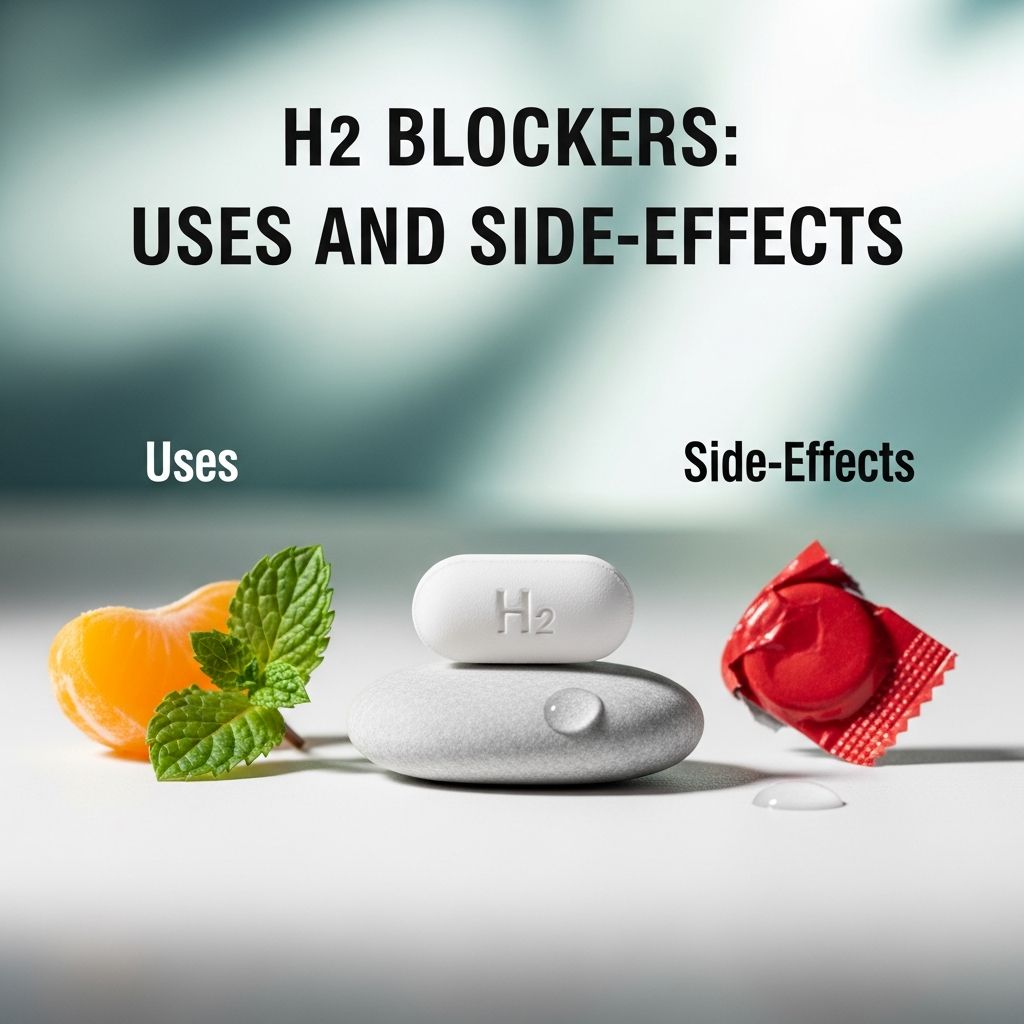
H2 blockers are medications that reduce stomach acid production, providing relief from conditions like heartburn, acid reflux, and ulcers.
What are H2 blockers?
H2 blockers, also known as histamine H2-receptor antagonists, are a class of drugs that decrease acid secretion by the parietal cells in the stomach lining. They work by blocking histamine from binding to H2 receptors on these cells, which normally stimulates acid release. Common examples include cimetidine (Tagamet®), famotidine (Pepcid®), nizatidine (Axid®), and ranitidine (Zantac®), available under various brand names.
Histamine, produced by enterochromaffin-like (ECL) cells in the stomach, triggers acid production after meals via gastrin stimulation. By competitively antagonizing H2 receptors, these blockers reduce acid output, alleviating symptoms like heartburn and promoting ulcer healing. Importantly, H2 blockers differ from H1 antihistamines used for allergies, as they target distinct receptors.
Introduced in the 1970s with cimetidine as the first, H2 blockers revolutionized peptic ulcer treatment before proton pump inhibitors (PPIs) became dominant. They are available over-the-counter (OTC) for mild symptoms and by prescription for severe cases, often in oral, intravenous, or intramuscular forms.
What conditions are they used to treat?
H2 blockers are versatile for acid-related disorders. Key FDA-approved uses include:
- Uncomplicated gastroesophageal reflux disease (GERD), causing heartburn and oesophagitis.
- Gastric and duodenal ulcers, aiding healing and preventing recurrence.
- Hypersecretory conditions like Zollinger-Ellison syndrome (ZES), where tumors cause excessive acid.
- Mild, infrequent heartburn or indigestion.
- NSAID-associated ulcers.
Off-label, they prevent stress ulcers, treat gastritis, esophagitis, and gastrointestinal bleeding, and were historically part of Helicobacter pylori eradication regimens (now replaced by PPIs). They also relieve sour stomach and acid indigestion.
How do H2 blockers work?
These medications reversibly bind H2 receptors on gastric parietal cells, inhibiting histamine’s acid-stimulating effect. Post-meal gastrin prompts ECL cells to release histamine, which H2 blockers neutralize, reducing acid by up to 70% for 6-12 hours depending on the drug. This lowers esophageal irritation from reflux and allows mucosal healing in ulcers.
Peak blood levels occur in 1-3 hours, with effects starting in 30-90 minutes. Unlike antacids, which neutralize existing acid, H2 blockers prevent production, offering longer relief.
Types of H2 blockers
Four main H2 blockers are FDA-recognized:
| Name | Common Brands | Key Notes |
|---|---|---|
| Cimetidine | Tagamet, Tagamet HB | First introduced; more drug interactions; OTC and prescription. |
| Ranitidine | Zantac | Second generation; widely used but recalled in some markets due to NDMA concerns (safer alternatives available). |
| Famotidine | Pepcid AC, Pepcid | Fewer interactions; fast-acting for heartburn; IV forms for hospitals. |
| Nizatidine | Axid | Less common; similar efficacy. |
Famotidine is often preferred for its safety profile and availability.
H2 blockers dosage
Dosages vary by condition and formulation. For OTC heartburn relief:
- Take 1 tablet (e.g., 10-20 mg famotidine) 30-60 minutes before meals or at symptom onset; max 2 doses/24 hours.
- Bedtime dosing for nocturnal relief.
Related Stories



Prescription regimens:
- GERD/ulcers: Famotidine 20-40 mg twice daily or 40 mg at night for 6-12 weeks.
- ZES: Higher doses, up to 160 mg 4x daily.
- IV famotidine for hospitalized patients with ulcers or GERD.
Do not self-treat beyond 2 weeks without medical advice. Combine with antacids for immediate relief if needed.
Who can and cannot take H2 blockers?
Most adults tolerate H2 blockers well. However, consult a doctor if you have:
- Kidney/liver impairment (dose adjustments needed).
- Pregnancy/breastfeeding (famotidine generally safer).
- Drug interactions, especially with cimetidine (affects warfarin, theophylline).
Not for children under 12 without advice; avoid in allergy to H2 blockers.
How and when to take or use H2 blockers
Take orally with water, with or without food. For prevention, dose 30-60 minutes pre-meal. Twice-daily (morning/evening) or nightly for maintenance. IV forms are hospital-administered. Complete full courses for ulcers/GERD to prevent relapse.
Common questions about H2 blockers
Are H2 blockers safe for long-term use?
Short-term (up to 2 weeks OTC) is safe; longer prescription use monitored for rare risks like vitamin B12 deficiency or infections.
Can I take H2 blockers with other medications?
Generally yes, but cimetidine interacts with many; famotidine has fewer issues.
Do H2 blockers cause drowsiness?
Rarely; less sedating than older types.
Side-effects of H2 blockers
Most users experience no side effects. Common (1-10%):
- Headache, dizziness, constipation/diarrhea.
Rare (<1%):
- Nausea, rash, fatigue.
- Cimetidine: gynecomastia, confusion in elderly.
- Very rare: blood disorders, hepatitis.
Long-term: Potential hypomagnesemia, fractures (less than PPIs). Discontinue if severe reactions occur.
What is the best H2 blocker?
No single best; all equally effective for acid reduction, but famotidine preferred for fewer interactions. PPIs (e.g., omeprazole) are first-line for severe GERD/ulcers due to superior acid suppression (up to 90%). Use H2 blockers if PPIs cause side effects or for milder cases.
H2 blockers vs antacids vs PPIs
| Medication | Onset | Duration | Best For |
|---|---|---|---|
| Antacids | Minutes | 1-2 hours | Immediate relief. |
| H2 Blockers | 30-90 min | 6-12 hours | Mild/chronic heartburn, prevention. |
| PPIs | 1-4 days | 24+ hours | Severe GERD, ulcers. |
H2 blockers bridge quick relief and sustained control.
Frequently Asked Questions (FAQs)
Can H2 blockers cure GERD?
No, they manage symptoms and heal damage but don’t cure underlying causes.
Are H2 blockers available over-the-counter?
Yes, lower doses of famotidine, cimetidine for heartburn.
How long do H2 blockers take to work?
30-90 minutes for relief, peaking in 1-3 hours.
Can I drink alcohol with H2 blockers?
Moderation advised; alcohol worsens reflux.
Do H2 blockers weaken bones?
Minimal risk short-term; monitor long-term use.
References
- H2 Blockers: Uses and Side-Effects — Patient.info. 2023. https://patient.info/digestive-health/indigestion-medication/h2-blockers
- H2 Blockers – StatPearls — NCBI Bookshelf / StatPearls Publishing. 2023-10-01. https://www.ncbi.nlm.nih.gov/books/NBK525994/
- H2 Blocker Medication Options for GERD — GERDHelp.com. 2023. https://www.gerdhelp.com/blog/h2-blocker-medication-options-for-gerd-gerdhelp/
- Acid Reflux Medicine: Antacids, H2 Blockers, Proton Pump Inhibitors — GoodRx. 2024-01-15. https://www.goodrx.com/conditions/gerd/best-treatment-acid-reflux-antacids-h2-blockers-proton-pump-inhibitors
- H2 blockers — MedlinePlus / U.S. National Library of Medicine. 2023. https://medlineplus.gov/ency/patientinstructions/000382.htm
- What to Know About H2 Receptor Blockers for GERD — WebMD. 2023. https://www.webmd.com/heartburn-gerd/what-to-know-h2-receptor-blockers-gerd
Similar Articles








Read full bio of Sneha Tete