Digital Cameras In Dermatology: 4 Essential Devices Compared
Essential guide to selecting digital cameras and devices for high-quality dermatological imaging and documentation.
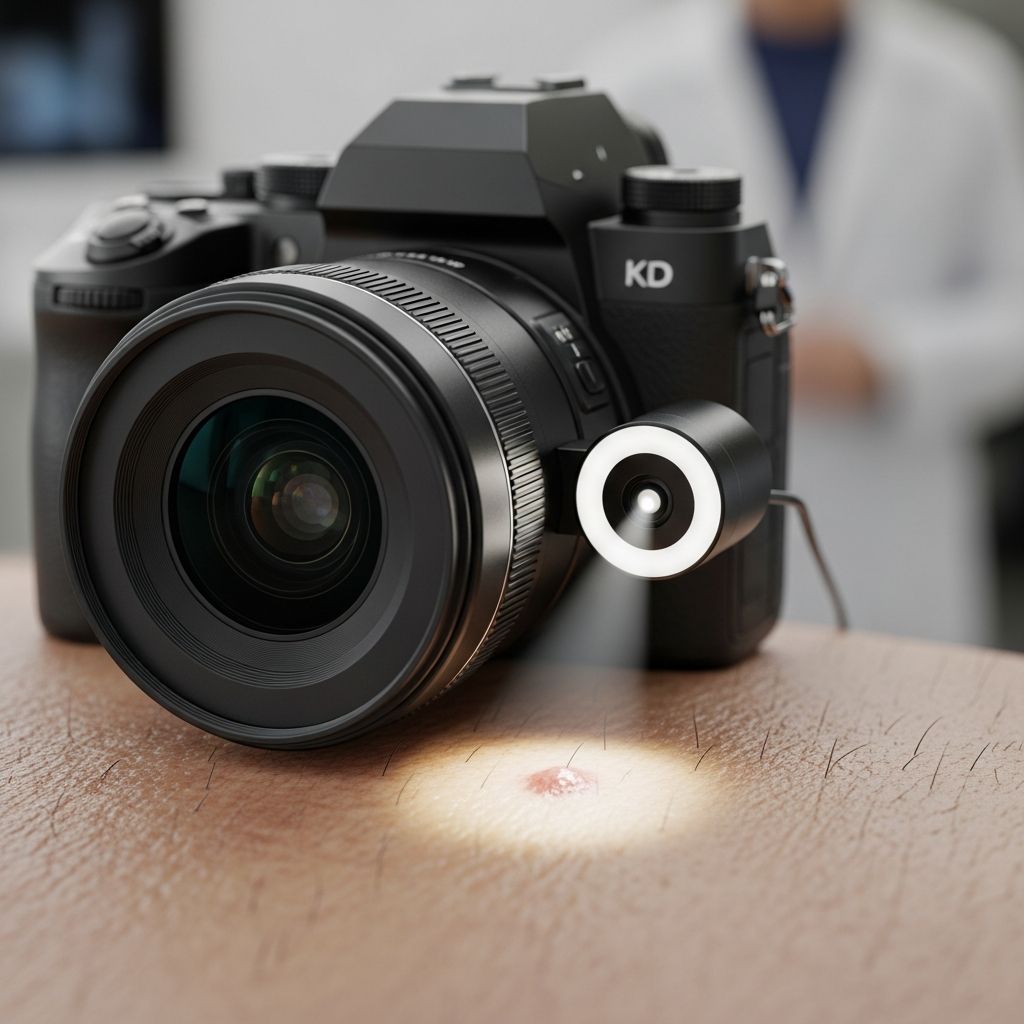
This comprehensive guide outlines the various digital imaging devices suitable for dermatological applications, including smartphones, point-and-shoot cameras, interchangeable lens cameras, and specialised attachments. Advances in camera technology have made high-quality dermatological imaging accessible across a range of devices, enabling precise documentation of skin conditions for diagnosis, monitoring, and research.
Digital cameras and associated technology have evolved dramatically over the past decade. Virtually any modern camera, regardless of pixel count or sensor size, delivers sufficient resolution for most dermatological needs. However, no single device is ideal for every scenario—selection depends on priorities such as portability, image quality, ease of use, and integration with dermoscopy.
As device size progresses from compact smartphones and tablets to professional cameras with interchangeable lenses, image quality generally improves due to larger sensors capturing more light and detail. For routine clinical viewing or web-based sharing, consumer-grade devices often suffice when paired with proper lighting and technique.
What affects image quality?
The paramount determinant of dermatological image quality is the operator’s proficiency in utilising the device’s features, composing shots effectively, and adjusting parameters to account for lighting conditions. Key factors influencing quality include:
- Sensor size: Larger sensors (e.g., in DSLRs or full-frame mirrorless cameras) excel in low-light performance and dynamic range, reducing noise and enhancing detail.
- Lens quality: Sharp, high-quality lenses minimise distortion and aberrations, crucial for macro dermatological shots.
- Lighting: Consistent, colour-accurate illumination prevents discrepancies that can mislead diagnosis; studies highlight significant colour variations across devices without calibration.
- Resolution and pixels: Higher megapixels aid large-scale printing but are secondary to overall quality for screen viewing.
- Operator technique: Steady hands, appropriate focus, and standardised positioning ensure reproducibility.
Annual device updates every 12-18 months offer incremental enhancements, allowing cost savings via previous-generation models or sales. Smartphones have largely supplanted compact cameras and reduced demand for DSLRs/mirrorless systems in everyday use.
Smartphones and tablets
Smartphones and tablets represent the most convenient option for dermatological imaging due to their ubiquity and portability.
Advantages
- Compact and lightweight, fitting easily in pockets for on-the-go use.
- Integrated apps for dermoscopy attachments, image annotation, and teledermatology.
- High-resolution sensors in flagship models rival entry-level cameras.
- Cost-effective with no additional hardware needs beyond attachments.
Disadvantages
- Smaller sensors limit low-light performance and depth of field control.
- Variable colour accuracy due to aggressive image processing; calibration is essential.
- Limited lens options and manual controls compared to dedicated cameras.
- Battery drain and storage constraints during extended sessions.
Devices like the iPhone 13 and Samsung Galaxy S24 demonstrate competitive performance but require post-processing for diagnostic accuracy.
Point-and-shoot cameras
Compact ‘point-and-shoot’ cameras offer a middle ground between smartphones and professional systems.
Advantages
- Superior sensor size and lens quality over smartphones for better detail.
- Simple operation with automatic modes ideal for non-expert users.
- Optical zoom capabilities without quality loss.
- Built-in flash and stabilisation for consistent results.
Disadvantages
- Declining market availability as smartphones dominate.
- Limited macro capabilities and customisation.
- Bulkier than phones, less portable for clinic workflows.
- Inferior to interchangeable lens systems in versatility.
Interchangeable lens cameras
These encompass digital single-lens reflex (DSLR), mirrorless, and compact interchangeable systems (e.g., Nikon 1 series, micro 4/3, APS-C, full-frame), providing professional-grade imaging.
Related Stories



Advantages
- Large sensors deliver exceptional resolution, dynamic range, and low-noise performance.
- Extensive lens ecosystem, including macro lenses optimised for dermatology (e.g., Canon and Sony models with 1:1 magnification).
- Full manual controls for precise exposure, white balance, and focus stacking.
- Superior for publications, total body photography, and AI training datasets.
Disadvantages
- Higher cost, bulk, and weight hinder portability.
- Steeper learning curve for optimal use.
- Requires additional lighting and tripods for consistency.
Mirrorless cameras like Canon EOS R7 and Sony A7III combine portability with DSLR quality, ideal for dermatologic macro work. Specialised macro lenses feature short focus distances (<0.10m), image stabilisation, and integrated LEDs to eliminate shadows.
Devices that connect with smartphones or tablets
Hybrids bridge consumer devices with professional features:
- Dermoscopy attachments: e.g., DermLite, MoleMax HD, Heine Cube—provide polarised/non-polarised views.
- Macro lenses: Clip-on systems for enhanced close-ups.
- 3D imaging: Devices like ARANZ SilhouetteStar for wound assessment.
- Specialised systems: FotoFinder Medicam 1000s for videodermatoscopy.
Other smaller interchangeable lens cameras
- Micro Four Thirds systems: Balance size and performance.
- Nikon 1 series: Ultra-compact with fast autofocus.
- APS-C mirrorless: e.g., Sony, Fujifilm for high-quality macros.
Canon and Sony macro lenses excel with features like ring LEDs, DermLite compatibility, and distortion-free imaging at short distances.
Optimising dermatological images
For diagnostic reliability:
- Use standardised lighting (5500K daylight-equivalent) and grayscale reference cards.
- Employ manual adjustments and post-processing for colour fidelity.
- Capture close-up, dermoscopic, and contextual views.
- Follow technology standards for reproducibility.
| Device Type | Best For | Key Strength | Key Limitation |
|---|---|---|---|
| Smartphone/Tablet | Daily clinic use | Portability | Colour accuracy |
| Point-and-Shoot | Beginners | Ease of use | Limited versatility |
| Interchangeable Lens | Research/Publications | Image quality | Bulk/Complexity |
Frequently Asked Questions (FAQs)
Which camera is best for dermatological imaging?
No universal best; smartphones suit portability, while interchangeable lens cameras excel in quality. Match to your workflow.
Do more megapixels mean better quality?
Not necessarily—sensor size, lens, and technique matter more for dermatology.
How to improve smartphone images?
Use attachments, calibrate colours, and ensure consistent lighting.
Are mirrorless cameras suitable for dermatology?
Yes, they offer pro quality in compact forms with macro lenses.
What about 3D imaging?
Useful for wounds and total body mapping in trials.
References
- Digital cameras in dermatology — DermNet NZ. 2023. https://dermnetnz.org/topics/digital-cameras
- Optimizing Digital Image Quality for Improved Skin Cancer Detection — PMC (NCBI). 2024-10-15. https://pmc.ncbi.nlm.nih.gov/articles/PMC12027704/
- Macro Lens for Mirrorless Cameras in Digital Photography in Dermatology — Actas Dermo-Sifiliográficas. 2018-04-01. http://www.actasdermo.org/en-objetivos-macro-camaras-mirrorless-fotografia-articulo-S1578219018300465
- Image acquisition in dermatology — DermNet NZ. 2023. https://dermnetnz.org/topics/image-acquisition-in-dermatology
- Dermatology Clinical Trials – Best Practices in Digital Photography — Medpace. 2023-11. https://www.medpace.com/wp-content/uploads/2023/11/Whitepaper-Dermatology-Clinical-Trials-Best-Practices-in-Digital-Photography.pdf
- Technology and Technique Standards for Camera-Acquired Digital Dermatologic Images — JAMA Dermatology. 2017. https://jamanetwork.com/journals/jamadermatology/article-abstract/2293166
Similar Articles








Read full bio of Sneha Tete