Direct Vs Indirect Ophthalmoscopy: Key Differences And Uses
Discover the key differences between direct and indirect ophthalmoscopes, their unique applications, and how they enhance eye diagnostics for better patient care.
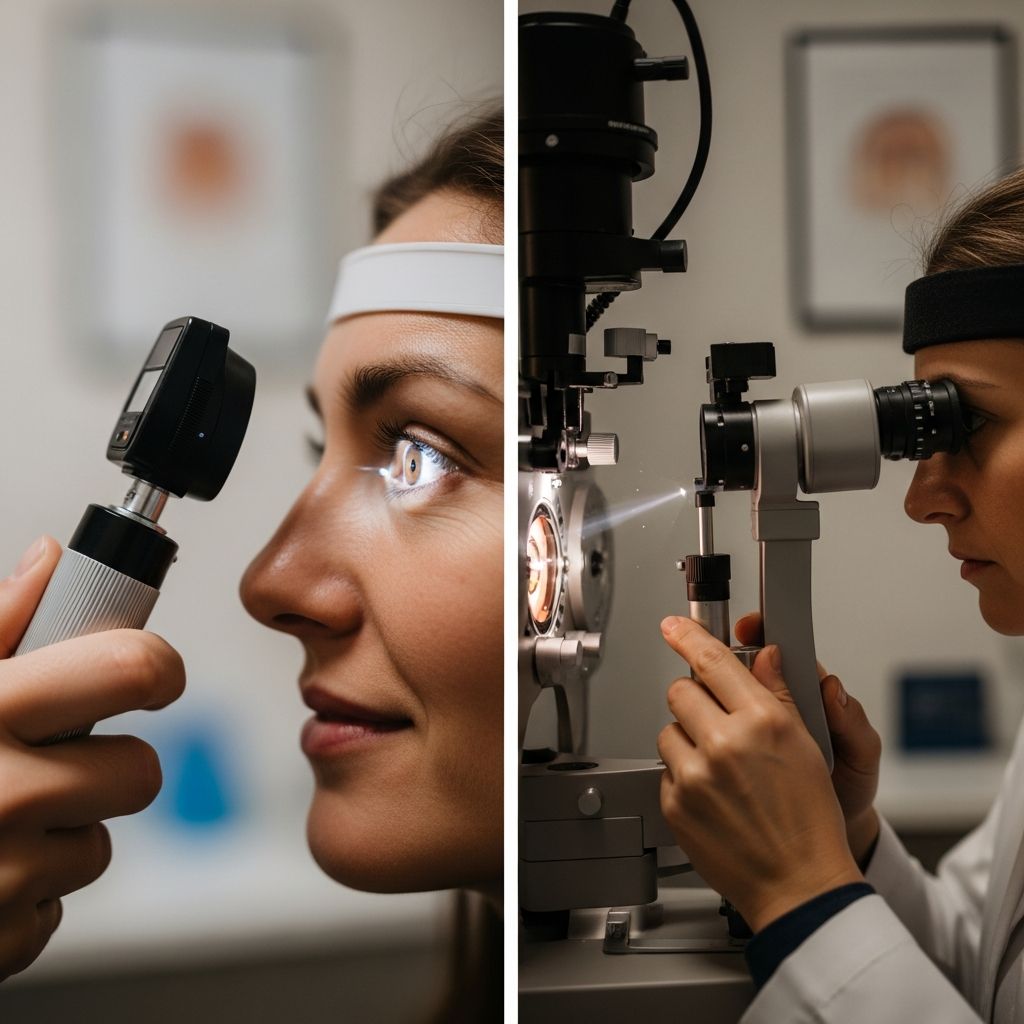
Direct and indirect ophthalmoscopy represent two cornerstone techniques in eye examinations, each offering distinct advantages for viewing the retina and other internal structures of the eye. Direct ophthalmoscopy delivers high-magnification views of central retinal areas, while indirect ophthalmoscopy provides broader peripheral visualization with stereoscopic depth. Understanding these tools empowers eye care professionals to select the optimal method based on patient needs and clinical scenarios.
Fundamentals of Ophthalmoscopy
Ophthalmoscopy, also known as funduscopy, involves inspecting the interior of the eye, particularly the retina, optic disc, blood vessels, and macula. These exams are vital for detecting conditions such as glaucoma, diabetic retinopathy, and retinal detachments. The choice between direct and indirect methods hinges on factors like required magnification, field of view, and patient positioning.
Both techniques rely on illumination and optics to overcome the eye’s natural barriers, including the cornea and lens. Modern devices incorporate LED lights for superior brightness and portability, enhancing diagnostic precision across settings from clinics to emergency rooms.
Exploring Direct Ophthalmoscopy
Direct ophthalmoscopy uses a handheld instrument held close to the patient’s eye, typically 1-2 cm away, in a darkened room to maximize pupil dilation and light entry. It produces an erect, real image with approximately 15x magnification, ideal for detailed scrutiny of the central fundus.
- Primary Strengths: Exceptional detail for optic nerve head, macula, and vessel abnormalities.
- Common Applications: Routine screenings, glaucoma assessments, and hypertensive retinopathy checks.
- Patient Experience: Quick and non-invasive, though proximity may feel intrusive for some.
This method excels in primary care settings where rapid, high-resolution central views suffice. However, its narrow field of view—about 10 degrees—limits peripheral retina assessment.
Delving into Indirect Ophthalmoscopy
Indirect ophthalmoscopy employs a head-mounted or slit-lamp device paired with a condensing lens (e.g., 20D or 28D), held at arm’s length. It generates an inverted, virtual image magnified 2-5x, but with a expansive 30-40 degree field, enabling stereopsis for depth perception.
- Key Advantages: Wide peripheral coverage and superior performance through hazy media like vitreous hemorrhage.
- Essential Uses: Retinal tears, detachments, and lattice degeneration diagnosis.
- Requirements: Pharmacological pupil dilation for optimal results.
Available in monocular (single-eye view) and binocular (3D stereoscopic) variants, binocular models are preferred for surgical planning and teaching due to enhanced depth cues.
Comparative Analysis: Direct vs. Indirect
A side-by-side evaluation highlights why neither tool supersedes the other; they complement each other in comprehensive eye care.
| Feature | Direct Ophthalmoscopy | Indirect Ophthalmoscopy |
|---|---|---|
| Field of View | Narrow (~10°) | Wide (~37°) |
| Magnification | ~15x | 2-5x |
| Image Orientation | Erect, real | Inverted, virtual |
| Stereopsis | Limited | Superior (binocular) |
| Best for | Central retina, optic disc | Peripheral retina, detachments |
| Light Intensity | Moderate | High |
| Media Opacity Tolerance | Poor | Excellent |
| Scleral Depression | Challenging | Facile |
Related Stories



This table underscores indirect’s dominance in peripheral and dynamic exams, contrasted with direct’s precision for focal lesions. Brightness differences arise from indirect’s powerful sources, crucial for dilated pupils.
Clinical Scenarios and Decision-Making
Selecting the right technique depends on the suspected pathology. For optic neuritis or papilledema, direct’s high magnification pinpoints subtle disc changes. Conversely, suspected retinal tears demand indirect’s panoramic view to map extent and urgency.
In pediatric cases, direct ophthalmoscopy with indirect optics (DIDO) offers a less intimidating arm’s-length approach, widening the field fivefold while mimicking indirect imaging—ideal for uncooperative children.
Emergency settings favor indirect for trauma or detachments, where stereopsis aids in assessing elevation. Routine diabetic checks often start with direct, escalating to indirect if periphery is unclear.
Technical Innovations Transforming Practice
Recent advancements elevate both methods. Direct ophthalmoscopes now feature digital halos and cobalt blue filters for corneal assessment. Indirect systems integrate wireless connectivity for telemedicine, lightweight frames for extended use, and variable lens mounts for customized views.
Hybrid devices combine slit-lamp indirect with high-res cameras, enabling fundus photography during exams. These evolutions improve accessibility, especially in remote areas, fostering collaborative diagnostics.
Patient Preparation and Procedural Tips
Optimal outcomes require preparation. For direct: Dim lights, steady patient fixation. For indirect: Mydriatic drops (e.g., tropicamide), 30-degree patient gaze shifts for periphery, and scleral indentation for anterior retina.
Comfort measures include explaining steps, using topical anesthetics for indentation, and accommodating phobias with gradual approaches. Post-exam, monitor for dilation side effects like light sensitivity.
Training and Skill Development
Mastery demands practice. Direct is introductory, taught via models simulating fundus views. Indirect requires headsets and lenses, with emphasis on patient positioning and lens stability for crisp images.
Simulation apps and VR training accelerate proficiency, bridging theory to clinic. Binocular indirect’s teaching utility shines, allowing observers to share the 3D view in real-time.
Frequently Asked Questions (FAQs)
What conditions does direct ophthalmoscopy best detect?
It excels at central issues like macular degeneration and optic disc swelling due to its high magnification.
Is pupil dilation always needed for indirect ophthalmoscopy?
Yes, full dilation is essential for the wide field and clear peripheral views.
Can these tools diagnose all retinal problems?
They complement imaging like OCT; indirect is superior for periphery, direct for detail.
How do I choose between monocular and binocular indirect?
Binocular for stereopsis in complex cases; monocular for basic wide-field needs.
Are modern ophthalmoscopes portable?
Yes, head-mounted indirect and pocket direct models enhance bedside and field use.
Future Directions in Ophthalmic Imaging
AI integration promises automated anomaly detection, enhancing human interpretation. Portable OCT-indirect hybrids could revolutionize screening. As devices miniaturize, expect broader adoption in global health initiatives, reducing blindness from undetected retina diseases.
In summary, direct and indirect ophthalmoscopy form a dynamic duo in retinal diagnostics. By leveraging their strengths—direct’s detail, indirect’s breadth—practitioners achieve precise, comprehensive care.
References
- Indirect and Direct Ophthalmoscope Key Differences and Uses — Seven OES. 2023. https://sevenoe.com/indirect-and-direct-ophthalmoscope-key-differences-and-uses/
- Inspecting the Difference Between Direct vs Indirect Ophthalmoscopes — Keeler UK. 2022-10-01. https://www.keeler.co.uk/blog/post/Inspecting%20the%20Difference%20Between%20Direct%20vs%20Indirect%20Ophthalmoscopes
- Inspecting the difference direct vs indirect ophthalmoscopes — Keeler Global. 2022. https://www.keelerglobal.com/inspecting-difference-direct-vs-indirect-ophthalmoscopes-208/
- Direct Ophthalmoscopic Indirect Ophthalmoscopy (DIDO) — MedCrave Online. 2018-05-15. https://medcraveonline.com/AOVS/direct-ophthalmoscopic-indirect-ophthalmoscopy-dido-and-estimation-dynamic-distance-direct-ophthalmoscopy-e-dddo-the-two-novel-uses-of-direct-ophthalmoscope.html
- Fundoscopic Exam (Ophthalmoscopy) — Stanford Medicine 25. 2024. https://med.stanford.edu/stanfordmedicine25/the25/fundoscopic.html
- Ophthalmoscopy — MedlinePlus (NIH). 2023-11-01. https://medlineplus.gov/ency/article/003881.htm
Similar Articles








Read full bio of medha deb