Discoid Lupus Erythematosus: 5 Treatments To Prevent Scarring
Chronic autoimmune skin condition causing scaly plaques, scarring, and potential hair loss—learn causes, symptoms, diagnosis, and treatments.
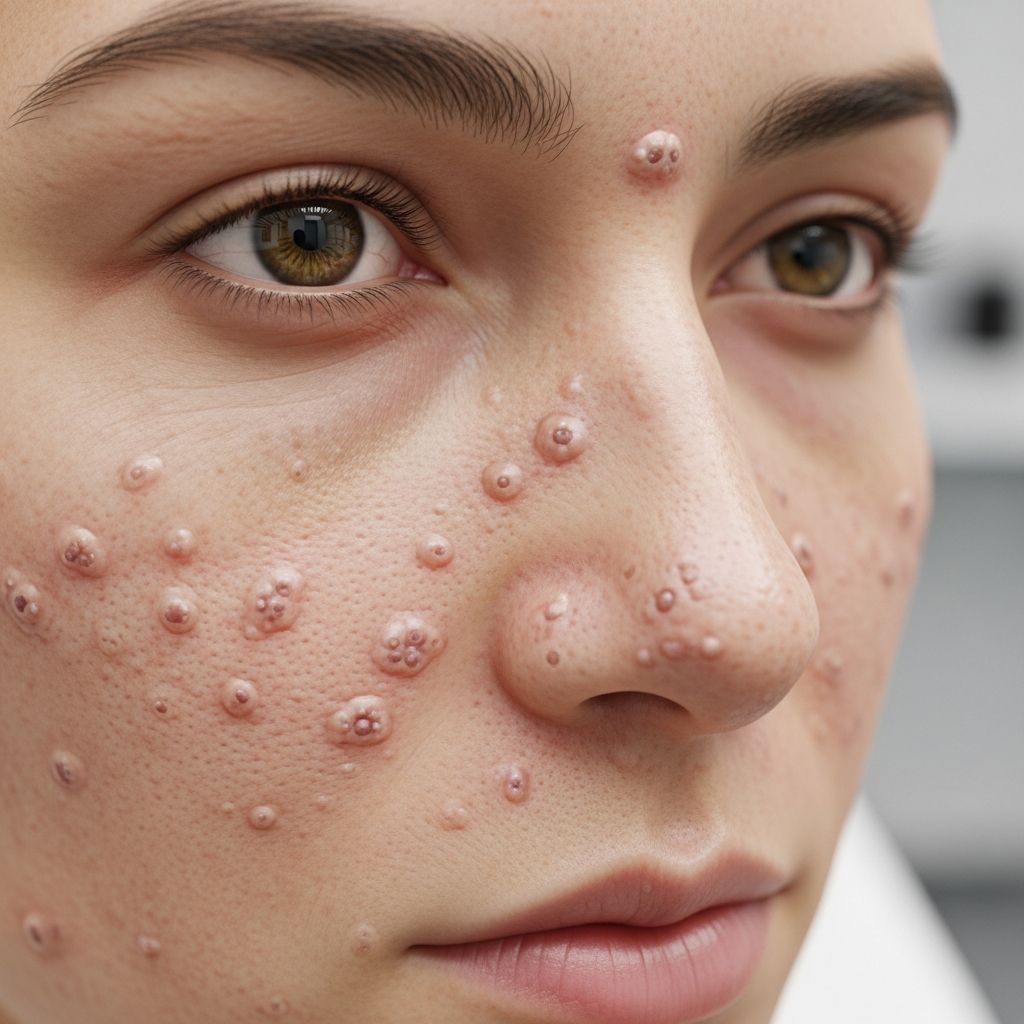
Discoid lupus erythematosus (DLE), also known as chronic discoid lupus, is the most common form of chronic cutaneous lupus erythematosus. It is characterized by persistent, scaly, coin-shaped (discoid) plaques primarily affecting sun-exposed areas such as the face, scalp, and ears. These lesions can lead to permanent scarring, hair loss (alopecia), and pigmentary changes if not treated promptly.
What is discoid lupus erythematosus?
Discoid lupus erythematosus is a localized autoimmune skin condition where the immune system mistakenly attacks healthy skin cells, leading to inflammation and damage. Unlike systemic lupus erythematosus (SLE), DLE primarily affects the skin without systemic organ involvement in most cases (about 95% of patients). However, 5-25% may progress to SLE over time. DLE lesions are typically erythematous (red), scaly plaques with central atrophy and scarring. They evolve slowly, starting as inflammatory patches and progressing to depigmented, atrophic scars.
The condition is more common in adults aged 20-50, with a slight female predominance (2:1 ratio), though it affects all ethnicities. Darker skin types are prone to more prominent dyspigmentation. Early intervention is crucial as untreated inflammation causes irreversible damage.
Who gets discoid lupus erythematosus?
DLE affects approximately 1 in 20,000 people in the general population. It is more prevalent in women than men (ratio 3:1 to 4:1) and typically onset in the third to fifth decade of life. Genetic predisposition plays a role, with higher incidence in families with autoimmune diseases. Environmental triggers exacerbate risk in susceptible individuals.
- Demographics: Peak age 30-60 years; females > males.
- Risk factors: Family history of lupus or autoimmunity; smoking; UV exposure.
- Localization: 80% localized to head/neck; 20% generalized (above and below neck).
Causes
The exact cause of DLE remains multifactorial, involving an interplay of genetic (endogenous) and environmental (exogenous) factors leading to loss of immune tolerance and autoantibody production.
Endogenous factors
- Genetic susceptibility: Genes linked to SLE (e.g., HLA associations) increase risk, though DLE is not directly inherited.
- Autoimmune dysregulation: Immune system produces antibodies against skin components, dominated by Th1 cells (not Th17 as in SLE).
Exogenous factors
- Ultraviolet radiation (UVR): Major trigger; up to 70% of lesions worsen with sun exposure.
- Smoking: Exacerbates lesions and reduces treatment response.
- Medications: Photosensitizing drugs (e.g., certain antihypertensives).
- Other: Trauma, infections, possibly viruses.
Pathophysiology involves interface dermatitis, periadnexal inflammation, follicular plugging, hyperkeratosis, basement membrane thickening, and dermal mucin deposition.
Clinical features
DLE lesions typically begin as small, red, inflammatory papules that expand into well-demarcated plaques with adherent scale, central clearing, atrophy, and scarring. They are often asymptomatic but may itch or burn.
Lesion evolution
- Early active stage: Erythematous macules/papules with fine scale; ‘carpet tack’ sign (follicular plugging projecting on underside of scale).
- Established lesions: Indurated plaques with hyperkeratosis, hypopigmentation, telangiectasia.
- Late stage: Atrophic scars, depigmentation, alopecia (scalp involvement).
Sites affected
- Face (malar cheeks, nose, ears): Most common.
- Scalp: Leads to scarring alopecia.
- Other: Neck, upper trunk, extremities (generalized DLE).
Related Stories



Mucosal involvement (mouth, lips) occurs in 15-20%; rare nail dystrophy or ulcers. Hypertrophic/chillblain variants exist.
Diagnosis
Diagnosis is clinical but confirmed by skin biopsy showing interface dermatitis, basement membrane thickening, mucin, and lymphocytic infiltrate. Dermoscopy reveals follicular keratotic plugs, white structureless areas.
- Histology: Vacuolar degeneration, perivascular/periadnexal infiltrate.
- Rule out SLE: ANA, anti-dsDNA if systemic symptoms; most DLE patients seronegative.
- Differential: Psoriasis, eczema, tinea, sarcoidosis, actinic damage.
Treatment
No cure exists; goals are lesion clearance, flare prevention, scarring minimization. Sun protection is foundational. Early treatment clears 60-80% of lesions.
| Option | Level | Notes |
|---|---|---|
| Sun protection | Mandatory | Broad-spectrum SPF50+, hats, avoidance. |
| Stop smoking | Mandatory | Improves response. |
| Topical/intralesional corticosteroids | First-line | High-potency; face-safe under supervision. |
| Antimalarials | Second-line | Hydroxychloroquine ± quinacrine. |
| Methotrexate, retinoids, thalidomide | Third-line | Refractory cases. |
Topical therapies
- Corticosteroids: Super-potent (e.g., clobetasol) for body; moderate for face. Apply 2x/day; taper when inactive. Risks: Atrophy.
- Calcineurin inhibitors: Tacrolimus 0.1%, pimecrolimus for face; no atrophy.
Intralesional
Triamcinolone acetonide (3-5mg/ml) injected every 3-4 weeks for localized plaques.
Systemic therapies
- Antimalarials: Hydroxychloroquine 200-400mg/day; response in 2-6 months. Monitor eyes.
- Others: Methotrexate, retinoids for refractory; biologics (belimumab) emerging.
- Short-term steroids: For flares.
Complications
- Scarring and atrophy (permanent).
- Scarring alopecia.
- Dyspigmentation (hypo/hyper, worse in dark skin).
- Progression to SLE (5%).
- Psychosocial impact from disfigurement.
Prevention
- Daily broad-spectrum sunscreen (SPF50+ PA++++).
- UV avoidance (10am-4pm).
- Quit smoking.
- Avoid triggers; regular follow-up.
Frequently Asked Questions (FAQs)
Q: Is discoid lupus contagious?
A: No, DLE is an autoimmune condition, not infectious.
Q: Can DLE be cured?
A: No cure, but treatments control symptoms and prevent progression in most cases.
Q: Does sun exposure worsen DLE?
A: Yes, UV light triggers flares in up to 70%; strict photoprotection essential.
Q: Will DLE turn into systemic lupus?
A: Rare (5-25%); monitor for systemic symptoms.
Q: Is smoking bad for DLE?
A: Yes, it worsens lesions and reduces treatment efficacy—quitting is mandatory.
References
- Discoid Lupus Erythematosus (DLE) — Skin Health Info (BAD Patient Hub). 2023. https://www.skinhealthinfo.org.uk/condition/discoid-lupus-erythematosus-dle/
- Discoid Lupus Erythematosus — StatPearls, NCBI Bookshelf. 2023-10-01. https://www.ncbi.nlm.nih.gov/books/NBK493145/
- Discoid Lupus Overview — Indiana University School of Medicine Dermatology Trials. 2024. https://dermatrials.medicine.iu.edu/blogs/discoid-lupus-overview
- Discoid Lupus: Symptoms, Causes & Treatment Guide — Hightower Clinical. 2024. https://hightowerclinical.com/blogs/understanding-discoid-lupus/
- Discoid Lupus Erythematosus — DermNet NZ. 2024. https://dermnetnz.org/topics/discoid-lupus-erythematosus
- Discoid Lupus Erythematosus — Cleveland Clinic. 2023-11-27. https://my.clevelandclinic.org/health/diseases/21808-discoid-lupus
- Discoid Lupus | Diagnosis & Disease Information — Rheumatology Advisor. 2023. https://www.rheumatologyadvisor.com/ddi/discoid-lupus/
Similar Articles








Read full bio of medha deb