Disease-Modifying Antirheumatic Drugs (DMARDs)
Comprehensive guide to DMARDs: Understanding how these medications slow rheumatoid arthritis progression.
What Are Disease-Modifying Antirheumatic Drugs (DMARDs)?
Disease-modifying antirheumatic drugs, commonly known as DMARDs, are a class of medications designed to slow or halt the progression of rheumatoid arthritis and other autoimmune inflammatory diseases. Unlike nonsteroidal anti-inflammatory drugs (NSAIDs) that primarily manage symptoms like pain and inflammation, DMARDs work by suppressing the underlying immune response that causes joint damage. These medications have revolutionized the treatment of rheumatoid arthritis since their introduction, allowing patients to achieve remission and prevent long-term structural damage to their joints.
The American College of Rheumatology guidelines recommend that rheumatoid arthritis patients be treated with DMARD therapy and/or biologic agents to effectively manage their condition. The goal of DMARD therapy is to reduce inflammation, alleviate symptoms, and most importantly, prevent irreversible joint damage that can lead to disability and reduced quality of life.
How DMARDs Work
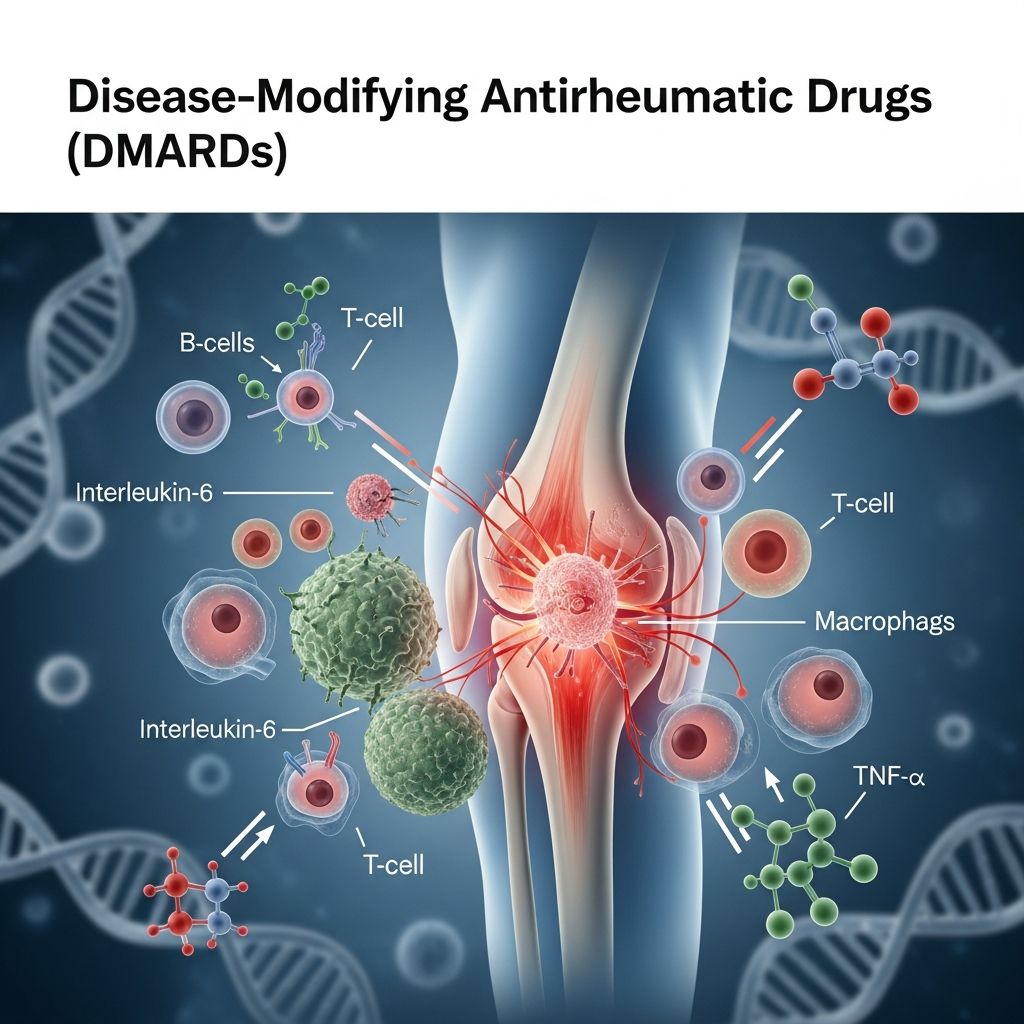
DMARDs function by modulating the body’s overactive immune system response. In rheumatoid arthritis, white blood cells that normally protect against infection become overactive and mistakenly attack the synovium—the tissue that lines and cushions the joints. This attack triggers chronic inflammation that gradually destroys cartilage and bone.
DMARDs interrupt this destructive process by suppressing immune and inflammatory responses. Each DMARD type has a unique mechanism of action, interfering with the inflammatory process that drives rheumatoid arthritis progression in different ways. By reducing inflammation at its source, DMARDs help preserve joint structure and function, ultimately preventing disability. It’s important to note that DMARDs are often initially taken alongside NSAIDs or corticosteroids, which manage immediate symptoms while DMARDs work on the disease itself.
Types of DMARDs
There are three main categories of disease-modifying antirheumatic drugs, each with distinct characteristics and mechanisms of action:
Conventional DMARDs
Conventional DMARDs are the traditional form of disease-modifying therapy and remain the first-line treatment for rheumatoid arthritis. These medications work by broadly suppressing immune system activity.
Methotrexate is considered the gold standard of conventional DMARDs. Originally developed as a chemotherapy drug to treat cancer, methotrexate has been revolutionizing rheumatoid arthritis treatment since the 1980s when researchers began exploring its potential for this condition. As a folate antagonist, methotrexate interferes with the production of numerous immune cells, effectively reducing inflammation. It can be used as monotherapy, combined with another DMARD or biologic, or taken alongside NSAIDs and corticosteroids. Methotrexate is available under various brand names and remains the most commonly prescribed DMARD worldwide.
Other conventional DMARDs include hydroxychloroquine, which works by destabilizing cellular membranes to reduce immune responses; leflunomide, which inhibits immune cell proliferation; and sulfasalazine, which combines anti-inflammatory and immunosuppressive properties. Each of these medications offers a distinct approach to managing rheumatoid arthritis, and some patients benefit from combination therapy using multiple conventional DMARDs.
Biologic DMARDs
Biologic medications represent a significant advancement in rheumatoid arthritis treatment. Unlike conventional DMARDs, which are chemically synthesized, biologics are derived from living organisms and grown from human cells. These medications are considered the most efficacious drugs available for rheumatoid arthritis treatment, particularly for patients who don’t respond adequately to conventional DMARDs.
Related Stories



While conventional DMARDs suppress the entire immune system’s inflammatory response, biologics target specific inflammatory molecules and pathways. This precision targeting allows for more effective disease control with potentially fewer side effects related to broad immune suppression. Biologics tend to work rapidly, with some medications showing improvement within two weeks and others within four to six weeks. They are typically delivered via injection or intravenous infusion and may be used alone or in combination with other DMARDs.
Tumor Necrosis Factor (TNF) Blockers were among the first biologic DMARDs approved by the FDA in 1998. TNF blockers work by inhibiting tumor necrosis factor, a key inflammatory molecule. Common TNF inhibitors include adalimumab (Humira), etanercept (Enbrel), and infliximab. These medications have transformed outcomes for many rheumatoid arthritis patients.
Interleukin (IL) Blockers target different inflammatory molecules, specifically interleukin-1 or interleukin-6 receptors. By blocking these inflammatory signaling pathways, IL blockers reduce joint inflammation and damage. These medications offer an alternative for patients who don’t respond well to TNF inhibitors.
T-Cell Costimulation Inhibitors such as abatacept (Orencia) work by blocking the interaction between T cells and other immune cells necessary for immune activation. This novel mechanism prevents the immune system from mounting an inflammatory attack against joint tissue.
While biologic DMARDs are highly effective, they do introduce the risk of serious side effects, particularly increased susceptibility to infections due to their intense immune-suppressing ability. Close monitoring and careful patient selection are essential when prescribing these medications.
Targeted Synthetic DMARDs (Small Molecule Drugs)
Targeted synthetic DMARDs, also known as small molecule drugs, represent the newest class of disease-modifying medications. These drugs combine the precision targeting approach of biologics with the more straightforward manufacturing process of conventional drugs. Unlike biologics that require injection or infusion, small molecule drugs can be taken orally, offering greater convenience for patients.
Janus Kinase (JAK) Inhibitors are a leading type of targeted synthetic DMARD. These medications have shown great promise in clinical studies for their efficacy in treating rheumatoid arthritis. JAK inhibitors work by blocking specific signaling pathways involved in immune cell activation and inflammation. Common JAK inhibitors include baricitinib (Olumiant) and tofacitinib (Xeljanz). These oral medications offer patients an alternative to injectable biologics while maintaining targeted disease modification.
Comparison of DMARD Types
| DMARD Type | Mechanism of Action | Onset of Action | Route of Administration | Cost |
|---|---|---|---|---|
| Conventional DMARDs | Broad immune suppression | 6-12 weeks | Oral | Low to moderate |
| Biologic DMARDs | Targeted inflammatory pathway inhibition | 2-6 weeks | Injection/Infusion | High |
| Targeted Synthetic DMARDs | Specific molecular pathway blocking | 2-4 weeks | Oral | High |
Effectiveness and Clinical Outcomes
Clinical data demonstrates the remarkable effectiveness of DMARD therapy in managing rheumatoid arthritis. More than 93.5% of rheumatoid arthritis patients treated with DMARDs and/or biologic agents at major rheumatology centers experience significant disease control. In any given year, between 93.2% and 93.9% of patients on DMARD therapy maintain disease stability and prevent joint damage progression.
For the small percentage of patients not on DMARDs or biologics, reasons typically include achievement of disease remission, patient refusal of treatment, or contraindications to specific medications due to underlying health conditions. The early initiation of DMARD therapy, preferably within three months of rheumatoid arthritis diagnosis, significantly improves long-term outcomes and reduces the risk of irreversible joint damage.
Side Effects and Safety Considerations
While DMARDs are essential for managing rheumatoid arthritis, they do carry potential side effects that require monitoring. Conventional DMARDs are generally well-tolerated but may cause gastrointestinal upset, liver enzyme elevation, or cytopenias (low blood cell counts). Regular blood work is recommended to monitor for these complications.
Biologic DMARDs, due to their immune-suppressing properties, carry an increased risk of serious infections, including tuberculosis and opportunistic infections. Patients receiving biologic therapy require baseline tuberculosis screening and regular infection monitoring. Other potential side effects include injection site reactions and, rarely, autoimmune phenomena.
Small molecule DMARDs like JAK inhibitors may cause elevated cholesterol levels, clotting complications, or increased infection risk. The specific side effect profile varies depending on the individual medication and patient factors. Close collaboration between patients and their rheumatologists ensures that benefits outweigh risks and that appropriate monitoring occurs.
Choosing the Right DMARD
Selecting the appropriate DMARD depends on multiple factors including disease severity, patient comorbidities, contraindications, pregnancy status, and individual response to treatment. Most rheumatologists begin with conventional DMARDs, particularly methotrexate, given its proven efficacy and cost-effectiveness. If patients achieve remission or low disease activity within 3-6 months, continuation of the current regimen is appropriate.
For patients with inadequate response to conventional DMARDs or those with poor prognostic factors, biologic or targeted synthetic DMARDs are considered. Treatment adjustments occur regularly, with the treat-to-target strategy guiding most modern rheumatology practice. This approach aims for remission or low disease activity, adjusting medications as needed to achieve this goal.
Frequently Asked Questions
Q: How long do DMARDs take to work?
A: Conventional DMARDs typically require 6-12 weeks to demonstrate their full effect, while biologic and targeted synthetic DMARDs often show improvement within 2-6 weeks. Patients should not expect immediate symptom relief; the gradual reduction in inflammation over weeks to months leads to improved joint function and pain control.
Q: Can DMARDs be used during pregnancy?
A: Some DMARDs are considered relatively safe during pregnancy, particularly certain biologics and specific conventional DMARDs like sulfasalazine in certain circumstances. However, others like methotrexate and leflunomide are contraindicated due to teratogenic effects. Women of childbearing age should discuss family planning with their rheumatologist before starting DMARD therapy.
Q: What happens if a DMARD stops working?
A: If a DMARD becomes ineffective, rheumatologists may increase the dose, add another DMARD, or switch to a different class of medication. Many patients benefit from combination DMARD therapy, particularly combining conventional and biologic agents.
Q: Can I stop taking DMARDs once I feel better?
A: Stopping DMARD therapy without medical supervision is not recommended. Even when symptoms resolve, continuing DMARD therapy prevents disease flares and ongoing joint damage. Treatment discontinuation should only occur under close rheumatologic supervision and typically only after sustained remission on therapy.
Q: Are DMARDs safe for long-term use?
A: DMARDs are designed for long-term use and have excellent long-term safety profiles when properly monitored. Regular blood work and clinical assessments help detect any potential complications early. The benefits of long-term DMARD therapy in preventing joint damage far outweigh the risks of side effects for most patients.
Q: How do biologics differ from conventional DMARDs?
A: Biologics are derived from living organisms and target specific inflammatory pathways, making them more precise than conventional DMARDs, which broadly suppress immune function. Biologics typically work faster but are more expensive and require injection or infusion. They’re often reserved for patients who don’t respond adequately to conventional DMARDs.
Q: What vaccines should I receive while on DMARDs?
A: Patients on DMARDs should receive most vaccines, but timing is important. Live vaccines should generally be avoided due to immune suppression. Discuss vaccination schedules with your rheumatologist, as some vaccines may be less effective while on certain DMARDs, and some may need to be administered before starting therapy.
References
- 2015 American College of Rheumatology Guideline for the Treatment of Rheumatoid Arthritis — Singh JA, Saag KG, Bridges SL Jr, et al. American College of Rheumatology. 2016-01-01. https://pubmed.ncbi.nlm.nih.gov/26436938/
- Disease-Modifying Antirheumatic Drugs (DMARDs) — Cleveland Clinic. 2024. https://my.clevelandclinic.org/health/treatments/disease-modifying-antirheumatic-drugs-dmards
- TNF (Tumor Necrosis Factor) Inhibitors: What It Is & Types — Cleveland Clinic. 2024. https://my.clevelandclinic.org/health/treatments/tnf-tumor-necrosis-factor-inhibitors
- The effect of disease-modifying antirheumatic drugs on vaccine responses — National Center for Biotechnology Information. 2020. https://pubmed.ncbi.nlm.nih.gov/33139263/
- Methotrexate: Uses and Side Effects — Cleveland Clinic. 2024. https://my.clevelandclinic.org/health/drugs/20143-methotrexate
- Rheumatoid Arthritis (RA): Symptoms, Stages & Treatment — Cleveland Clinic. 2024. https://my.clevelandclinic.org/health/diseases/4924-rheumatoid-arthritis
Similar Articles








Read full bio of medha deb