DISH Back Pain: Essential Guide To Symptoms & Treatment
Discover how Diffuse Idiopathic Skeletal Hyperostosis (DISH) contributes to back pain and learn effective management strategies.
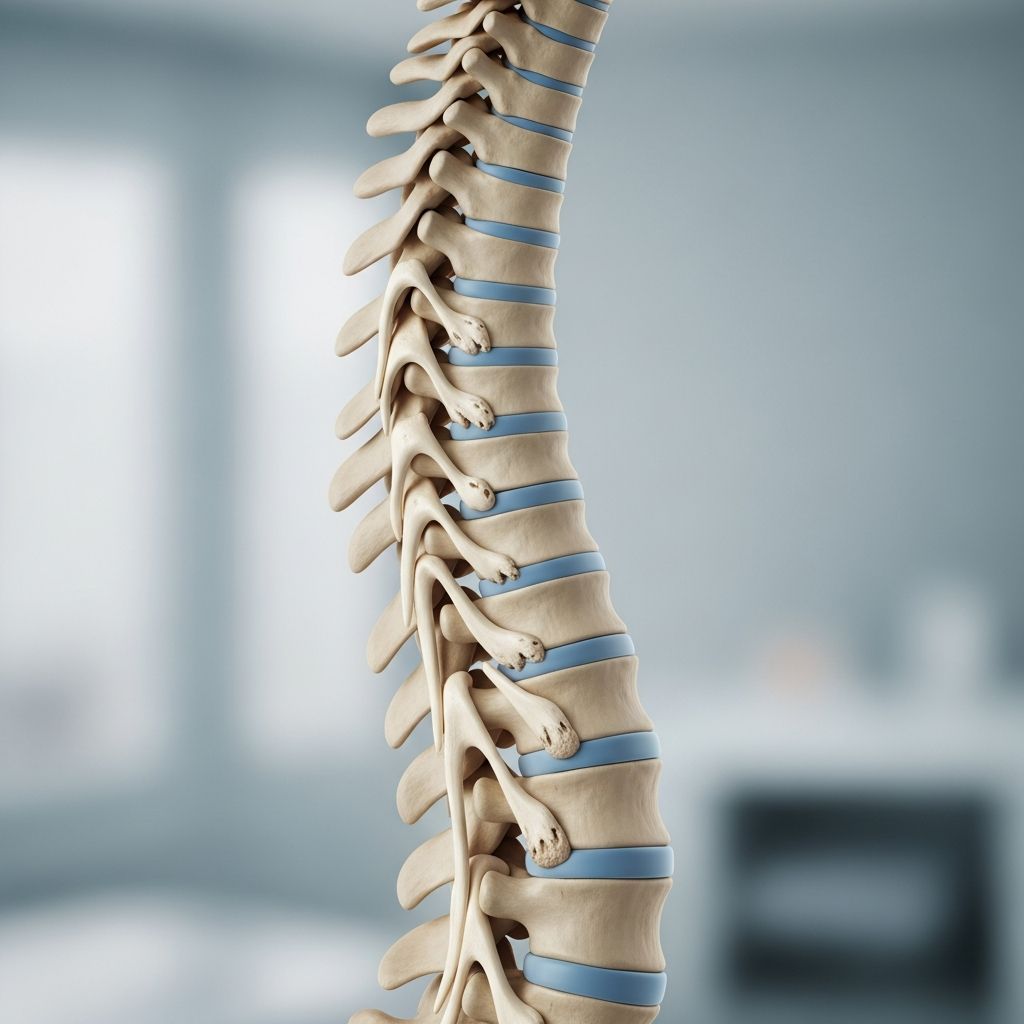
Diffuse idiopathic skeletal hyperostosis (DISH), also known as Forestier’s disease, was once considered largely asymptomatic. Recent insights reveal it plays a significant role in back pain for many individuals. Affecting an estimated 10% of Americans over age 50—nearly 11 million people—DISH hardens tendons and ligaments, primarily around the spine, forming bone spurs that contribute to discomfort.
What Is DISH?
Diffuse idiopathic skeletal hyperostosis (DISH) is a form of arthritis that targets ligaments and tendons attaching to the spine, causing them to calcify and harden into bony bridges between vertebrae. Unlike inflammatory arthritides, DISH involves no significant joint cartilage damage or inflammation but leads to abnormal bone growths or spurs where tissues meet bones.
This condition most commonly impacts the thoracic (mid-back) spine but can affect the cervical (neck) and lumbar (lower back) regions. Bone spurs may also form in peripheral sites like hips, knees, feet, shoulders, elbows, and Achilles tendons. The hardening restricts spinal mobility and can compress nearby structures, exacerbating pain.
Why It’s Under the Radar
Historically, DISH was viewed as an incidental radiographic finding without clinical relevance. However, experts like Simon Helfgott, MD, from Brigham and Women’s Hospital and Harvard Medical School, note evolving perspectives: structural spinal changes in DISH now explain pain in affected individuals.
Early symptoms mimic normal aging—mild stiffness or pain dismissed as wear-and-tear. Many remain asymptomatic until imaging for unrelated issues reveals it. As progression occurs, symptoms intensify, linking DISH directly to chronic back issues.
Symptoms of DISH
Symptoms vary; some experience none, while others face progressive issues. Common manifestations include:
- Back pain and stiffness: Ongoing or recurrent, worse in mornings or after inactivity, often relieved by mild activity.
- Limited range of motion: Particularly in upper back and neck.
- Bone spur complications: Difficulty swallowing (dysphagia) if cervical spurs compress the esophagus; rare nerve compression causing arm/leg numbness, weakness, or tingling.
- Peripheral issues: Tendonitis-like pain in elbows, knees, or heels from spurs.
- Fracture risk: Rigid spine increases vertebral fracture susceptibility.
Pain is typically mild to moderate but can intensify with spinal instability or nerve involvement. Unlike osteoarthritis, inflammation is minimal.
Who Gets DISH? Risk Factors
DISH arises from multifactorial causes, with higher prevalence in certain groups. Key risk factors include:
- Male gender.
- Age over 50.
- Diabetes or obesity—strong associations; metabolic control may slow progression.
- History of isotretinoin (Accutane or generics) use.
- Membership in Native American Pima tribe.
- Unusual spine anatomy.
These factors suggest metabolic, genetic, and environmental influences. Managing diabetes and weight is crucial for mitigation.
Diagnosis of DISH
DISH is primarily diagnosed via imaging, as symptoms overlap with other spinal conditions. Key diagnostic features on X-ray include:
Related Stories



- Continuous ossification along the anterolateral spine over at least four contiguous vertebrae.
- Preserved intervertebral disc spaces without significant degeneration.
- No sacroiliac joint involvement, distinguishing it from ankylosing spondylitis (AS).
X-rays may mimic AS, but DISH lacks inflammatory markers and doesn’t respond to TNF inhibitors. CT or MRI aids in assessing complications like nerve compression. Clinical history, risk factors, and exclusion of mimics (e.g., OA, degenerative disc disease) confirm diagnosis.
Treatment and Management
No disease-modifying therapy exists for DISH; management mirrors osteoarthritis or degenerative disc disease, focusing on symptom relief and function preservation:
- Exercise and physical therapy: Essential for pain control, stiffness reduction, and mobility. Low-impact activities like swimming provide full-body benefits without strain.
- Pain relief: Over-the-counter NSAIDs for pain and mild inflammation.
- Heat therapy: Eases morning stiffness.
- Lifestyle changes: Weight management, blood sugar control to potentially halt progression; good posture and ergonomics.
- Surgery: Rare, reserved for severe complications like fractures or dysphagia.
A multidisciplinary approach—physician, pharmacist, therapist—personalizes care. Non-medical therapies suffice for most.
DISH vs. Other Spinal Conditions
| Condition | Key Features | Treatment Difference |
|---|---|---|
| DISH | Ligament calcification, no inflammation, metabolic links | Conservative; no biologics |
| Ankylosing Spondylitis (AS) | Inflammatory, sacroiliac involvement | TNF inhibitors effective |
| Osteoarthritis (OA) | Cartilage wear, joint space narrowing | Similar conservative approach |
| Degenerative Disc Disease | Disc narrowing, pain from instability | Exercise, pain meds |
This table highlights distinctions; accurate diagnosis prevents mismanagement.
Living with DISH: Practical Tips
Maintain an active lifestyle with daily stretching and strengthening. Swimming or water aerobics are ideal. Monitor weight and glucose levels diligently. Use heat packs for stiffness and ergonomic supports for daily activities. Regular rheumatologist check-ups track progression.
Pain fluctuations are common; gentle movement often provides relief over rest. Collaborate with healthcare teams for safe medication use.
Frequently Asked Questions (FAQs)
What causes DISH?
DISH results from ligament and tendon calcification around the spine, influenced by age, male sex, diabetes, obesity, and possibly retinoid exposure. Exact etiology remains unclear.
Is DISH the same as ankylosing spondylitis?
No. DISH lacks inflammation and sacroiliac involvement; it doesn’t respond to AS biologics.
Can DISH be cured?
No cure exists, but symptoms are manageable with exercise, weight control, and pain relief.
Does surgery help DISH?
Rarely; only for complications like severe dysphagia or fractures.
How is DISH diagnosed?
Via X-ray showing spinal ossification patterns, plus clinical correlation.
Conclusion
DISH, once overlooked, is increasingly recognized as a back pain contributor. Early recognition, lifestyle management, and conservative therapies empower those affected to maintain quality of life. Consult specialists for tailored advice.
References
- Diffuse Idiopathic Skeletal Hyperostosis (DISH) and Back Pain — Arthritis Foundation. 2021-04-21. https://www.arthritis.org/health-wellness/about-arthritis/related-conditions/other-diseases/dish-and-back-pain
- Diffuse Idiopathic Skeletal Hyperostosis (DISH) — Arthritis Society Canada. Accessed 2026. https://arthritis.ca/about-arthritis/arthritis-types/diffuse-idiopathic-skeletal-hyperostosis/
- Diffuse Idiopathic Skeletal Hyperostosis (DISH) — Arthritis Australia. Accessed 2026. https://www.arthritis.org.au/types-of-arthritis/diffuse-idiopathic-skeletal-hyperostosis-dish/
- Diffuse Idiopathic Skeletal Hyperostosis — Arthritis Foundation. Accessed 2026. https://www.arthritis.org/diseases/diffuse-idiopathic-skeletal-hyperostosis
- Arthritis & Back Pain-Part 1: What’s Causing your Back Pain? — Arthritis Foundation. Accessed 2026. https://www.arthritis.org/liveyes/podcast/episodes/arthritis-and-back-pain-part-1
Similar Articles








Read full bio of Sneha Tete