Dissociative Identity Disorder: Symptoms, Causes, & Treatments
Understanding symptoms, causes, diagnosis, and treatment of Dissociative Identity Disorder (DID), once called multiple personality disorder.
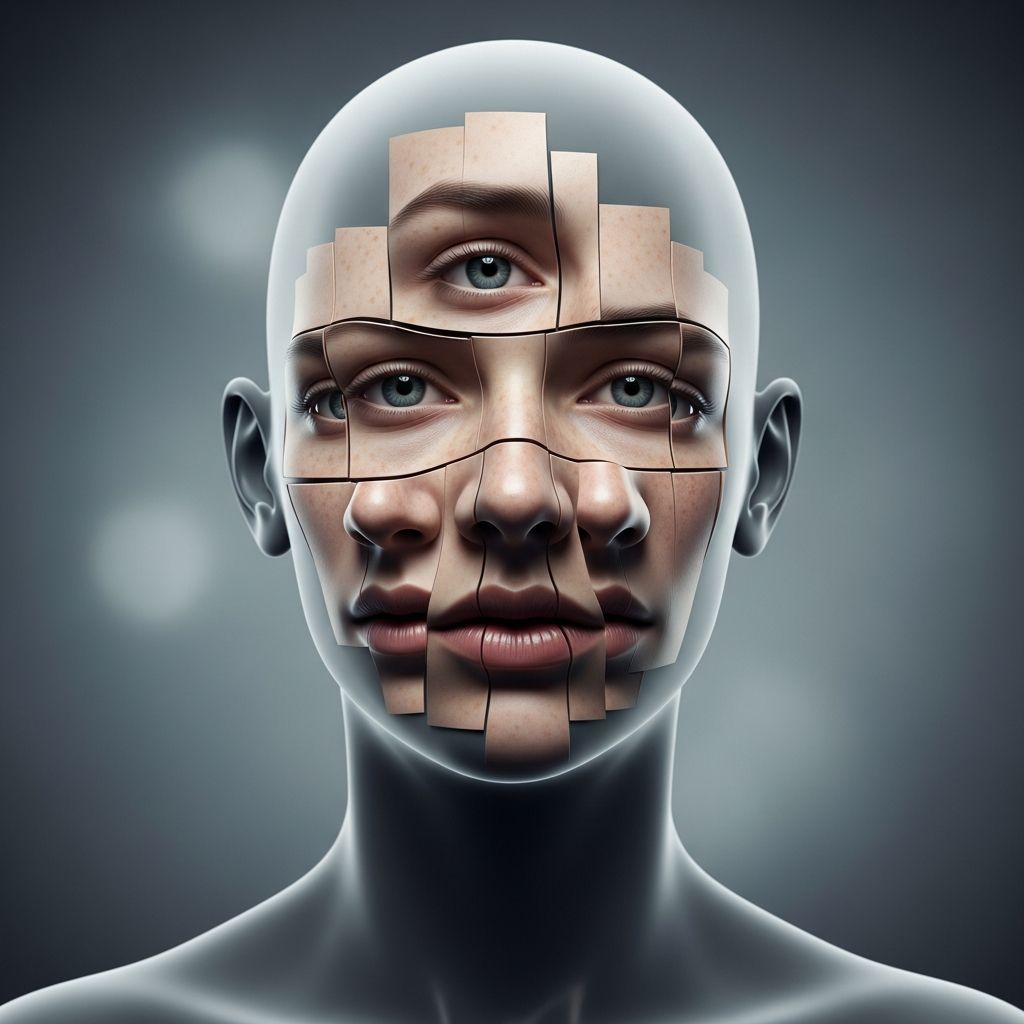
Dissociative Identity Disorder (DID), previously known as Multiple Personality Disorder, is a complex mental health condition characterized by the presence of two or more distinct identity or personality states that recurrently take control of a person’s behavior, accompanied by an inability to recall important personal information beyond ordinary forgetfulness.
What Is Dissociative Identity Disorder?
Dissociative Identity Disorder (DID) represents a severe form of dissociation, where individuals experience a disconnection in thoughts, memories, feelings, actions, or sense of identity. This disconnection serves as a coping mechanism, often originating from overwhelming trauma that the conscious mind cannot process. In DID, these dissociated states manifest as two or more distinct identities, referred to as “alters,” each with its own unique traits, memories, behaviors, and ways of interacting with the world.
Each alter may have a different age, gender, race, posture, gestures, voice, and preferences. For instance, one alter might be a child, another an aggressive protector, or even an animal-like figure. These identities control behavior at different times through a process called “switching,” which can occur suddenly due to triggers and last from seconds to days. The host personality, often unaware of the others, typically identifies with the person’s legal name and daily life.
Core dissociative experiences in DID include depersonalization (feeling detached from one’s body, as in an out-of-body experience) and derealization (perceiving the world as foggy, unreal, or distant). Amnesia is a hallmark, with gaps in memory for everyday events, personal information, or traumatic experiences that cannot be attributed to normal forgetfulness.
Symptoms of Dissociative Identity Disorder
Symptoms of DID vary but revolve around the presence of multiple identities and associated disruptions. Key symptoms include:
- Two or more distinct identities or personality states, each with enduring patterns of perceiving, relating, and thinking about the self and environment.
- Recurrent amnesia for everyday events, important personal information, or traumatic experiences.
- Depersonalization, derealization, and identity confusion or alteration.
- Other symptoms like headaches, time loss, trances, out-of-body experiences, self-harm tendencies, and higher suicide risk.
Individuals may experience sudden shifts in attitude, preferences (e.g., food, clothing), or physical sensations (e.g., feeling like a child or opposite gender). These shifts are involuntary and distressing, often observed by others. Micro-amnesias, where recent conversations are forgotten instantly, are common.
Co-occurring issues frequently include depression, mood swings, anxiety, panic attacks, phobias, substance abuse, eating disorders, sleep disturbances (insomnia, night terrors), compulsions, and psychotic-like symptoms such as hallucinations.
Causes of Dissociative Identity Disorder
DID is strongly linked to severe, repeated childhood trauma, particularly physical or sexual abuse occurring before age 9. Nearly all individuals with DID report such histories, with trauma distorting reality and prompting dissociation as a survival mechanism. Predisposing factors include:
- High capacity to dissociate (hypnotizability).
- Overwhelming trauma.
- Creation of alters for self-soothing.
- Lack of stable caregiving.
Neurobiological theories suggest altered brain responses to stress, with smaller hippocampal and amygdalar volumes observed in DID patients via MRI studies. Environmental triggers like stress can provoke switching between alters.
Related Stories



Diagnosis of Dissociative Identity Disorder
Diagnosis follows DSM-5 criteria, requiring:
| Criterion | Description |
|---|---|
| 1. Distinct Identities | Two or more distinct identities or personality states, with marked differences in behavior, memory, and thinking. |
| 2. Amnesia | Gaps in recall of everyday events, personal info, or trauma not due to forgetfulness. |
| 3. Distress/Impairment | Symptoms cause significant distress or impairment in social, occupational, or other areas. |
| 4. Not Cultural/Religious | Not part of normal practices. |
| 5. Not Substance/Medical | Not due to substances, seizures, or other medical conditions. |
Clinicians use structured interviews like the Dissociative Experiences Scale (DES) and SCID-D for assessment. Average initial diagnosis reveals 2-4 alters, increasing to 13-15 with treatment. Differential diagnosis excludes PTSD, borderline personality disorder, and substance-induced states.
Treatment for Dissociative Identity Disorder
Treatment is phased, primarily psychotherapy-focused, aiming for stabilization, trauma processing, and identity integration.
- Stabilization: Ensure safety, manage self-harm/suicide risk, build therapeutic alliance. Address co-occurring conditions with meds if needed (e.g., antidepressants for depression).
- Trauma Work: Process memories with alters, using techniques like EMDR or hypnosis to access and share trauma narratives.
- Integration: Fuse alters into a cohesive self, improve functioning and relationships.
Hypnosis is effective given DID patients’ high hypnotizability; it facilitates alter communication. CBT and DBT help manage symptoms. Medications target comorbidities (e.g., anxiolytics, mood stabilizers) but not DID core. Inpatient care for acute risks.
With treatment, many achieve symptom reduction and fulfilling lives, though therapy is intensive.
What It’s Like to Live With Dissociative Identity Disorder
Living with DID involves navigating switches, amnesia, and internal conflicts, often feeling like multiple entities inhabit one body. Daily challenges include memory gaps affecting work/school, relationship strains from unexplained behaviors, and chronic distress from trauma echoes. Self-harm and suicidality risks are elevated during dissociation.
Coping strategies:
- Journaling to track switches and memories.
- Grounding techniques (e.g., 5-4-3-2-1 sensory exercise) for dissociation.
- Therapy adherence and support groups.
- Trigger avoidance and safety plans.
Success stories highlight integration, but full recovery varies; some live cooperatively with alters.
Frequently Asked Questions (FAQs)
What is Dissociative Identity Disorder (DID)?
DID involves two or more distinct identities controlling behavior, with amnesia gaps, often from trauma.
Is DID the same as multiple personality disorder?
Yes, DID is the current DSM-5 term for what was formerly called multiple personality disorder.
Can DID be cured?
Not always “cured,” but symptoms can be managed effectively through phased psychotherapy, leading to integration and improved functioning.
Does DID cause violence?
No, DID does not inherently cause violence; media portrayals are inaccurate. Risks are more self-directed.
How common is DID?
Prevalence is 1-3% in general population, higher in psychiatric settings; often underdiagnosed.
References
- Dissociative Identity Disorder (Multiple Personality Disorder) — WebMD. 2023. https://www.webmd.com/mental-health/dissociative-identity-disorder-multiple-personality-disorder
- Dissociative Identity Disorder — StatPearls, NCBI Bookshelf, NIH. 2023-10-30. https://www.ncbi.nlm.nih.gov/books/NBK568768/
- What Are Dissociative Disorders? — American Psychiatric Association (psychiatry.org). 2023. https://www.psychiatry.org/patients-families/dissociative-disorders/what-are-dissociative-disorders
- Dissociative Identity Disorder (DID): Symptoms & Treatment — Cleveland Clinic. 2023-11-09. https://my.clevelandclinic.org/health/diseases/9792-dissociative-identity-disorder-multiple-personality-disorder
- Dissociative disorders – Symptoms and causes — Mayo Clinic. 2023-08-31. https://www.mayoclinic.org/diseases-conditions/dissociative-disorders/symptoms-causes/syc-20355215
Similar Articles








Read full bio of Sneha Tete