Dithranol for Psoriasis: Complete Treatment Guide
Comprehensive guide to dithranol cream for treating chronic plaque psoriasis effectively.
About Dithranol
Dithranol is a topical medication that has been used since 1916 for treating psoriasis, making it one of the longest-established dermatological treatments. Also known as anthralin in the United States, dithranol is primarily prescribed for chronic plaque psoriasis, the most common form of the condition. This medication works by slowing down the production of new skin cells, helping to control the rapid cell multiplication that characterizes psoriasis.
Psoriasis occurs when cells in the outer layer of your skin multiply faster than normal. This accelerated cell production causes older and dead skin cells to accumulate on the skin’s surface, resulting in the characteristic red, scaly patches called plaques. These plaques typically develop over elbows and knees, the scalp, and the lower part of the back, though they can appear anywhere on the body and may vary in size over time.
| Key Information | Details |
|---|---|
| Primary Use | Chronic plaque psoriasis |
| Also Called | Anthralin (US); Dithrocream® |
| Available Forms | Cream, ointment, and paste |
| Prescription Status | Available on prescription; some preparations available without prescription |
| Mechanism | Slows production of new skin cells |
How Dithranol Works
Dithranol functions as a potent reducing agent with marked therapeutic activity against psoriasis. Although its exact mechanism of action remains incompletely understood, dithranol demonstrates both antiproliferative and anti-inflammatory effects on psoriatic lesions. It effectively interrupts the abnormal skin cell multiplication cycle by slowing the production of new skin cells, allowing the skin to normalize.
The therapeutic effectiveness of dithranol is notable: treatment proves effective in 70% to 80% of cases. Importantly, dithranol can be considered a safe long-term treatment because it shows no known carcinogenicity or systemic toxicity, distinguishing it from some other psoriasis medications.
Availability and Prescription Status
Dithranol is available on prescription from your physician. However, some dithranol preparations can be purchased without a prescription at a pharmacy, making this treatment accessible to a broader population. Many commercial dithranol formulations contain additional active ingredients such as salicylic acid, zinc, and coal tar to enhance therapeutic efficacy.
Who Should Not Use Dithranol
Certain conditions require avoiding dithranol or using alternative treatments. You should not use dithranol in the following situations:
- Severe or acute psoriasis: If any areas of psoriasis are sore, inflamed, or have blisters filled with pus, you should not use dithranol, as more severe forms of psoriasis require treatment by a skin specialist.
- Concurrent topical medications: If you are using any other skin preparations, including over-the-counter products or herbal and complementary medicines, inform your doctor before starting dithranol.
- Known allergies: If you have ever had an allergic reaction to a medicine, you must discuss this with your healthcare provider before using dithranol.
- Delicate skin areas: Dithranol should not be used on the face, genitalia, skin folds (armpits and groin), or scalp without specific medical guidance, as these areas are more likely to become irritated.
Related Stories



Dithranol Strength and Starting Treatment
Dithranol preparations come in several different strengths, typically ranging from 0.05% to 5.0%, with the aim being to find the strength that provides maximum benefit without causing irritation or burning. Your dermatologist will develop a personalized treatment plan based on your skin’s tolerance and the severity of your psoriasis.
Starting protocol: Begin with a low-strength preparation, such as 0.1% dithranol, and use it for one week. After this initial week, gradually increase the strength over the following weeks until you identify the strength that suits your skin best. Once you establish your optimal strength, continue using this concentration consistently. Most patients achieve clearance of psoriatic patches within approximately 4 to 6 weeks of treatment.
The gradual strength escalation approach is important because it allows your skin to adapt and helps minimize adverse reactions. Although experiencing a mild sensation of warmth when applying dithranol is normal, if you begin to feel a burning sensation, this indicates that you have left it on too long or that the strength is too high for your individual tolerance. In such cases, inform your doctor or pharmacist immediately.
Application Instructions
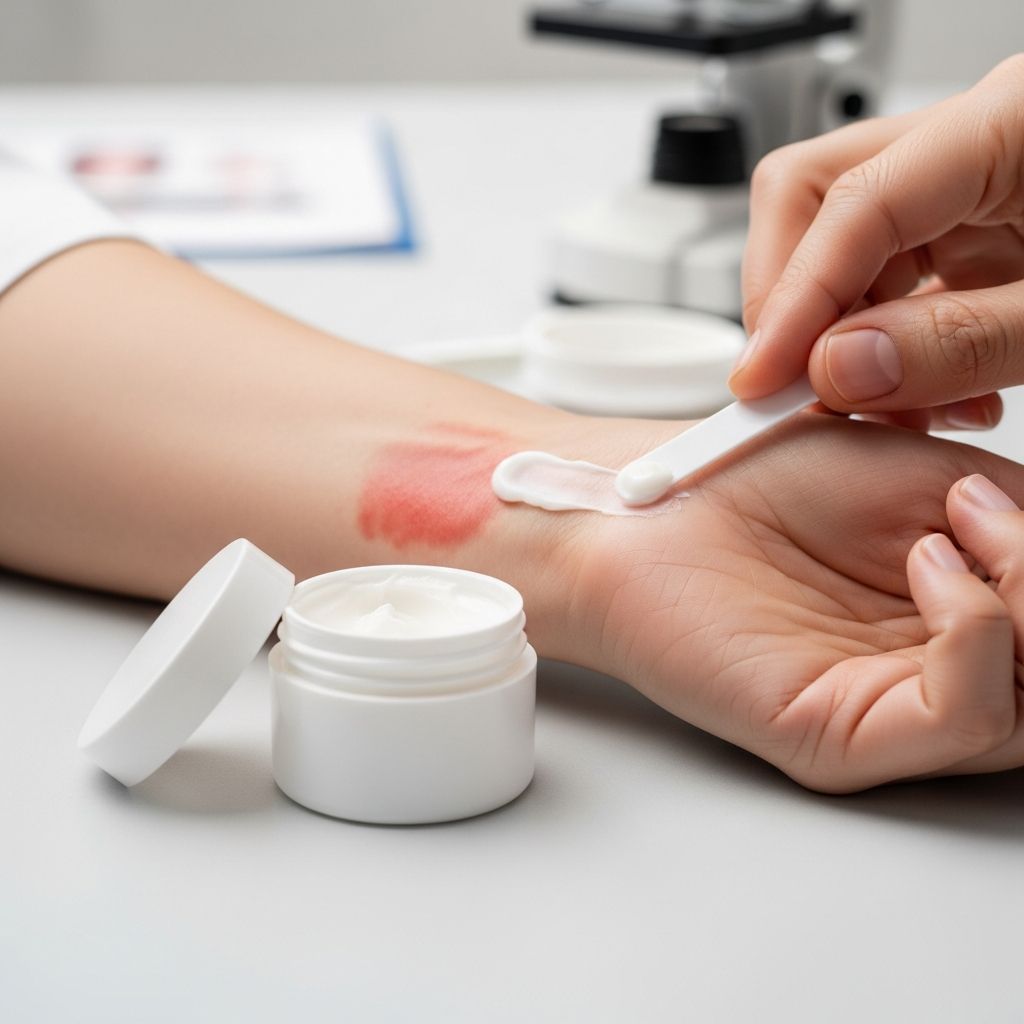
Proper application technique is crucial for achieving optimal results while minimizing side effects. Follow these guidelines carefully:
- Amount: Apply a thin layer of dithranol to affected areas only.
- Application technique: Gently rub the dithranol into your skin, ensuring you apply it only to the psoriatic plaques and avoid contact with healthy skin as much as possible.
- Frequency: Use dithranol once daily; you can choose a time of day that suits your schedule best.
- Precision: Take care to apply dithranol accurately to the affected areas, as unintended application to healthy skin can cause unwanted irritation.
- Delicate areas: When treating delicate areas like the face, neck, underarms, and groin, use a lower strength of dithranol and apply it cautiously, as these areas are more prone to irritation.
Short-Contact Therapy
Dithranol is typically used as ‘short-contact’ therapy, meaning it is left on your skin for a limited duration before rinsing off. The standard short-contact application involves leaving dithranol on your skin for no more than one hour, then washing it off in a shower or bath. However, dithranol can be effective even with much shorter contact times: some treatment protocols use contact periods as brief as 10 minutes.
This short-contact methodology is advantageous because it allows stronger concentrations of dithranol to be used with significantly less burning and staining compared to prolonged contact methods. The flexibility in timing allows you to integrate treatment into your daily routine conveniently.
Intensive treatment alternative: More intensive treatment with dithranol involves leaving it on overnight under a dressing. However, this approach is usually only undertaken under the direct supervision of a specialist skin doctor or nurse, as it requires professional oversight to ensure safety and effectiveness.
Managing Treatment and Side Effects
While using dithranol, monitor your response carefully and communicate with your healthcare provider about your experience. Your doctor will typically begin you with a low-strength preparation and then provide a higher-strength preparation if you are not experiencing any problems.
Common Side Effects
Dithranol can cause skin irritation, including redness, itching, and a burning sensation. If skin irritation continues or becomes severe, stop using dithranol and seek advice from your doctor or pharmacist. The development of irritation does not necessarily mean you cannot use dithranol; it may simply indicate that you need to use a lower strength or reduce the contact time.
A distinctive characteristic of dithranol is that it can stain your skin, hair, and clothing with a brown-purple discoloration. Skin staining will disappear within a few days after you stop using the product, while stained hair will grow out naturally over time. To minimize staining inconvenience, wear old clothing and use old bed linen when applying dithranol to ensure that accidental staining does not affect garments you want to preserve. Additionally, clean your bath or shower immediately after use to prevent permanent staining of these fixtures.
Reporting Other Symptoms
If you experience any symptoms that you believe may be related to dithranol treatment, speak with your doctor or pharmacist promptly. While serious side effects are rare, your healthcare provider needs to be aware of any adverse reactions you experience.
Safety Profile and Long-Term Use
Dithranol has a favorable safety profile, particularly when compared to some other psoriasis treatments. The main adverse effects are skin irritation and staining of skin and clothing, rather than systemic toxicity or serious internal complications. This makes dithranol an appropriate option for long-term management of chronic plaque psoriasis, as it does not carry risks of organ damage or serious systemic side effects associated with some systemic psoriasis medications.
Treatment Areas and Precautions
Dithranol is most useful for stubborn areas of psoriasis on non-delicate skin, particularly on elbows and knees, which are common sites of plaque psoriasis. As mentioned earlier, delicate areas including the face, neck, underarms, groin, and scalp require special precautions and typically need lower concentrations of dithranol or alternative treatments to avoid excessive irritation.
Frequently Asked Questions
Q: How long does it take for dithranol to clear psoriasis?
A: It should be possible to clear the patches within about 4 to 6 weeks of treatment with dithranol, assuming you are using the appropriate strength and frequency as prescribed by your doctor.
Q: Can I use dithranol on my face?
A: Dithranol should not be used on the face without specific medical guidance, as facial skin is delicate and prone to irritation. If psoriasis affects your face, consult your dermatologist about appropriate alternative treatments.
Q: Will the staining from dithranol be permanent?
A: No. Skin staining from dithranol disappears within a few days after stopping the product, and stained hair grows out naturally. Permanent damage to clothing or fixtures can be avoided by wearing old clothes, using old bed linen, and cleaning your bath or shower immediately after application.
Q: Can dithranol be used with other skin treatments?
A: You must inform your doctor if you are using any other skin preparations, as dithranol may interact with or be affected by concurrent treatments. Your healthcare provider will determine whether combination therapy is appropriate.
Q: What should I do if I experience burning when using dithranol?
A: If you experience a burning sensation, this typically means you have left dithranol on too long or the strength is too high for you. Contact your doctor or pharmacist to adjust the strength or duration of application.
Q: Is dithranol safe for long-term use?
A: Yes. Dithranol can be considered a safe long-term treatment because it is not known to cause carcinogenicity or systemic toxicity. However, regular monitoring by your healthcare provider is still recommended.
Q: Can I buy dithranol without a prescription?
A: Some dithranol preparations are available to purchase without a prescription at a pharmacy, though dithranol is primarily available on prescription from your physician. Check with your pharmacist about available options.
Key Takeaways
Dithranol remains an effective and well-established treatment for chronic plaque psoriasis, with a long track record dating back over a century. By understanding how to use dithranol properly—starting with low strengths, gradually increasing as tolerated, using short-contact therapy, and managing side effects—you can achieve significant improvement in your psoriatic lesions. The 4 to 6-week timeframe for clearing patches, combined with the favorable safety profile and minimal systemic side effects, makes dithranol an excellent choice for many patients. However, always follow your dermatologist’s specific guidance and report any concerns during treatment to ensure the best possible outcome.
References
- Dithranol for Psoriasis (Dithrocream) — Patient.info. Retrieved from https://patient.info/medicine/dithranol-for-psoriasis-dithrocream
- Dithranol Topical Patient Medicine Information — MIMS Philippines. Retrieved from https://www.mims.com/philippines/drug/info/dithranol/patientmedicine/dithranol-topical
- Dithranol (Anthralin) — DermNet. Retrieved from https://dermnetnz.org/topics/dithranol
- Anthralin for Psoriasis (Drithocreme, Dritho-Scalp, Zithranol) — Patient.info. Retrieved from https://patient.info/medicine/anthralin-for-psoriasis-zithranol
- Dithranol: Knowledge and References — Taylor & Francis. Retrieved from https://taylorandfrancis.com/knowledge/Medicine_and_healthcare/Pharmaceutical_medicine/Dithranol/
- Psoriasis – Topical Treatments — British Association of Dermatologists Patient Hub. Retrieved from https://www.skinhealthinfo.org.uk/condition/topical-treatments-for-psoriasis/
- Short Contact Dithranol — Newcastle Hospitals NHS Foundation Trust. Retrieved from https://www.newcastle-hospitals.nhs.uk/services/dermatology/patient-dermatology-information-leaflets/short-contact-dithranol/
Similar Articles








Read full bio of Sneha Tete