Do Glasses Fix Color Blindness? Evidence And Practical Guide
Explore the science behind color blindness correcting glasses: promises, limitations, and what studies reveal about their true effectiveness.
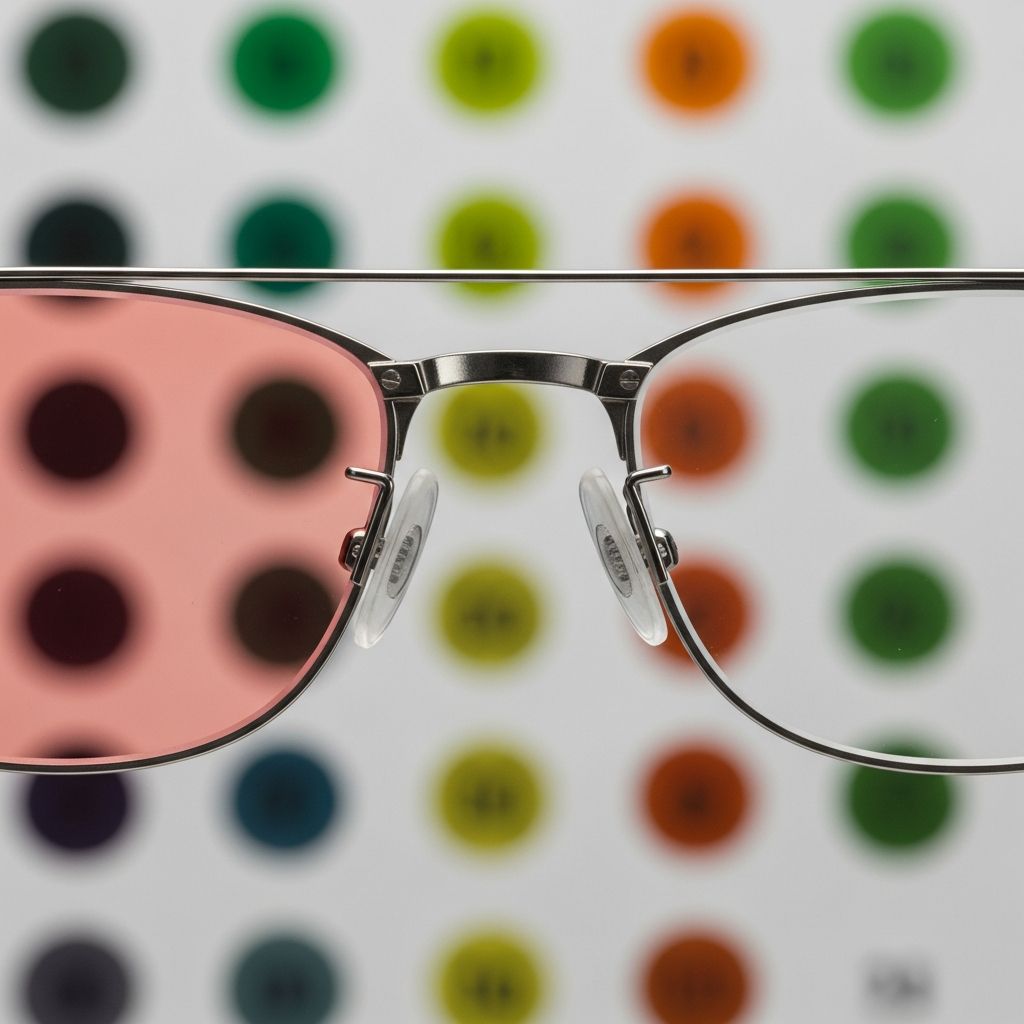
Color vision deficiency, commonly known as color blindness, affects how individuals perceive hues, particularly reds and greens. Specially designed glasses promise to bridge this gap by enhancing color discrimination. However, scientific scrutiny reveals a mixed picture: while some users report vivid improvements, rigorous studies often show limited or no overall enhancement in color vision capabilities.
Understanding Color Vision Deficiency
Color blindness stems from anomalies in the cone cells of the retina, which detect red, green, and blue light. The most prevalent form is red-green color vision deficiency, split into protan (red-weak) and deutan (green-weak) types. Affecting about 8% of men and 0.5% of women, it reduces the spectrum of perceivable colors from over a million shades to roughly 10% for those severely impacted.
Daily challenges include distinguishing traffic lights, selecting ripe fruits, or identifying wires in professional settings. Unlike total color blindness (achromatopsia, rare), most cases allow some differentiation but with confusion among similar shades.
- Protanomaly/Protanopia: Reduced red sensitivity, making reds appear dimmer or greenish.
- Deuteranomaly/Deuteranopia: Weak green perception, causing greens to blend with reds or yellows.
- Tritan types: Rarer blue-yellow confusions, less targeted by common glasses.
How Color-Correcting Glasses Claim to Work
Devices like EnChroma glasses employ spectral notch filters that block specific wavelengths where red and green cones overlap in deficient vision. This narrows the spectral output, aiming to separate confusing signals and make colors more distinct.
Manufacturers assert these optical aids enhance everyday color experiences without curing the condition. For mild to moderate red-green deficiencies, they claim users see colors ‘pop’—like distinguishing fruits or landscapes more vividly. The filters mimic effects of hunting glasses, boosting contrast for targeted stimuli.
Evidence Supporting Effectiveness
A 2022 study from the University of the Incarnate Word (UIW) Rosenberg School of Optometry tested EnChroma glasses on 13 color-blind participants over 11-14 days. Subjects wore them daily, undergoing cone contrast sensitivity, color naming, and visual evoked potentials (VEPs) assessments.
Key findings included immediate improvements in color thresholds—the lowest detectable contrast—and sustained gains even without glasses after 12 days. VEPs showed selective enhancement in brain responses to cone-specific stimuli, suggesting neural adaptation in color-processing cortex areas.
Dr. Jeff Rabin noted a participant with severe protanomalous deficiency reported joy at seeing tomatoes, rainbows, and car colors more clearly, with 3-5x better daytime vision at six months.
Anecdotal reports align: about 80% of red-green deficient users experience some benefit, per promotional contexts, though not full normal vision.
Scientific Skepticism and Contradictory Studies
Despite positive claims, multiple peer-reviewed investigations question broad efficacy. A 2018 University of Granada (UGR) study with 48 color-blind volunteers used Ishihara plates, Farnsworth-Munsell arrangements, and X-Rite color naming. Results: no significant improvements in recognition or arrangement tests. Subjective surroundings assessments yielded minimal perceived enhancement, with only one mild case noting changes.
Related Stories



Spectral simulations confirmed glasses alter color appearance but do not replicate normal vision. Some shades became distinguishable at the expense of others, akin to activity-specific filters rather than universal aids.
| Study | Sample Size | Key Tests | Findings |
|---|---|---|---|
| UIW (2022) | 13 | Cone sensitivity, VEPs, naming | Immediate & sustained gains |
| UGR (2018) | 48 | Ishihara, Farnsworth-Munsell | No overall improvement |
| AO H-R-R (2020) | Various subgroups | Pseudoisochromatic, naming | Limited protan benefit; worsened others |
A 2020 PubMed study on EnChroma filters found shifted error scores in pseudoisochromatic tests but no clear alleviation of severity. Protan subgroups improved slightly, yet deutan errors shifted toward protan types, impairing cyan perception across all. Conclusion: does not support correction of discrimination.
Systematic Reviews and Broader Analysis
A PMC systematic review of commercial devices, including EnChroma and Chromagen, analyzed multiple studies. It found insufficient evidence for clinically significant perception improvements. Color scores remained low, contradicting marketing claims.
NeuroLogica Blog summarized UGR results: glasses change perception without net gain, failing professional screening tests. Colour Blind Awareness confirms no effective treatment for inherited cases, with filters offering situational help at best.
Who Might Benefit and Real-World Applications
- Mild deficiencies: Greatest reported enhancements, e.g., subtle shade differences in clothing or maps.
- Specific scenarios: Driving (red/blue pop-out), gardening, or safety inspections where contrast matters.
- Children/education: Potential aid in learning color concepts, though unproven academically.
Limitations hit severe cases hardest—no new colors emerge; existing ones shift. Professional tests like Ishihara remain failed, disqualifying users from color-critical jobs.
Alternatives to Optical Filters
Beyond glasses:
- Digital apps: Screen filters on phones/computers simulate enhancements.
- Gene therapy (experimental): Targets cone opsins; early trials promising for animals.
- Behavioral training: Improves naming via practice, not physiology.
- Custom lenses: Tailored for individuals, costlier but potentially superior.
Practical Advice for Potential Buyers
Before investing ($200-500), consult an optometrist for deficiency typing via anomaloscope or HRR plates. Trial periods (some brands offer) reveal personal utility. Manage expectations: enhancement, not cure.
Frequently Asked Questions (FAQs)
Can color blindness glasses cure the condition?
No, they filter light for better discrimination but do not alter cone cells. Effects cease without glasses.
Do EnChroma glasses work for everyone?
No, best for mild-moderate red-green types; severe or tritan cases see little benefit.
How long until results show?
Immediate for some; UIW noted sustained neural effects after days of wear.
Are they safe for driving?
Generally yes, but verify local laws; enhanced reds/blues may aid traffic signals.
What’s the return policy?
Brands like EnChroma offer 30-day refunds if unsatisfied post-trial.
Future Directions in Color Vision Enhancement
Ongoing research explores adaptive optics, neural implants, and AI-assisted vision. Longitudinal studies could clarify long-term brain plasticity from filters. Until then, glasses serve as assistive tools, not miracles.
For the 300 million worldwide affected, awareness and accommodations remain key. Glasses intrigue, but evidence urges tempered optimism.
References
- UIW Study Finds Special Glasses Help Color Blind See Colors Better — University of the Incarnate Word Rosenberg School of Optometry. 2022-02-07. https://enchroma.com/pages/uiw-study-finds-special-glasses-help-color-blind-see-colors-better
- Scientists debunk the effectiveness of EnChroma glasses — Phys.org / University of Granada. 2018-10. https://phys.org/news/2018-10-scientists-debunk-effectiveness-enchroma-glasses.html
- Characterizing the Effects of Enchroma Glasses on Color Discrimination — PubMed. 2020. https://pubmed.ncbi.nlm.nih.gov/33055508/
- Study Questions Glasses for Colorblindness — NeuroLogica Blog / University of Granada reference. 2018. https://theness.com/neurologicablog/study-questions-glasses-for-colorblindness/
- Color vision devices for color vision deficiency patients — PMC / NIH. 2022. https://pmc.ncbi.nlm.nih.gov/articles/PMC9498227/
Similar Articles








Read full bio of Sneha Tete