Do I Have Melanoma? Self-Check Guide With ABCDE Signs
Learn to identify melanoma warning signs, perform self-exams, and understand diagnosis for early detection and treatment.
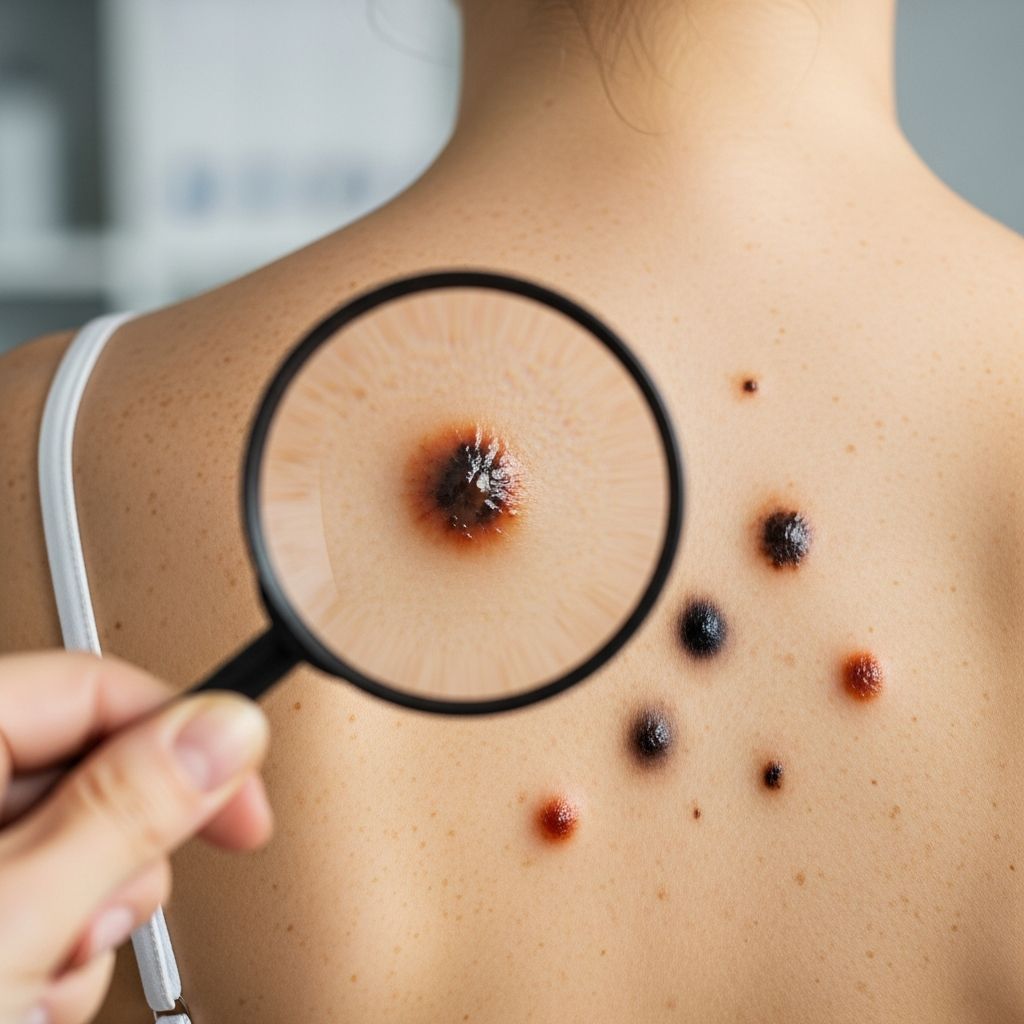
Melanoma is the most serious form of skin cancer, but early detection significantly improves outcomes. This article helps you assess suspicious skin lesions using clinical criteria, self-examination techniques, and professional diagnostic methods. Recognizing changes promptly can be life-saving.
What is melanoma?
Melanoma arises from melanocytes, the pigment-producing cells in the skin. It can develop in normal skin or within existing moles (naevi). Unlike other skin cancers, melanoma can spread rapidly to other parts of the body if not caught early. There are several subtypes, including superficial spreading melanoma (most common, 60-70% of cases), nodular melanoma, acral lentiginous melanoma (on palms, soles, nails), and lentiginous melanoma on sun-damaged skin.
Superficial spreading melanoma often stays in the epidermis (in situ phase) before invading deeper layers, showing typical ABCDE features. Nodular types grow vertically and may lack pigmentation, leading to delayed diagnosis. Melanoma in situ is confined to the epidermis, with no invasion into the dermis.
Risk factors for melanoma
Key risk factors include:
- Fair skin that burns easily and tans poorly.
- History of sunburns, especially in childhood.
- Multiple atypical or dysplastic naevi.
- Family or personal history of melanoma.
- Previous skin cancer.
- Weakened immune system.
- Excessive UV exposure from sun or tanning beds.
Sun-damaged skin on the trunk and limbs increases risk for lentiginous melanoma. Acral lentiginous melanoma occurs equally in all skin types, unrelated to UV exposure.
Self skin examination
Regular self-exams are crucial for early detection. Examine your entire body monthly using good lighting and a mirror, or with a partner’s help. Look for:
- Changes in colour.
- Increases in size or thickness.
- Changes in texture.
- Irregular outline.
- Lesions bigger than 6 mm.
- New spots or evolving moles.
Undress completely and check hard-to-see areas like the back, scalp, between fingers/toes, soles, and genitals. Use a comb for scalp inspection. Record findings with photos for comparison.
Warning signs of melanoma: ABCDE rule
The
ABCDE
criteria help identify suspicious lesions:| Feature | Description |
|---|---|
| A: Asymmetry | Pigmented area or lesion where one half does not match the other. |
| B: Border | Irregular, notched, or scalloped edges. |
| C: Colour | Variation: shades of brown, black, red, white, or blue. |
| D: Diameter | Larger than 6 mm (pencil eraser size), though smaller ones can be melanoma. |
| E: Evolving | Any change in size, shape, colour, or symptoms like itching/bleeding. |
The British 7-point checklist expands this for clinicians. Note: ABCDE may miss amelanotic, desmoplastic, or childhood melanomas.
ABCDEFG of melanoma
An extended
ABCDEFG
rule includes:- F: Firmness – Feels hard or nodular.
- G: Growing – Continues to grow.
This aids public and clinician screening, but not all melanomas fit perfectly.
Clinical features of melanoma
Melanomas vary by subtype:
- Superficial spreading: Irregular borders, colour variation, flat or slightly raised.
- Nodular: Rapidly growing dome-shaped nodule, often pink/red (amelanotic).
- Acral lentiginous: Parallel ridge pattern on dermoscopy, on palms/soles/nails.
- Lentiginous: Slow-growing on sun-damaged skin.
Symptoms include itching, tenderness, or ulceration.
Dermoscopy and the 3-point checklist
Related Stories



Dermoscopy uses a handheld magnifying tool for detailed examination. The
3-point checklist
detects early melanoma with high sensitivity:- Atypical pigment network: Irregular holes, thick lines, streaming, or pseudopods.
- Blue-white structures: Veils or regression areas.
- Atypical vascular structures: Dotted, glomerular, or polymorphous vessels.
Two or more criteria suggest malignancy (melanoma or basal cell carcinoma). Ideal for non-experts. Examine with good light; practice on benign and suspicious lesions.
How is melanoma diagnosed?
See a doctor for any concerning spot. They perform a full skin exam and use dermoscopy with ABCDE. Family history is reviewed. Suspicious lesions require biopsy.
Biopsy (excisional)
Complete excision with 2-3 mm margins for suspicious pigmented lesions. Performed under local anaesthetic. Sent for histopathology to confirm diagnosis. In difficult sites, refer to specialists. Multiple sections checked for invasion; IHC stains like S-100, HMB45, MITF, SOX10 if needed.
Melanoma pathology
Histology shows atypical melanocytes: asymmetrical, poorly circumscribed, pagetoid spread. In situ: basal epidermis only. Invasive: dermal nests/single cells. Breslow thickness measures depth (not for in situ). Ulceration, mitotic rate, regression noted.
If melanoma is diagnosed
Further staging tests if invasive:
- Blood tests for health.
- CT/PET scans for spread.
- Fine-needle aspiration for lymph nodes.
- Sentinel lymph node biopsy: Dye/radionucleotide maps first node.
Staging uses AJCC guidelines (Breslow depth, ulceration, nodes).
Treatment overview
Melanoma in situ: Excision with 5 mm margins or Mohs surgery.
- Stage 1/2: Wide local excision (1-2 cm margins).
- Sentinel node positive: Lymph node clearance.
- Advanced: Immunotherapy, targeted therapy, radiation, or clinical trials.
Follow-up: Skin exams, node checks; metastases often within 2 years.
Frequently Asked Questions
Can melanoma be smaller than 6 mm?
Yes, early melanomas can be diagnosed under 6 mm diameter.
Is dermoscopy only for doctors?
Primarily for trained professionals, but apps exist; consult a dermatologist.
What if ABCDE doesn’t match?
Some melanomas (e.g., nodular) lack these features; see a doctor for changes.
How often should I self-examine?
Monthly, especially if high-risk.
Does sunscreen prevent melanoma?
It reduces risk but doesn’t eliminate; combine with shade and clothing.
Prevention tips
Limit UV exposure, use SPF 30+ sunscreen, wear protective clothing, avoid tanning beds, and check skin regularly.
References
- Diagnosing melanoma skin cancer — Cancer Society NZ. 2023. https://www.cancer.org.nz/cancer/types-of-cancer/melanoma-of-the-skin/diagnosing-melanoma-skin-cancer/
- Three-point checklist – Dermoscopy — DermNet NZ. 2008 (updated). https://dermnetnz.org/cme/dermoscopy-course/three-point-checklist
- Common skin lesions – Melanoma — DermNet NZ. 2024. https://dermnetnz.org/cme/lesions/melanoma
- Superficial spreading melanoma — DermNet NZ. 2024. https://dermnetnz.org/topics/superficial-spreading-melanoma
- Acral lentiginous melanoma — DermNet NZ. 2024. https://dermnetnz.org/topics/acral-lentiginous-melanoma
- Melanoma in situ — DermNet NZ. 2024. https://dermnetnz.org/topics/melanoma-in-situ
Similar Articles








Read full bio of Sneha Tete