Do Shrinking Fashion Sizes Promote Anorexia?
Examining if shrinking clothing sizes in fashion fuel anorexia and eating disorders among models and consumers.
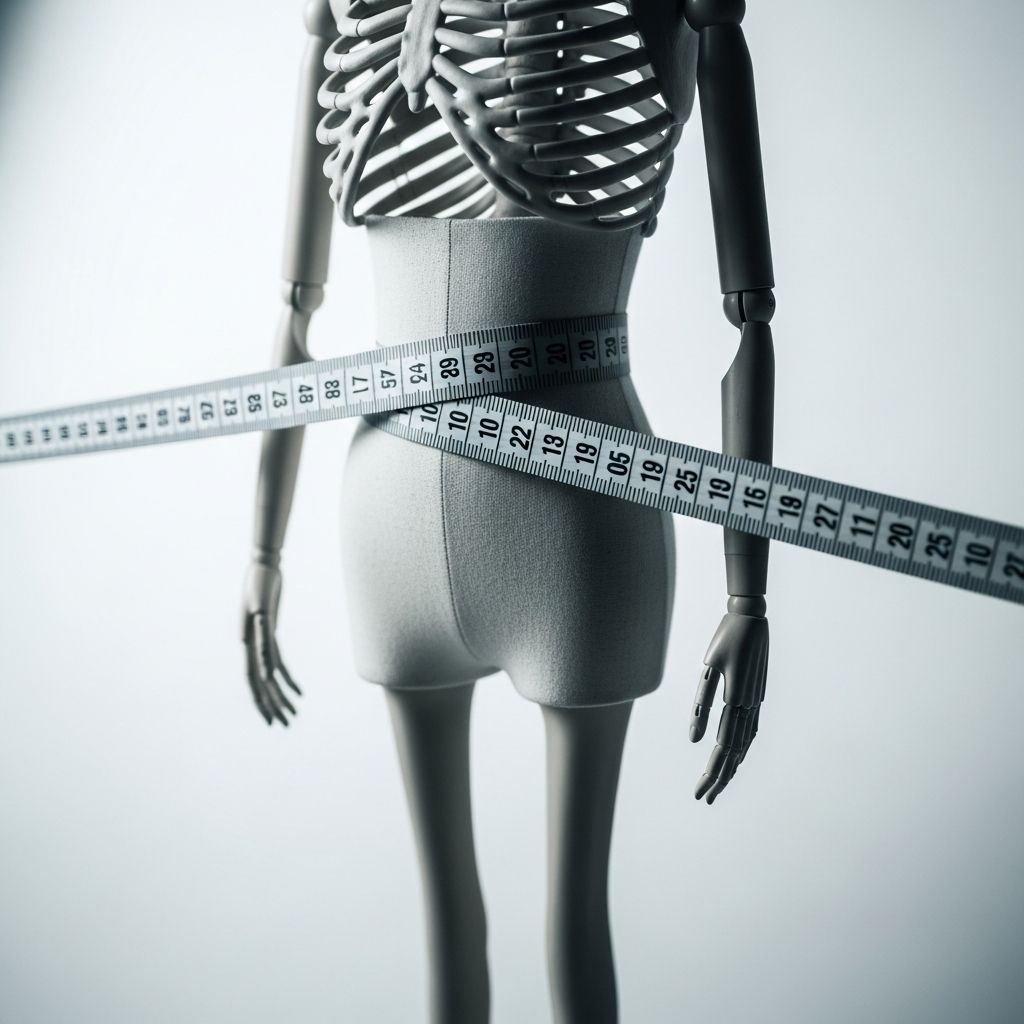
The fashion industry’s relentless pursuit of ever-smaller clothing sizes has sparked debate: do these trends glamorize extreme thinness and contribute to anorexia nervosa? As models are pressured to embody shrinking standards, evidence suggests a heightened risk of disordered eating, affecting both industry insiders and consumers exposed to these ideals.
What Are Shrinking Fashion Sizes?
Fashion sizes have dramatically decreased over decades. Twenty years ago, the average model weighed 8% less than the typical woman; today, that gap has widened to 23%. Runway models often meet the body mass index (BMI) criteria for anorexia, typically under 17.5, with many falling into size 0 or negative space in standard sizing.
This shift reflects ‘vanity sizing,’ where labels shrink but numbers stay the same to flatter consumers. However, for models, it’s literal: agencies demand BMIs as low as 16, equating to sizes that barely register on charts. Half of women wear size 14 or larger, yet standard outlets cater to size 14 and below, pushing an unrealistic thin ideal.
The Pressure on Fashion Models
Fashion models face intense scrutiny to maintain ultra-thin frames. A 2016 survey revealed 62.4% were asked to lose weight or alter body size, and 69.4% to ‘tone up’ in the prior year. Mean model height is around 177.8 cm, with 36.4% having BMI 17.0-18.5 and 52.3% below 17.0, classifying many as underweight.
Industry expectations create environmental pressure from peers and standards, leading to negative body image and disordered eating symptoms. Models report extreme calorie restriction, monotrophic eating (single-food diets), and obsessive exercise, especially those with loss-of-control feelings over eating.
- 62.4% pressured to lose weight or change shape.
- Height-adjusted comparisons show models taller but with higher thinness drive.
- Positive body talk correlates with more extreme restrictions.
Eating Disorders in the Fashion Industry
Research confirms elevated risks. Fashion models show no significant difference in full-blown anorexia nervosa (AN) or bulimia nervosa (BN) from controls (3.9% vs. 1.1% for simulated AN; p=0.057), but subclinical AN is markedly higher: 14.6% in models vs. 2.7% in controls (p<0.001).
Subclinical AN criteria include BMI <18.5 and sub-threshold drive for thinness scores (EDI-DT 10-13). After adjusting for height and BMI<25, models still had significantly more subclinical AN, underscoring occupational etiology.
Orthorexia tendency—obsessive ‘clean eating’—is higher among female models, serving as a coping mechanism that masks restriction and leads to malnutrition risks like hair loss, amenorrhea, cardiac issues, and osteoporosis.
| Disorder Type | Models (%) | Controls (%) | Significance (p-value) |
|---|---|---|---|
| Simulated AN | 3.9 | 1.1 | 0.057 |
| Subclinical AN | 14.6 | 2.7 | <0.001 |
| Subclinical BN | No sig. diff. | No sig. diff. | N/A |
Drive for thinness is stronger in models despite slight underweight status, with frequent subclinical symptoms compared to average populations.
Health Risks of Extreme Thinness
Maintaining BMIs below 17 risks severe complications. Anorexia nervosa involves restriction leading to malnutrition, while subclinical forms erode health subtly. Models engaging in extreme diets face cardiac arrhythmias, bone density loss, and reproductive issues.
Related Stories



‘Clean eating’ normalizes restriction, hiding disordered habits under health guises. Younger models starting as minors are particularly vulnerable, with habits solidifying into full disorders.
- Hair loss and amenorrhea from caloric deficits.
- Osteoporosis and cardiac complications long-term.
- Obsessive control over food fosters AN/BN progression.
Impact on Consumers and Society
Beyond models, shrinking sizes promote thin ideals via media. Exposure to ultra-thin images heightens body dissatisfaction and eating disorder risks in viewers. Economic factors may amplify pro-anorexia messaging, correlating with downturns.
Size 6 is now ‘plus-size’ in some contexts, alienating average women and fueling dissatisfaction. This cultural normalization pressures all to shrink, mirroring model experiences.
Calls for Change in Fashion
Advocacy pushes for health-focused standards. Some brands adopt size-less clothing to reduce stigma in recovery. Regulations in places like France ban underweight models (BMI<18), verified medically.
Qualitative research is urged to unpack subtle pressures maintaining thin ideals. Adjusting for BMI and height in studies reinforces models’ unique risks, calling for industry reform.
Frequently Asked Questions (FAQs)
What percentage of fashion models face weight loss pressure?
A: 62.4% were asked to lose weight or change body size in the previous year.
Do fashion models have higher rates of full anorexia nervosa?
A: No significant difference from controls (3.9% vs 1.1%), but subclinical AN is significantly higher (14.6% vs 2.7%).
What BMI do most runway models fall into?
A: Many meet anorexia criteria (BMI <17.5), with 52.3% severely underweight.
Can ‘clean eating’ lead to eating disorders in models?
A: Yes, orthorexia tendencies are higher, masking restrictive diets that cause health issues.
How have model weights changed relative to average women?
A: From 8% lighter 20 years ago to 23% lighter today.
Conclusion
Shrinking fashion sizes undeniably amplify thinness pressures, elevating subclinical anorexia risks among models without matching full disorder rates. Broader societal impacts demand industry shifts toward health and diversity to curb eating disorder promotion.
References
- Frequency of disordered eating habits among fashion models — PMC/NCBI. 2022-12-20. https://pmc.ncbi.nlm.nih.gov/articles/PMC9790310/
- Increased eating disorder frequency and body image disturbance — Frontiers in Psychiatry. 2024-05-15. https://www.frontiersin.org/journals/psychiatry/articles/10.3389/fpsyt.2024.1360962/full
- Most Models Meet Criteria for Anorexia, Size 6 Is Plus Size: Magazine — ABC News. 2012-01-01. http://abcnews.go.com/blogs/headlines/2012/01/most-models-meet-criteria-for-anorexia-size-6-is-plus-size-magazine
- Higher orthorexia tendency among female fashion models — PMC/NCBI. 2024-07-10. https://pmc.ncbi.nlm.nih.gov/articles/PMC11211108/
- Economic Downturn and Body Image Messaging Toward Women — University of Nebraska-Lincoln DigitalCommons. 2019-05-01. https://digitalcommons.unl.edu/cgi/viewcontent.cgi?article=1687&context=honorstheses
Similar Articles








Read full bio of Sneha Tete