Does Arthritis Cause Carpal Tunnel Syndrome?
Uncover the connection between arthritis and carpal tunnel syndrome: symptoms, causes, differences and effective treatments explained.
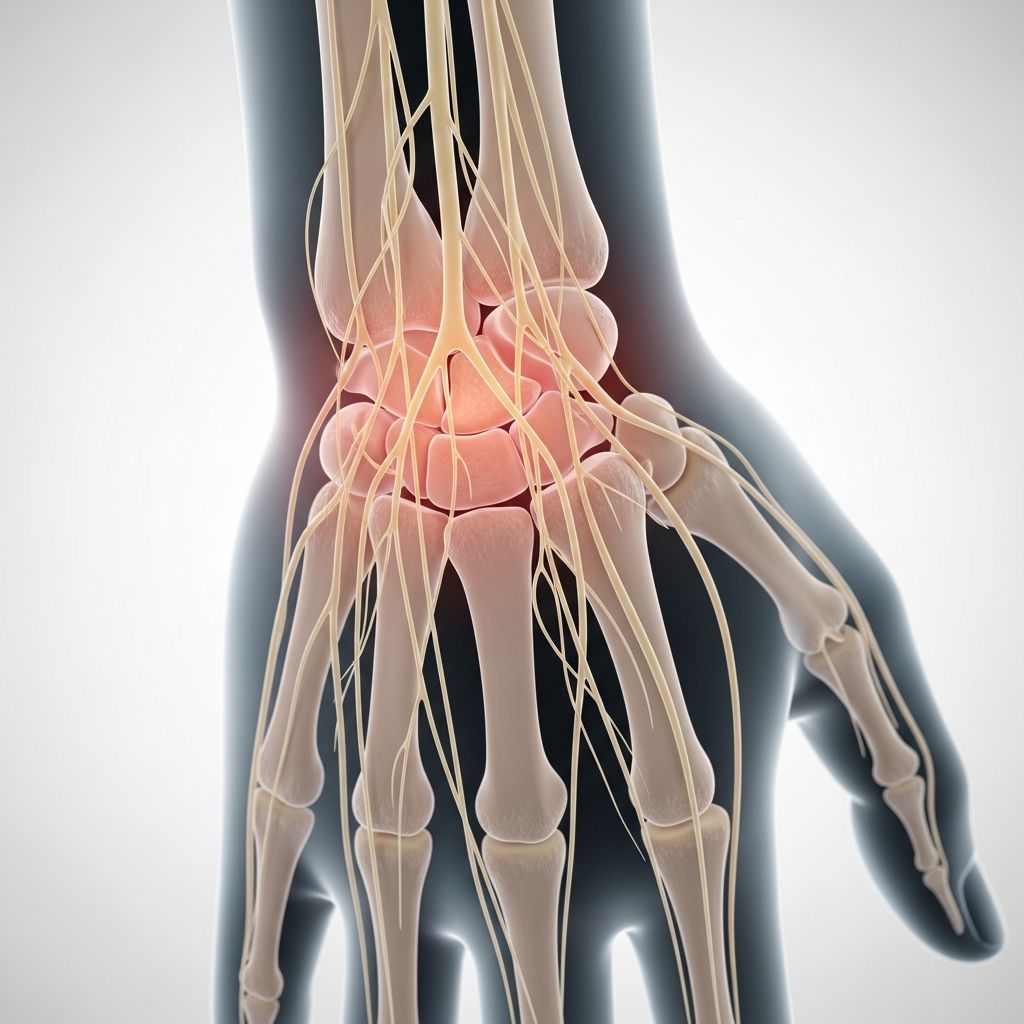
Carpal tunnel syndrome (CTS) involves compression of the median nerve in the wrist, leading to numbness, tingling, and pain in the hand, and certain types of arthritis like rheumatoid arthritis can contribute to this condition by causing inflammation and swelling that narrows the carpal tunnel. While osteoarthritis primarily affects joint cartilage, inflammatory arthritides such as rheumatoid arthritis (RA), psoriatic arthritis, gout, and pseudogout are more directly linked to CTS due to synovial inflammation and tenosynovitis.
What Is Carpal Tunnel Syndrome?
Carpal tunnel syndrome is the most common entrapment neuropathy worldwide, characterized by numbness, tingling, burning pain, or weakness primarily in the thumb, index, middle, and part of the ring finger. It occurs when the median nerve, which provides sensation to the thumb side of the hand and controls some thumb muscles, becomes compressed within the carpal tunnel—a narrow passageway formed by the carpal bones and the transverse carpal ligament (flexor retinaculum).
The carpal tunnel houses the median nerve and nine flexor tendons that bend the fingers and thumb. Any increase in pressure inside this rigid space—from swelling, inflammation, or structural changes—can compress the nerve, leading to ischemic damage, impaired axonal transport, and symptoms that worsen at night or with repetitive hand use. CTS significantly impacts quality of life, causing hand weakness, clumsiness, and difficulty with fine motor tasks like buttoning clothes or gripping objects.
Wrist Anatomy and the Carpal Tunnel
Understanding CTS requires knowledge of wrist anatomy: eight carpal bones form the tunnel’s floor and sides, topped by the transverse carpal ligament. The median nerve runs through this tunnel alongside flexor tendons from forearm muscles that control finger and thumb movement.
- Carpal bones: Scaphoid, lunate, triquetrum, pisiform, trapezium, trapezoid, capitate, hamate—create a rigid arch.
- Transverse carpal ligament: Forms the roof, unyielding to pressure changes.
- Median nerve: Vulnerable to compression due to its position adjacent to tendons prone to inflammation.
In healthy wrists, the tunnel’s contents glide smoothly. Pathological changes like synovial thickening or bone spurs disrupt this, compressing the nerve.
Symptoms of Carpal Tunnel Syndrome
Classic CTS symptoms include:
- Numbness or tingling (paresthesia) in the thumb, index, middle, and radial half of the ring finger—often worse at night, prompting patients to shake their hand for relief (“flick sign”).
- Burning pain or aching radiating from the wrist to the palm, fingers, forearm, or shoulder.
- Hand weakness, dropping objects, or muscle wasting at the base of the thumb in advanced cases.
- Sensory loss: Difficulty distinguishing hot from cold or pinpointing touch.
Symptoms typically affect one or both wrists, starting gradually and progressing if untreated. Unlike arthritis, CTS pain is nerve-related, not joint-centered.
Related Stories



Causes of Carpal Tunnel Syndrome
CTS arises from anything reducing tunnel space or increasing contents volume/pressure:
- Repetitive strain: Overuse from typing, vibrating tools, or heavy lifting.
- Medical conditions: Diabetes, hypothyroidism, obesity, pregnancy (hormonal fluid retention).
- Trauma: Wrist fractures or dislocations.
- Genetic factors: Narrow carpal tunnel anatomy.
In many cases, no single cause is identified (idiopathic CTS), but swelling of the median nerve or subsynovial connective tissue is common.
Arthritis as a Cause of CTS
Yes, arthritis—particularly inflammatory types—can cause or exacerbate CTS. Rheumatoid arthritis (RA) is a major risk factor due to synovial proliferation in the wrist and flexor tenosynovitis, narrowing the tunnel and elevating pressure.
- Rheumatoid arthritis (RA): Synovitis leads to joint erosions, ligament laxity, carpal tunnel shrinkage, and median nerve ischemia. CTS is the most common neurological manifestation in RA.
- Psoriatic arthritis (PsA): Increased synovial inflammation and angiogenesis cause tunnel narrowing.
- Osteoarthritis (OA): Less directly causal but can contribute via bone spurs or wrist swelling.
- Gout/pseudogout: Crystal deposits cause acute inflammation compressing the nerve.
In RA, CTS often presents with finger flexor tenosynovitis or radiocarpal synovitis, differing from idiopathic CTS’s nerve swelling pattern. Other rheumatic diseases like systemic sclerosis (SSc) show nerve stiffness. Importantly, CTS is not arthritis itself but a compressive neuropathy that arthritis can trigger.
How Arthritis Leads to CTS
Arthritis induces CTS through:
| Mechanism | Description | Associated Arthritis Type |
|---|---|---|
| Synovial inflammation | Tenosynovitis swells tendon sheaths, crowding the tunnel | RA, PsA |
| Bone spurs/erosions | Deformities from chronic inflammation trap the nerve | RA, OA |
| Fluid accumulation | Inflammatory effusions increase tunnel pressure | RA, gout |
| Vascular changes | Angiogenesis in synovium narrows space | PsA |
RA wrist changes reduce tunnel size, impair blood flow, and cause median nerve damage. Drug toxicity or amyloidosis in chronic RA may also contribute.
CTS vs. Arthritis: Key Differences
Distinguishing CTS from hand arthritis prevents misdiagnosis:
| Feature | Carpal Tunnel Syndrome | Osteoarthritis | Rheumatoid Arthritis |
|---|---|---|---|
| Location | Thumb, index, middle fingers; may radiate to arm | Finger joint ends, thumb base | Small joints symmetrically |
| Pain Type | Nerve: tingling, numbness, night pain | Joint: aching, stiffness after inactivity | Joint: swelling, morning stiffness >1hr |
| Cause | Nerve compression | Cartilage wear | Autoimmune inflammation |
| Both Possible? | Yes, arthritis worsens CTS risk | ||
CTS pain is neuropathic; arthritis is musculoskeletal. Thumb base pain suggests OA, while finger numbness points to CTS.
Diagnosis
Diagnosis combines history, exam (Tinel’s/Phalen’s tests), and tests:
- Nerve conduction studies/EMG: Confirm median nerve slowing.
- Ultrasound: Measures nerve cross-section, detects synovitis.
- MRI: For complex cases showing tunnel contents.
In rheumatic disease-related CTS, imaging reveals inflammation patterns distinct from idiopathic cases.
Treatment Options
Treatment targets the cause:
- Conservative: Night splints, activity modification, NSAIDs/steroid injections reduce swelling.
- Disease-specific: DMARDs/biologics for RA/PsA control underlying inflammation.
- Surgical: Carpal tunnel release severs the ligament, relieving pressure—effective for severe/refractory cases.
Early intervention prevents permanent nerve damage. Co-existing arthritis requires dual management.
Frequently Asked Questions
Q: Does arthritis directly cause CTS?
A: Inflammatory arthritis like RA often contributes via swelling, but CTS isn’t arthritis itself.
Q: Can CTS turn into arthritis?
A: No, they are distinct; CTS doesn’t cause joint damage.
Q: Can you have both?
A: Yes, wrist arthritis increases CTS risk.
Q: Is surgery always needed?
A: No, many improve with splints/injections; surgery for persistent cases.
Q: How does RA specifically cause CTS?
A: Synovitis and erosions narrow the tunnel, compressing the nerve.
References
- Does Arthritis Cause Carpal Tunnel Syndrome? — Arthritis Foundation. 2023. https://www.arthritis.org/health-wellness/about-arthritis/understanding-arthritis/does-arthritis-cause-carpal-tunnel-syndrome
- Carpal Tunnel Syndrome and RA — South Island Orthopedics. 2024. https://siortho.com/blog/hand-wrist/carpal-tunnel-syndrome-and-ra/
- Carpal tunnel syndrome related to rheumatic disease (Review) — PMC / National Library of Medicine. 2024-08-02. https://pmc.ncbi.nlm.nih.gov/articles/PMC11332155/
- Carpal Tunnel Syndrome or Arthritis? — NewSouth NeuroSpine. 2024. https://www.ns2.md/carpal-tunnel-syndrome-or-arthritis/
- Carpal tunnel or arthritis – what’s the difference? — Practice Plus Group. 2024. https://practiceplusgroup.com/knowledge-hub/carpal-tunnel-arthritis-difference/
Similar Articles








Read full bio of Sneha Tete