Does Fiber Cause Weight Gain? What You Need To Know
Uncover the truth about fiber and weight: Learn how this essential nutrient supports weight management, prevents gain, and promotes loss.
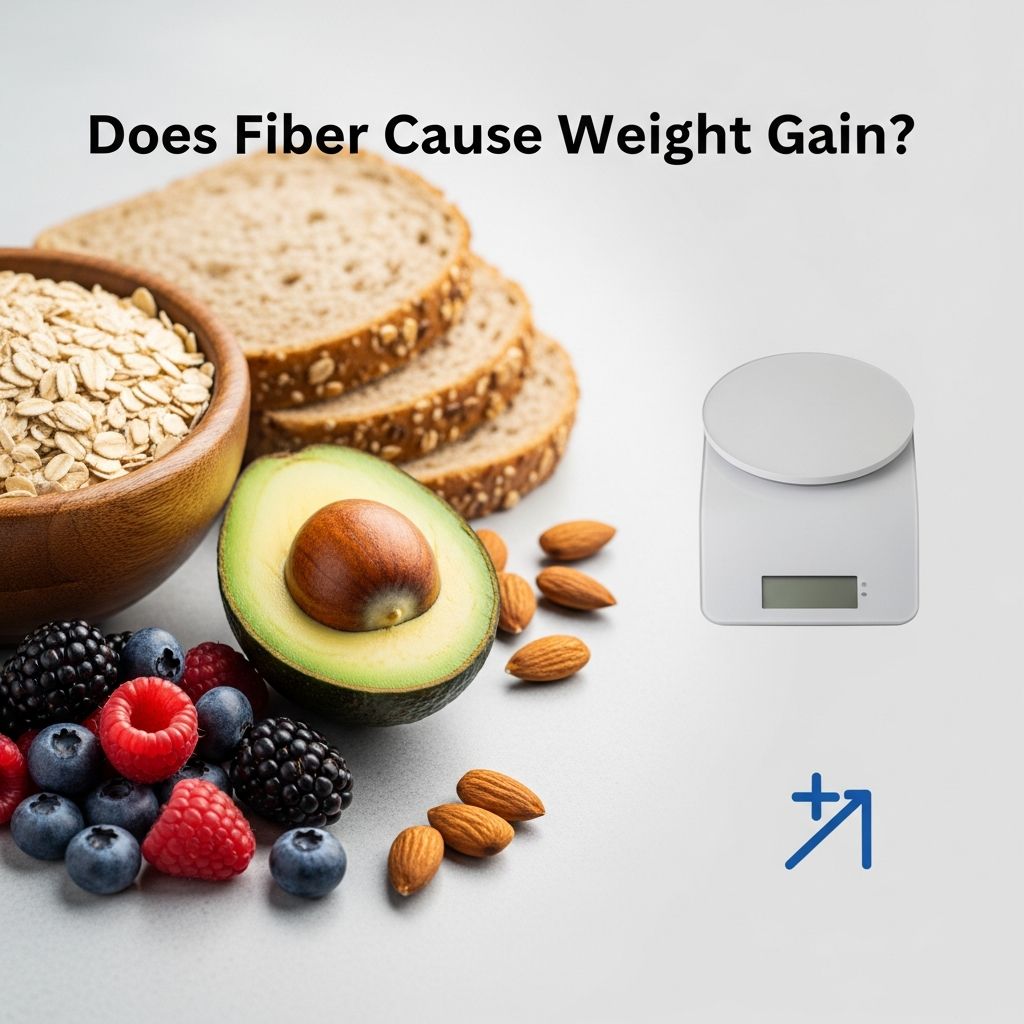
Fiber does not cause weight gain; instead, higher dietary fiber intake is consistently linked to reduced weight gain, improved weight loss, and better body weight regulation in both observational and clinical studies. Prospective cohort studies show that for every 20g/day increase in total fiber, weight gain is reduced by 5.5kg over time, with cereal, fruit fiber, and added bran being particularly effective. Randomized trials confirm that fiber-rich diets with 6ge;30g/day promote sustained weight loss comparable to calorie-restricted plans.
What Is Fiber?
Dietary fiber refers to the indigestible carbohydrates found in plant foods that resist digestion in the small intestine and are fermented by gut bacteria in the colon. It is classified into two main types: soluble fiber, which dissolves in water to form a gel-like substance, and insoluble fiber, which adds bulk to stool and speeds transit time. Both types contribute to health benefits, but soluble fiber excels in blood sugar control and cholesterol reduction, while insoluble fiber supports digestive regularity.
The average American consumes only 10-15g of fiber daily, far below the recommended 20-35g for adults by health organizations. Whole plant foods like fruits, vegetables, whole grains, legumes, nuts, and seeds are the richest sources, providing fiber alongside essential nutrients, unlike isolated supplements.
How Much Fiber Should You Eat?
Adults should aim for 25-38g of fiber per day, depending on age and sex: women 25g and men 38g, according to guidelines. To reach this, prioritize fiber-dense diets with 11-14g fiber per 1,000 calories from whole foods. Doubling intake from typical low-fiber Western diets (6-9g/1,000kcal) to higher levels prevents weight gain and supports leanness.
- Women (19-50 years): 25g/day
- Men (19-50 years): 38g/day
- Over 50 years: Slightly lower, 21g women, 30g men
- Children: Age + 5g/day (e.g., 10-year-old: 15g)
Gradually increase intake to avoid bloating, and drink plenty of water to aid digestion.
Types of Fiber and Their Effects on Weight
Soluble fibers like beta-glucan (oats), psyllium, and pectin (fruits) form viscous gels that slow digestion, enhance satiety, and reduce calorie absorption. Insoluble fibers like cellulose (vegetables, wheat bran) increase food volume without adding calories, promoting fullness. Studies show soluble fiber sources, such as sugarcane fiber and psyllium, attenuate weight gain more effectively than insoluble cellulose in high-fat diet models by improving insulin sensitivity and modulating hunger hormones like ghrelin.
| Fiber Type | Sources | Weight Benefits |
|---|---|---|
| Soluble | Oats, beans, apples, psyllium | Lowers energy density, boosts satiety hormones (GLP-1, leptin), reduces ghrelin |
| Insoluble | Whole grains, vegetables, bran | Increases bulk, speeds transit, prevents overeating |
High-fiber whole-food diets outperform supplements because they displace energy-dense foods, lowering overall calorie intake.
Does Fiber Make You Gain Weight?
No, fiber does not cause weight gain. Epidemiologic data links low-fiber diets to obesity, while higher intakes correlate with leanness. Prospective studies across populations show inverse relationships: higher fiber from whole grains, fruits, vegetables, pulses, and nuts reduces BMI, body fat, and waist circumference. For instance, diets >25g/day prevent excess gain, and +10-12g/day improvements yield significant control.
Related Stories



In children, low-fiber diets promote visceral fat accumulation, highlighting vulnerability. Claims of fiber-induced gain often stem from temporary water retention or bloating during adjustment, not fat gain. Long-term, fiber reduces gain risk by 5.5kg per 20g increment.
Why Does Fiber Help with Weight Loss?
Fiber aids weight loss through multiple mechanisms:
- Lowers energy density: Fiber-rich foods have fewer calories per volume, allowing larger portions without excess energy.
- Slows digestion and eating: Viscous fibers extend fullness, reducing total intake by ~10% with +14g/day.
- Enhances satiety: Stimulates GLP-1, leptin; suppresses ghrelin, as seen in high-fat diet trials where soluble fiber groups gained less weight.
- Gut effects: Promotes lean microbiota, excretes undigested fats/calories, boosts metabolism.
Randomized trials show 6ge;30g/day diets match hypocaloric plans for 1-year loss, with one study equating 32g/day (500g whole plants) to reduced BMI/waist vs. 15g/day. Protein-fiber combos optimize outcomes, correlating with sustained loss at 3-12 months.
Fiber and Appetite Control
Fiber expands in the stomach, triggering stretch receptors for fullness signals. Soluble types delay gastric emptying, stabilizing blood sugar and curbing hunger. In mouse models, psyllium/sugarcane fiber lowered ghrelin mRNA, improved insulin sensitivity, and cut weight gain vs. cellulose. Human data: High-fiber breakfasts reduce later intake.
High-Fiber Foods for Weight Management
- Whole grains: Oats (10g/cup), barley, quinoa
- Legumes: Lentils (16g/cup), black beans
- Vegetables: Broccoli (5g/cup), Brussels sprouts
- Fruits: Raspberries (8g/cup), pears with skin
- Nuts/seeds: Chia (10g/oz), almonds
Substitute one high-fiber item per meal/snack to +15g/day easily.
Sample High-Fiber Meal Plan
| Meal | Sample | Fiber (g) |
|---|---|---|
| Breakfast | Oatmeal with berries & chia | 12 |
| Lunch | Lentil soup, salad | 15 |
| Dinner | Quinoa-stuffed peppers | 18 |
| Snack | Apple & almonds | 8 |
| Total | – | 53 |
Potential Side Effects of Too Much Fiber
Sudden increases can cause gas, bloating, or constipation if water intake is low. Start slow (add 5g/week), hydrate (8+ cups/day). Rare issues: Nutrient malabsorption with extremes (>70g/day without balance). Those with IBS may need low-FODMAP fibers.
Fiber Supplements vs. Whole Foods
Whole foods superior: Provide bulk, nutrients, displace calories. Supplements (psyllium) help mildly but less effective alone. Trials favor food sources for microbiota benefits.
Frequently Asked Questions
Can eating too much fiber cause weight gain?
No, excess fiber promotes loss via satiety and low density; temporary bloat isn’t fat.
How quickly does fiber help with weight loss?
Effects in weeks: +14g/day cuts intake 10%, 1.9kg loss in 4 months.
Is soluble or insoluble fiber better for weight?
Both; soluble excels in satiety/hormones, insoluble in bulk. Mix for best results.
Do fiber supplements work for weight loss?
Modestly; whole foods better by 2-3x due to displacement.
Can fiber prevent weight regain?
Yes, 6ge;30g/day diets reduce regain risk vs. <20g.
References
- Role of fiber and healthy dietary patterns in body weight regulation and weight loss — MedCrave Online. 2023. https://medcraveonline.com/AOWMC/role-of-fiber-and-healthy-dietary-patterns-in-body-weight-regulation-and-weight-loss.html
- Effects of Dietary Fibers on Weight Gain, Carbohydrate Metabolism and Gastric Ghrelin Gene Expression in a Mouse Model — PMC (PubMed Central). 2009-07-22. https://pmc.ncbi.nlm.nih.gov/articles/PMC2730183/
- Weight-loss Success Depends on Eating More Protein, Fiber while Limiting Calories, Study Finds — University of Illinois College of Medicine. 2024. https://medicine.illinois.edu/news/weight-loss-success-depends-on-eating-more-protein-fiber-while-limiting-calories-study-finds
- Dietary fiber: An integral component of a successful weight loss intervention — American Society for Nutrition. 2023. https://nutrition.org/dietary-fiber-an-integral-component-of-a-successful-weight-loss-intervention/
- Fiber — Physicians Committee for Responsible Medicine. 2024. https://www.pcrm.org/good-nutrition/nutrition-information/fiber
Similar Articles








Read full bio of medha deb