Lavender For Sleep: 5 Proven Ways To Boost Sleep Quality
Explore the science-backed benefits of lavender for better sleep, relaxation, and anxiety relief through aromatherapy and more.
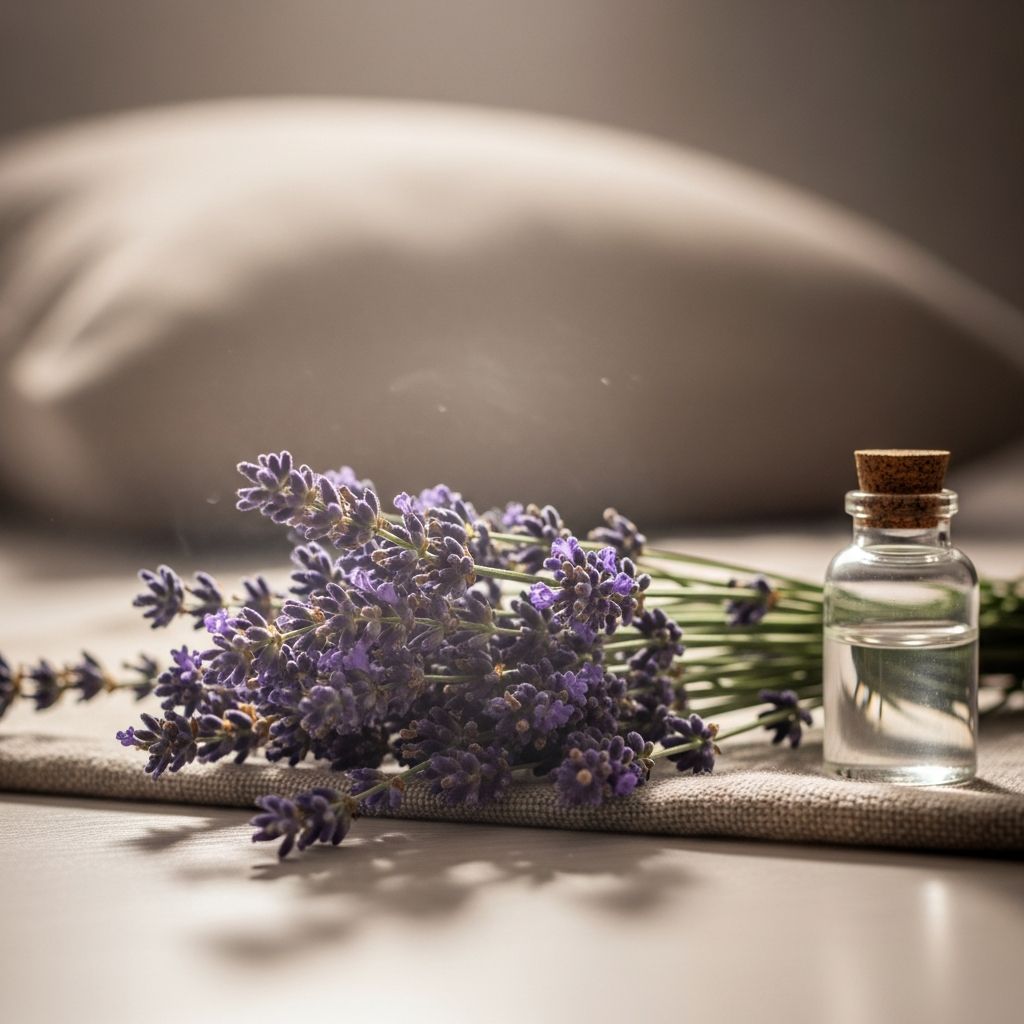
Lavender, with its soothing floral scent, has long been associated with relaxation and better sleep. Scientific studies indicate that inhaling lavender essential oil can improve sleep quality, reduce anxiety, and promote deeper rest, particularly when combined with good sleep hygiene.
What Is Lavender?
Lavender (*Lavandula angustifolia*) is a flowering herb native to the Mediterranean region, prized for its purple blooms and aromatic oils. Its essential oil, extracted through steam distillation, contains active compounds like linalool and linalyl acetate that contribute to its calming properties. These compounds interact with the neurotransmitter GABA in the brain, quieting nervous system activity and inducing sedation.
Historically used in ancient remedies for insomnia and anxiety, lavender today appears in essential oils, teas, pillows, and topical products. Modern research supports its role beyond folklore, showing benefits for sleep disturbances, stress, and even chronic conditions like heart failure.
Does Lavender Actually Help You Sleep?
Yes, multiple studies confirm lavender’s efficacy in enhancing sleep. A randomized controlled trial on college students with self-reported sleep issues found that inhaled lavender combined with sleep hygiene significantly improved sleep quality (measured by PSQI and PROMIS scales) at post-intervention and two-week follow-up, outperforming sleep hygiene alone.
In patients with chronic heart failure, lavender inhalation led to greater improvements in Pittsburgh Sleep Quality Index (PSQI) scores compared to controls across Day 3, Week 1, 2, and 4, alongside reduced fatigue. A 2019 study noted lavender may boost melatonin levels, aiding overall sleep. Systematic reviews of 15+ studies also link lavender aromatherapy to better sleep in those with mild disturbances, insomnia, depression, and anxiety.
How Does Lavender Help with Sleep?
Lavender promotes sleep through several mechanisms:
- Calms the nervous system: Its scent lowers heart rate and blood pressure, reducing agitation via GABA interaction.
- Increases deep sleep: Aromatherapy extends slow-wave sleep duration, helping users fall asleep faster and wake refreshed.
- Boosts melatonin: May elevate this sleep hormone, improving sleep architecture.
- Reduces awakenings: Participants in trials reported fewer interruptions and easier sleep onset.
Effects persist post-use, suggesting a re-balancing of the sleep cycle, though exact pathways need further study.
Scientific Evidence on Lavender and Sleep
Robust evidence spans RCTs and meta-analyses:
- A 2020 trial showed 30 minutes of lavender inhalation reduced anxiety, stress, and depression while aiding sleep.
- Systematic reviews (2014, 2019) of 13+ RCTs found small-to-moderate benefits, especially with *L. angustifolia*.
- Heart failure patients experienced sustained PSQI improvements and lower fatigue (FAS scores dropped β=-7.900 at Week 4).
- College students saw PSQI p<0.001 improvements with lavender+sleep hygiene.
| Study Population | Intervention | Key Outcome | Source |
|—————–|————–|————-|——–|
| College students | Inhaled lavender + sleep hygiene | Improved PSQI (p=0.01 post, p<0.001 follow-up) | |
| Heart failure patients | Lavender inhalation (4 weeks) | PSQI improvement all timepoints; FAS reduction (p<0.001) | |
| General/insomnia | Aromatherapy | Better sleep quality, more deep sleep | |
| Middle-aged women | Lavender oil | Lowered BP, heart rate; better sleep | |
No changes in total sleep quantity were noted, but quality metrics consistently improved.
How to Use Lavender for Sleep
Incorporate lavender safely for optimal results:
- Aromatherapy: Diffuse 3-5 drops in a bedroom diffuser for 30+ minutes before bed in a well-ventilated room.
- Pillow spray: Mix 10 drops with water in a spray bottle; mist bedding lightly.
- Bath: Add 5-10 drops to Epsom salts for a relaxing soak 1-2 hours pre-bedtime.
- Topical: Dilute 1-2 drops in carrier oil; apply to wrists or temples (patch test first).
- Tea: Steep dried flowers for a mild sedative drink, avoiding excess if on blood pressure meds.
Combine with sleep hygiene: consistent schedule, dark room, no screens.
Related Stories



Other Benefits of Lavender
Beyond sleep, lavender offers:
- Anxiety relief: Meta-analysis (2019) confirms stress reduction.
- Menopause/menstrual relief: Eases hot flashes, pain, restlessness.
- Pain and inflammation: Analgesic and anti-bacterial properties.
- Blood pressure: Lowers systolic/diastolic readings via nervous system calming.
- Skin/mood: Aids acne, wounds, headaches, and mood via aromatherapy.
Is Lavender Safe? Side Effects and Precautions
Lavender is generally safe with high adherence and few side effects in trials—no adverse events in heart failure or student studies. However:
- Allergies: Rare skin irritation; dilute topicals and patch test.
- Drug interactions: Sedative effects amplify with sleep aids; may lower BP—caution with antihypertensives.
- Pregnancy/children: Consult doctor; avoid high oral doses.
- Quality: Use pure *L. angustifolia* from reputable sources; avoid synthetics.
Satisfaction is high, with heart failure patients rating 9.06/10 vs. 6.03 controls.
Who Should Avoid Lavender?
- Those with lavender allergy or hormone-sensitive conditions (mild estrogenic effects rumored, unproven).
- Users of sedatives, alcohol, or BP meds without medical advice.
- Infants/very young children—stick to mild exposure.
Frequently Asked Questions (FAQs)
What is the best way to use lavender for sleep?
Aromatherapy via diffuser or pillow spray for 30 minutes pre-bed is most effective, per studies.
How long does lavender take to work for sleep?
Benefits appear after 3 days to 4 weeks; immediate relaxation often noted.
Can I take lavender oil orally for sleep?
Yes, in capsules, but consult a doctor; inhalation is safer for most.
Does lavender help with insomnia?
Yes, trials show improved quality in insomnia, anxiety-related cases.
Is lavender safe every night?
Yes, with no reported adverse effects in long-term studies up to 4 weeks.
(Word count: 1678)
References
- How Lavender Can Help with Sleep and Relaxation — Banner Health. 2023. https://www.bannerhealth.com/healthcareblog/teach-me/tips-for-using-lavender-for-relaxation-and-sleep
- Does Lavender Help You Sleep? — Sleep Doctor. 2024. https://sleepdoctor.com/pages/sleep-aids/does-lavender-help-you-sleep
- Effect of Inhaled Lavender and Sleep Hygiene on Self-Reported Sleep Issues — PMC (PubMed Central). 2015-07-01. https://pmc.ncbi.nlm.nih.gov/articles/PMC4505755/
- Effects of lavender essential oil inhalation on sleep quality and fatigue in heart failure patients — European Journal of Cardiovascular Nursing (Oxford Academic). 2024. https://academic.oup.com/eurjcn/advance-article/doi/10.1093/eurjcn/zvag006/8416616
- The Many Benefits of Lavender for Mood, Sleep, Hair, and Skin — Healthline. 2023. https://www.healthline.com/health/what-lavender-can-do-for-you
Similar Articles








Read full bio of medha deb