Does the Moon Really Affect Our Bodies and Minds?
Exploring the science behind lunar cycles and their impact on mental health, sleep, and mood.
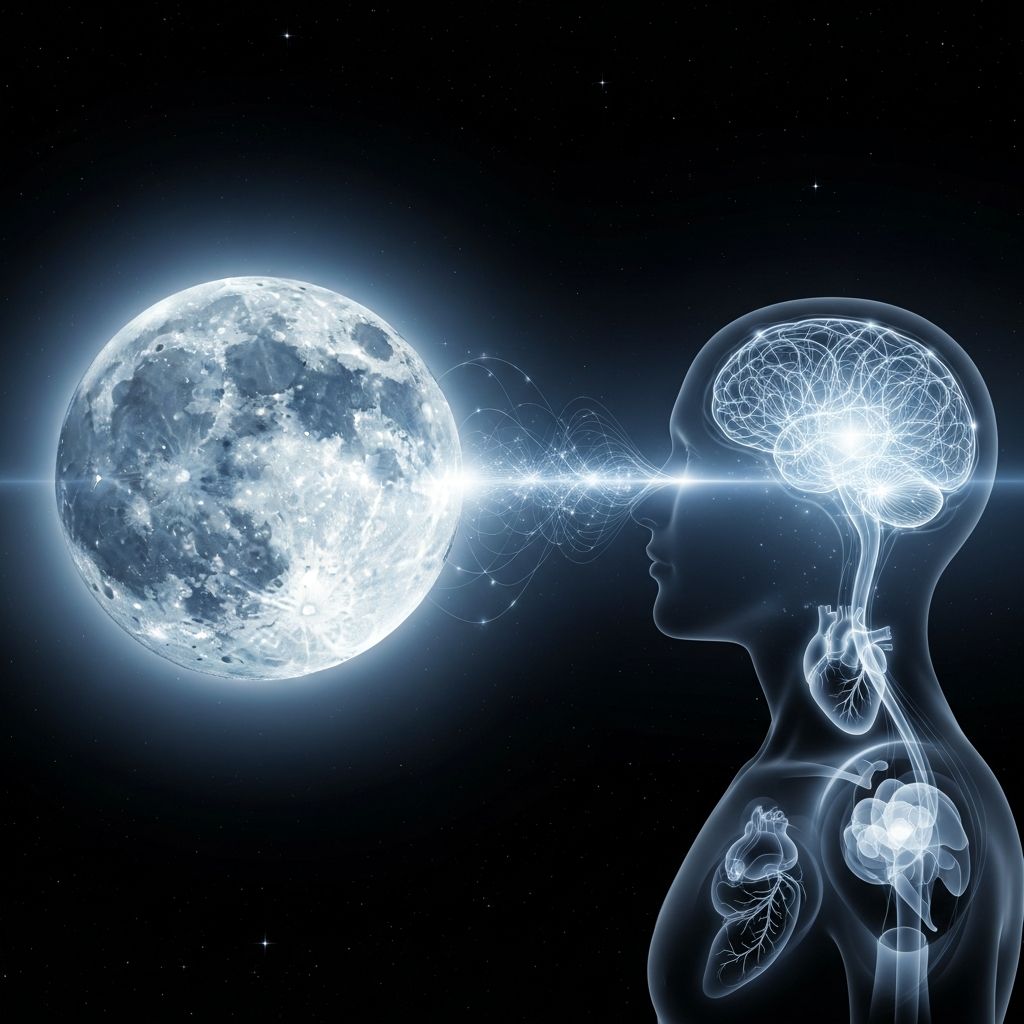
For centuries, the moon has captivated human imagination and inspired countless myths and legends about its influence on our bodies and minds. From affecting our moods to triggering unusual behaviour, the lunar cycle has been blamed for everything from sleep disturbances to mental health crises. But what does science actually tell us about these age-old beliefs? While the moon’s gravitational pull influences ocean tides on a massive scale, the question of whether it genuinely affects human physiology and psychology remains more complex than popular culture suggests.
The Historical Belief in Lunar Influence
Beliefs about the moon’s influence on human behaviour date back to ancient times. For centuries, physicians and philosophers attributed behavioural changes directly to the moon’s pull. The word “lunacy” itself derives from “luna,” the Latin word for moon, reflecting historical associations between lunar cycles and mental illness. Even today, this belief persists strongly; research indicates that nearly 81% of mental health professionals believe the full moon can affect people’s mental health. Emergency room staff, hospital workers, and the general public often report observations of increased patient numbers or unusual behaviour during full moon nights, perpetuating these long-held assumptions.
The Moon’s Impact on Sleep and Circadian Rhythms
One of the most scientifically supported connections between the moon and human physiology involves sleep patterns. The moon influences our sleep primarily through its effects on light exposure and circadian rhythm disruption. During a full moon, the night sky becomes significantly brighter, which can interfere with the natural production of melatonin—the hormone that signals to our body that it’s time to sleep.
In a notable 2013 study, researchers examined data from participants who were not initially aware they would be evaluated for lunar influences. The findings were striking: around the full moon, people spent 30% less time in NREM sleep (deep sleep) and slept for approximately 20 minutes less overall compared to nights without a full moon. These changes were associated with decreased levels of melatonin, suggesting a direct physiological link between lunar brightness and our body’s sleep-wake cycle.
When melatonin levels rise at night, serotonin—often called the “feel-good” hormone—decreases naturally. This hormone plays a crucial role in controlling mood and appetite. The bright light from a full moon can disrupt this delicate hormonal balance, potentially affecting not just sleep quality but also mood regulation. However, it’s worth noting that the full moon only brightens the sky by approximately 0.1 to 0.3 lux compared with a streetlight (15 lux) or a cell phone screen (40 lux), raising questions about whether this modest increase in brightness truly disrupts sleep for most people.
Lunar Cycles and Mental Health Conditions
While the general population may not show significant mood changes related to lunar cycles, research suggests that certain mental health conditions may be more responsive to lunar phases.
Bipolar Disorder and Lunar Cycles
Among mental health conditions, bipolar disorder appears to show the most consistent association with lunar phases. In a small but significant study of 17 people with bipolar disorder, researchers discovered that patients cycled rapidly between states of depression and mania, and notably, these rapid cycles were not random—they aligned with the lunar cycle. This finding suggests that the moon may influence circadian rhythm disruptions and sleep-wake cycle disturbances, which are known triggers for mood cycling in bipolar disorder.
The mechanism remains unclear, but the gravitational pull of the moon’s tides may play a role in triggering the cycling of manic and depressive episodes. Sleep disruptions caused by lunar phases are themselves recognized triggers for manic episodes, creating a potential pathway through which lunar influence affects bipolar symptoms. However, researchers emphasize that these findings do not prove the moon causes bipolar disorder—rather, it may aggravate existing symptoms in susceptible individuals.
Related Stories



Schizophrenia and Lunar Phases
Research on schizophrenia and lunar cycles has produced interesting results. Studies examining hospital admissions reveal that patients with schizophrenia tend to show more stability during the new moon but experience symptom aggravation during the first quarter and full moon phases. Patients with paranoid schizophrenia appear particularly susceptible to deterioration during the full moon period. Some research has found that psychiatric hospital admissions for schizophrenia show peaks during full moon periods, suggesting that lunar phases may intensify existing symptoms in this population.
Depression, Anxiety, and General Mood Disorders
When it comes to depression, anxiety, and general mood disturbances, the scientific evidence becomes less clear. While it’s certainly true that environmental factors can contribute to mood swings and trigger anxiety and depression, establishing a direct causal link with lunar cycles has proven difficult for researchers. A 2017 study that analyzed emergency room records at a 140-bed hospital found that people visited the ER due to psychiatric conditions in roughly equal numbers during all four phases of the moon. Additionally, a comprehensive 2019 review examining nearly 18,000 medical records from different facilities found no relationship between lunar cycles and hospital stay lengths or the number of psychiatric inpatient admissions and discharges.
The Placebo and Expectation Effect
One powerful factor influencing our perception of lunar effects is the placebo effect and the power of expectation. If you expect the full moon to trigger irritability or mood disturbances, you’re more likely to interpret your emotions through that lens and potentially act accordingly. When we focus exclusively on negative outcomes, those negative experiences can feel far more significant than positive ones, creating a self-fulfilling prophecy.
This psychological phenomenon works both ways. Just as believing in negative lunar effects can amplify perceived symptoms, believing in positive treatments or outcomes can enhance their actual effectiveness through increased compliance and positive behavioural changes. Our thoughts directly impact our actions, and our actions shape our experiences—meaning much of what we attribute to the moon might actually reflect our expectations and beliefs about lunar influence.
What Science Actually Concludes About the Moon and Mental Health
The prevailing scientific consensus is nuanced. Current evidence does not support the belief that moon phases cause mental disorders in the general population. Most research shows no significant correlation between lunar cycles and psychiatric symptoms for the majority of people. However, the evidence does suggest that for certain individuals with specific conditions—particularly bipolar disorder and possibly schizophrenia—lunar phases may aggravate existing symptoms, though not create the conditions entirely.
It’s important to emphasize that moon phases could potentially aggravate bipolar disorder and schizophrenia in some patients, but this may not warrant a generalization that this happens in all cases of these conditions. Considerable individual variation exists, and many people with these diagnoses experience no lunar effects whatsoever.
How the Moon Might Influence Your Mood: Mechanisms and Theories
If the moon does influence mood and mental health, several potential mechanisms could explain the connection:
- Light exposure: The increased brightness during full moons can disrupt melatonin production and circadian rhythms, affecting sleep quality and mood regulation.
- Gravitational effects: The moon’s gravitational pull, while primarily affecting ocean tides, might influence fluid balance in the body or nervous system function, though evidence for this remains speculative.
- Circadian rhythm disruption: Changes in light exposure and potentially other environmental factors related to lunar cycles can desynchronize the body’s internal biological clock.
- Sleep disruption: Reduced sleep quality and quantity can trigger or exacerbate mood disturbances, particularly in vulnerable populations.
Frequently Asked Questions
Q: Does the full moon really cause mental illness?
A: No, scientific evidence does not support the idea that the full moon causes mental illness in the general population. However, for some individuals with bipolar disorder or schizophrenia, lunar phases may temporarily aggravate existing symptoms.
Q: Can the moon affect my sleep?
A: Research suggests the full moon can reduce deep sleep time by approximately 30% and decrease overall sleep duration by about 20 minutes in some people, primarily due to increased light exposure disrupting melatonin production.
Q: Why do so many healthcare workers believe the moon affects mental health?
A: Despite scientific findings to the contrary, about 81% of mental health professionals report believing the full moon influences mental health. This likely reflects historical beliefs, confirmation bias, and memorable anecdotal observations rather than strong scientific evidence.
Q: Does the moon affect people with bipolar disorder?
A: Some research indicates that rapid cycling between depression and mania in bipolar disorder may align with lunar phases, possibly through disruption of circadian rhythms and sleep patterns. However, this effect doesn’t occur in all individuals with the condition.
Q: How bright is the full moon compared to artificial light?
A: The full moon brightens the sky by only 0.1 to 0.3 lux, compared with a streetlight (15 lux) or a cell phone screen (40 lux), making it a relatively minor source of light pollution.
Q: Can my expectations about the moon affect how I feel?
A: Yes, the placebo effect is powerful. If you believe the full moon will trigger irritability or mood changes, you’re more likely to notice and interpret your emotions through that expectation, potentially creating a self-fulfilling prophecy.
Key Takeaways
The moon has fascinated humanity for millennia, and it’s understandable why so many believe in its influence over our minds and bodies. However, modern scientific evidence reveals a more complicated picture than ancient myths suggest. While the moon likely has minimal to no impact on the mental health of most people, mounting evidence indicates that certain individuals with conditions like bipolar disorder and possibly schizophrenia may experience symptom aggravation during specific lunar phases.
The most robust scientific link between lunar cycles and human physiology involves sleep disruption, particularly during full moons. This effect appears to result from increased nighttime brightness interfering with melatonin production rather than from gravitational or mystical influences. For the general population, however, these sleep changes are modest and likely not significant enough to cause noticeable mood disturbances.
Rather than dismissing all lunar influence or accepting every folk belief uncritically, the most scientifically sound approach involves acknowledging what evidence actually supports while remaining open to ongoing research. If you notice mood changes or sleep disturbances that seem to correlate with lunar cycles, tracking patterns over time and consulting with a healthcare provider can help determine whether the moon genuinely affects you or whether expectations and confirmation bias play a larger role. Understanding the difference between correlation and causation, and recognizing the power of our beliefs to shape our experiences, ultimately serves our mental health better than either blind adherence to or complete dismissal of lunar influence theories.
References
- Does The Moon Affect Humans? — Cleveland Clinic Health Essentials. 2024. https://health.clevelandclinic.org/moon-effects-on-humans
- Moon Cycles and Mental Ailments — International Journal of Indian Psychology (IJIP). 2024. https://ijip.in/wp-content/uploads/2024/03/18.01.210.20241201.pdf
- Moon and Health: Myth or Reality? — PMC/NIH. 2024. https://pmc.ncbi.nlm.nih.gov/articles/PMC10704544/
Similar Articles








Read full bio of medha deb