Does Muscle Weigh More Than Fat? 6 Key Differences Explained
Unraveling the myth: Muscle and fat weigh the same, but density makes all the difference in body composition and appearance.
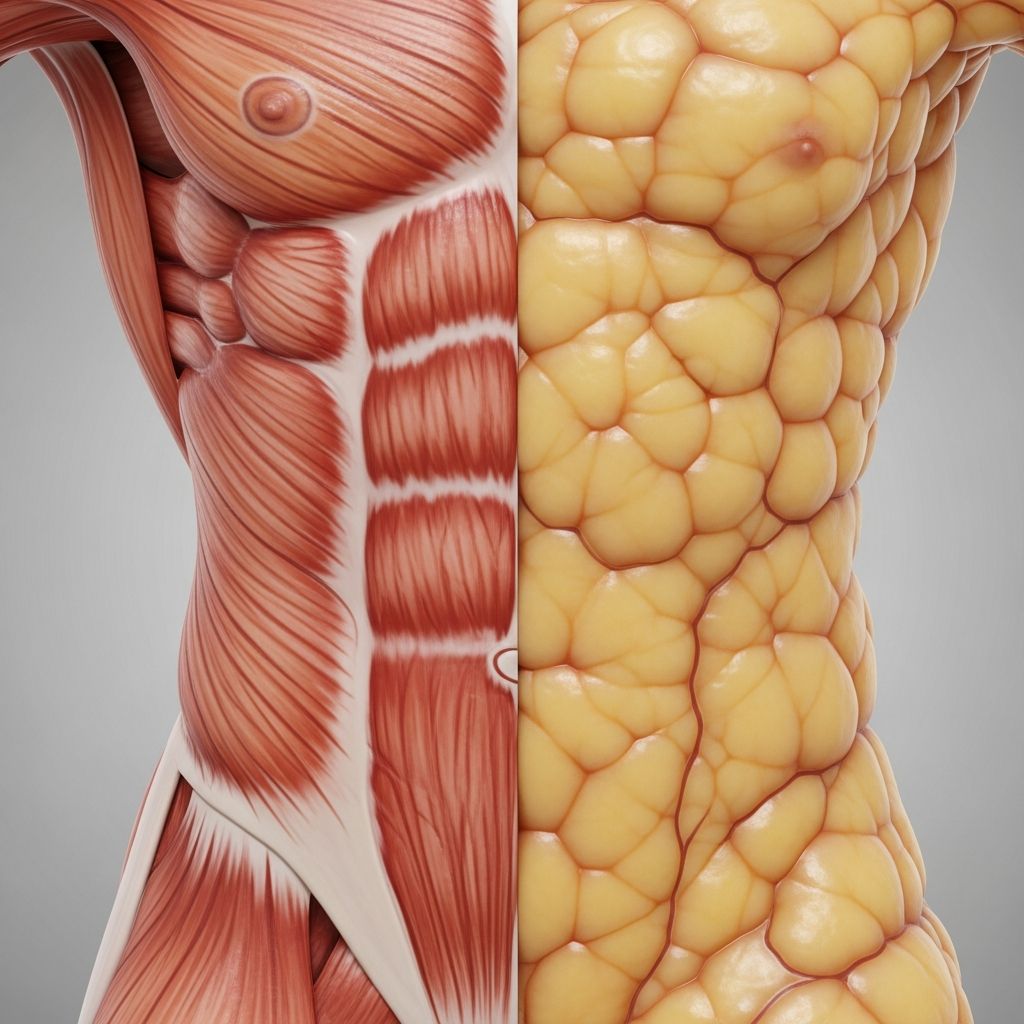
A pound of muscle weighs exactly the same as a pound of fat—both are one pound. The key distinction lies in their density: muscle is denser, occupying less volume than an equivalent weight of fat, which explains why building muscle can make you appear leaner even if the scale doesn’t drop.
This misconception often leads to frustration during fitness journeys, as people expect rapid weight loss only to see the scale stall or rise despite visible improvements. Understanding body composition— the ratio of fat, muscle, bone, and water in your body—shifts focus from scale numbers to meaningful progress.
What Is Muscle Made Of?
Muscle tissue, primarily skeletal muscle, consists of long, cylindrical fibers bundled together, rich in proteins like actin and myosin that enable contraction. These fibers are supported by connective tissues, blood vessels, and nerves, giving muscle its firm texture and high water content—about 75% of muscle is water.
Unlike fat, which stores energy in large adipocytes (fat cells) filled with triglycerides, muscle actively supports movement, posture, and metabolism. Skeletal muscle density measures approximately 1.06 g/cm³, roughly 18% higher than adipose tissue at 0.90 g/cm³, per research in the American Journal of Clinical Nutrition. This compactness means 5 pounds of muscle resembles a small book, while 5 pounds of fat looks like a softball.
What Is Fat Made Of?
Body fat, or adipose tissue, serves as an energy reserve, insulation, and cushion for organs. It comprises adipocytes swollen with lipids, surrounded by minimal structural support, resulting in a soft, jiggly consistency. Fat tissue holds less water (about 10-20%) and is less vascularized than muscle.
Its lower density allows fat to expand in volume: one liter of fat weighs around 0.90 kg, versus 1.06 kg for muscle. This volume difference dramatically affects body shape—excess fat creates a softer silhouette, while muscle promotes a toned, athletic build.
Muscle vs. Fat: Key Differences
Muscle and fat differ not just in weight and density but in function, appearance, and metabolic impact. Here’s a comparison:
| Property | Muscle | Fat |
|---|---|---|
| Density | 1.1 g/cm³ (18% denser) | 0.9 g/cm³ |
| Volume (per lb) | Smaller, compact (book-sized for 5 lb) | Larger, expansive (football-sized for 5 lb) |
| Appearance | Firm, toned, defined | Soft, less contoured |
| Calories Burned at Rest (per lb/day) | 6-10 kcal | 2-3 kcal |
| Water Content | ~75% | 10-20% |
| Vascularization | Rich blood supply | Limited |
[Data synthesized from] These traits explain why bodybuilders weigh more than expected yet look shredded, while two 160-pound individuals—one muscular at 18% body fat, the other sedentary at 28%—wear vastly different clothing sizes.
Why Does the Scale Lie?
Scales measure total body weight, ignoring composition. Daily fluctuations from water retention, glycogen (stored carbs binding 3g water per 1g glycogen), meals, or hormones can vary 5-6 pounds without fat change.
Related Stories



- False Negatives: Lose 3 lb fat, gain 3 lb muscle—scale unchanged, but you’re leaner and healthier.
- False Positives: Crash diets shed 10 lb, but 30% may be muscle, slowing metabolism.
Strength training builds dense muscle, which may increase weight while shrinking measurements. Post-workout inflammation adds temporary water weight. Focus on progress photos, tape measures, and how clothes fit for true insight.
Does Muscle Weigh More Than Fat by Volume?
By weight, no—a pound is a pound. By volume, yes: equal volumes show muscle heavier due to density. A 1-liter muscle sample weighs 1.06 kg; fat, 0.90 kg.
This volume disparity drives aesthetics. Replacing 10 lb fat with 10 lb muscle keeps weight steady but tightens physique, reduces waist size, and improves posture. Athletes exemplify this: higher weight, lower body fat percentage, superior health markers.
Why BMI Isn’t Always Accurate
Body Mass Index (BMI) calculates weight-to-height ratio but lumps muscle with fat, misclassifying fit individuals as overweight. Healthy ranges: women 25-31% body fat, men 18-24%.
A muscular 200 lb man at 15% fat scores high BMI despite low risk; a sedentary 180 lb woman at 35% fat appears ‘normal.’ Better metrics: body fat percentage via DEXA, calipers, or bioimpedance scales; waist circumference; fitness tests.
Health Benefits of Muscle Over Fat
Muscle boosts resting metabolic rate (RMR)—6-13 kcal/lb/day vs. fat’s 2-4.5. Additional perks:
- Metabolic Health: Improves insulin sensitivity, blood sugar control.
- Cardiovascular: Lowers blood pressure, enhances vascular function.
- Bone Density: Resistance training increases mineralization, reducing osteoporosis risk.
- Functional Strength: Cuts fall risk in seniors, boosts daily mobility.
- Mental Health: Elevates mood via endorphins, reduces inflammation.
Gaining 3 lb muscle raises RMR by ~7%, supporting sustained fat loss.
Building Muscle While Losing Fat (Body Recomposition)
Body recomposition swaps fat for muscle via resistance training, protein-rich diet (1.6-2.2g/kg body weight), and calorie balance. Beginners see fastest results; track via apps or DEXA scans.
- Train: 3-5x/week compound lifts (squats, deadlifts, presses).
- Eat: High protein, moderate deficit/surplus cycling.
- Recover: 7-9 hours sleep, manage stress.
- Track: Non-scale victories like strength gains.
Example: Lose 5 lb fat, gain 5 lb muscle—weight stable, body transformed.
Frequently Asked Questions
Can you weigh more with more muscle?
Yes. Muscle adds weight without equal fat loss, but you’ll look slimmer due to density.
Why do I look skinnier but weigh more?
Muscle’s lower volume tightens appearance; fat loss reduces fluff.
Do you gain weight when building muscle?
Yes, plus water/glycogen. Scale rises as body fat % falls.
Does muscle burn more calories than fat?
Yes, 6-10 kcal/lb/day vs. 2-3, per tissue studies.
Is BMI reliable for muscular people?
No—use body fat % and composition scans.
How to measure body composition at home?
Bioimpedance scales, calipers, tape measures. DEXA for precision.
References
- Does Muscle Weigh More Than Fat? — BodySpec. 2023. https://www.bodyspec.com/blog/post/does_muscle_weigh_more_than_fat
- Muscle vs Fat Weight: What’s the Real Difference? — InBody USA. 2023. https://inbodyusa.com/blogs/inbodyblog/muscle-vs-fat-weight/
- Fat vs Muscle: Density, Volume & Weight Differences — Juniper. 2024. https://www.myjuniper.co.uk/articles/fat-vs-muscle
- The Difference Between Muscle Weight vs. Fat Weight — Cleveland Clinic. 2023. https://health.clevelandclinic.org/muscle-vs-fat-weight
- Wang Z, et al. Specific metabolic rates of major human organs and tissues. — PMC (NIH). 2010-10-11. https://pmc.ncbi.nlm.nih.gov/articles/PMC4824141/
Similar Articles








Read full bio of medha deb