Tretinoin For Acne Scars: Results, Timeline, What To Expect
Explore how tretinoin reduces acne scars through collagen stimulation and cell renewal.
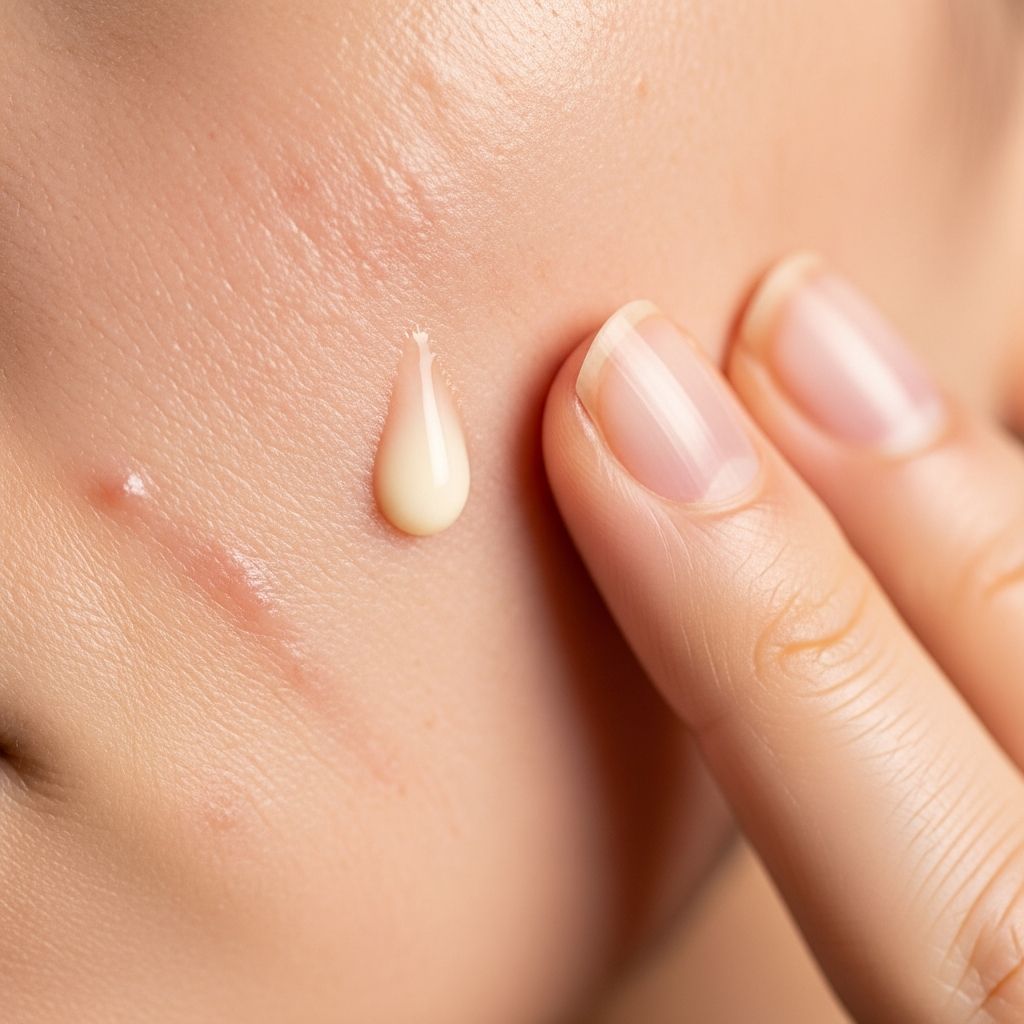
Does Tretinoin Help with Acne Scars?
If you’re struggling with acne scars and wondering whether tretinoin can help, the answer is yes—but with important caveats. Tretinoin is effective for reducing the appearance of acne scars, particularly post-inflammatory hyperpigmentation and shallow atrophic scars, with clinical studies showing that 79-94% of patients experience improvement with consistent use over several months. However, tretinoin cannot completely eliminate deep or severe scars and works best as part of a comprehensive skincare approach.
How Tretinoin Works on Acne Scars
Tretinoin, a prescription-strength retinoid also known as retinoic acid or Retin-A, addresses acne scars through two primary mechanisms that work synergistically to improve your skin’s texture and appearance.
Accelerates Cell Turnover
One of tretinoin’s most important functions is speeding up skin cell turnover. Your skin naturally sheds old cells and generates new ones, but this process can be sluggish, especially over scarred areas. Tretinoin accelerates this cycle, causing damaged skin cells to move to the surface faster and be replaced by fresher, healthier cells beneath. This accelerated renewal helps fade post-inflammatory hyperpigmentation—those dark or discolored spots that often linger after acne heals—and smooths rough texture caused by scarring.
Boosts Collagen Production
Beyond cell turnover, tretinoin stimulates your skin to produce more collagen, the structural protein responsible for skin firmness and elasticity. When acne leaves indented or atrophic scars, these depressions lack adequate collagen. By triggering increased collagen synthesis, tretinoin helps gradually fill in these shallow depressions, improving the overall contour and appearance of scarred skin. This collagen-stimulating effect is particularly valuable for treating atrophic scars, which are the most common type of acne scarring.
Types of Acne Scars That Respond Best to Tretinoin
Not all acne scars respond equally to tretinoin. Understanding which scar types benefit most helps set realistic expectations.
Post-Inflammatory Hyperpigmentation (Dark Spots)
Tretinoin is highly effective for treating dark spots and discoloration left after acne heals. This type of scarring, called post-inflammatory hyperpigmentation (PIH), often responds most quickly to tretinoin treatment. Many patients notice visible fading within 4 weeks of consistent daily use, with significant improvement typically appearing within 3-6 months.
Shallow Atrophic Scars
Atrophic scars—the indented or depressed scars that create texture irregularities—respond moderately well to tretinoin, particularly when they are shallow or moderate in depth. The collagen-stimulating effects gradually fill in these depressions over time. However, deep atrophic scars or severe scarring may show limited improvement with tretinoin alone and typically require professional treatments like microneedling or laser therapy for substantial results.
Newer vs. Older Scars
Tretinoin tends to work better on newer acne scars rather than old, well-established ones. Fresh scars have more active remodeling occurring in the skin, making them more responsive to tretinoin’s effects. However, research shows that tretinoin can still improve the appearance of older scars, though the degree of improvement may be less dramatic.
Timeline: When to Expect Results
Patience is essential when using tretinoin for acne scars. Results develop gradually as collagen rebuilds and skin cells turn over.
| Timeframe | Expected Results |
|---|---|
| 4 weeks | Noticeable fading of dark spots and discoloration |
| 3-6 months | Significant improvement in hyperpigmentation and visible scar improvement |
| 6-12 months | Maximum benefits typically achieved with continued daily use |
Related Stories



For best outcomes, daily consistency is essential. Studies demonstrate that consistent daily application over 6-12 months produces the most dramatic improvements. The longer you use tretinoin, the more improvement you’re likely to see, though most significant gains occur within the first 6 months.
Who Should Use Tretinoin for Acne Scars
Tretinoin works best for specific individuals and circumstances:
- People with post-inflammatory hyperpigmentation or dark spots from acne
- Those with shallow to moderate atrophic scars
- Individuals with newer scars that haven’t fully matured
- Patients with active acne who want to prevent new scars while treating existing ones
- People willing to commit to several months of consistent, daily use
- Individuals with realistic expectations about tretinoin’s limitations for deep scarring
Tretinoin vs. Other Scar Treatments
Tretinoin vs. Retinol
Tretinoin is significantly more effective than over-the-counter retinol for acne scars. The key difference lies in how these compounds work in your skin. Tretinoin is the active form of vitamin A that works immediately, while retinol must be converted to retinoic acid within your skin—a process that reduces its potency. For scar treatment specifically, tretinoin’s superior collagen-stimulating properties make it the preferred choice. The trade-off is that tretinoin requires a prescription and typically causes more initial irritation than gentler retinol products.
Tretinoin vs. Adapalene (Differin)
Both tretinoin and adapalene help reduce acne scars, but they have different strengths. Adapalene causes less irritation than tretinoin and is available over-the-counter without a prescription, making it more accessible for many people. However, tretinoin has superior collagen-stimulating effects and may produce better results for moderate scarring. Adapalene makes a good starting point for those with mild scars or sensitive skin, while tretinoin is typically reserved for more significant scarring or when stronger results are desired.
Tretinoin vs. Professional Treatments
While tretinoin is effective for mild to moderate scarring, professional treatments offer more dramatic results for severe scars. Laser therapy, microneedling, and surgical excision can provide more substantial improvements for deep or extensive scarring. Many dermatologists recommend combining tretinoin with professional treatments for optimal outcomes.
Potential Side Effects and Considerations
Tretinoin is generally well-tolerated but comes with important considerations. When first starting tretinoin, you may experience redness, scaling, and irritation as your skin adjusts. This initial adjustment period, sometimes called the “retinization process,” typically subsides within 2-4 weeks as your skin builds tolerance.
Start with the lowest concentration (usually 0.025%) and increase gradually only as your skin adapts. Sun protection is absolutely essential—tretinoin increases skin sensitivity to UV rays, so daily broad-spectrum SPF 30 or higher is non-negotiable. Pregnant women should avoid tretinoin, as it can cause birth defects. Additionally, tretinoin is not recommended during active acne breakouts until the acne improves, as it may initially worsen inflammation.
Frequently Asked Questions
Q: Can tretinoin completely remove acne scars?
A: No, tretinoin typically cannot completely remove acne scars, especially deep or severe scarring. However, it can significantly fade dark spots and improve the appearance of shallow scars, making them much less noticeable. For complete scar removal, professional treatments like laser therapy, surgical excision, or microneedling are usually needed.
Q: Should I use tretinoin if I still have active acne?
A: Yes, tretinoin treats both active acne and acne scars simultaneously. It prevents pores from clogging while improving existing scars and dark spots. Treating active acne is actually crucial for preventing new scars from forming. Your dermatologist may prescribe tretinoin for both purposes.
Q: Does tretinoin work on old acne scars?
A: Tretinoin can improve old acne scars, though newer scars typically respond better. Research shows tretinoin reduces acne scars even if you’ve had them for a while. However, very old, deep scarring may show limited improvement with tretinoin alone and might require professional treatments for significant results.
Q: How long does it take to see results from tretinoin?
A: Initial improvements typically appear within 4 weeks, particularly for dark spots. Significant scar improvement usually becomes visible within 3-6 months of consistent daily use, with maximum benefits typically achieved by 6-12 months.
Q: Is tretinoin safe for all skin types?
A: Tretinoin is generally safe for all skin types, though darker skin types may be more prone to post-inflammatory hyperpigmentation during treatment. However, recent studies with newer retinoids like trifarotene have demonstrated safety and efficacy across all Fitzpatrick skin phototypes. Always consult with a dermatologist to ensure tretinoin is appropriate for your specific skin type and condition.
Key Takeaways
Tretinoin is an effective treatment for acne scars by accelerating cell turnover and boosting collagen production. It works best for post-inflammatory hyperpigmentation and shallow atrophic scars, with clinical evidence showing that 79-94% of patients experience improvement. Results require patience and consistency, with visible improvement typically appearing between 3-6 months of daily use.
While tretinoin works well for mild to moderate scarring and dark spots, deep or severe scars usually need professional treatments like microneedling or laser therapy for significant improvement. Success with tretinoin depends on realistic expectations, consistent daily application, diligent sun protection, and professional guidance from a dermatologist. For many people, tretinoin represents an accessible, evidence-based first step in addressing acne scars and preventing new ones from forming.
References
- Does Tretinoin Help with Acne Scars? What to Expect — Nolla Health. 2025. https://www.nollahealth.com/learning/does-tretinoin-help-with-acne-scars
- What to Expect When Treating Acne with Tretinoin (Retin-A) — Healthline. 2024. https://www.healthline.com/health/tretinoin-for-acne
- Recommendations to Improve Outcomes in Acne and Acne Sequelae — National Center for Biotechnology Information (NCBI/PMC). 2024. https://pmc.ncbi.nlm.nih.gov/articles/PMC11909303/
Similar Articles








Read full bio of Sneha Tete