Doomscrolling Dangers: Mental and Physical Health Risks
Understanding doomscrolling's impact on mental and physical health and how to break free.
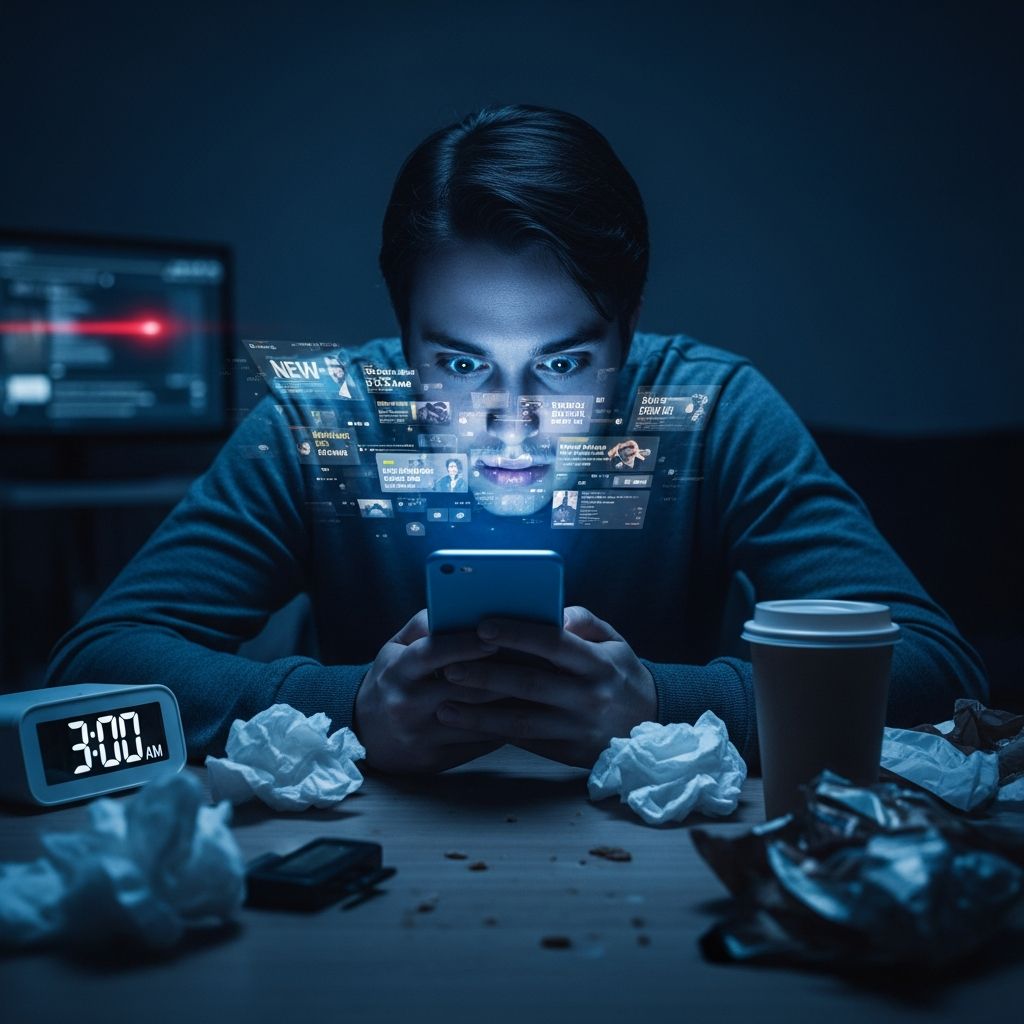
Understanding Doomscrolling: Definition and Overview
Doomscrolling refers to the compulsive consumption of large quantities of news content, particularly negative stories, through social media platforms and news websites. This behavior involves spending excessive amounts of time scrolling through feeds filled with distressing information, often without conscious awareness of how long the activity has continued. The term combines ”doom” with ”scrolling” to capture the essence of this modern digital habit that has become increasingly prevalent in our connected society.
In our current information landscape, staying updated on world events has become easier than ever through smartphones and social media. However, this accessibility has created a problematic pattern where individuals find themselves trapped in endless cycles of consuming negative news. What often begins as a desire to remain informed about current affairs can quickly transform into an unhealthy obsession with distressing content.
Doomscrolling can manifest in various ways, including constantly scrolling through video-based apps like TikTok, YouTube, and Instagram, frequently checking applications for updates despite having notifications enabled, regularly refreshing news feeds, and obsessively checking emails and push notifications. The behavior often occurs automatically, with individuals not realizing they are engaging in doomscrolling until significant time has passed.
The Mental Health Impact of Doomscrolling
The psychological consequences of doomscrolling are profound and well-documented through multiple research studies. Exposure to continuous negative news creates an emotional burden that can significantly affect overall mental wellbeing. When individuals engage in doomscrolling, they often experience emotional responses including anxiety, sadness, anger, and a persistent sense of being overwhelmed.
Research has demonstrated specific mental health challenges associated with doomscrolling. A 2023 study examining adults who experienced major earthquakes in Türkiye found that doomscrolling was associated with increased levels of stress, anxiety, and depression. Additionally, a 2024 study involving participants from Iran and the United States revealed that doomscrolling was associated with existential anxiety—a deep concern about meaning, mortality, and the nature of human existence.
Common Mental Health Effects
Individuals who engage in excessive doomscrolling frequently report experiencing:
– Persistent worry and heightened stress levels- Difficulty concentrating on tasks- Feelings of guilt and responsibility- Inability to mentally ”switch off” from distressing content- Existential dread and concerns about global safety- Increased irritability and emotional reactivity- Feelings of isolation despite constant connectivity- Distrust in others and society- Mental fatigue and cognitive exhaustion
The relationship between doomscrolling and mental health is bidirectional and cyclical. Individuals experiencing anxiety about the future are more likely to engage in doomscrolling, yet the activity itself intensifies anxiety and worry. This creates a self-perpetuating cycle where the temporary relief sought through information-seeking ultimately produces greater distress.
Physical Health Consequences of Doomscrolling
Beyond psychological impacts, doomscrolling produces tangible physical health effects that often go unrecognized. When engaged in doomscrolling, the body enters a stress response state, triggering physiological changes that manifest as various uncomfortable symptoms.
Doomscrolling activates the body’s ”fight, flight, or freeze” response mechanism, causing elevated blood pressure and increased stress hormone production. Additionally, maintaining a fixed posture while scrolling for extended periods contributes to musculoskeletal problems. These combined factors result in measurable physical symptoms including:
– Headaches and migraines- Neck and shoulder pain from prolonged fixed posture- Muscle tension throughout the body- Difficulty sleeping and insomnia- Nausea and digestive discomfort- Loss of appetite or abnormal eating patterns- Elevated blood pressure- Eye strain and vision problems
The sedentary nature of doomscrolling, combined with stress hormone elevation, creates a perfect environment for physical health deterioration. Individuals may spend hours in uncomfortable positions while their bodies remain in heightened alert states, producing cumulative physiological damage.
Why People Engage in Doomscrolling
Understanding the motivations behind doomscrolling is essential for addressing the behavior. People do not engage in doomscrolling randomly; rather, psychological and environmental factors drive this compulsive behavior.
The Illusion of Control
One primary motivator for doomscrolling is the human need for control in an unstable world. By obsessively consuming negative information, individuals attempt to fulfill their evolutionary need for safety by staying hyperaware of potential threats. The misguided logic suggests that knowing about dangers provides protection or predictability. However, this strategy ultimately backfires, creating greater anxiety rather than genuine security.
Information Overload and Media Landscape
The contemporary news media environment contributes significantly to doomscrolling behavior. Media outlets disproportionately emphasize negative events over positive developments, creating a skewed representation of reality. As Dr. Richard Mollica, a professor of psychiatry at Harvard Medical School, notes: “We are not getting any messages about hope — it’s all negativity.”
The constant stream of new articles, videos, and audio content about current affairs creates an environment where stepping away becomes increasingly difficult. Social media algorithms are specifically designed to maximize engagement through emotionally provocative content, meaning negative stories are prioritized and amplified.
Dopamine and Reward Cycles
The novelty and reward inherent in discovering new information triggers dopamine release in the brain. However, constant exposure to social media creates emotional dysregulation, as the brain becomes conditioned to crave increasing amounts of stimulation. This creates a cycle where individuals must scroll more frequently and consume more extreme content to achieve the same neurochemical reward.
Recognizing Signs of Problematic Doomscrolling
Doomscrolling often occurs so automatically that individuals may not recognize when it has become problematic. Identifying warning signs allows for early intervention before serious mental or physical health consequences develop.
Common indicators that doomscrolling is negatively affecting your wellbeing include:
– Feeling anxious, tense, or low immediately after checking news- Scrolling for significantly longer than initially intended- Compulsively checking for updates despite having notifications enabled- Experiencing difficulty concentrating on work or personal tasks- Feeling overwhelmed by information or emotional content- Using news consumption as an escape or coping mechanism- Noticing increased irritability or emotional reactivity- Experiencing physical symptoms like headaches or sleep problems after scrolling- Finding it difficult to ”switch off” mentally from distressing content
Vulnerable Populations and Special Considerations
Research has identified certain populations as particularly vulnerable to the negative effects of doomscrolling. Individuals with preexisting mental health conditions, history of trauma, or childhood maltreatment are at higher risk for experiencing severe negative impacts from doomscrolling behavior.
During crisis periods such as the COVID-19 pandemic, doomscrolling intensified dramatically. Studies found that daily exposure to pandemic-related social media content was associated with elevated depression and post-traumatic stress disorder (PTSD) symptoms. Vulnerable individuals often turned to pandemic-related information as a maladaptive coping strategy, unintentionally worsening their mental health conditions.
The Popcorn Brain Phenomenon
Harvard experts have identified a condition referred to as ”popcorn brain”—a phenomenon occurring when excessive online time overstimulates the mind. This condition results in reduced ability to focus on single tasks or engage in deep thinking. The constant bombardment of varied content fragments attention and creates cognitive patterns that prioritize rapid information consumption over meaningful understanding.
As Dr. Aditi Nerurkar, a lecturer in the Division of Global Health and Social Medicine at Harvard Medical School, explains: ”Our brains and bodies are expertly designed to handle short bursts of stress. But over the past several years, the stress just doesn’t seem to end. Doomscrolling is our response to that.”
Strategies for Breaking the Doomscrolling Cycle
Addressing doomscrolling requires intentional action and practical strategies that work within modern digital lifestyles. Several evidence-based approaches can help reduce excessive news consumption and improve overall wellbeing.
Setting Time Boundaries
Establishing specific time limits for news consumption is a foundational strategy. Designate particular times of day for checking news rather than allowing continuous, throughout-the-day scrolling. Consider using phone features that restrict app usage after set durations or setting alarms as reminders to disengage from news applications.
Digital Detox Strategies
Consider deleting news and social media applications from your smartphone, using website blockers to limit access during specific hours, or designating technology-free times or spaces in your daily routine. These barriers create friction that breaks automatic scrolling patterns and provides opportunities for reflection about whether news consumption is truly necessary.
Curating Your Information Diet
Be intentional about which news sources you consume, selecting outlets known for balanced reporting and fact-checking rather than sensationalism. Follow journalists and sources that provide context and solutions-focused reporting rather than purely catastrophic narratives.
Seeking Support and Connection
Share your concerns with loved ones rather than seeking reassurance through endless scrolling. Direct human connection provides genuine support and perspective that technology cannot replicate. Consider speaking with a mental health professional if doomscrolling is significantly impacting your wellbeing.
Developing Alternative Coping Mechanisms
Replace doomscrolling habits with healthier activities including exercise, meditation, outdoor time, creative pursuits, or social engagement. These alternatives activate different neurological pathways and provide genuine stress relief rather than temporary escape.
When to Seek Professional Help
If you experience persistent mental or physical symptoms as a result of doomscrolling or find yourself unable to control the behavior despite genuine efforts, consulting with a healthcare professional is advisable. Mental health specialists can assess whether doomscrolling is contributing to or exacerbating conditions such as anxiety disorders, depression, or trauma-related conditions, and can recommend personalized treatment approaches.
Frequently Asked Questions (FAQs)
Q: What is the difference between staying informed and doomscrolling?
A: Staying informed involves intentional, time-limited consumption of news from reliable sources to understand current events. Doomscrolling is compulsive, often uncontrolled consumption of excessive negative content that leaves you feeling worse. The key difference lies in intent, duration, and emotional impact.
Q: Can doomscrolling cause long-term mental health problems?
A: While occasional doomscrolling is unlikely to cause lasting damage, chronic engagement can exacerbate existing mental health conditions and potentially contribute to anxiety disorders, depression, and other psychological issues. Those already vulnerable are at higher risk for serious consequences.
Q: How much news consumption is considered healthy?
A: Mental health experts suggest checking news for 15-30 minutes once or twice daily is reasonable for most people. Limiting consumption to designated times rather than constant scrolling helps maintain awareness without triggering stress responses.
Q: Is doomscrolling the same as social media addiction?
A: While related, they are not identical. Doomscrolling specifically involves consuming negative news content, whereas social media addiction encompasses broader compulsive platform use. However, doomscrolling often occurs through social media platforms and shares similar addictive mechanisms.
Q: Can I recover from the effects of doomscrolling?
A: Yes. Reducing news consumption, implementing healthy boundaries, engaging in stress-relief activities, and seeking professional support when needed can significantly improve mental and physical health. Most people experience noticeable improvements within weeks of changing their consumption patterns.
References
- Doomscrolling: Definition, health effects, and more — Medical News Today. 2024. https://www.medicalnewstoday.com/articles/doomscrolling
- Doomscrolling – tips for healthier news consumption — Mind (Mental Health UK). https://www.mentalhealth.org.uk/explore-mental-health/articles/doomscrolling-tips-healthier-news-consumption
- How to Stop Doomscrolling — Health Assured. https://www.healthassured.org/blog/what-is-doomscrolling/
- Doomscrolling – Addiction To Bad News and Its Negative Consequences on Health — Associazione Psicologi Europe. 2025-03-14. https://associazionepsicologieurope.com/2025/03/14/doomscrolling-addiction-to-bad-news-and-its-negative-consequences-on-health/
- Fight, flight, or freeze: how our bodies respond to doomscrolling — Harvard Gazette. 2022-06-14. https://news.harvard.edu/gazette/story/2022/06/numb-from-the-news-heres-why-and-what-to-do-about-it/
Similar Articles








Read full bio of medha deb