Dorsiflexion: 3-Step Plan To Improve Ankle Mobility
Understanding ankle dorsiflexion: its role in movement, common issues, and exercises to improve mobility for better health and performance.
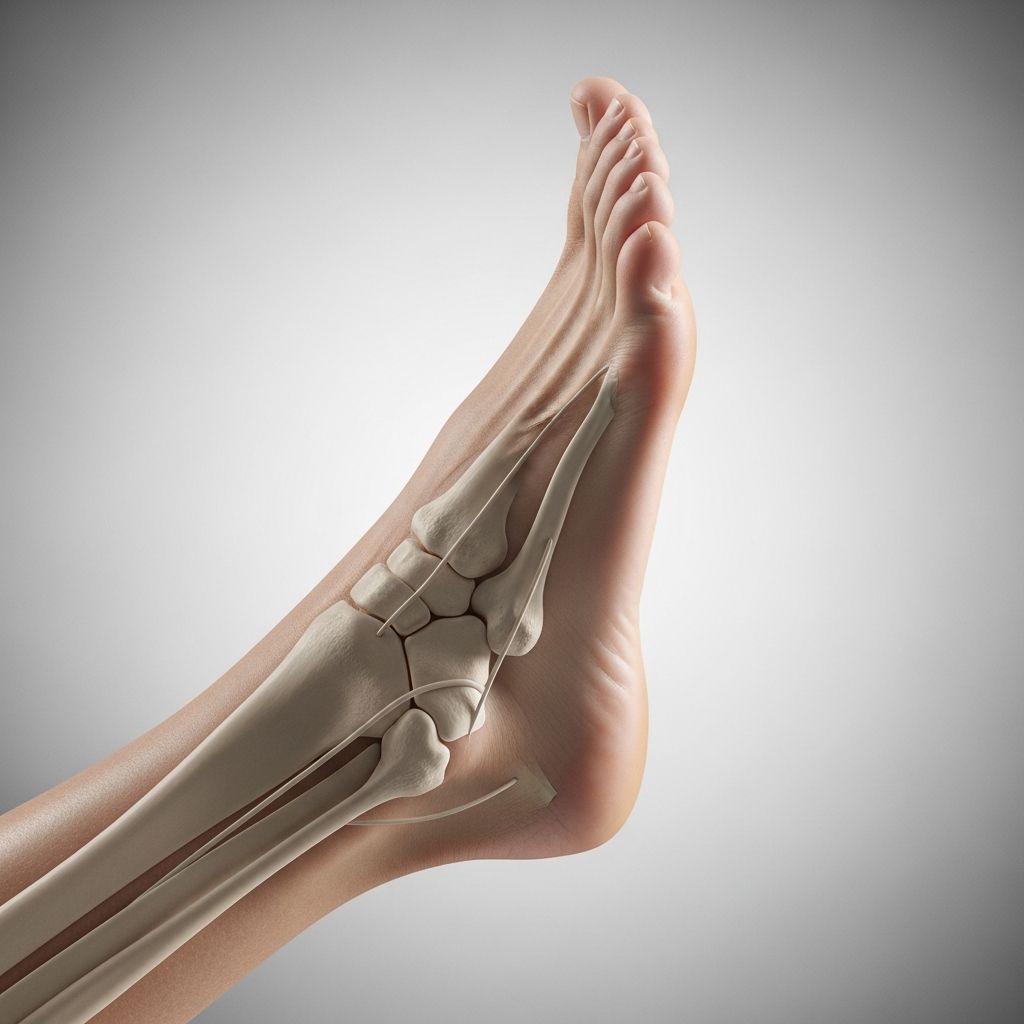
Dorsiflexion is the movement where the top of the foot moves toward the shin, primarily involving ankle flexion. This essential motion enables efficient walking, running, squatting, and athletic performance by allowing proper foot positioning during gait and dynamic activities.
What Is Dorsiflexion?
Dorsiflexion refers to the backward bending or upward flexion of the foot at the ankle joint, bringing the toes toward the shin. It is facilitated by muscles like the tibialis anterior, extensor hallucis longus, and extensor digitorum longus, which contract to lift the foot. During gait, peak ankle dorsiflexion occurs in the stance and swing phases, contributing to forward propulsion and shock absorption.
In everyday activities, adequate dorsiflexion ensures the foot clears the ground during swing phase and allows heel strike without compensation. Limitations disrupt biomechanics, leading to altered pelvic, hip, knee, and foot kinematics. Research shows normal weight-bearing dorsiflexion ranges from 7-35 degrees, with gait requiring up to 20 degrees and deep squats needing 30-35 degrees.
Why Is Dorsiflexion Important?
Ankle dorsiflexion is critical for lower extremity function, sports performance, and injury prevention. It harmonizes body-surface interaction, supports force handling in functional tasks, and activates brain areas for motor planning, balance, and coordination.
- Gait and Propulsion: Peak dorsiflexion enables ankle push-off for leg swing and forward momentum. Restrictions reduce anterior ground reaction forces, hip extension, and pelvic motion, impairing propulsion.
- Athletic Performance: Sports requiring running, jumping, or squatting demand greater range; e.g., maximal squats need ~35 degrees.
- Injury Risk Reduction: Limited dorsiflexion correlates with dynamic knee valgus, ACL stress, patellofemoral pain, and lower extremity injuries.
Studies confirm that restricted dorsiflexion alters kinematics during walking and jogging, increasing torsional stress and injury susceptibility.
Effects of Limited Ankle Dorsiflexion
Limited dorsiflexion, often from gastrocnemius/soleus tightness or talus gliding issues, triggers compensatory patterns with widespread effects.
Biomechanical Changes
- Pelvic Motion: Reduced frontal plane motion during walking; smaller ipsilateral rotation in jogging, heightening torsional stress.
- Hip and Knee: Decreased hip extension, increased knee external rotation (raising ACL impingement risk), and reduced plantarflexion moment.
- Foot and Ground Forces: Forefoot landing preference, diminished forward propulsion.
Injury Associations
| Injury | Link to Limited Dorsiflexion |
|---|---|
| Plantar Fasciitis | Altered foot loading and stress |
| Achilles Tendinitis | Compensatory tension |
| Knee Injuries (ACL, Patellofemoral) | Knee valgus, rotation, alignment changes |
| Low Back Pain | Pelvic-lumbar pattern alterations |
| Ankle Instability/Impingement | ATFL scarring, fibula positioning |
Individuals with restrictions show higher injury risks due to faulty movement quality on both extremities.
How to Test Ankle Dorsiflexion
The weight-bearing lunge test (WBLT) is a reliable, quantitative measure. Kneel with one foot against a wall, lunge until heel lifts minimally, measuring shin-toe distance or angle.
- Normal Ranges: Non-weight-bearing: 0-17°; Weight-bearing: 7-35°; Gait: ~20°; Squat: 30-35°.
- Procedure: Perform bilaterally; <10cm shin advancement indicates restriction. Correlates across positions.
- Qualitative Assessment: Observe squat depth, heel lift, or knee valgus.
Confirm with diagnostic imaging if joint vs. soft tissue involvement.
Causes of Limited Dorsiflexion
- Muscle Tightness: Gastrocnemius, soleus shortening.
- Joint Restrictions: Talus posterior gliding deficit, anterior impingement.
- Ligament Issues: ATFL damage causing fibula anterior shift, instability.
- Post-Injury Scarring: Chronic ankle sprains.
- Other: Patellofemoral osteoarthritis linked to reduced range.
Related Stories



Exercises to Improve Dorsiflexion
Targeted interventions restore range via stretching, mobility drills, and strengthening. A 3-step framework: assess (WBLT), diagnose, personalize.
Stretching Exercises
- Calf Stretch: Wall lean with straight/knee-bent leg; hold 30s x 3.
- Foam Rolling: Roll calves to release tightness.
Mobility Drills
- Ankle Circles: 10 each direction, side-to-side, forward-back.
- Heel Walks: Walk on heels 20-30m.
- WBLT Holds: Lunge to end-range, oscillate gently.
Strengthening
- Tibialis Anterior Raises: Lift toes while seated/resisted band.
- Squat Progressions: Heel-elevated to full depth as mobility improves.
Yoga Poses
- Camel, Chair, Child’s Pose to enhance ankle flexion.
Consistency yields results; combine with dynamic warm-ups for athletes.
When to See a Professional
Consult a physical therapist if dorsiflexion <10° WBLT, persistent pain, or post-injury stiffness. They provide tailored rehab, ruling out structural issues. Early intervention prevents compensatory injuries.
Frequently Asked Questions (FAQs)
What is dorsiflexion?
Dorsiflexion is lifting the foot so toes move toward the shin, key for gait and mobility.
How much ankle dorsiflexion is normal?
Weight-bearing: 7-35°; gait needs ~20°; squats up to 35°.
Can limited dorsiflexion cause knee pain?
Yes, it promotes knee valgus and rotation, risking ACL and patellofemoral issues.
How do I fix poor dorsiflexion?
Use calf stretches, WBLT, foam rolling, and strengthening; assess first.
Is dorsiflexion testing important for athletes?
Absolutely; it predicts performance and injury risk in sports.
References
- Effects of peak ankle dorsiflexion angle on lower extremity biomechanics — NIH/PMC. 2024. https://pmc.ncbi.nlm.nih.gov/articles/PMC10867967/
- Why is Ankle Dorsiflexion so Critical? — Pinnacle Physical Therapy. 2021-09-24. https://pinnaclephysicaltherapy.org/blog/2021/9/24/why-perfect-anke-dorsi-flexion-is-critical
- Role of ankle dorsiflexion in sports performance and injury risk — European Journal of General Medicine. 2024. https://www.ejgm.co.uk/article/role-of-ankle-dorsiflexion-in-sports-performance-and-injury-risk-a-narrative-review-13412
- Restoring ankle dorsiflexion range of motion in athletes — Frontiers in Sports and Active Living. 2025. https://www.frontiersin.org/journals/sports-and-active-living/articles/10.3389/fspor.2025.1677383/full
- Dorsiflexion: Ankle, Foot, Muscles, and More — Healthline. 2023. https://www.healthline.com/health/fitness-exercise/dorsiflexion
Similar Articles








Read full bio of medha deb